
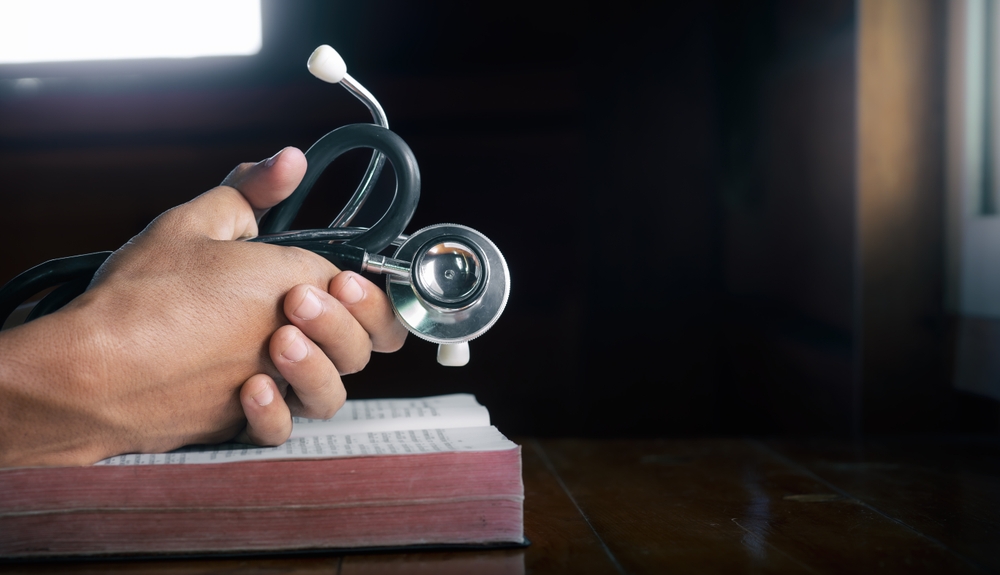
Medicine is often pictured as a world of white coats, charts, lab results, and machines that beep with the confidence of a tiny robot supervisor. Yet anyone who has sat beside a hospital bed knows that healing is never only technical. A diagnosis can shake the body, but it can also rattle the soul. In those moments, belief in God can become more than a private comfort; it can serve as a guiding light through fear, uncertainty, pain, and difficult medical decisions.
This does not mean faith replaces science. No one should swap antibiotics for wishful thinking or skip chemotherapy because a motivational refrigerator magnet seemed persuasive. Modern medicine saves lives through evidence, training, teamwork, and technology. But belief in God can strengthen the human side of medicine: hope, compassion, patience, humility, courage, forgiveness, and meaning. When illness turns life upside down, faith can help patients, families, nurses, doctors, and caregivers remember that a person is more than a chart number.
In hospitals across the United States, spiritual care is increasingly recognized as part of whole-person care. Chaplains, physicians, nurses, counselors, and palliative care teams often work together to support not only physical symptoms but also emotional and spiritual distress. For many people, prayer, scripture, worship, sacred music, religious community, and trust in God become anchors during the storm. And in medicine, anchors matter. Nobody wants to drift alone in rough water while wearing one of those breezy hospital gowns.
Faith and Medicine: Partners, Not Rivals
A healthy view of belief in God and medicine begins with balance. Faith should not be used to deny medical reality, shame patients, or pressure anyone into a religious conversation. At the same time, medical care should not treat spiritual questions as irrelevant simply because they do not fit neatly into a blood test.
People facing illness often ask questions that medicine alone cannot fully answer: Why is this happening? How do I endure this? What gives my life meaning now? What should I do if treatment becomes too burdensome? How do I forgive, let go, or keep going? These questions are spiritual, moral, and deeply human. For believers, God often becomes the center of those conversations.
Doctors treat disease, but they also meet people at some of the most vulnerable moments of their lives. A physician may prescribe medication, explain risks, and perform procedures. Yet a compassionate doctor also listens. A nurse may administer treatment, but also notice when a patient is afraid and needs reassurance. A chaplain may not change a lab result, but may help someone breathe again emotionally after hearing life-changing news.
How Belief in God Helps Patients Face Medical Challenges
Belief in God can support patients in practical and emotional ways. It can help people find hope without pretending everything is easy. Real faith is not a plastic smile pasted over pain. It is the quiet strength to say, “This is hard, but I am not abandoned.”
Faith Offers Hope During Uncertainty
Medical uncertainty can be exhausting. Waiting for test results, trying a new treatment, or living with a chronic illness can make the mind run laps like a squirrel on espresso. Belief in God can help patients place uncertainty within a larger framework of trust. They may not know the outcome, but they believe their life still has value, purpose, and divine care.
This kind of hope is not the same as guaranteed recovery. It is deeper. It says that even if the road is longer than expected, God’s presence can still be found along the way. For some patients, that belief reduces loneliness. For others, it gives them courage to continue treatment, ask questions, accept help, or make peace with circumstances they cannot control.
Prayer Can Become a Source of Calm
Prayer is one of the most familiar ways people bring faith into health challenges. Some pray for healing. Some pray for wisdom. Some pray because they are scared and do not know what else to say. That counts too. Prayer does not need polished grammar. God is not grading punctuation.
In the medical setting, prayer may help patients slow down, express fear, release anger, or feel connected to something greater than the crisis in front of them. Families may pray together before surgery. A patient may silently pray before an infusion. A doctor or nurse of faith may pray privately for strength to serve with compassion and clarity.
Religious Community Reduces Isolation
Illness can shrink a person’s world. Appointments replace hobbies. Medication schedules replace spontaneity. Friends may not know what to say, so they say very little, which can hurt even when no harm is intended. A faith community can help fill that gap.
Churches, synagogues, mosques, temples, and other spiritual communities often provide meals, rides, visits, prayer chains, financial support, and emotional encouragement. These acts may seem simple, but to someone recovering from surgery or facing cancer treatment, a warm casserole can feel like a theological argument for hope. Preferably not overcooked, but still holy in its own way.
Why Spiritual Care Matters in Modern Health Care
Spiritual care is not about forcing religion into medicine. It is about respecting the beliefs, values, and sources of meaning that patients bring with them. The Joint Commission has emphasized the importance of assessing spiritual needs in health care settings, especially when those needs affect care, coping, or decision-making. Many hospitals include chaplains as part of the care team because spiritual distress can intensify suffering.
A patient may need spiritual support when asking whether to continue aggressive treatment, how to face disability, or how to prepare for death. Another patient may need help reconciling faith with anger: “Why would God allow this?” These questions deserve tenderness, not quick answers. A rushed religious cliché can land about as well as cold coffee in a waiting room.
Good spiritual care begins with listening. It may include asking respectful questions such as: What gives you strength? Are there spiritual practices that matter to you? Would you like a chaplain or faith leader contacted? Are there beliefs that should be considered in your care? These questions allow patients to guide the conversation.
Belief in God and the Ethics of Compassionate Medicine
Medicine is full of ethical challenges: end-of-life decisions, treatment refusals, reproductive care, organ donation, pain management, truth-telling, and family disagreements. Belief in God can shape how patients and clinicians think about dignity, suffering, responsibility, and the value of life.
However, ethical care requires humility. A clinician’s personal beliefs should never overpower a patient’s rights, values, or informed choices. Likewise, patients deserve accurate medical information even when decisions are spiritually complex. The best care happens when medical expertise and personal belief meet with respect.
For example, a patient with advanced illness may believe that life is sacred and want to continue treatment. Another may believe that dying naturally, surrounded by family and prayer, honors God. A compassionate medical team does not mock either view. Instead, it explains options, clarifies likely outcomes, manages pain, and supports the patient’s values as much as ethically and medically possible.
Faith as a Light for Doctors, Nurses, and Caregivers
Patients are not the only ones who need strength. Health care workers face long shifts, emotional fatigue, heartbreaking losses, and the pressure of making decisions where there is no perfect answer. For clinicians who believe in God, faith can provide a sense of calling. It can remind them that every patient deserves dignity, even on chaotic days when the coffee is weak and the electronic health record seems personally offended by efficiency.
Faith may encourage medical professionals to serve with humility. No doctor knows everything. No nurse can fix every sorrow. No specialist can guarantee every outcome. Belief in God can help clinicians accept the limits of human control while still giving their best effort. That combinationskill without arrogance, compassion without despairis powerful.
Caregivers also draw strength from belief in God. A spouse caring for a partner with dementia, a parent sitting beside a child in intensive care, or an adult child navigating hospice decisions may feel stretched beyond normal endurance. Faith can help caregivers see their work as an act of love, not merely a list of tasks. It can also remind them to rest. Even deeply devoted caregivers are still human beings, not rechargeable hospital equipment.
When Faith Feels Difficult During Illness
It is important to be honest: illness can challenge belief in God. Some people feel closer to God during sickness. Others feel confused, angry, numb, or abandoned. These reactions do not make someone weak or faithless. They make someone human.
A cancer diagnosis, chronic pain, infertility, disability, depression, or the death of a loved one can raise painful spiritual questions. Some patients wonder whether they are being punished. Others feel guilty for not feeling peaceful. In these moments, compassionate spiritual care can help separate harmful shame from healthy reflection.
Belief in God should not become a burden that tells sick people they failed because they did not pray “correctly.” That is not comfort; that is spiritual junk mail. A more healing approach says: You are allowed to grieve. You are allowed to ask questions. You are allowed to need help. Faith can include tears, silence, and wrestling.
Specific Examples of Faith Guiding Medical Journeys
A Patient Facing Surgery
Imagine a woman preparing for heart surgery. She trusts her surgical team, but fear keeps visiting like an uninvited neighbor. Before the operation, she asks for prayer with her family. The prayer does not replace the surgeon’s training, anesthesia plan, or sterile technique. Instead, it helps her enter the operating room with steadier breathing and a sense that she is held by God and supported by people who love her.
A Family Navigating Cancer Treatment
A father receiving chemotherapy may find that faith helps him endure the grind of treatment. His church community organizes rides, his pastor visits, and his children write Bible verses on sticky notes around the house. The treatment still causes fatigue. The nausea is still rude. But he does not feel alone. Faith becomes a network of hope with hands and feet.
A Nurse Serving in Palliative Care
A palliative care nurse may rely on belief in God to sit calmly with families during final days. She cannot erase grief, but she can manage symptoms, explain what is happening, and honor sacred moments. Her faith may help her see dying patients not as medical failures, but as people deserving comfort, dignity, and tenderness until the end.
Belief in God Should Encourage Wise Medical Decisions
One of the most practical ways faith can guide medicine is by encouraging wisdom. Belief in God does not require rejecting doctors, vaccines, medication, therapy, surgery, or rehabilitation. For many believers, medicine itself is understood as a gift: knowledge, skill, research, and healing ability used for human good.
A faithful patient can pray and take prescribed medication. A family can trust God and ask the oncologist detailed questions. A church can believe in miracles and still drive someone to physical therapy. These are not contradictions. They are examples of faith and responsibility working together.
Patients should be encouraged to discuss spiritual concerns with their health care team when those beliefs affect treatment choices. They should also seek guidance from trusted faith leaders who respect both spiritual conviction and medical reality. Good counsel does not bully. It helps people think clearly, act wisely, and remain grounded in love.
How Hospitals Can Respect Belief in God
Hospitals can support spiritual well-being in several simple but meaningful ways. They can ask respectful spiritual assessment questions during intake. They can provide access to chaplains from diverse traditions. They can make space for prayer, rituals, sacred texts, and family presence when possible. They can train staff to recognize spiritual distress without assuming every patient wants religious support.
Respect is the key word. Some patients deeply want prayer. Others do not. Some believe in God using traditional religious language. Others describe spirituality as meaning, connection, nature, conscience, or love. Patient-centered care honors the person in the bed, not the preferences of the person holding the clipboard.
Experiences Related to Belief in God as Medicine’s Guiding Light
Many people who have walked through hospitals as patients, relatives, or caregivers describe faith as a quiet lamp rather than a lightning bolt. It may not remove the challenge, but it helps them take the next step. In real life, medical crises rarely unfold like inspirational movie scenes. There are forms to sign, parking tickets to fight, insurance calls to survive, and vending-machine dinners that test both nutrition and theology. Yet even in those ordinary frustrations, belief in God can create a sense of direction.
Consider the experience of waiting outside an intensive care unit. Time behaves strangely there. Ten minutes can feel like an entire winter. Families whisper, pace, check phones, and study doctors’ facial expressions as if decoding ancient tablets. In that space, prayer often becomes less about perfect words and more about presence. A mother may repeat, “God, give us strength.” A husband may sit silently with his hands folded. A daughter may text friends from church asking them to pray. None of this guarantees a specific outcome, but it can keep panic from becoming the only voice in the room.
Another common experience comes after diagnosis. When a patient hears words like cancer, heart failure, Parkinson’s disease, kidney disease, or Alzheimer’s, life can suddenly divide into “before” and “after.” Belief in God can help the person rebuild identity. The patient is not only “the diabetic,” “the tumor,” or “the case in room 412.” Faith says, “I am still loved. I still have purpose. My story is not reduced to this illness.” That belief can be emotionally protective, especially during long-term treatment.
Caregivers often describe faith as fuel when their own energy is nearly gone. Caring for a loved one can be beautiful, but it can also be repetitive, messy, and lonely. Medication reminders, bathing assistance, night waking, appointment scheduling, and emotional strain can wear down even the most devoted person. Belief in God can help caregivers transform routine tasks into acts of service. It can also remind them that accepting help is not failure. Even Moses needed people to hold up his arms; surely a modern caregiver is allowed to accept a meal train and a nap.
Health care professionals have their own faith-shaped experiences. A doctor may pause before delivering bad news, asking God for compassion and clarity. A nurse may silently pray while holding the hand of a frightened patient. A chaplain may walk into a room where no one knows what to say and offer the gift of calm presence. These moments rarely make headlines, but they matter. Medicine is built not only on breakthrough discoveries, but also on thousands of small acts of mercy.
Belief in God also helps people process outcomes that are not what they hoped for. Recovery may be slower. Treatment may fail. A loved one may die despite excellent care and countless prayers. In these moments, faith is not a magic eraser for grief. Instead, it can become a place to bring grief. People may find comfort in believing that suffering is seen by God, that love does not disappear at death, and that hope can exist even when the body cannot be cured.
Perhaps the most powerful experience is the discovery that faith and medicine shine brightest when they serve together. The surgeon’s steady hands, the pharmacist’s careful review, the nurse’s patience, the therapist’s encouragement, the family’s prayers, and the patient’s courage all become part of one larger story of care. Belief in God does not make medicine less scientific. At its best, it makes medicine more human.
Conclusion: A Light That Does Not Replace the Work, but Helps Us Do It
Belief in God has long helped people face sickness, suffering, recovery, caregiving, and death. In modern medicine, faith should never be used as a substitute for evidence-based care, nor should it be forced on anyone. But when welcomed by the patient, belief in God can bring comfort, courage, meaning, and moral clarity. It can help families endure uncertainty, help clinicians practice with humility, and help patients remember that they are more than their diagnosis.
Medicine treats the body with science, skill, and discipline. Faith speaks to the heart with hope, trust, and love. When both are honored properly, the result is not weaker care but deeper care. Through every challenge, belief in God can be a guiding lightnot because it removes every storm, but because it helps people walk through the storm with courage, compassion, and a sense that they are not alone.













