
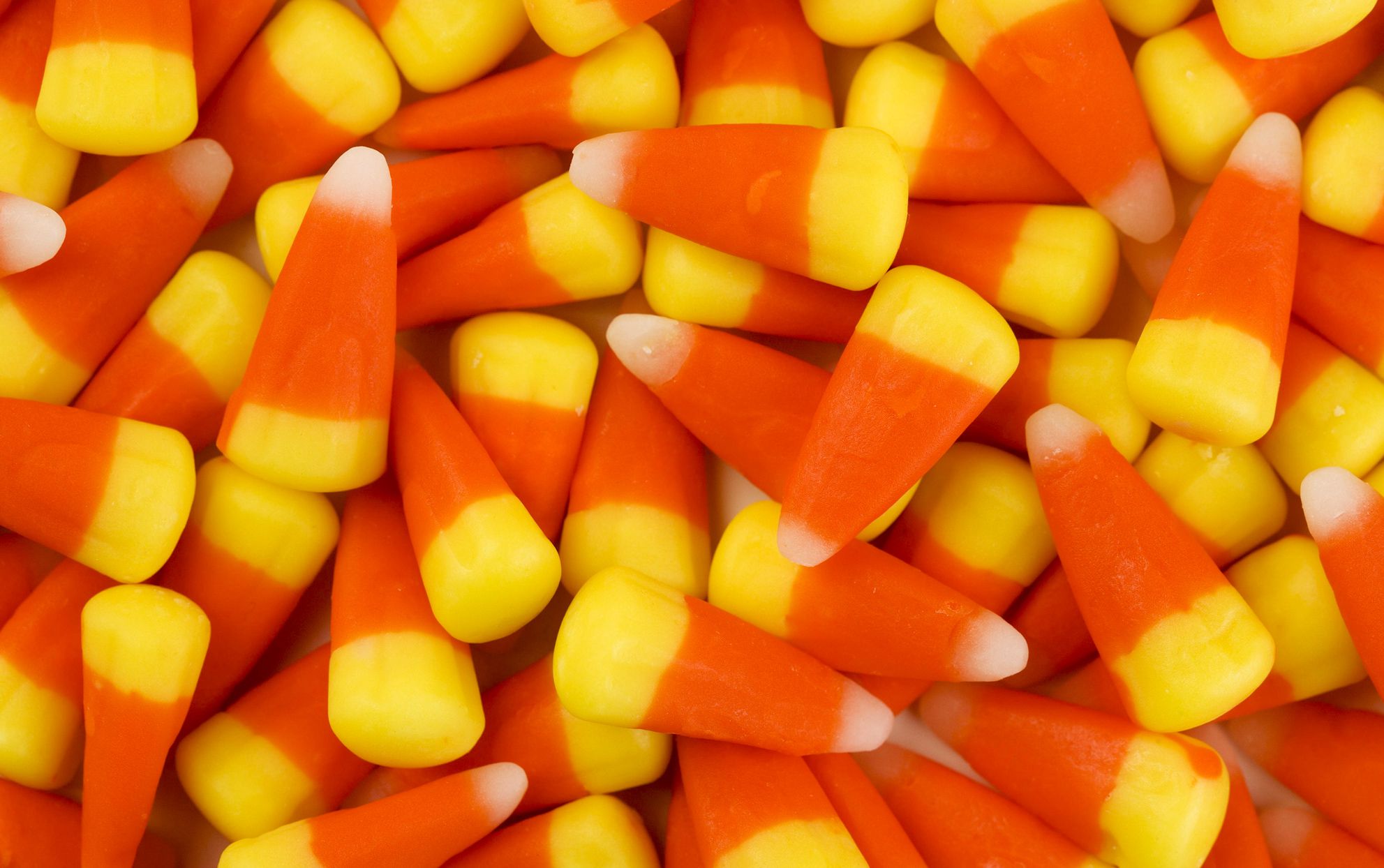
Candy corn is the tiny triangular candy that walks into every Halloween party wearing a yellow jacket, an orange sweater, and a white hat. Some people love it. Some people claim it tastes like sweetened candle wax with a public relations team. Yet every fall, there it is again, glowing from candy bowls, cookie trays, school party bags, and supermarket shelves like a sugary traffic cone for spooky season.
The history of candy corn is more than a tale about sugar, corn syrup, and nostalgia. It is a story about 19th-century candy innovation, American farming culture, clever seasonal marketing, and the strange power of a candy that can start an argument faster than someone saying, “Actually, pumpkin spice is overrated.” For more than a century, candy corn has remained one of the most recognizable Halloween candies in the United States. Its shape is simple, its colors are iconic, and its reputation is hilariously dramatic.
So how did this old-fashioned harvest candy become a Halloween candy favorite? The answer begins in the 1880s, long before plastic pumpkins, fun-size chocolate bars, and neighbors who give out toothbrushes “for health reasons.”
What Is Candy Corn?
Candy corn is a small, kernel-shaped confection traditionally made with sugar, corn syrup, fondant, vanilla flavoring, and marshmallow-like ingredients that create a smooth, chewy bite. Classic candy corn has three colors: a white tip, an orange middle, and a yellow base. The colors are not random. They were designed to resemble a kernel of corn, especially the kind associated with farm life and harvest imagery.
Its flavor is usually described as creamy vanilla, honey-like sweetness, or mellowcreme. That last word matters. Candy corn belongs to a family of candies called mellowcremes, which are soft, fondant-based candies molded into seasonal shapes. Pumpkins, leaves, and other fall-themed candies often share the same general style. In other words, candy corn is not just a candy; it is the tiny ancestor of half the autumn candy aisle.
The Birth of Candy Corn in the 1880s
The most widely accepted origin story credits George Renninger, a candymaker at the Wunderle Candy Company in Philadelphia, with creating candy corn in the 1880s. At the time, American candy makers were experimenting with shaped sweets that looked like familiar objects from everyday life. Since farming was central to American life, candies shaped like vegetables, nuts, fruits, and harvest symbols made perfect sense.
Candy corn stood out because of its tri-color design. Today, a three-color candy might not seem shocking. We live in an age when candy can taste like cotton candy, birthday cake, sour watermelon, and occasionally something that should have remained a dare. But in the 19th century, layering three colors into one tiny piece of candy required patience, skill, and a surprising amount of physical effort.
Renninger’s creation was clever because it combined novelty with familiarity. It looked like corn, which rural Americans recognized instantly. It was sweet, portable, and visually charming. It also had the kind of simple design that children could understand immediately. You did not need a slogan to explain candy corn. It looked like what it was trying to be: a sweet little kernel.
From Wunderle to Goelitz: The “Chicken Feed” Era
Although Wunderle was the first company associated with selling the candy, the Goelitz Confectionery Company helped bring candy corn to a much wider audience. In 1898, Goelitz began producing and marketing the treat. At that time, the candy was not originally promoted as a Halloween product. Instead, it was sold under the name “Chicken Feed.”
Yes, “Chicken Feed.” It may not sound like the name of a candy you would enthusiastically place beside cupcakes, but it made sense in its day. In the late 19th and early 20th centuries, corn was strongly associated with livestock feed in many parts of the United States. The packaging often leaned into that farm theme, sometimes featuring a rooster and cheerful language that suggested the candy was “worth crowing for.”
This was smart marketing. Instead of pretending the candy was elegant or fancy, Goelitz embraced its rustic charm. Candy corn was fun, affordable, and tied to the agricultural imagination of the period. It belonged to a candy world filled with molded sweets shaped like pumpkins, chestnuts, turnips, and clover leaves. Basically, if it could be found on a farm or in a harvest basket, a candy maker somewhere probably tried to turn it into sugar.
How Candy Corn Was Made by Hand
The original candy corn production process was labor-intensive. Workers cooked sugar, corn syrup, and other ingredients into a hot slurry. Fondant and marshmallow-like ingredients helped create the candy’s smooth texture. Then the warm candy mixture was poured into buckets. Workers known as “stringers” walked backward along trays filled with cornstarch molds, carefully pouring the candy into kernel-shaped impressions.
The process required three separate passes: one for the white tip, one for the orange center, and one for the yellow base. Each color had to be added in the correct order and at the right time so the layers would hold together. The work was hot, repetitive, and physically demanding. If modern candy corn could talk, it would probably say, “Respect the layers.”
Today, machines handle most of the production, but the basic idea remains similar. Candy corn is still made using a starch molding process. Kernel-shaped depressions are formed in cornstarch trays, the colored candy is deposited in stages, the pieces cool, and then they are polished with confectioners’ glaze to give them their familiar shine. The method has modernized, but the candy’s appearance has stayed remarkably close to its old-fashioned roots.
Why Candy Corn Was Not Always a Halloween Candy
One of the most interesting facts about candy corn history is that it was not originally a Halloween candy. It was more of a general harvest-season treat and penny candy. In the first half of the 20th century, children could buy small candies cheaply from stores, and candy corn fit neatly into that world. It could appear at Halloween parties, Thanksgiving gatherings, or simply as a year-round sweet.
Halloween itself was also changing. Before the mid-20th century, trick-or-treating was not the candy-centered national tradition it is today. Halloween celebrations often involved parties, games, pranks, homemade treats, and community events. Packaged candy became more central to Halloween later, especially as manufacturers and retailers recognized the holiday’s enormous potential.
By the 1950s, candy companies began advertising more heavily in October. Candy corn, with its autumn colors and harvest look, was perfectly positioned for the moment. The candy that once looked like chicken feed gradually became a symbol of jack-o’-lanterns, costumes, haunted houses, and candy bowls. It did not need a scary shape to become Halloween royalty. It simply showed up every October dressed in the official colors of fall and refused to leave.
Candy Corn and the Rise of Halloween Candy Culture
The growth of trick-or-treating helped candy corn become a Halloween staple. Individually wrapped chocolate bars, lollipops, taffy, and hard candies became common in American neighborhoods, but candy corn held a different role. It was not always the candy children chased first in their trick-or-treat bags, yet it became essential to the visual language of Halloween.
Candy corn looks like decoration even when it is technically food. A bowl of candy corn on a table instantly says “October.” Add a plastic spider nearby, and suddenly your dining room has seasonal ambition. Because of its colors, candy corn works in snack mixes, cupcakes, cookie decorations, centerpieces, and party favors. It became useful not only as something to eat but also as something to display.
That decorative quality helped extend its cultural power. Chocolate may win the popularity contest in many candy bowls, but candy corn wins the costume contest. It is visually unmistakable. You can draw three stacked triangles in yellow, orange, and white, and almost everyone knows what you mean.
Why Candy Corn Is So Polarizing
Few candies inspire such strong opinions. Candy corn is not merely liked or disliked; it is defended, mocked, ranked, debated, and occasionally treated like a personality test. Some fans love its creamy texture and nostalgic flavor. Critics say it is too sweet, too waxy, or too old-fashioned. Somewhere in the middle are people who eat three pieces, nod politely, and then move on to the peanut butter cups.
Part of the divide comes from texture. Candy corn is soft but firm, chewy but not gummy, creamy but not chocolatey. It does not offer crunch, sourness, caramel stretch, or a surprise filling. Its appeal is subtle, which is a dangerous thing to be in a Halloween bucket full of louder candies shouting, “Look at me, I have nougat!”
Nostalgia also plays a huge role. People who grew up seeing candy corn at school parties, fall festivals, or grandma’s candy dish often associate it with happy seasonal memories. People without that emotional connection may judge it only by flavor, and candy corn’s flavor is not exactly trying to be modest. It is sweet. Very sweet. It walks into the room and introduces itself as sugar wearing a tiny hat.
How Much Candy Corn Is Produced Each Year?
Candy corn remains a major seasonal product. Industry estimates often place annual production at more than 35 million pounds, or roughly 9 billion individual kernels. That is a mountain of candy corn large enough to make dentists quietly stare out windows and reconsider their appointment calendars.
Even with all the jokes about people hating it, candy corn continues to sell because it is tied deeply to Halloween tradition. It is affordable, recognizable, and versatile. Shoppers buy it for candy dishes, party mixes, baking projects, classroom treats, and nostalgia. Some buy it because they genuinely love it. Others buy it because Halloween without candy corn feels like a haunted house without one suspiciously loud floorboard.
Modern Candy Corn Flavors and Seasonal Variations
Classic yellow, orange, and white candy corn remains the best-known version, but modern candy makers have created many variations. Autumn mix often includes mellowcreme pumpkins and harvest corn. Thanksgiving versions may use brown, orange, and white colors, with chocolate notes in the darker layer. Christmas versions appear in red, green, and white. Valentine’s Day and Easter versions use pinks and pastels.
Flavor experiments have gone even further. Candy corn has appeared in pumpkin spice, caramel apple, cinnamon, fruit punch, and other seasonal flavors. Some limited-edition varieties have leaned into novelty with flavors inspired by turkey dinner, hot dogs, hamburgers, or other foods that make traditionalists clutch their candy bowls in alarm.
These experiments prove something important: candy corn is more than one flavor. It is a format. Its shape and layered appearance are so recognizable that brands can change the colors and flavors while still borrowing the emotional power of the original. Whether the results are delicious or suspicious is a separate question best handled with courage and a glass of water.
Candy Corn in American Pop Culture
Candy corn has become a pop culture shorthand for Halloween. It appears in cartoons, social media jokes, party decorations, baking blogs, costumes, and seasonal memes. Its simple shape makes it easy to turn into earrings, pillows, garlands, nail art, candles, and classroom crafts. There are candy corn cookies, candy corn cakes, candy corn cocktails for adults, and candy corn decorations that contain no actual candy at all.
Its polarizing reputation has also made it more famous. A candy that everyone quietly liked would not generate the same seasonal conversation. Candy corn thrives because people argue about it. Every October, the debate returns: Is candy corn delicious, terrible, nostalgic, misunderstood, or best used as a decorative filler around a candle? The answer depends on who you ask and how close they are standing to the snack table.
Why Candy Corn Still Matters
Candy corn survives because it carries history in a small package. It connects modern Halloween to 19th-century candy making, agricultural imagery, penny candy traditions, and mid-century holiday marketing. Few candies have changed so little in appearance while remaining so visible in American culture.
Its continued popularity also says something about how people celebrate holidays. Halloween is not only about eating the “best” candy. It is about rituals, colors, memories, jokes, decorations, and shared traditions. Candy corn may not be everyone’s favorite treat, but it is one of the candies that makes Halloween look like Halloween.
In that sense, candy corn has achieved something remarkable. It does not need universal love. It only needs to be present. Like fake cobwebs, carved pumpkins, and someone wearing a vampire cape over regular jeans, candy corn belongs to the season because generations of Americans have decided it does.
Experiences and Memories Connected to Candy Corn
Part of candy corn’s charm is that it rarely appears alone. It arrives with the rest of the Halloween atmosphere: the rustle of costume fabric, the smell of carved pumpkins, the porch lights flicking on, and the suspiciously early appearance of Christmas decorations in the next aisle. For many people, the first sight of candy corn in stores signals that fall has officially clocked in for duty.
A common candy corn experience starts with a bowl on the kitchen counter. At first, everyone claims they are not interested. Then someone takes one piece. Then another person walks by and takes two. By the end of the day, the bowl is half empty, and the household begins a formal investigation in which every suspect insists they “barely had any.” Candy corn has a strange way of disappearing in small, deniable quantities.
Candy corn also has a strong connection to classroom celebrations. Many Americans remember seeing it scattered across paper plates beside frosted cupcakes, popcorn balls, apple slices, and napkins printed with smiling ghosts. Teachers used it for counting games, craft projects, and snack mixes. Children used it for the far more important purpose of deciding whether the white tip tasted different from the yellow base. Scientific conclusion: emotionally, yes; technically, probably not.
Another classic experience is the candy corn and peanut mixture. Fans swear that when candy corn is eaten with salted peanuts, the combination tastes like a payday-style candy bar. The salt balances the sweetness, and suddenly candy corn becomes less like a sugar megaphone and more like a respectable snack with a plan. This is often the recipe that converts skeptics, or at least convinces them to stop making dramatic faces after one bite.
Candy corn also works as decoration in a way few candies do. Pour it into a glass jar, and it becomes a centerpiece. Press it into frosting, and cupcakes look instantly festive. Scatter it around a dessert board, and the whole table looks prepared for a Halloween magazine photo shoot, even if the rest of the room contains laundry and a dog wearing a pumpkin bandana against its will.
The emotional experience of candy corn is not always about taste. It is about recognition. It reminds people of trick-or-treat routes, plastic masks, school carnivals, neighborhood parties, and the thrill of sorting candy on the living room floor. Even people who do not love eating it often feel a tug of nostalgia when they see it. Candy corn is a tiny edible time machine, though admittedly one that may stick to your molars.
There is also joy in the debate itself. Every Halloween gathering seems to include at least one candy corn defender and one candy corn critic. The defender says, “It’s a classic.” The critic says, “So is dust.” Someone else suggests mixing it with peanuts. A fourth person quietly eats the mellowcreme pumpkins and avoids eye contact. This annual argument is part of the fun. Candy corn gives people something silly, harmless, and seasonal to passionately discuss.
Ultimately, the candy corn experience is about tradition. It does not have to be the fanciest candy in the bowl. It does not need caramel, crunch, or a celebrity endorsement. It simply shows up every autumn with the same colors, the same shape, and the same ability to divide a room. That consistency is exactly why it matters. In a season built on costumes and make-believe, candy corn remains wonderfully itself: sweet, strange, cheerful, old-fashioned, and impossible to ignore.
Conclusion
The history of candy corn is a surprisingly rich slice of American food culture. Born in the 1880s, popularized by Goelitz as “Chicken Feed,” shaped by old-fashioned hand-pouring methods, and transformed by Halloween marketing in the 1950s, candy corn has become one of the most iconic seasonal candies in the United States.
Whether you love it, dislike it, decorate with it, bake with it, or only eat it when mixed with peanuts, candy corn has earned its place in the Halloween candy bowl. It is more than sugar in three colors. It is nostalgia, debate, design, history, and harvest tradition packed into one tiny kernel. Not bad for a candy that started out pretending to be chicken food.










