
Nikki Glaser walked onto the stage at Netflix’s Tom Brady roast, delivered one tightly packed pu kind of career-changing buzz comedians spend years chasing. Then Bert Kreischer and Tom Segura raised a question that added an unexpected postgame debate: Was Glaser’s performance truly that dominant, or did her favorable place in the lineup help make it look unbeatable?
Glaser did not respond by throwing a chair, launching a podcast war, or changing her tour name to Two Bears, Zero Good Takes. Instead, she acknowledged that performance order mattered while challenging the idea that timing alone explained why her set became the most discussed segment of the night.
Her response turned a small piece of comedy-world commentary into a larger conversation about preparation, opportunity, public criticism, professional jealousy, and the strange habit of explaining a woman’s success by examining every factor except the possibility that she was simply excellent.
Research basis: urn785301search4turn785301news27
What Bert Kreischer and Tom Segura Said About Nikki Glaser
Netflix streamed The Greatest Roast of All Time: Tom Brady live from the Kia Forum on May 5, 2024. Kevin Hart hosted the nearly three-hour event, which featured comedians, former New England Patriots players, celebrities, and enough divorce jokes to make a family-law conference feel cheerful.
Glaser appeared relatively early in the program and quickly became one of its biggest stories. Her material moved rapidly through Brady’s football legacy, failed cryptocurrency involvement, divorce, former teammates, and the other people seated on the roast dais. The set was sharp, economical, and delivered with the confidence of someone who had arrived with more backup jokes than most people have passwords.
On their 2 Bears, 1 Cave podcast, Kreischer and Segura praised Glaser’s performance. The criticism was not that she had performed badly. Their argument was more complicated: They wondered whether the attention surrounding her set had been increased by her early position in the lineup.
The Andrew Schulz Hypothetical
Kreischer questioned whether Andrew Schulz might have received similar acclaim if he had performed in Glaser’s slot. Schulz appeared much later, after the audience had already sat through hours of insults, surprise guests, football stories, and Kevin Hart reacting to everything as though someone had just set off fireworks inside his jacket.
The basic point was reasonable. Comedy audiences become tired. Topics get repeated. Later performers often discover that earlier speakers have already used the most obvious premises. A joke about Brady’s divorce feels fresher during the first hour than it does after the subject has been tackled from every possible angle, including several angles that probably required a medical waiver.
However, the hypothetical also shifted attention away from what Glaser had actually accomplished. Instead of simply recognizing that she wrote and delivered an exceptional set, the discussion asked whether another comedian could have produced the same result under her circumstances.
That was the part Glaser found frustrating.
Public comments and lineup discussion: tion>
How Nikki Glaser Fired Back
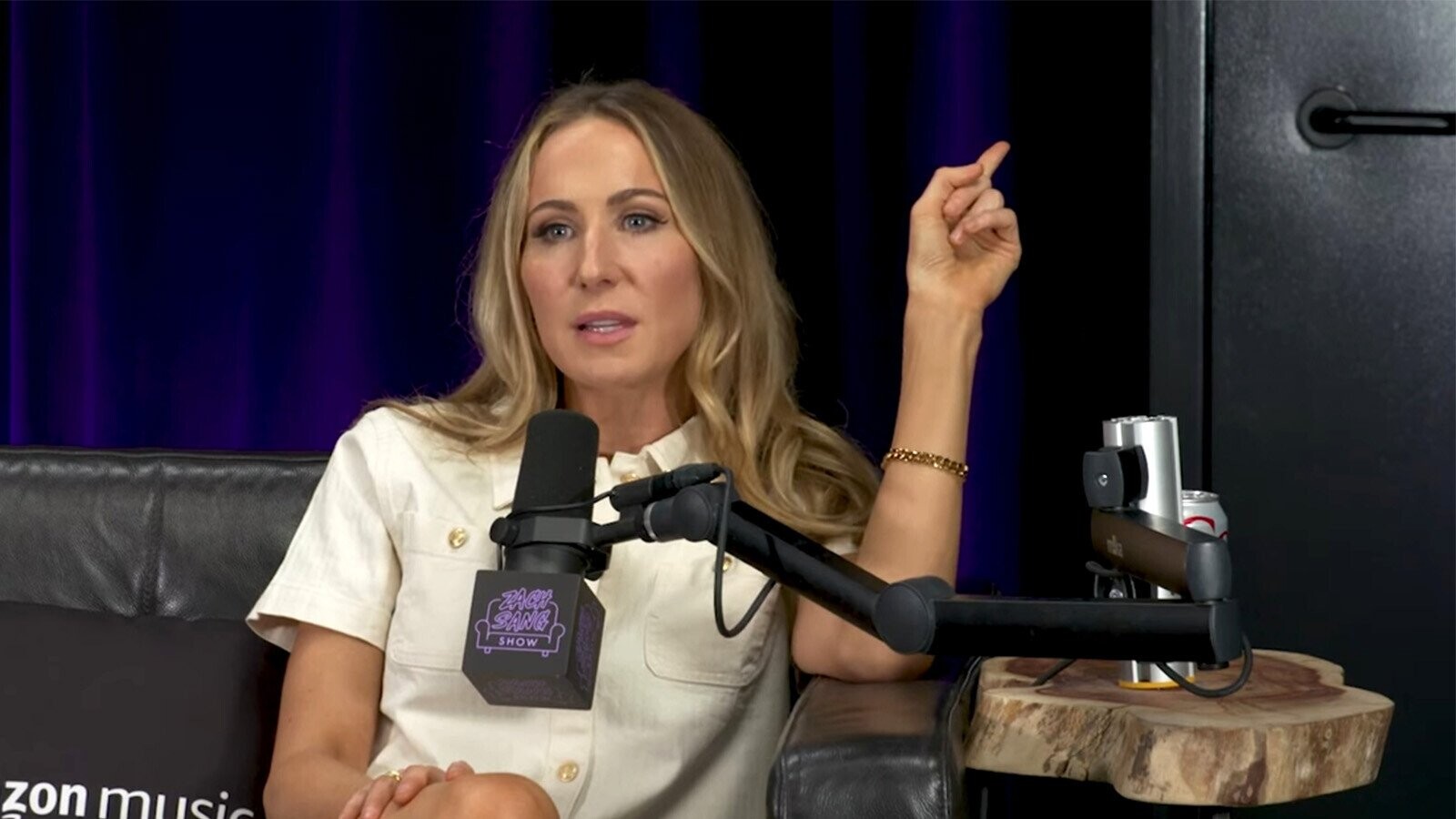
During an appearance on the Zach Sang Show, Glaser said she was disappointed by Kreischer’s comments, particularly because she considered him a friend. Still, she did not reject his argument completely.
She agreed that lineup placement matters and expressed gratitude for performing while the audience still had energy. She also said she had spoken with Schulz and believed he would have received more publicity if he had appeared earlier.
That concession is important. Glaser did not pretend comedy exists inside a laboratory where every performer receives identical conditions. She understood that timing, crowd energy, topic repetition, camera placement, and running order can influence audience perception.
“I Would Still Have Been Talked About”
Glaser’s counterargument was that she believed her material would have attracted attention even if she had performed in Schulz’s later position. In other words, timing may have increased the volume of the response, but it did not manufacture the quality of the work.
She also questioned why the conversation needed to introduce an alternate universe in which her success belonged to someone else. The suggestion, as she saw it, risked taking something away from a moment she had earned through preparation and performance.
That is the heart of Nikki Glaser’s response to Bert Kreischer and Tom Segura’s roast criticism. She was not denying the existence of favorable circumstances. She was rejecting the idea that those circumstances deserved more credit than her writing, editing, rehearsal, and delivery.
Luck can open a door. It cannot walk onstage, control a live audience, remember several minutes of carefully arranged material, adjust to crowd reactions, and land punchlines in front of millions of viewers. Luck is helpful, but it has terrible stage presence.
Why Nikki Glaser’s Tom Brady Roast Set Worked
She Treated the Roast Like a Major Competition
Glaser described the event as a kind of Super Bowl for comedians, which helps explain the intensity of her preparation. The roast was not an ordinary club appearance where a weak joke could quietly disappear before the next show. It was a live Netflix broadcast centered on one of the most famous athletes in American history.
She reportedly developed far more material than she could use and tested jokes before the event. After the roast, she shared several discarded lines in interviews, demonstrating how much editing had occurred before the final set reached the stage.
The finished routine did not sound like a notebook being read aloud. It sounded effortless because the effort had happened earlier.
The Set Had Almost No Wasted Motion
Glaser avoided long explanations and complicated setups. She moved quickly from one target to another, creating the sense that the audience barely had time to recover before the next punchline arrived.
That density mattered during a show that lasted close to three hours. Viewers at home could clip individual moments, share them online, and understand the joke without watching ten minutes of background material. Her set was designed for the room, but it was also perfectly suited to the internet’s appetite for short, self-contained comedy clips.
Her Delivery Balanced Cruelty and Control
Celebrity roasts require a peculiar tone. A comedian must sound vicious without appearing genuinely hostile. Too soft, and the material feels ceremonial. Too angry, and the audience starts wondering whether everyone should exchange insurance information afterward.
Glaser delivered harsh jokes with visible excitement and playfulness. Her stage persona suggested that she understood exactly how terrible the words sounded and was delighted to have found an elegant way to say them.
That tonal control separated her from participants who appeared nervous, underprepared, or overly dependent on shock value. The material was brutal, but the performance remained inviting.
Preparation and reception synthesis: tion>
The Awkward Irony for Bert Kreischer and Tom Segura
Kreischer and Segura’s criticism received extra attention because their own roast segment was not universally praised. The pair presented an ESPN-style analysis portraying Brady as a psychopath, using graphics and comparisons to notorious historical and criminal figures.
The concept produced laughs, including a particularly dark joke involving Brady’s marriage. However, many viewers considered the segment less effective than the straightforward stand-up sets delivered by Glaser, Schulz, Tony Hinchcliffe, and others.
Hinchcliffe later mocked Kreischer and Segura on their own podcast, joking that the roast had been a comedy show until their segment changed the atmosphere and made the audience more appreciative of laughter. It was exactly the sort of insult that sounds friendly until you realize it has removed the roof from your house.
This does not mean Kreischer and Segura were forbidden from discussing lineup strategy. Comedians regularly analyze performances, and their observation about audience fatigue was legitimate. Still, questioning the scale of Glaser’s praise while facing criticism of their own performance created an unavoidable comic contrast.
They were attempting to review the game while social media was still replaying footage of their own dropped passes.
Segura and Kreischer segment and responses: tion>
Was This Really a Comedy Feud?
The public exchange is better described as a professional disagreement than a genuine feud. Kreischer and Segura praised Glaser before discussing the advantages of her position. Glaser acknowledged the logic behind their observation before explaining why it bothered her.
No one declared permanent war. No friendship was publicly ended. There was no dramatic unfollowing ceremony conducted under a full moon.
The disagreement became interesting because it exposed how praise can be weakened by qualification. Saying someone was brilliant and immediately asking whether another performer could have been equally brilliant under the same conditions changes the emotional meaning of the compliment.
Glaser’s reaction also showed that experienced comedians are not immune to criticism from friends. In some cases, criticism from a friend lands harder because the performer assumes that person understands the work involved.
A stranger saying, “You were only successful because of timing,” is internet noise. A colleague saying it can feel like an evaluation from someone with access to the backstage area.
Timing Versus Talent: Both Can Be True
Kreischer was correct that running order influences a roast. Glaser was correct that her set should not be reduced to running order. These ideas can coexist without requiring anyone to surrender a podcast microphone.
An early performer benefits from fresher topics and a more attentive audience. A late performer benefits from having observed the room and may earn additional respect for reviving tired viewers. Every position has advantages and problems.
What cannot be measured is the imaginary performance another comedian might have given in Glaser’s exact slot. Schulz could have received more attention earlier. Glaser might still have dominated later. Both claims are plausible, and neither can be tested without a time machine operated by Netflix’s comedy department.
The only performance that actually happened was Glaser’s, and its impact lasted beyond the evening. Her roast appearance became a major career milestone, contributed to broader opportunities, and introduced her to viewers who had not followed her previous stand-up specials or Comedy Central roast appearances.
Later appearances in football programming and major awards-show hosting roles reinforced the idea that the Brady roast was not merely a lucky viral clip. It was a highly visible demonstration of skills Glaser had built over years: writing quickly, handling live pressure, reading a room, and insulting famous people without causing an evacuation.
Career impact: tion>
Experience-Based Lessons From the Nikki Glaser Roast Debate
The exchange offers useful lessons not only for comedians but also for writers, speakers, performers, content creators, and anyone whose work is evaluated publicly. These observations come from the practical realities visible in live performance rather than from claims of private involvement in the roast.
Preparation Creates the Appearance of Spontaneity
Audiences often describe a great performance as natural or effortless. That language can accidentally erase the process that made the performance look easy.
Glaser’s roast set demonstrated a familiar experience in creative work: The cleaner the final product becomes, the harder it is to see the discarded drafts behind it. Viewers saw a polished routine lasting several minutes. They did not see every rejected premise, rewritten transition, failed test, memorization session, or decision to remove a joke that was funny but structurally unnecessary.
This lesson applies to presentations, interviews, videos, sales pitches, and public speeches. Preparation does not guarantee success, but it gives the performer more options when conditions change. A person who has rehearsed one version can panic when interrupted. A person who understands the material deeply can shorten, expand, reorder, or recover.
You Cannot Control the Lineup, but You Can Control Readiness
Most careers contain variables that resemble roast order. A project may launch during a busy news cycle. A colleague may present first. An algorithm may favor one post and ignore another. A client may be energetic in the morning and exhausted by late afternoon.
It is reasonable to recognize those variables. It becomes dangerous when they are used to explain every outcome.
Glaser benefited from appearing early, but she was also prepared to benefit. A favorable opportunity is useful only when the person receiving it can perform. Being handed the ball near the goal line still requires someone to carry it across.
The practical approach is to separate controllable and uncontrollable factors. Running order may be uncontrollable. Writing quality, rehearsal, pacing, research, and emotional readiness are not. Focusing on controllable factors prevents uncertainty from becoming an excuse.
Public Criticism From Friends Requires a Measured Response
Glaser’s response provides a strong example of disagreement without unnecessary escalation. She identified what disappointed her, admitted where the criticism had merit, and defended the value of her work.
That combination is more effective than pretending not to care or responding with total hostility. Denying every criticism can make a person seem defensive. Accepting every criticism can allow others to rewrite the meaning of an achievement.
A useful response follows three steps: acknowledge the valid point, explain the missing context, and state the boundary. Glaser effectively acknowledged that lineup placement matters, explained why her material still deserved credit, and objected to framing that seemed to diminish her success.
She did not need to prove that timing was irrelevant. She only needed to establish that timing was not the entire story.
Do Not Turn Every Achievement Into a Hypothetical Competition
One of the most relatable parts of the debate is the frustration created by imaginary substitutions. When someone succeeds, observers often ask what another person could have done with the same opportunity.
Perhaps another employee would have closed the deal. Perhaps another actor would have improved the movie. Perhaps another comedian would have gone viral in the same slot. Such questions can be interesting, but they are impossible to answer and frequently minimize the person who completed the work.
A more productive evaluation examines the real performance. Did the jokes land? Was the delivery controlled? Did the audience remain engaged? Did the material remain memorable after the event? In Glaser’s case, the answer to each question was yes.
Let the Work Continue After the Breakthrough
A viral moment can become a trap when a performer tries endlessly to recreate it. The better strategy is to treat attention as an introduction rather than a conclusion.
Glaser used the roast’s momentum to expand into other visible formats while continuing stand-up. That matters because a single breakout performance can be dismissed as luck. Repeated strong performances create a pattern.
The experience is relevant to any creator who suddenly receives attention. The immediate temptation is to debate critics, monitor every reaction, and defend the legitimacy of the success. The longer-term answer is better work. Nothing weakens the “she just got lucky” argument faster than getting lucky again through suspiciously consistent preparation.
Conclusion: Nikki Glaser Earned the Moment
Bert Kreischer and Tom Segura were not entirely wrong. Nikki Glaser’s early position at the Tom Brady roast likely helped her. The audience was alert, the major topics were still fresh, and her clips had time to become part of the conversation before the lengthy broadcast ended.
But favorable timing does not explain the precision of her writing, the pace of her delivery, or the confidence required to perform live in front of a global audience. Glaser’s response succeeded because she did not deny reality. She simply refused to let a logistical advantage become the main explanation for an artistic achievement.
The fairest assessment is not that timing beat talent or that talent made timing irrelevant. It is that preparation met opportunity, and Glaser was ready when the spotlight reached her.
Kreischer and Segura raised a valid question about how live comedy works. Glaser gave the stronger answer by pointing back to the performance itself. The lineup may have placed her near the beginning, but the jokes are why people remembered her at the end.
Note: This article analyzes publicly reported remarks and performances. It does not characterize the exchange as a private personal feud or claim knowledge of conversations that were not made public.










