
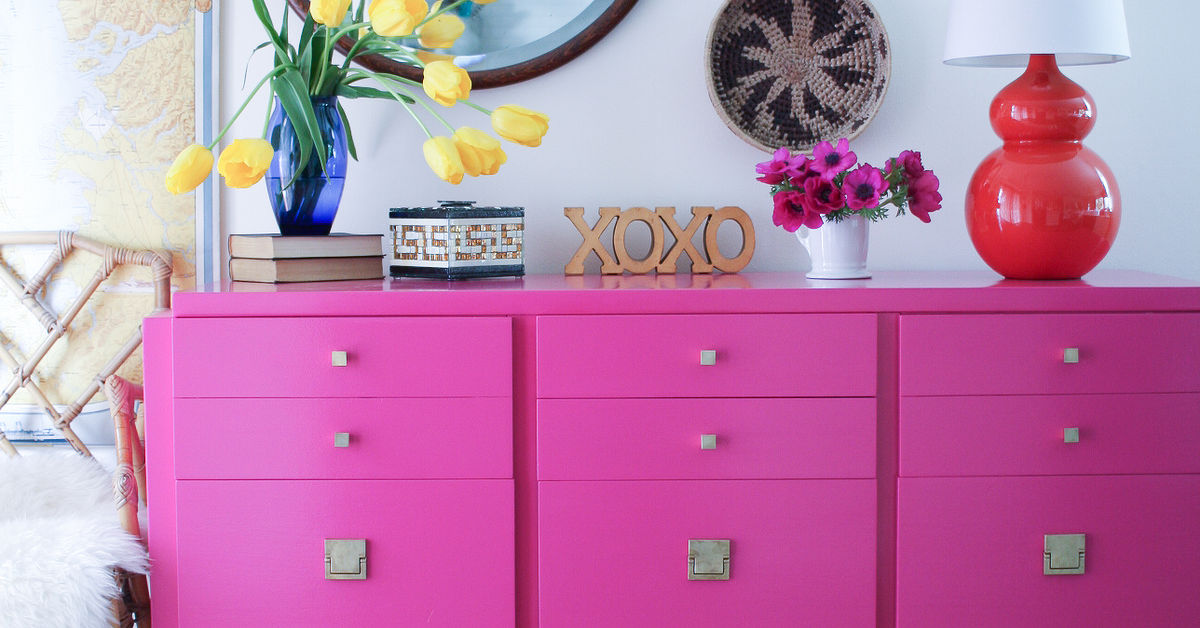
A vintage dresser usually enters a room quietly. It offers drawers, behaves responsibly, and asks for nothing more exciting than a folded sweater. A hot pink American of Martinsville dresser, however, enters like it has its own theme music. Painted in a saturated fuchsia or peony pink and repurposed as a buffet, it becomes storage, serving space, conversation starter, and proof that serious furniture does not have to take itself too seriously.
The appeal of this makeover comes from contrast. American of Martinsville is known among vintage-furniture shoppers for substantial casegoods, especially bedroom and dining pieces. Hot pink is playful, modern, and impossible to ignore. Put the two together and a formerly dark, boxy dresser can become a polished statement piece that works in a dining room, entryway, living room, home office, or bedroom.
Why American of Martinsville Furniture Is Worth Saving
American of Martinsville traces its roots to Martinsville, Virginia, where Ancil Witten and Charles Keesee founded the American Furniture Company in 1906. The business initially concentrated on bedroom furniture and expanded into dining furniture during the 1920s. Over the decades, the manufacturer became associated with well-built American casegoods and a broad range of traditional, transitional, and mid-century designs.
That history matters because a thrifted American of Martinsville dresser is often more than a random brown box. Depending on the line and age, it may feature hardwood framing, wood veneers, dovetailed drawers, solid drawer boxes, distinctive brass hardware, or proportions that are difficult to find in inexpensive new furniture. Vintage marketplaces continue to list American of Martinsville dressers, credenzas, chests, and sideboards in many sizes and styles, showing how adaptable the brand’s case pieces remain.
Before reaching for sandpaper, look for a maker’s mark inside a drawer, on the back panel, or beneath the top. Photograph labels, numbers, stamps, hardware, and the original finish. A rare, complete, or unusually well-preserved piece may deserve professional evaluation before it is painted. A common dresser with damaged finish, missing veneer, or past alterations is a more comfortable candidate for a colorful makeover.
Dresser or Buffet? The Answer Can Be “Both”
A dresser is designed primarily for clothing storage, while a buffet or sideboard stores dining essentials and provides a surface for serving. In practice, a long, low dresser can perform the buffet job beautifully. Designers and home publications regularly recommend repurposing vintage dressers as sideboards because the drawers are ideal for flatware, napkins, candles, serving tools, and less glamorous necessities such as takeout menus and the one corkscrew nobody can ever find.
What Makes a Dresser Suitable for Buffet Duty?
The best candidate is wide enough to hold serving trays but shallow enough to preserve comfortable circulation. It should sit level, have drawers that open smoothly, and offer a top that can tolerate regular use. Low dressers often feel naturally buffet-like, especially after bulky bases are replaced with tapered legs or cleaner modern feet.
Function should guide the makeover. Deep drawers can hold table linens. Smaller top drawers can organize utensils and bar accessories. A center cabinet can hide bottles or small appliances. If the piece will support food and drinks, the top needs a durable, cleanable finish rather than a delicate decorative wax that panics at the sight of condensation.
Planning the Hot Pink Transformation
Choose the Right Pink
“Hot pink” covers more territory than it appears. A blue-based fuchsia feels crisp and contemporary. A warmer peony pink looks cheerful and slightly softer. Raspberry adds depth, while neon magenta delivers maximum drama and may cause neutral furniture to file a complaint.
Test large color samples in the actual room. Artificial light can push pink toward purple, while warm daylight can make it appear redder. If the dresser will be the room’s focal point, a balanced palette helps it look intentional. The familiar 60-30-10 decorating guideline uses a dominant color, a secondary color, and a smaller accent color; in this case, hot pink can be the accent, supported by quieter walls, rugs, and upholstery. It is a guideline, not a warrant from the decorating police.
Decide What to Preserve
A full monochromatic finish creates the boldest look, but it is not the only option. Leave the top in natural wood for warmth, paint only the case while preserving drawer fronts, or use hot pink inside cabinets for a surprise color moment. Original brass pulls can look excellent against pink after gentle cleaning. If the hardware is missing, modern brass, acrylic, matte black, or ceramic replacements can shift the piece toward Hollywood Regency, mid-century modern, or playful eclectic style.
How to Refinish a Hot Pink American of Martinsville Dresser
1. Inspect Before You Strip
Check for loose joints, lifting veneer, water rings, deep scratches, odor, swollen drawer bottoms, and signs of previous repairs. Determine which surfaces are solid wood and which are veneer or laminate. Veneer can be refinished successfully, but aggressive sanding may cut through the thin decorative layer. Laminate requires a bonding-focused preparation process rather than traditional staining.
If the dresser has an old painted coating of unknown age, treat sanding as a safety issue. The EPA warns that disturbing lead-based paint can create hazardous dust, and safety guidance recommends testing or using lead-safe work practices when older coatings may be present. Do not dry-sand mystery paint in a living room while the dog supervises.
2. Remove Hardware and Clean Thoroughly
Take out the drawers and remove pulls, hinges, doors, and detachable feet. Label everything. Years of furniture polish, kitchen grease, wax, and hand oils can prevent primer from bonding. Clean every painted surface with a degreasing cleaner appropriate for the existing finish, then rinse or wipe as directed and allow the piece to dry completely.
3. Repair Damage Before Adding Color
Glue loose veneer with even pressure, fill missing chips, tighten joints, and replace weak drawer stops. Sand filler smooth after it cures. Cosmetic paint cannot correct structural problems; it merely gives them a brighter outfit.
4. Scuff-Sand, Do Not Attack
For a sound existing finish, the goal is usually to dull the sheen and create tooth for primer, not to excavate the dresser back to 1906. Fine sandpaper or a sanding sponge works well on broad surfaces and edges. Move gently over veneer and rounded details. This Old House and Benjamin Moore both emphasize light sanding and appropriate bonding primers for previously finished or slick furniture surfaces.
5. Prime for Adhesion and Color Accuracy
Primer is especially important when making a dramatic color change. A high-adhesion primer helps paint grip glossy finishes, while a stain-blocking primer can reduce bleed-through from tannins, old stains, or mystery marks. A tinted primer may also improve the coverage of intense pink paint, reducing the number of finish coats needed. Paint manufacturers consistently recommend priming furniture for a smoother and more durable result.
6. Apply Thin, Even Coats
Use a quality synthetic brush, small foam or microfiber roller, or paint sprayer suited to the chosen coating. Spraying can create a sleek lacquer-like finish, but only when the surface is carefully prepared and overspray is controlled. Brushing and rolling are more accessible and can still look professional when the paint is applied thinly, allowed to level, and lightly sanded between coats when the product instructions permit.
For a buffet, choose a furniture or cabinet-grade enamel that cures to a hard, washable film. Satin offers a forgiving modern sheen; semi-gloss increases reflectivity and wipeability; full gloss can look glamorous but reveals every dent, brush mark, and moment of impatience. Furniture-painting guides generally favor durable coatings on frequently used surfaces and stress that preparation matters more than miracle-product marketing.
7. Protect the Top and Allow a Full Cure
A painted surface may feel dry long before it reaches full hardness. Follow the manufacturer’s recoat and cure times. Avoid setting heavy lamps, trays, or decor on the top too soon, and use coasters or felt pads during the early curing period. If the paint system recommends a clear protective coat, choose one compatible with the paint and test it first; some clear finishes can alter the color or sheen.
Styling a Hot Pink Dresser as a Buffet
Because the color already provides visual fireworks, the styling can stay disciplined. Brass lamps, a large mirror, black-framed art, white ceramics, and natural wood accessories all work well. Green plants provide a lively complementary contrast. Blue-and-white pottery can create a polished preppy look, while smoked glass and dark artwork pull the piece toward a moodier, more sophisticated direction.
Keep enough of the top clear for actual serving. Design professionals often recommend limiting small decorative objects on sideboards so they remain useful during entertaining. One large artwork or mirror, a lamp, and a compact grouping of objects usually look more intentional than fifteen tiny accessories auditioning for attention.
Room-by-Room Uses
Dining room: Store linens, serving pieces, and bar tools. Use the top for drinks, desserts, or a coffee station.
Entryway: Assign drawers to keys, mail, sunglasses, dog-walking gear, and reusable bags. Add a mirror above.
Living room: Use it as a media console, game cabinet, or storage for chargers and remotes. Manage cords through existing back openings rather than cutting original material unnecessarily.
Bedroom: Keep its traditional dresser role, but pair the vivid finish with calmer bedding and simple artwork.
Home office: Store supplies and files while using the top as a printer station or display surface.
Practical Safety and Care
Large vintage dressers are heavy, but weight alone does not make them tip-proof. The U.S. Consumer Product Safety Commission recommends anchoring furniture with drawers, doors, or shelves to the wall, particularly in homes where children visit or live. Store heavier objects in lower drawers, open one drawer at a time, and use an appropriate anti-tip restraint.
For routine care, dust with a soft cloth and clean spills promptly with a damp cloth and mild cleaner approved for the finish. Avoid abrasive pads, harsh solvents, and soaking wet cloths. Felt pads under lamps and trays reduce scratches. If the buffet is used for drinks, coasters and a removable serving tray offer cheap insurance against rings.
Experience Notes: What a Hot Pink Furniture Makeover Really Teaches You
The first surprise in a makeover like this is usually scale. A dresser that looked modest in a marketplace photo becomes a small apartment building once it is carried into the garage. Removing drawers makes it manageable, but the solid case may still require two people, moving blankets, and a brief renegotiation of several friendships.
The second lesson is that preparation takes longer than painting. The glamorous part is the first sweep of hot pink across the front. The important part happened earlier: cleaning greasy corners, tightening a loose leg, gluing a veneer bubble, labeling eight nearly identical pulls, and sanding just enough to help the primer bond. Skipping those steps feels efficient for approximately one afternoon. Then the paint chips near a drawer edge and announces that shortcuts have excellent memories.
Color also behaves differently at furniture scale. A pink sample that seems lively on a small card can become startling across six feet of cabinetry. That is not necessarily bad. Statement furniture is supposed to make a statement, not whisper an apology. Still, testing the color on a poster board or hidden area helps determine whether the shade feels sophisticated, candy-bright, or radioactive under the room’s lighting.
Hardware creates another turning point. Original brass pulls may look dull and unimpressive before cleaning, then suddenly become the detail that makes the entire piece feel expensive. New feet can also change the personality of a bulky dresser. Raising the case a few inches adds visual breathing room and can make it read as a buffet rather than bedroom furniture. The key is using feet and mounting plates strong enough for the weight, not decorative legs that appear to have trained only for light cardio.
Applying the finish rewards restraint. Three thin coats generally look better than one heroic coat thick enough to preserve fingerprints for future archaeologists. Flat drawer fronts reveal roller texture, glossy areas expose sanding scratches, and drips collect beneath edges where they wait patiently to be discovered after curing. Working under good light and checking every surface from multiple angles prevents most of these problems.
The curing period may be the hardest stage because the dresser looks finished and usable. It is tempting to reinstall everything immediately, decorate the top, and host a dinner party in its honor. Waiting for the coating to harden reduces dents, sticking drawers, and marks around hardware. Patience is less photogenic than paint, but it produces a better final photograph.
The final lesson is that bold furniture becomes easier to live with once it has a job. As a random hot pink object, the dresser may feel theatrical. As the place where linens, serving utensils, candles, and cocktail supplies are organized, it becomes practical. Guests notice the color first, then the craftsmanship, then the fact that every napkin in the house finally has a drawer. That combinationuseful storage, vintage construction, and unapologetic personalityis what makes the makeover successful.
Conclusion
A hot pink American of Martinsville dresser / buffet works because it balances old and new. The vintage case provides weight, craftsmanship, and history; the color supplies energy. Careful inspection, restrained sanding, the right primer, durable paint, and patient curing turn the project from a quick social-media stunt into furniture that can serve a home for years.
The best version does not erase the piece’s identity. It preserves useful details, respects the construction, and gives the dresser a new role. Whether it stores sweaters, stemware, office supplies, or emergency chocolate, a hot pink buffet proves that practical furniture can still be the funniest and most confident object in the room.
Note: Confirm the piece’s age, materials, condition, and collector significance before refinishing, and follow all paint-product and lead-safety instructions.














