
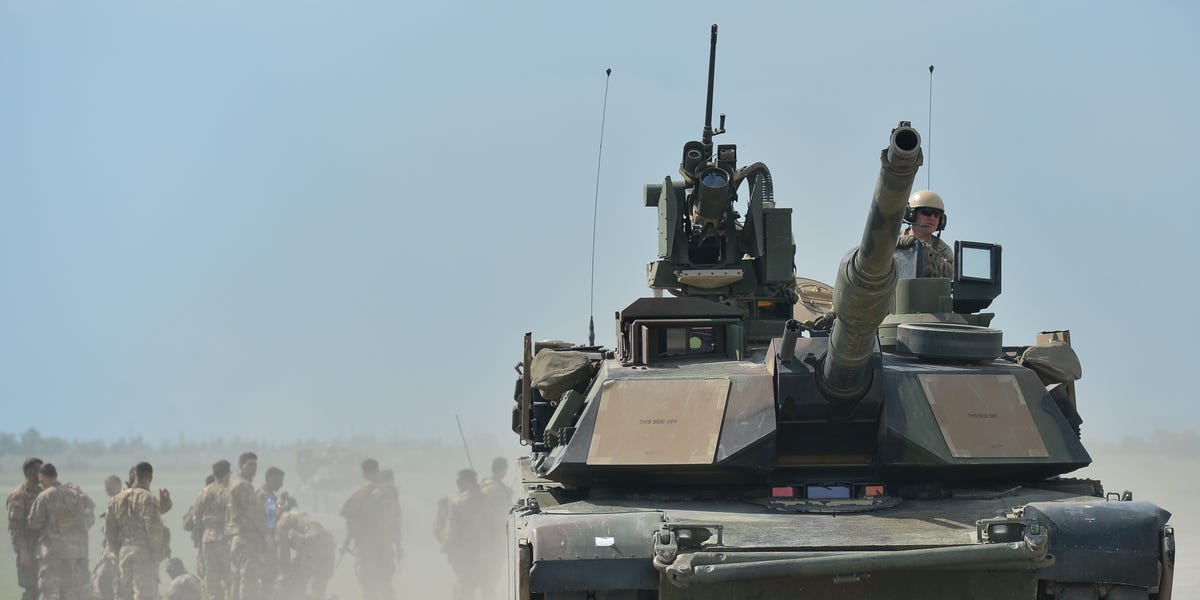
If imitation is the sincerest form of flattery, military planners have a very funny way of showing respect. In recent years, open-source reporting and satellite imagery have pointed to a quietly revealing trend: the United States and China have both used replicas, mock-ups, and visually modified stand-ins of each other’s military equipment, including armored vehicles. At first glance, that sounds like a niche hobby for defense obsessives and people who can identify a tank by its side skirts. In reality, it says something much bigger about how modern powers prepare for war.
The phrase “U.S. and China build replicas of each other’s tanks” is catchy for a reason. It is visual, weird, and just dramatic enough to make you picture two superpowers playing the world’s most expensive version of garage theater. But the real story is not about props. It is about realism. When militaries build lookalikes of an adversary’s hardware, they are trying to sharpen recognition, refine targeting, rehearse tactics, and reduce surprise. A fake tank is not just a fake tank. It is a rehearsal tool, a training shortcut, a signaling device, and sometimes a warning.
Why Build a Fake Enemy Tank at All?
There is a simple answer: because soldiers do better when training looks like the real thing. Armored warfare is fast, loud, technical, and unforgiving. In the middle of a dusty exercise or a chaotic battlefield, crews do not get extra points for saying, “Hang on, is that silhouette a tank, an infantry fighting vehicle, or somebody’s very unfortunate maintenance truck?” Recognition matters. Speed matters. Familiarity matters.
That is why the U.S. military has spent decades using OPFOR systems, short for opposing force, and VISMODs, short for visual modifications. In plain English, that means taking friendly vehicles and dressing them up to resemble enemy platforms. The idea is not to build a museum-perfect replica that would impress a rivet counter with a magnifying glass. The goal is to reproduce the shape, profile, movement, and battlefield signature well enough to make training harder, smarter, and more realistic.
Recognition Training Beats Classroom Guesswork
One reason replicas matter is target identification. Tank crews and anti-armor teams are trained to recognize threats by profile, turret design, hull shape, sensor placement, and even the way a vehicle moves over terrain. Slides and manuals help, but nothing sharpens the eye like seeing a convincing stand-in in open ground. A crew that has already trained against a realistic mock-up is less likely to freeze, misidentify, or waste precious seconds in a real crisis.
Mock-Ups Help Test Sensors, Gunnery, and Tactics
Replicas also help armies train across multiple layers of warfare. A fake enemy tank can be used for live-fire drills, gunnery tables, reconnaissance exercises, drone scouting, and sensor testing. It can help commanders practice how to detect, classify, track, engage, and destroy a threat. In a world where optics, thermal systems, drones, and long-range fires matter as much as raw armor thickness, visual realism is no small detail. The paint may be fake, but the lesson is real.
The American Side: A Chinese Tank Lookalike in the U.S.
The American side of the story became especially attention-grabbing in 2021, when imagery circulated showing what appeared to be a full-size mock-up of a Chinese Type 99A main battle tank being moved in Arkansas. That sighting was not officially accompanied by a brass band and a press release reading, “Yes, we built one, and yes, we know it looks odd on a highway.” Still, the image fit a long-established U.S. pattern: realistic enemy surrogates are a normal part of high-end military training.
The U.S. Army has a long record of transforming its own vehicles into foreign stand-ins for combat training centers and large exercises. During earlier eras, American OPFOR units famously modified U.S. hardware to resemble Soviet armor. More recently, the Army and National Guard have continued working on kits that convert vehicles into lookalikes resembling Russian-style tanks and armored personnel carriers. Against that backdrop, a Chinese tank replica is not some bizarre one-off. It is an updated version of an old training philosophy: know the enemy well enough to make your own troops uncomfortable in peacetime.
That matters because modern U.S. planning has shifted toward preparing for highly capable state adversaries, not just irregular forces. A Chinese-style tank mock-up fits that shift. It reflects a broader effort to train for major-power conflict where identification, reaction time, and realistic threat portrayal can make a serious difference.
The Chinese Side: Abrams-Like Targets and a Bigger Pattern
China’s side of the story appears broader and, in some areas, more openly visible through satellite imagery. Open-source reports in 2021 described an Abrams-like target vehicle appearing in China, suggesting that Chinese training planners were also experimenting with realistic stand-ins for American armor. Even if every tank-shaped object is not officially labeled by Beijing, the pattern is hard to ignore.
China has been repeatedly linked to increasingly elaborate mock-ups of U.S. military systems, especially at desert training and missile-testing sites. Analysts and journalists have documented large-scale replicas of American aircraft carriers, destroyers, and later aircraft silhouettes at remote ranges. Some of those mock targets appeared designed not merely as static shapes, but as tools for refining how weapons, sensors, and strike systems would perform against recognizable U.S. signatures.
That broader pattern matters because it shows the tank issue is part of something bigger. This is not only about two armies trading armored cosplay. It is about realistic adversary modeling. China appears to be practicing against the actual platforms it expects to face if a regional conflict ever expands into a direct confrontation with the United States. In that sense, a fake Abrams is not an isolated curiosity. It is a puzzle piece in a much larger board game.
What China’s Mock-Ups Suggest
Military replicas can serve several purposes at once. They can help troops identify targets, help missile units refine aim points, help reconnaissance units practice classification, and help planners simulate combat conditions before the real thing ever happens. In China’s case, the use of U.S.-shaped ship and aircraft targets strongly suggests an interest in realistic training against American intervention forces, especially those that could operate around Taiwan or the wider Indo-Pacific.
That does not mean every replica equals an imminent war plan. Militaries prepare for contingencies they hope never to fight. But replicas do reveal what a force takes seriously enough to imitate. And imitation, in military planning, is expensive enough that it usually comes with intent.
Why Tanks Still Matter in a Taiwan-Centered Conversation
Some readers may ask an obvious question: if the most likely flashpoints between the U.S. and China involve Taiwan, maritime routes, airpower, missiles, and blockade scenarios, why all the fuss over tanks? Fair question. Tanks are not the opening headline of a Taiwan conflict. The first chapters would almost certainly feature missile salvos, air defense suppression, cyber operations, naval maneuver, and long-range strikes. Nobody expects the first breaking-news banner to read, “Main battle tanks spotted swimming across the Strait.” Tanks, despite all their strengths, remain terrible swimmers.
But tanks still matter. If a conflict escalated into land combat on Taiwan or involved follow-on operations after amphibious or airborne actions, armored vehicles would have an important role in firepower, mobility, and shock effect. More importantly, the tank replicas tell us something about how both sides think. They are studying not just abstract doctrine, but the physical signature of the opposing force. That is a hallmark of serious military preparation.
There is also a strategic message hidden in the details. A country that builds a mock-up of your tank is not merely curious about your brochure. It is trying to understand how your systems look, how your crews might react, how its own troops can train against them, and how to reduce the mystery that surrounds a powerful foreign platform. In military competition, reducing uncertainty is gold.
What the Replica Race Says About Modern Warfare
This trend also highlights how modern warfare blends old-school fieldcraft with high-tech systems. Tanks may be packed with sensors, digital architecture, thermal sights, and advanced protection systems, but basic visual recognition still matters. A drone operator, scout, gunner, missile crew, or commander often has to identify a threat quickly under imperfect conditions. Shape, outline, and context still count.
That is why replicas can be surprisingly valuable in an era obsessed with software, satellites, and artificial intelligence. They offer cheap realism. They let troops practice against something that looks right enough to trigger better decisions. They also support training across services. A fake tank can teach a reconnaissance drone team one lesson, a mechanized platoon another, and a strike cell a third.
And then there is the psychological dimension. Realistic replicas tell soldiers that the enemy is not a vague concept. It has a shape. It has equipment. It has habits. It can be studied, rehearsed, and beaten. That kind of preparation builds familiarity, and familiarity can reduce hesitation. Armies spend vast amounts of time trying to make the unfamiliar feel manageable. A well-made replica does exactly that.
What We Know, and What We Should Not Exaggerate
It is worth keeping one foot on the brake. Some of the most interesting imagery in this story comes from open-source photos, satellite analysis, and reporting built around observed mock-ups rather than official government confirmation of every detail. So the careful conclusion is not that Washington and Beijing are staging identical mirror-image tank programs with matching spreadsheets and synchronized arts-and-crafts budgets.
The careful conclusion is this: both countries have clearly embraced realistic stand-ins for adversary equipment as part of broader military training and preparation. In the U.S. case, that fits a long doctrinal tradition of OPFOR realism. In China’s case, the visible pattern of American-looking targets at training ranges suggests a similarly serious effort to practice against specific U.S. systems and intervention scenarios.
That distinction matters because sober analysis beats hype. Still, even the cautious version of the story is striking enough. When great powers build lookalikes of each other’s tanks, ships, aircraft, and even urban targets, they are doing more than training. They are revealing where their attention is fixed.
Conclusion: Fake Tanks, Real Signals
In defense circles, replicas are not jokes, toys, or movie props with better suspension. They are clues. The United States and China are engaged in a long military competition shaped by technology, geography, deterrence, and fear of surprise. Building replicas of each other’s equipment is one way of shrinking that surprise. It is also a way of turning a distant adversary into a concrete training problem: identify it, track it, outmaneuver it, defeat it.
So yes, the headline is deliciously strange. The U.S. and China build replicas of each other’s tanks. It sounds like the setup to a geopolitical sitcom that absolutely should not exist. But behind the oddity is a hard truth. In modern military competition, the side that studies the other most seriously is often the side trying hardest not to lose. Fake tanks, in other words, are a very real signal.
Experiences from the Training Ground: What Replica Warfare Actually Feels Like
To understand why this matters, imagine the experience from the training side rather than the headline side. A realistic replica changes the mood of an exercise. On paper, a briefing slide can say “enemy armor expected in sector.” In the field, that warning feels abstract until a crew sees a silhouette on the horizon that looks enough like a real adversary to trigger an instinctive reaction. Suddenly, range estimation matters more. Observation discipline gets sharper. Conversations inside vehicles become shorter and more precise. The exercise feels less like a routine drill and more like a problem that can bite back.
That is one of the overlooked strengths of a well-made mock-up. It creates friction. Troops have to process shape, movement, terrain, and timing in conditions that are much closer to reality than a classroom lecture or laminated recognition card. Tankers, scouts, drone operators, and anti-armor teams all benefit from that friction because real war does not arrive in neat bullet points. It arrives in dust, noise, glare, confusion, and incomplete information.
For armored crews, replicas can also change how gunnery and maneuver training feel. A target that resembles a known enemy platform forces a crew to think beyond “shoot the steel in front of you.” It encourages faster identification, better communication, and stronger tactical memory. Even support elements gain something. Reconnaissance units practice reporting more accurately. Command posts learn to classify and prioritize threats. Maintenance and sustainment planners are reminded that armored warfare is not just about glamorous turret shots; it is about keeping vehicles moving while the tempo rises.
There is a similar effect on the broader training environment. Once an army commits to realistic replicas, it usually signals a larger commitment to realistic threat portrayal. That means better exercise design, better red teaming, and more honest lessons learned. Nobody likes discovering during a real crisis that years of training were too easy, too scripted, or too generic. Replicas help close that gap. They make the enemy feel more specific, which usually makes your own preparation more serious.
China’s visible use of American-shaped targets appears to point in that same direction. Whether the platform is a tank, a carrier, or an aircraft silhouette, the training message is similar: know the opponent’s profile, study the system, rehearse against it, and reduce uncertainty. From a military perspective, that is practical. From a strategic perspective, it is revealing. A replica quietly advertises the problem a force is working hardest to solve.
That is why stories about fake tanks and mock carriers keep resonating. They feel odd, but they are tangible. They allow outsiders to glimpse something militaries usually prefer to keep dull and technical: how they practice for the possibility of fighting each other. And once you see it that way, the replicas stop looking like curiosities and start looking like evidence. They show preparation in physical form. They show fear of surprise translated into plywood, metal, paint, rails, and desert dust. Most of all, they show that in a rivalry as consequential as the one between the U.S. and China, even the fakes are built for serious reasons.










