
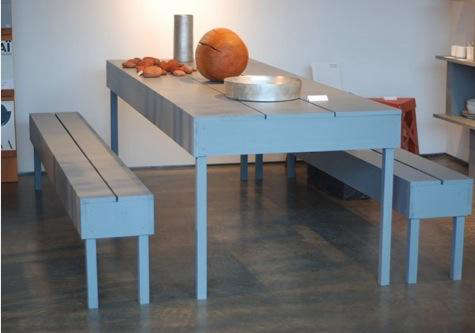
Taku Shinomoto’s tables do not arrive wearing a tuxedo, waving a brass plaque, or demanding that everyone whisper around them. They are simpler than that. Constructed from pine, finished with practical patio paint, and designed for use indoors or outside, these understated pieces demonstrate how ordinary materials can become unusually thoughtful furniture.
Originally highlighted by Remodelista in 2010, the collection included a DIY Table listed at $900 for the set and a Picnic Table listed at $1,100. Those figures are historical prices rather than current retail information, but the tables remain compelling because their appeal was never based on novelty. Their charm comes from proportion, utility, visible construction, and a refreshing absence of decorative gymnastics.
A Quick Look at Taku Shinomoto’s Tables
The two archived designs share a straightforward vocabulary: pine boards, rectilinear forms, sturdy-looking construction, and a painted finish suitable for indoor-outdoor furniture. They resemble familiar workshop and picnic structures, yet careful decisions about scale and composition move them beyond ordinary hardware-store projects.
The DIY Table
The name “DIY Table” immediately lowers the temperature in the room. It does not sound precious, rare, or intimidating. Instead, it suggests direct assembly, understandable parts, and furniture that shows how it was made. Remodelista described the design as a set, historically priced at $900, although the archived feature provides limited details about the exact configuration.
Its larger idea is more important than its old product listing. The DIY Table treats construction as part of the visual character. Rather than hiding every joint beneath molding, veneers, or decorative trim, it celebrates the logic of boards meeting supports. This is furniture that appears willing to explain itself.
The Picnic Table
The Picnic Table was historically listed at $1,100. Its familiar identity makes it instantly approachable, but Shinomoto’s interpretation feels more composed than the standard park model that has survived countless family reunions and at least one unfortunate bowl of potato salad.
A picnic table is already a highly efficient furniture type. It combines a broad working surface with communal seating and does not require a committee meeting to decide where the chairs belong. Shinomoto’s version refines that everyday structure into something suitable for a design-conscious kitchen, studio, patio, courtyard, or covered porch.
Who Is Taku Shinomoto?
Taku Shinomoto is a Japanese designer and co-founder of Tortoise General Store. He and his wife, Keiko Shinomoto, moved from Tokyo to California and established Tortoise in 2003. Before that move, Taku spent years designing furniture for Idée in Japan; Tortoise’s own historical material states that he worked as an in-house furniture designer there for 13 years.
This background helps explain why the tables feel both informal and resolved. They are not merely rough objects made from common lumber, nor are they luxury pieces pretending not to care about luxury. They reflect the judgment of someone who understands furniture development, retail environments, daily routines, and the tiny practical details that separate visual simplicity from actual usefulness.
Shinomoto is also widely associated with Hasami Porcelain, a modular tableware collection designed around stackability and everyday utility. Although porcelain and pine furniture are very different categories, the same broader instincts appear in both: clear forms, repeatable dimensions, uncomplicated materials, and objects intended to participate in life rather than sit above it wearing a velvet rope.
Tortoise and the “Slow and Steady” Approach
Tortoise General Store was founded around a “slow and steady” design concept. Its assortment has emphasized well-made Japanese household objects, traditional techniques, contemporary crafts, and products meant to become part of ordinary routines. Architectural Digest has described the store’s focus as minimal yet beautiful everyday design, while the Los Angeles Times has highlighted its selection of timeless Japanese home goods.
That philosophy matters when examining the tables. “Slow” does not mean sleepy, inefficient, or designed by someone who misplaced the deadline. It means resisting disposable trends. “Steady” suggests objects that keep working after the excitement of purchase has passed.
Many fashionable tables are designed to look thrilling in one photograph. Shinomoto’s furniture seems designed to survive the remaining 364 days of the year: breakfast, homework, wet flowerpots, groceries, laptops, serving bowls, elbows, coffee rings, and the person who insists on leaning back despite repeated warnings from everyone’s mother.
The Design Language: Honest, Direct, and Quietly Clever
Visible Structure Instead of Visual Disguise
The tables use recognizable building components rather than concealing their anatomy. Tops read as tops. Supports look like supports. The visual hierarchy is obvious, which makes the furniture easy to understand from across a room.
Dwell has connected Shinomoto’s broader pine furniture to the legacy of Enzo Mari’s self-built wooden designs, in which standard lumber and direct fastening methods became both the construction system and the aesthetic. That comparison is useful because it places Shinomoto’s work within a tradition of economical, legible furniture rather than treating it as generic rustic decor.
Minimalism Without Sterility
Minimal furniture can occasionally feel as welcoming as a dentist’s waiting room after closing time. Shinomoto avoids that problem by using pine, a material with visible grain, knots, variation, and warmth. The geometry is controlled, but the wood keeps the result human.
This balance is important. Simplicity is not merely the removal of detail; it is the decision to keep only the details that help an object perform or communicate. Contemporary Japanese designers often describe simplicity as a route toward sophistication rather than an aesthetic costume. The tables embody that idea without requiring a philosophical instruction manual under every place setting.
Familiar Forms Made More Intentional
Neither the worktable nor the picnic table is a new furniture species. That is precisely the point. Shinomoto begins with forms people already understand, then improves their visual rhythm through proportion, spacing, material consistency, and finish.
This strategy produces furniture that feels comfortable immediately. There is no learning curve. Nobody has to ask whether the sculptural object in the dining room is a table, a bench, or a very confident radiator cover.
Why Pine Is the Right Material
Pine is common, relatively approachable, visually warm, and easy to associate with workshops, cabins, crates, shelving, and basic construction. Those humble associations are not weaknesses here. They allow Shinomoto to create something special from a material that does not arrive with an aristocratic résumé.
Contemporary interest in unfinished pine and plywood furniture follows a similar logic. Designers appreciate the pale color, visible grain, raw quality, and ability of ordinary lumber to produce honest, expressive forms without relying on exotic surfaces. Apartment Therapy has noted this appeal in newer waves of unfussy pine and sheet-material furniture.
Pine also changes with use. Edges soften, paint develops small marks, and surfaces record daily activity. For people who demand that furniture remain photographically perfect forever, this may sound alarming. For everyone else, it means the table can develop character rather than merely accumulate evidence for a future insurance claim.
Patio Paint and Indoor-Outdoor Flexibility
According to the original Remodelista feature, the pine tables were coated in patio paint, allowing them to be used indoors or outdoors. That practical finish changes how the furniture can participate in a home. A table may begin on a covered patio, move into a studio during winter, become a temporary dining table, and later return outside for a summer gathering.
Paint also unifies inexpensive boards. Pine grain and knots remain part of the underlying object, but a consistent coating gives the structure a more deliberate architectural presence. Instead of pretending to be rare hardwood, the table becomes confidently painted pine.
Outdoor Use Still Requires Common Sense
“Suitable for outdoor use” should not be interpreted as “immune to weather and available for submarine duty.” Painted wood benefits from protection against standing water, prolonged saturation, and harsh seasonal exposure. Chips should be touched up before moisture works beneath the finish, and the furniture should be cleaned gently rather than attacked with bleach, ammonia, or a pressure washer set to “remove driveway.”
General wood-care guidance recommends inspecting painted surfaces for cracks or peeling, cleaning with mild products, and addressing damage before applying a fresh finish. Outdoor pieces also last longer when placed under cover or stored during severe weather.
How These Tables Fit Into Modern Homes
In a Small Dining Area
A simple pine table works well in a compact dining room because its visual language is easy to read. There are no heavy carved aprons, glossy stone slabs, or elaborate bases competing for attention. Pair it with lightweight chairs, stools, or benches so the room remains flexible.
For warmth, add woven seat pads, linen napkins, handmade ceramics, or a paper pendant lamp. The table provides the quiet structure; softer objects prevent the room from feeling like a very tasteful lumber department.
In a Kitchen
The worktable character makes these designs natural companions for open kitchens. A Shinomoto-style table could function as an informal island, prep surface, breakfast station, or gathering place. Because it does not depend on ornate detailing, it pairs comfortably with stainless steel, painted cabinetry, exposed brick, plaster walls, concrete floors, or simple tile.
In a Studio or Home Office
A broad rectangular surface with direct supports is ideal for drawing, fabric work, writing, model building, or spreading out multiple monitors while insisting that the arrangement is temporary. The visible construction feels appropriate in creative rooms because it encourages use rather than ceremony.
On a Patio or Covered Porch
Outdoors, the table can anchor a communal zone without requiring a matching eleven-piece furniture package. Add galvanized planters, plain cushions, lanterns, and weather-resistant tableware. A few mismatched objects can make the setting more personal, while the table’s disciplined form keeps the whole arrangement from drifting into yard-sale opera.
Why the Designs Still Feel Relevant
The tables were publicly featured more than a decade ago, yet their design language aligns with several priorities that remain important: durable construction, flexible use, recognizable materials, compact visual impact, and resistance to short-lived ornament.
They also offer an alternative to two furniture extremes. At one end is disposable furniture that may not survive a move across town. At the other is collectible furniture so precious that placing a sandwich on it feels like an act of cultural vandalism. Shinomoto’s tables occupy a more generous middle ground. They are designed objects, but they still want to work.
The broader history of Western interest in Japanese design has often centered on simplicity, construction, asymmetry, and the elevation of craft. Museums such as The Metropolitan Museum of Art and Cooper Hewitt have documented the long influence of Japanese design principles on Western decorative arts. Shinomoto’s work adds a contemporary, California-based chapter to that exchange: Japanese design experience meeting American indoor-outdoor living.
What to Consider Before Buying a Similar Table
- Measure the room and circulation path: Leave enough space for people to sit, stand, and pass without performing sideways choreography.
- Ask about the finish: Indoor paint, exterior paint, penetrating stain, and clear coatings behave differently under sun and moisture.
- Inspect the joinery: Simple construction should still be stable, square, and appropriately reinforced.
- Expect pine to show life: Dents, knots, and surface variation are part of its character.
- Verify current availability: The archived DIY and Picnic Table listings and prices should not be treated as current inventory.
- Choose function before styling: Decide whether the table must support dining, work, outdoor entertaining, or several jobs at once.
Experience Notes: What Living With a Shinomoto-Style Table Feels Like
The best way to understand this kind of furniture is not to stare at it from the doorway. It is to imagine a full week of ordinary use.
On Monday morning, the table is a breakfast station. A coffee mug, a bowl, and a folded newspaper occupy one end. Because the surface is visually plain, the objects placed on it look intentional even when they are not. This is a small but valuable design trick: simple furniture gives daily clutter a fighting chance of appearing organized.
By noon, a laptop and notebook have replaced breakfast. The broad top feels less like formal dining furniture and more like a dependable work platform. There is no delicate edge profile to worry about and no reflective glass broadcasting every fingerprint. The table quietly accepts the job change.
On Tuesday evening, friends arrive. A communal table immediately changes the mood of a gathering because it reduces furniture negotiations. People sit beside one another rather than forming separate islands of chairs. Serving dishes occupy the center, elbows appear at the edges, and the table performs its oldest social function: giving everyone a shared territory.
The painted pine also affects the atmosphere. Natural hardwood can feel luxurious, while metal and glass may feel crisp or urban. Painted pine is more relaxed. It suggests that a scratch will not trigger a family emergency. That psychological comfort encourages people to use the furniture naturally, which is arguably the highest compliment a table can receive.
Midweek, the table moves outside for an afternoon project. Pots, soil, hand tools, and seedlings cover the top. An overly refined dining table would protest this assignment through the voice of its anxious owner. A patio-painted worktable seems almost pleased to be useful.
That does not mean neglecting it. After the project, loose soil should be brushed away and the surface wiped with a lightly damp cloth. Water should not be allowed to pool around joints. When the table is dry, it can return indoors or remain under a covered outdoor area. Flexibility works best when paired with basic maintenance.
On Friday, the table becomes a visual anchor during a room rearrangement. Its straight lines help organize softer pieces: a rounded lamp, woven basket, ceramic vase, linen curtain, or irregular artwork. This is where the simplicity becomes more than an aesthetic preference. A visually disciplined table allows surrounding objects to be expressive without turning the room into a group conversation in which everyone speaks at once.
Over time, the most satisfying experience would likely be watching the table gather evidence of use. A small dent may recall a move. A touched-up corner may mark a season outdoors. Slight wear along an edge may show where someone sits every morning. These changes do not automatically diminish the design. They may complete it.
There is also a useful lesson for anyone considering a DIY interpretation. The appeal does not come from simply screwing several pine boards together and declaring victory before lunch. Proportion matters. Board thickness, overhang, leg placement, bracing, seat height, fastener choice, and finish determine whether a piece feels purposefully simple or merely unfinished. Shinomoto’s achievement lies in controlling those decisions while preserving the visual immediacy of basic construction.
Living with a table like this would ultimately feel less like owning a display object and more like gaining a reliable piece of domestic infrastructure. It is there for meals, projects, conversations, work, plants, packages, and the occasional pile of laundry that is definitely going upstairs later. Its success is measured not by how carefully people avoid touching it, but by how naturally they gather around it.
Conclusion: A Table That Understands Its Job
Taku Shinomoto’s tables at Tortoise demonstrate that modest materials and familiar structures can produce memorable furniture when handled with discipline. Pine provides warmth and accessibility. Patio paint expands the possible locations. Clear construction makes the pieces visually honest, while careful proportion prevents them from feeling crude.
The DIY Table and Picnic Table are noteworthy not because they reinvent the table, but because they respect what a table already does well. They support work, meals, objects, and people. They adapt without showing off. They become part of the room without swallowing it whole.
In a market crowded with furniture that promises transformation, Shinomoto’s work offers something calmer: a well-considered place to sit down and get on with life.










