
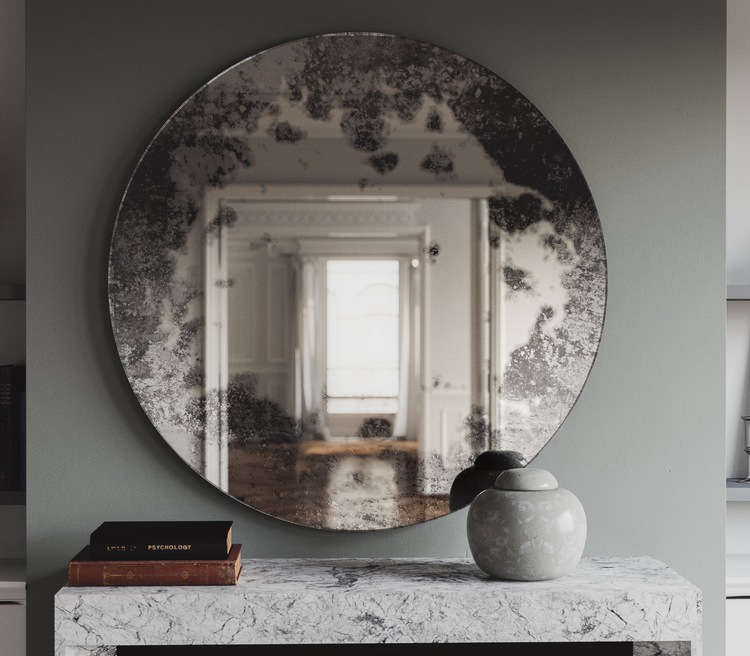
Note: This article is inspired by the work of Los Angeles mirror designer John Linden and the broader resurgence of antiqued, tinted, and decorative mirror glass in contemporary interiors.
A mirror can do many things. It can help you check whether your shirt has somehow acquired a coffee stain. It can bounce sunlight into a gloomy hallway. It can make a small apartment feel less like a shoebox and more like a place where actual adults live. But the most interesting mirrors do something more ambitious: they change the emotional temperature of a room.
That is the appeal of antiqued and colored mirrors. They do not simply reflect a room back at you in high-definition honesty. They soften it, tint it, blur it, dramatize it, and occasionally make your living room look like it belongs to a stylish hotel where someone definitely serves martinis in coupes.
Los Angeles designer John Linden understood this long before decorative mirrors became another “must-have” item on social media. Through Mirror Cooperative, often called Mirror Coop, Linden developed custom wall mirrors, antiqued glass, colored mirror panels, mosaics, and decorative mirrored surfaces that treat reflection as a material rather than just a bathroom necessity.
His work helps explain why antiqued mirrors remain such a powerful design choice. These mirrors are not merely shiny. They are layered, imperfect, atmospheric, and quietly theatrical. In a world full of smooth white walls and furniture that looks suspiciously afraid of personality, an aged or colored mirror can bring instant depth without requiring you to buy a velvet chaise lounge shaped like a seashell.
The Los Angeles Origin Story Behind Mirror Coop
John Linden came to mirrored glass through interior design projects. After repeatedly specifying custom mirror pieces for clients, he built connections with glass suppliers and fabricators in Los Angeles, Chicago, and New York. Eventually, the demand for distinctive mirrored surfaces became strong enough to become its own business. Mirror Coop emerged as a studio focused on custom mirrors and decorative glass rather than basic, builder-grade rectangles with clips that look like they belong in a dentist’s office.
Today, Mirror Coop describes itself as a Los Angeles custom mirror studio that hand-builds wall mirrors using antique, colorful, and verre églomisé glass and mirror. That description matters because it signals a different approach to decorative glass. The goal is not a perfect, invisible reflection. The goal is character.
Verre églomisé, for example, refers to decorative glass that is painted, gilded, or otherwise embellished on the reverse side. It can create metallic depth, shimmering color, or an almost painterly surface. When used in a mirror, it turns a functional object into something closer to wall art.
Linden’s designs also draw from the long history of Italian modernism, Venetian glassmaking, midcentury decorative mirrors, and glamorous hotel interiors. Colored mirror glass, asymmetric shapes, brass frames, and softly distressed finishes all help a room feel collected rather than assembled from one giant online shopping cart at 1:00 a.m.
What Makes an Antiqued Mirror Different?
An antiqued mirror is not simply an old mirror. It is a mirror designed to have a weathered, mottled, speckled, cloudy, or softly oxidized appearance. Instead of giving you a sharp reflection, it creates a softer image with visual variation across the glass.
That variation is the entire point. The darkened corners, subtle silver loss, small speckles, faded patches, and irregular reflections create depth. A standard mirror says, “Here is the room.” An antiqued mirror says, “Here is the room, but after it has appeared in an old movie, developed excellent taste, and learned to appreciate candlelight.”
Antiqued mirror glass works especially well in interiors because it reflects light without becoming too harsh. A clear mirror can feel modern, crisp, and bright. An antiqued finish takes that brightness and adds warmth, softness, and mystery. It can make a minimalist room feel less sterile or make a traditional room feel more layered.
Designers frequently use antiqued mirror panels to open up enclosed spaces while avoiding the overly polished look of a full mirrored wall. Architectural Digest has highlighted antiqued mirror grids as a way to create dimension and make rooms feel larger without turning the space into a literal dance studio from 1987.
Antiqued Mirror vs. Mercury Glass
These terms are often used interchangeably, but they are not always identical. Mercury glass traditionally refers to decorative glass with a silvery finish created through historic techniques. In contemporary interiors, the phrase is often used loosely to describe reflective glass with a distressed, cloudy, or metallic appearance.
Antiqued mirror glass may include similar visual effects, but its finish can range from lightly speckled and subtle to dramatically oxidized and darkened. The difference is less about strict terminology and more about visual mood. A lightly antiqued panel can feel elegant and restrained. A heavily distressed mirror can feel moody, glamorous, and a little haunted in the best possible way.
Why Colored Mirrors Are Having a Moment
Colored mirrors are one of the easiest ways to bring personality into an interior without committing an entire room to a bold paint color. Blue, green, bronze, blush, amber, smoke, and rose-tinted mirror finishes can shift the feeling of a space while still keeping the reflective quality that makes mirrors so useful.
Mirror Coop has featured colorful antiqued mirror swatches and decorative pieces, including a green Deco-style mirror associated with Linden’s Los Angeles studio. These examples show how color can turn a mirror from a practical object into a focal point.
A blue mirror can bring a cool, watery calm to a bathroom or bedroom. A bronze or smoke-colored mirror can make a dining room feel more intimate. A pink or blush mirror can add warmth and a playful edge to an entryway. Green mirror glass can feel vintage, botanical, Art Deco, or slightly futuristic depending on the frame and surrounding materials.
The trick is to think of colored mirrors the way you think of colored lighting or tinted sunglasses. They change the mood of what you see. A room reflected in bronze glass feels different from the same room reflected in clear silver glass. The furniture has not changed. The atmosphere has.
Color Is Not Just Decoration
Colored mirror glass can also help control visual intensity. In bright rooms, a tinted mirror softens glare. In darker rooms, it can add depth without the coldness of a clear mirror. It is particularly effective in spaces where you want atmosphere more than precision: dining rooms, powder rooms, bars, lounges, bedrooms, entryways, and boutique retail environments.
Design Milk has documented contemporary mirror collections inspired by stained glass and color-filtered windows, demonstrating that colored reflective surfaces can function as both sculpture and architecture.
How Antiqued Mirrors Change a Room
The practical benefits of mirrors are well known. They reflect natural light, create visual depth, and can make tight rooms feel more spacious. But antiqued mirrors add another layer: they reduce the “look at me” quality of ordinary mirror glass.
Instead of sharply doubling every lamp, plant, and pile of unopened mail, antiqued mirror glass creates a softer echo of the room. That softness is why it works so well in elegant spaces. It gives you brightness and dimension while muting visual clutter.
House Beautiful notes that mirrors can animate flat walls, brighten interiors, and make rooms feel larger. In designer spaces, antique-look mirror surfaces are often used on walls, cabinetry, backsplashes, and built-ins because they create visual expansion without adding more physical bulk.
In a small dining room, an antiqued mirror wall can make the room feel wider while maintaining a cozy mood. In a narrow hallway, vertically oriented mirrored panels can make the space feel less tunnel-like. In a powder room, a tinted mirror can create the kind of jewel-box drama that makes guests suddenly spend much longer than necessary checking their hair.
Best Places to Use Antiqued and Colored Mirrors
1. Above a Fireplace
A mirror above a mantel remains a classic for a reason. It creates vertical height, reflects lamps or windows, and gives the fireplace wall a natural focal point. An antiqued or bronze-tinted mirror is especially useful when a clear mirror would feel too sharp or formal.
Choose a shape that works with the room’s architecture. An arched mirror can soften a boxy fireplace surround. A large rectangular mirror can emphasize symmetry. A round mirror can break up strong horizontal lines. The goal is not to make the mantel look like a hotel lobby from the early 2000s. The goal is to make it feel intentional.
2. In a Dining Room
Dining rooms are ideal for antiqued mirrors because they benefit from low, warm lighting. Candlelight, pendant lights, and table lamps look especially beautiful when reflected through aged glass. Instead of getting a harsh duplicate of the room, you get movement, sparkle, and softness.
Architectural Digest has shown how antique mirror walls can expand dining rooms and add character, especially when panels are divided into grids rather than installed as one enormous sheet.
3. As a Kitchen Backsplash
Mirrored backsplashes are not for everyone. They require cleaning, they reflect every countertop crumb, and they may inspire you to become far more aware of your kitchen habits. Still, antiqued mirror backsplashes can be stunning.
They work particularly well behind bars, open shelving, coffee stations, and less aggressive cooking zones. A distressed mirrored backsplash can reflect glassware, brass fixtures, and pendant lights while disguising some of the visual chaos that a clear mirror would magnify. Mirror Coop has been featured for antiqued mirror mosaic backsplash applications, while designers continue to use mirrored tile to maximize light in kitchens.
4. In a Bathroom or Powder Room
Bathrooms are natural homes for mirrors, but they do not have to be boring. A colored or antiqued vanity mirror can make a simple bathroom feel custom. In a powder room, it can become the star of the entire space.
Antiqued mirror is especially appealing when paired with wallpaper, handmade tile, stone, or aged brass. The imperfect reflection repeats those materials without overwhelming them. Architectural Digest designers have noted that mirrors can deepen the visual effect of tiled or wallpapered bathrooms by reflecting the repeated surface treatment.
5. On Cabinet Doors and Built-Ins
Mirrored cabinetry can make bulky storage feel lighter. In a bedroom, mirrored wardrobe doors can reduce the visual weight of a large closet. In a bar area, antiqued mirror cabinet fronts can create a refined, vintage-inspired look without making the room feel flashy.
The finish matters here. Clear mirrored cabinet doors can feel sleek and modern. Antiqued mirror fronts feel softer and more forgiving. They hide fingerprints better, blur visual clutter, and make even basic cabinetry look a little more expensive than it probably was.
How to Choose the Right Mirror Finish
Before choosing an antiqued or colored mirror, start with the room’s existing palette. Look at the metals, wood tones, fabrics, wall colors, and lighting. A mirror should support those elements rather than arrive like an overdressed guest who mistakes every dinner party for the Met Gala.
For warm interiors with walnut, brass, rust, cream, or tan tones, bronze, amber, and antique gold mirrors are strong choices. For cooler interiors with marble, gray, blue, black, or chrome, smoke, silver, blue, and green mirrors often work better.
Think about contrast, too. A dark moody room may need a lighter, more reflective antiqued finish. A bright white room may benefit from a darker bronze or smoke mirror to create depth. The mirror does not need to match everything. It simply needs to feel related to the room’s visual language.
Consider What the Mirror Will Reflect
This is the most important design rule: do not choose a mirror location based only on the wall. Choose it based on what the mirror will show.
A mirror opposite a beautiful window, a piece of art, a garden view, or a favorite lamp can double the room’s best features. A mirror opposite a laundry pile, a television full of news alerts, or an awkward open storage shelf can double your regret. Designers consistently recommend using mirrors to reflect windows, artwork, and attractive vignettes rather than clutter.
Apartment Therapy also notes that mirrors are commonly hung around eye level, often around 60 inches from the floor to the center, unless the mirror is part of a larger mantel, headboard, or architectural composition.
Custom Mirrors vs. Ready-Made Mirrors
A ready-made mirror can be a practical choice when you need something simple, affordable, and fast. But custom mirror work becomes valuable when the space has unusual proportions, specific color needs, or architectural details worth emphasizing.
Custom mirrors can be created for arched openings, oversized walls, built-ins, fireplace surrounds, furniture inserts, mosaic installations, and commercial spaces. They can also be specified with different levels of distressing, unique colors, decorative frames, bevels, panel divisions, and reverse-painted details.
That flexibility is why a studio like Mirror Coop is interesting. The process is not just about selecting a mirror from a product grid. It is about choosing how a reflective surface will behave in a room. Will it brighten? Will it soften? Will it create drama? Will it make your entryway look twice as large? These are not minor decisions when glass can occupy an entire wall.
Care, Cleaning, and Installation Tips
Antiqued and colored mirrors should be treated carefully. Avoid harsh abrasive cleaners, rough sponges, and excessive moisture around exposed edges. Spray cleaner onto a soft cloth rather than directly onto the mirror whenever possible, especially with framed or aged glass. This helps reduce the chance of liquid seeping behind the glass or affecting the backing.
For large mirrors, custom panels, or heavy framed pieces, professional installation is worth considering. Wall-mounted mirrors can become dangerous if the mounting system fails. The U.S. Consumer Product Safety Commission has issued recalls involving wall mirrors whose glass detached from their mounting bases, creating injury and laceration hazards.
Use hardware appropriate to the mirror’s weight, wall type, and mounting configuration. Heavy mirrors should be secured into studs or properly rated anchors rather than relying on optimism and one tiny nail that has somehow survived since 1998. The National Glass Association also publishes professional guidance related to fabrication and installation practices for flat glass mirrors.
Why These Mirrors Feel So Personal
The best interiors do not simply display objects. They create experiences. Antiqued and colored mirrors are powerful because they make a room feel different throughout the day.
In the morning, an antiqued mirror may reflect pale light and make a room feel calm. At midday, it can soften strong sun. At night, it picks up lamps, candlelight, and the flicker of a dinner party, turning ordinary light into atmosphere.
That changing quality makes decorative mirror glass feel alive. It is never exactly the same from one hour to the next. It reacts to seasons, weather, furniture, flowers, people, and whatever mildly chaotic event is currently happening in your home.
Experiences with Antiqued and Colored Mirrors: Living with Reflection, Not Just Looking at It
There is a difference between seeing a mirror in a showroom and living with one for months. In a showroom, the mirror is usually perfect. The lighting is flattering. Nothing is out of place. No one has left a backpack on the floor, and there is definitely no dog toy shaped like a taco visible in the reflection.
At home, a mirror becomes part of daily life. It catches the morning light before you are fully awake. It reflects the kitchen while you are making coffee. It doubles the glow of a lamp while you answer emails at the dining table. It becomes part of the background of birthday dinners, rushed departures, late-night conversations, and every occasion when someone says, “Wait, let me check my hair first.”
Antiqued mirrors are especially pleasant to live with because they are not too demanding. A perfectly clear mirror can make you notice every stack of mail, every fingerprint, and every object that has drifted onto a console table. An antiqued surface is kinder. It gives the room a softer version of itself. It reflects the light and shape of things without turning your home into a high-definition surveillance zone.
Colored mirrors create a different kind of experience. A pale green mirror in an entryway can make daylight feel cooler and fresher. A bronze mirror in a dining room can make evenings feel warmer and more intimate. A blush-colored mirror in a bedroom can add softness without needing another layer of paint, wallpaper, or upholstery.
One of the best experiences with decorative mirror glass is watching how it changes when guests arrive. During the day, the mirror may seem quiet and understated. At night, once lamps are switched on and conversation begins, it starts working harder. It captures tiny movements: a glass lifted for a toast, a hand gesturing during a story, the glow of a candle, the shape of flowers on the table.
A large antiqued mirror can also make a familiar room feel newly discovered. You may notice a plant from another angle. A painting may suddenly appear more important because the mirror repeats it. A window view may become part of the room rather than something separate from it. That is one reason designers love mirrors: they do not add square footage, but they can make a room feel more generous.
There is also a quiet emotional quality to living with aged glass. The imperfect finish creates a sense of history, even in a new apartment. It suggests that the room has collected memories rather than being assembled in one weekend. Of course, the mirror may have arrived last Tuesday, but nobody needs to know that. Let the patina do its storytelling.
For renters, a large leaning mirror can be a low-commitment way to experiment with this effect. Place it safely against a wall, ideally where it reflects a window, artwork, or a well-styled corner. For homeowners, custom antiqued mirror panels can become a more architectural statement in a bar, hallway, bathroom, or dining room.
The experience is ultimately less about vanity and more about atmosphere. A good antiqued or colored mirror does not ask you to stare at yourself. It asks you to notice the room. It reminds you that light moves, color changes, and even an ordinary hallway can become interesting when it catches the right reflection.
That may be the real magic of John Linden’s approach to decorative mirrors. The mirror is not just an object on the wall. It is a mood machine. It turns sunlight into texture, candlelight into drama, and a basic room into a place with a little more mystery. And honestly, most homes could use a bit more mystery.
Conclusion: A Mirror with a Point of View
Antiqued and colored mirrors prove that reflective surfaces do not have to be plain, cold, or purely practical. From John Linden’s Los Angeles-based Mirror Coop to the many contemporary interiors embracing aged mirror panels, tinted glass, and decorative mosaics, the trend is really about creating depth and atmosphere.
Whether you choose a subtle speckled antiqued mirror over a mantel, a bronze-tinted panel behind a bar, a green Deco mirror in an entryway, or a full wall of aged glass in a dining room, the right mirror can make a room feel brighter, larger, warmer, and more personal.
The best part is that it does not need to be perfect. In fact, the tiny imperfections are exactly what make it beautiful.














