
Four ordinary words can do extraordinary damage to an investment portfolio: “This time is different.” They often arrive dressed in an expensive suit, carrying a beautiful chart and speaking with the confidence of someone who has never met an unexpected recession.
Animal Spirits: The Four Most Dangerous Words in Podcasting uses that famous market warning as a playful doorway into a much broader conversation. Released in June 2019, the episode features hosts Michael Batnick and Ben Carlson moving rapidly through venture capital, initial public offerings, retirement savings, electric scooters, internet trends, government budgets, Social Security, quantitative easing, inflation, professional credentials and even the disappointing state of modern movies. It is less a carefully plated financial dinner than a very entertaining buffet where someone has placed an Apple Watch beside the inflation data.
Beneath the jokes and topic-hopping, however, sits a serious theme: investors, financial commentators and podcast hosts should be extremely careful when explaining why old rules supposedly no longer apply.
What Are the Four Most Dangerous Words?
The phrase is generally associated with legendary investor John Templeton, who warned that the four most dangerous words in investing are “this time is different.” The warning does not mean that markets, technologies and economic systems never change. They clearly do. It means investors often use genuine change as an excuse to abandon valuation discipline, ignore risk or assume a favorable trend will continue forever.
Howard Marks explored this paradox in a 2019 memo with the same theme. New conditions may be real, but enthusiasm can push investors from the reasonable statement “something has changed” to the far more dangerous conclusion “therefore, price no longer matters.” History has repeatedly shown that those are not the same sentence.
The phrase is especially relevant to podcasting because audio encourages intimacy. A confident host speaking directly into a listener’s ears can feel less like a media personality and more like a financially sophisticated friend. That relationship is valuable, but it can also make bold predictions sound more trustworthy than the underlying evidence deserves.
Understanding the Animal Spirits Podcast
Animal Spirits is a financial podcast about markets, investing and everyday life. Batnick and Carlson discuss what they are reading, writing, watching and listening to, usually combining market analysis with personal observations and humor. The result feels more like overhearing two knowledgeable colleagues at lunch than sitting through a quarterly earnings presentation conducted by a committee of neckties.
This conversational approach matters. Financial markets are not powered entirely by spreadsheets. They are influenced by fear, greed, envy, career risk, storytelling and the human desire to appear smarter than the person sitting nearby. The podcast’s title itself comes from economist John Maynard Keynes’s concept of “animal spirits,” the emotional forces that affect economic decisions.
By 2019, podcasting was becoming a mainstream American medium. Edison Research reported that more than half of Americans age 12 and older had listened to a podcast at least once. That growing audience created room for finance shows that were educational without sounding like recorded textbooks.
Why the Episode Still Matters
The companies, interest rates and fashionable technologies discussed in the episode belong to a specific moment. The thinking tools are timeless. Each topic asks a version of the same question:
Are we observing a durable structural change, or are we inventing a sophisticated explanation for temporary excitement?
That distinction is difficult because both possibilities can exist at once. A technology may transform an industry while its stock remains wildly overpriced. A retirement plan may use innovative digital tools while succeeding mainly because it automatically enrolls workers. A central bank policy may influence expectations while also working through measurable financial channels.
Markets enjoy making simple answers look foolish. They are generous that way.
Unicorns, Venture Capital and the Price of Abundant Money
More Unicorns Do Not Automatically Mean More Innovation
One of the episode’s opening questions is whether the growing number of private companies valued at more than $1 billion reflected extraordinary innovation or simply an extraordinary supply of venture capital.
At the time, the Crunchbase Unicorn Leaderboard contained 452 private companies with a combined stated valuation of roughly $1.6 trillion. Venture investors had poured more than $135 billion into unicorn companies during 2018, while 151 businesses joined the billion-dollar club that year.
Those figures demonstrated real technological ambition. They also demonstrated how valuation labels depend on financing conditions. When capital is abundant and investors compete for a limited number of exciting deals, private valuations can rise faster than business fundamentals.
A unicorn valuation is not a cash register receipt proving what the entire company could be sold for tomorrow. It is usually derived from the terms of a financing round involving a relatively small portion of the company. That distinction tends to disappear when headlines begin galloping around with sparkles in their manes.
IPOs Turn Private Narratives Into Public Tests
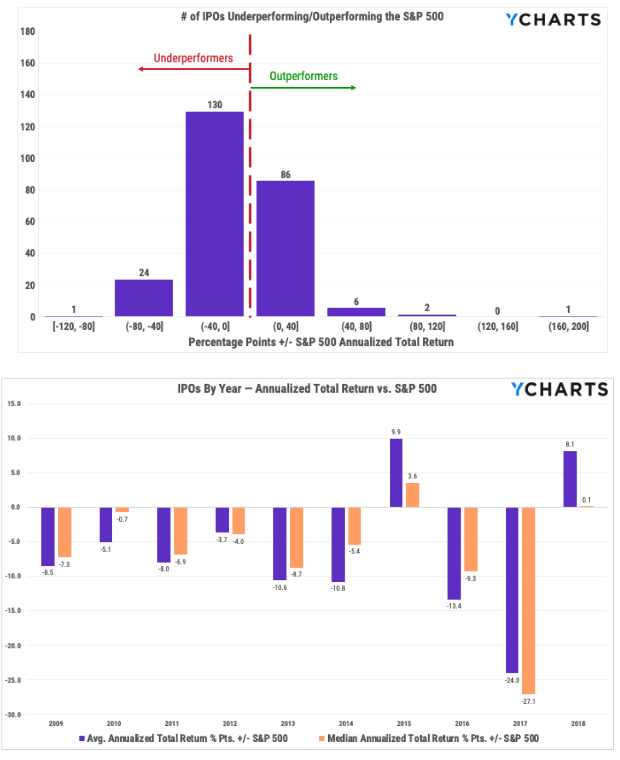
The episode also considers how newly listed companies perform against the broader stock market. An IPO forces a private-market story to face continuous public pricing, quarterly reporting and millions of investors who are under no obligation to admire the founder’s presentation deck.
The Securities and Exchange Commission has long warned that IPO investing carries special risks. Investors may receive limited operating history, encounter volatile pricing and discover that the market price differs substantially from the original offering price. Access to a famous IPO is not the same as access to an attractive investment.
The practical lesson is simple: evaluate the business, valuation, competitive position and path to profitability. Do not buy merely because an opening bell was accompanied by branded jackets and aggressive confetti.
Retirement Savings: Better Systems Beat Better Speeches
Plan Design Can Be More Powerful Than Motivation
One of the episode’s most optimistic subjects is the next generation of retirement savers. The hosts emphasize that plan design may matter more than repeatedly telling workers that they should save.
Traditional financial education assumes that employees will study investment options, calculate a suitable contribution rate and enroll voluntarily. In reality, many people postpone the decision because retirement feels distant and the paperwork is less exciting than nearly everything else on Earth.
Automatic enrollment changes the default. Instead of asking workers to take action before saving, it begins contributions automatically while preserving the ability to opt out. Vanguard’s research has repeatedly found substantially higher participation among automatically enrolled workers. Features such as automatic contribution increases and target-date funds can further improve long-term behavior.
This is behavioral finance in practical clothing. The best retirement system does not assume every employee wakes up eager to rebalance a portfolio before breakfast. It makes the beneficial action easy, automatic and boring.
Environment Often Beats Willpower
The same principle explains why financial advice resembles fitness advice. Most people already know that saving money is useful and moving their bodies is generally preferable to becoming permanently attached to a sofa. Information is rarely the only missing ingredient.
Behavior is shaped by defaults, convenience, incentives, habits and social expectations. A person with automatic payroll contributions may save consistently without feeling unusually disciplined. Someone forced to make a fresh decision every month must repeatedly defeat procrastination, unexpected expenses and the mysterious ability of online stores to recommend exactly the thing nobody needed.
Electric Scooters and the Difference Between Adoption and Economics
Electric scooters offered the episode a perfect example of a product that could be popular without necessarily producing attractive business economics.
Lime reported millions of rides during its early expansion and said that more than a quarter of surveyed riders used its service to connect with public transportation on their most recent trip. The service clearly addressed a real transportation need, particularly for short urban journeys.
But user growth answers only one question. Investors must also examine vehicle lifespan, charging costs, maintenance, theft, local regulation, competition, customer acquisition and the contribution margin from each ride.
This distinction applies far beyond scooters. A product can be useful, culturally important and beloved by customers while remaining a difficult investment. Revenue growth does not automatically create profits, just as owning a popular restaurant does not guarantee wealth if every customer’s dinner costs the owner twelve dollars more than the menu price.
Internet Trends and the Seduction of Big Numbers
The episode references Mary Meeker’s enormous 2019 Internet Trends presentation, a data-packed overview of digital behavior. At the time, approximately 3.8 billion people were internet users, e-commerce represented about 15% of retail sales and American adults were spending increasing amounts of time with digital media. Customer acquisition costs were also rising, creating pressure on businesses that depended on paid growth.
These trends help explain why venture capital supported so many ambitious companies. A connected global population created enormous addressable markets. Yet “large market” is not a synonym for “durable competitive advantage.”
Financial podcasts frequently discuss total addressable markets because the numbers are impressive. A company needs only a tiny percentage of a trillion-dollar industry to justify an optimistic forecastat least inside a spreadsheet. Unfortunately, competitors own spreadsheets too.
Is the Personal Finance Industry a Scam?
The episode engages with a provocative question raised in a GQ essay: Does the personal finance industry sell individual solutions to problems that are partly structural?
Some criticism is deserved. Financial media often recycles familiar advice, exaggerates the importance of tiny expenses or markets wealth as the inevitable reward for purchasing the correct book, course or color-coded budgeting system. A person facing low wages, medical expenses or unaffordable housing cannot solve every problem by canceling one streaming subscription.
Still, calling all personal finance guidance a scam goes too far. Spending less than one earns, avoiding high-interest debt, maintaining emergency savings, using tax-advantaged accounts and investing consistently remain useful principles. The problem is usually not that these ideas are false. It is that they are sometimes packaged as complete solutions to circumstances they cannot fully control.
Good financial advice should acknowledge both personal agency and economic reality. It should help without pretending that every setback is caused by insufficient enthusiasm for budgeting apps.
Government Debt Is Not Household Debt
The episode warns against treating the federal government like a giant household. Both must deal with constraints, but the analogy quickly breaks down. The federal government can tax, issue currency-denominated debt, influence economic activity and operate across generations. Families cannot normally respond to a large repair bill by issuing Treasury securities.
The Federal Reserve Bank of St. Louis has similarly described the household analogy as imperfect. Government debt still matters, especially when interest costs rise or borrowing reduces room for future policy responses, but the relevant limits are inflation, productive capacity, interest expense and confidencenot the expiration date on an imaginary national credit card.
Social Security: A Shortfall Is Not the Same as Disappearance
In 2019, Social Security’s trustees projected that the combined trust fund reserves would become depleted in 2035 if lawmakers made no changes. That did not mean the program would suddenly possess zero income or stop sending every check. Payroll taxes would continue generating revenue, although they would not be sufficient to pay all scheduled benefits under existing rules.
The distinction between reserve depletion and total program bankruptcy is frequently lost in dramatic financial commentary. “Social Security faces a funding gap” is accurate but not especially theatrical. “Social Security will vanish before lunch” performs better on certain thumbnails.
Listeners should examine what a projection actually measures, which assumptions it uses and what policy responses remain possible.
Is Quantitative Easing Merely Psychological?
Quantitative easing works partly through expectations. When a central bank signals that it intends to purchase assets and support accommodative financial conditions, investors adjust their expectations about interest rates, liquidity and risk.
But calling QE purely psychological would ignore its market mechanisms. Federal Reserve research has examined how large-scale asset purchases can affect longer-term yields, term premiums, asset prices and financial conditions. Expectations are part of the transmission process, not evidence that the process is imaginary.
The broader lesson is that psychology and fundamentals are not enemies. Expectations can change behavior, and changed behavior can alter economic outcomes. A belief can become financially important without becoming magically true.
Sometimes This Time Really Is Different
The most useful part of the famous warning is also the most uncomfortable: sometimes the present genuinely is different.
Technological progress changes business models. Regulations reshape industries. Demographics influence consumption and labor markets. Interest-rate regimes can last longer than investors expect. New financial products alter market structure. Refusing to recognize genuine change can be just as costly as believing every fashionable narrative.
A disciplined investor should therefore replace certainty with a set of questions:
- What specifically has changed?
- Which historical relationships should the change affect?
- What evidence would prove the thesis wrong?
- Has the market price already reflected the optimistic scenario?
- Does the investment remain survivable if the forecast is early?
“This time is different” should begin an investigation, not end one.
What the Episode Teaches About Successful Financial Podcasting
A Strong Title Creates Curiosity Without Explaining Everything
“The Four Most Dangerous Words in Podcasting” is effective because it borrows a familiar investing phrase and gives it a humorous twist. The title promises danger, finance and personality without sounding like a compliance manual.
Good financial podcast titles create a curiosity gap while remaining connected to the actual discussion. A title should invite the listener through the door, not lure the listener into an entirely different building.
Host Chemistry Can Make Complex Topics Accessible
Batnick and Carlson frequently approach subjects from slightly different angles. That mild disagreement gives listeners permission to remain uncertain. Instead of presenting finance as a collection of universal answers, the conversation shows how experienced professionals test ideas in real time.
This is especially valuable in a medium where opinions and factual reporting often appear together. Pew Research has found that podcast audiences encounter a substantial amount of host and guest opinion, making it important for listeners to distinguish evidence from interpretation.
Range Keeps the Conversation Human
An episode that moves from venture capital to retirement plans, scooters, Social Security, career credentials and movies should feel chaotic. Somehow, it works because money touches nearly every part of life.
The lighter subjects also prevent fatigue. Listeners can absorb only so many discussions of inflation expectations before someone needs to complain about entertainment or review a gadget.
Humility Is More Valuable Than Prediction Theater
The most dangerous financial podcast is not the one that occasionally makes a bad forecast. Forecasting is difficult, and errors are unavoidable. The real danger appears when hosts present guesses as certainties, hide previous mistakes or treat disagreement as proof of stupidity.
A trustworthy host explains assumptions, admits uncertainty and updates opinions when evidence changes. “I don’t know” may not produce the most dramatic clip, but it has saved many investors from remarkably expensive adventures.
How to Listen to Financial Podcasts More Intelligently
Listeners do not need to treat every episode like an academic examination. A simple framework can separate useful insight from entertaining noise.
Separate Facts, Interpretations and Predictions
A company’s reported revenue is a fact. Whether that revenue demonstrates a competitive advantage is an interpretation. Whether the stock will outperform is a prediction. Podcasts often move between all three within a single minute.
Check the Date
Financial discussions are time-sensitive. An opinion about interest rates, valuations or Social Security projections should be understood in the context of the information available when the episode was recorded.
Notice Incentives
Consider whether a guest manages a fund, sells a product, advises companies or owns the asset being discussed. An incentive does not automatically invalidate an argument, but it belongs in the analysis.
Convert Ideas Into Process, Not Immediate Trades
The strongest lesson from an episode is usually a better question or decision rulenot a ticker symbol. Use podcasts to improve how you research, diversify, save and manage risk. Avoid converting every enthusiastic conversation into an urgent visit to the brokerage app.
Experience Notes: What Listeners Learn After Applying These Ideas
A common early experience with financial podcasts is the discovery that confident speakers can make almost any thesis sound inevitable. One episode may explain why interest rates must rise. The next presents an equally polished case for permanently low rates. Both arguments arrive with charts, historical examples and a host who appears to own a microphone specifically engineered to eliminate doubt.
The first useful lesson is that persuasion and accuracy are different skills. A listener may feel convinced because the story is coherent, not because the conclusion is probable. After experiencing a few forecasts that age like unrefrigerated seafood, careful listeners begin writing down assumptions rather than merely remembering conclusions.
Consider a listener hearing an enthusiastic discussion about a newly public technology company. The company has rapid growth, a famous founder and an enormous potential market. The inexperienced response is, “This business is changing the world, so the stock must be attractive.” The more mature response separates four questions: Is the product useful? Is the company financially healthy? Does it have a defensible advantage? Is the current valuation reasonable?
These questions can produce different answers. The product may be excellent while the stock is overpriced. The company may eventually dominate while early shareholders still suffer years of disappointing returns. Innovation is not required to send investors a thank-you card.
Another familiar experience involves retirement advice. A listener may initially search for the perfect fund, market forecast or asset allocation. Over time, the bigger improvement often comes from increasing automatic contributions, collecting the full employer match and reducing unnecessary account changes. The exciting strategy attracts attention; the boring system builds the balance.
Financial podcasts also teach listeners to recognize emotional timing. Market discussions become most frightening after prices have already fallen and most euphoric after prices have already risen. When every guest suddenly agrees that an asset is unstoppable, the consensus may contain more information about recent performance than future returns.
Keeping a simple listening journal can help. Record the date, central claim, supporting evidence, major risks and conditions that would invalidate the thesis. Review the notes six or twelve months later. The exercise reveals which commentators distinguish scenarios from certainties and which ones quietly move the goalposts into another ZIP code.
Listeners also become better at handling disagreement. Two thoughtful professionals can examine the same data and reach different conclusions because they use different time horizons, risk tolerances or assumptions. The goal is not to identify a permanently correct podcast personality. It is to understand why the disagreement exists and which risks matter to one’s own financial plan.
Perhaps the most important experience is realizing that a podcast should support judgment rather than replace it. Audio can introduce ideas, explain history and expose blind spots. It cannot know a listener’s income stability, tax situation, debt, family obligations or capacity for loss.
The best outcome is not finishing an episode with a desperate need to trade. It is finishing with a clearer understanding of uncertainty, a stronger decision process and perhaps a reminder to increase the 401(k) contribution before buying shares in a scooter company valued like it has discovered teleportation.
Conclusion
Animal Spirits: The Four Most Dangerous Words in Podcasting succeeds because it is not really about one prediction or one dangerous phrase. It is about the challenge of separating structural change from speculative storytelling.
The episode’s discussions of unicorns, IPOs, retirement plan design, internet growth, personal finance, Social Security and monetary policy all point toward the same principle: context matters, incentives matter, valuation matters and human behavior changes far less than the technology surrounding it.
Markets are always different in some ways and familiar in others. The investor’s job is to identify which differences are durable without using them as permission to ignore risk. The podcast listener’s job is equally important: enjoy the conversation, appreciate the humor and keep one hand firmly on the skepticism button.
Note: This article is provided for educational and informational purposes and should not be treated as personalized investment, tax or financial advice.













