
There is a funny little stretch of spring when my decorating brain refuses to choose sides. St. Patrick’s Day arrives with shamrocks, emerald ribbons, and enough green to make a salad jealous. Then Easter follows close behind with fresh grass, budding branches, pastel eggs, flowers, and all the cheerful evidence that winter is finally packing its bags. Instead of redecorating the entire house twice, I like the idea of letting one color do the heavy lifting: green.
Showing my green for St. Patricks Day and Easter is less about covering every surface in holiday merchandise and more about building a flexible spring look that changes personality as March moves toward Easter. Deep emeralds, mossy greens, fresh leaves, green glass, natural plants, white ceramics, woven baskets, and a handful of holiday-specific accents can carry a home through both celebrations without turning decorating into a second job.
The approach also makes sense historically and visually. Green has become one of the most recognizable colors associated with St. Patrick’s Day in the United States, while Easter decorating frequently borrows its palette from spring itself: budding plants, grass, flowers, nests, and garden-inspired colors. Put those ideas together and green becomes the perfect bridge between the holidays.
Why Green Works So Well for Both Holidays
St. Patrick’s Day and Easter are very different celebrations, but aesthetically they share one valuable ingredient: the feeling of renewal. St. Patrick’s Day brings Irish and Irish-American heritage, shamrocks, parades, folklore, and the famous tradition of wearing green. Easter brings religious traditions for many families along with familiar seasonal symbols such as decorated eggs, rabbits, chicks, flowers, and spring baskets.
Green comfortably belongs in both worlds. For St. Patrick’s Day, it can be energetic, saturated, and playful. Think emerald napkins, clover-shaped decorations, green glassware, and perhaps one unapologetically sparkly shamrock. For Easter, the same foundation can become softer by adding pale pink, lavender, cream, robin’s-egg blue, natural wood, and flowering branches.
That means a green vase displayed on March 17 does not need to disappear on March 18. Remove the shamrock pick, add tulips, and suddenly it looks ready for Easter brunch. That is my favorite kind of seasonal decorating: the kind that does not require its own storage unit.
The Story Behind Wearing the Green
The modern connection between St. Patrick’s Day and green developed over centuries. Historical accounts note that St. Patrick himself was not always represented by green; blue also had a historical association with him. Green eventually became strongly connected with Irish identity, the shamrock, and Irish nationalism, and the color became increasingly prominent in celebrations.
Irish immigrants helped transform St. Patrick’s Day into a major American cultural celebration. Cities including New York, Boston, and Savannah developed long-standing parade traditions, and the holiday gradually became an opportunity for both Irish Americans and the broader public to celebrate Irish heritage.
Today, wearing green is so familiar that arriving at a St. Patrick’s Day gathering without even a tiny green detail can feel like showing up to a swimming pool wearing hiking boots. American folklore even produced the playful idea that wearing green keeps mischievous leprechauns from pinching you.
Whether you take that legend seriously is your business. Personally, I would rather add a green scarf than enter negotiations with an invisible leprechaun.
Building a Green Spring Color Palette
The easiest way to decorate successfully for both St. Patrick’s Day and Easter is to stop thinking of green as a single color. Nature certainly does not. A spring garden can contain emerald, sage, fern, mint, olive, celery, moss, and lime before breakfast.
Start With Two or Three Greens
Choose one darker green to anchor the room and one or two softer shades for balance. Emerald or forest green works beautifully in glassware, pillows, candles, or table linens. Sage and moss green feel quieter and transition naturally into Easter and general spring decorating.
Sage green is especially useful because it behaves almost like a neutral. It pairs comfortably with cream, white, natural fibers, wood, brass, black, and many pastel colors. Designers have increasingly used earthy greens in interiors because they connect easily with botanical and natural materials.
Add White and Natural Materials
If every object is bright green, your living room may begin looking like a leprechaun opened a nightclub. White keeps the palette clean. Wicker, wood, linen, jute, rattan, moss, and ceramic pieces add texture without competing with the main color.
A simple combination might include green glass bottles, a white pitcher, a wooden tray, a woven basket, and fresh greenery. During St. Patrick’s Day, add shamrocks or gold accents. For Easter, swap those pieces for eggs, carrots, tulips, or a small bunny.
Easy St. Patrick’s Day Decorations That Transition Into Easter
Green Glassware
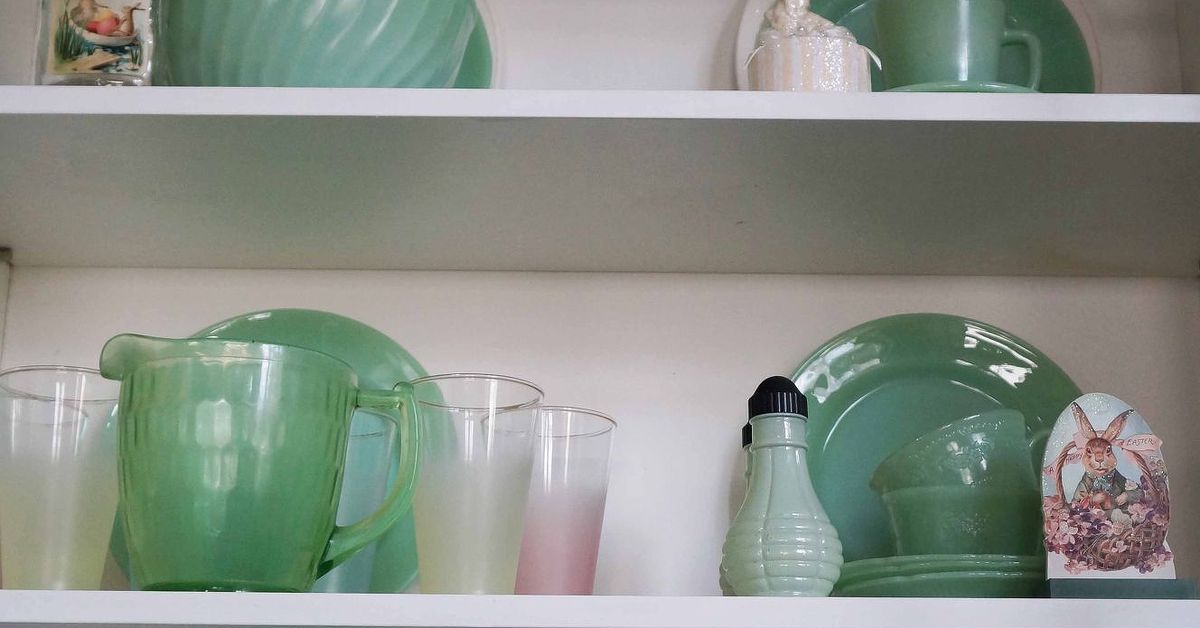
Green glass is one of my favorite shortcuts because it looks decorative without screaming a particular holiday. Vintage-inspired glassware, bottles, jars, pitchers, or serving dishes can remain on shelves throughout spring.
If you enjoy thrifting, older green glass and pottery can bring character to a seasonal display. The combination of glass, sunlight, and varying shades of green creates more visual interest than a shelf packed with identical decorations.
A Flexible Spring Wreath
Instead of making two completely different wreaths, begin with a grapevine or greenery base. Attach shamrock ribbon or a small St. Patrick’s Day sign temporarily. After March 17, remove those elements and replace them with speckled eggs, pastel ribbon, or spring flowers.
Seasonal craft guides regularly use wreaths, garlands, moss, paper decorations, greenery, and floral elements because they are simple ways to change the appearance of a room without replacing its permanent decor.
Plants as Living Decorations
Nothing says green quite as convincingly as an actual plant. A collection of small houseplants can serve as a centerpiece, decorate a kitchen windowsill, or brighten an entry table. Unlike plastic holiday decorations, plants do not become socially unacceptable the morning after the holiday.
For a dining table, keep arrangements low enough that guests can see one another. Small leafy plants in simple pots are particularly effective because the natural green provides color while white, cream, or pastel containers can shift the display toward Easter.
Transforming the Table From St. Patrick’s Day to Easter
The dining table is probably the easiest place to demonstrate how versatile green can be.
For St. Patrick’s Day
Begin with a white or neutral tablecloth. Add green napkins, clear or green-tinted glasses, and a centerpiece made with foliage, ornamental cabbage, or flowers. Small touches of gold can reference the playful pot-of-gold side of the holiday without making the table resemble a casino lobby.
Instead of buying plates printed with shamrocks, use regular white dinnerware and add removable holiday details. A paper shamrock tied around a napkin takes seconds to remove when the celebration is over.
For Easter
Keep the green centerpiece and neutral dinnerware. Replace the shamrocks with naturally colored or painted eggs. Add pastel napkins, miniature baskets, flowers, or simple bunny place cards. Easter decorating experts frequently mix seasonal flowers, eggs, spring colors, greenery, and natural textures, so the transition feels almost automatic.
The result is a table that looks intentionally redesigned even though perhaps 75 percent of it never moved.
DIY Decorations That Do Not Look Like a Kindergarten Emergency
Holiday crafts are fun, but there is a fine line between charming handmade decor and discovering glitter in your carpet until 2034. I prefer simple projects using materials that can be reused.
Paper Shamrock Garland
Cut shamrocks from several shades of green cardstock and string them along natural twine. Mixing dark and light greens creates a more sophisticated effect than using one neon shade. After the holiday, save the twine and recycle or store the paper shapes.
Moss-Covered Shapes
Moss works particularly well because it belongs visually to both St. Patrick’s Day and Easter. A moss-covered shamrock can appear in March, while moss surrounding eggs, pots, or small spring flowers works beautifully for Easter.
Naturally Inspired Easter Eggs
Rather than making every egg pink or blue, include several shades of green. Olive, sage, mint, and botanical patterns look especially attractive alongside white and naturally brown eggs. Decorated eggs have a long cultural history, and modern Easter displays frequently treat them as small pieces of art rather than simply objects to hide in the yard.
Bring the Green Theme Into the Kitchen
Decorating does not have to stop at the centerpiece. Food can join the color story without requiring you to dye everything radioactive green.
For St. Patrick’s Day, a green snack board can include cucumber, green grapes, broccoli, celery, sliced green apples, herbs, avocado dip, pistachios, and other naturally green ingredients. It is festive, colorful, and considerably more appetizing than discovering someone has added green food coloring to mashed potatoes.
For Easter brunch, keep fresh herbs and green vegetables in the menu while introducing traditional spring favorites, eggs, breads, salads, fruit, and desserts. The visual connection between food and decor can make the entire gathering feel coordinated without being overly themed.
A Quick Easter Egg Safety Reminder
If hard-cooked eggs are part of your decorating or egg hunt, remember that they are still food. USDA guidance recommends keeping eggs refrigerated and not leaving them at room temperature for more than two hours. Eggs used outdoors can also come into contact with dirt, animals, lawn chemicals, or other contaminants, so families planning to eat the eggs afterward should handle them carefully.
Make the Holidays Fun for Kids Without Buying More Stuff
Children are excellent holiday decorators because subtlety has never slowed them down. Give a child three green crayons, some paper, and ten minutes and you may receive a shamrock large enough to qualify as real estate.
That enthusiasm can be used to create inexpensive family traditions. Let children make paper shamrocks for March and then decorate eggs, baskets, or spring pictures for Easter. Plastic eggs left from an Easter hunt can be reused for matching games or other activities instead of immediately entering the mysterious plastic container ecosystem in the garage.
Family craft resources commonly emphasize reusable materials, homemade games, baskets, garlands, and simple projects because the activity itself often becomes more memorable than the finished decoration.
How to Make Your Green Decorating More Sustainable
There is another reason I like decorating across both holidays with the same foundation: it reduces waste.
Seasonal decor can become surprisingly expensive when every celebration requires new signs, plates, napkins, garlands, figurines, and throw pillows. A more sustainable strategy is to build a reusable collection of neutral and green pieces and change only a few recognizable accents.
The U.S. Environmental Protection Agency encourages consumers to consider whether they already own, can reuse, borrow, repair, or repurpose items before buying new goods. That philosophy works perfectly for holiday decorating.
Try keeping one spring decorating box instead of separate mountains of St. Patrick’s Day and Easter items. Inside might be green ribbons, faux moss, neutral baskets, floral picks, reusable eggs, small signs, and a few favorite shamrocks. Glassware, ceramic pieces, linens, and plant pots can remain part of your everyday home.
You spend less money, need less storage, and reduce the annual ritual of wondering why you own seventeen decorative rabbits.
A Simple Decorating Timeline
If you want the transition to feel effortless, decorate in stages.
Early March
Bring out greenery, green glass, moss, white ceramics, and natural materials. Add a wreath and perhaps a few early spring branches.
The Week Before St. Patrick’s Day
Layer in shamrocks, Irish-inspired accents, touches of gold, green table linens, and a playful decoration or two. This is the moment when you can safely increase the green volume.
After March 17
Remove shamrocks, leprechauns, and strongly themed signs. Leave the green foundation alone. Add pastel flowers, Easter eggs, baskets, and rabbit or chick details.
After Easter
Remove the explicitly Easter-themed pieces while keeping plants, glassware, flowers, moss, natural baskets, and soft green textiles. Congratulations: your Easter decorations have quietly become regular spring decor.
The Experience of Showing My Green Through Both Holidays
The most enjoyable thing about combining St. Patrick’s Day and Easter decorating is how gradually the house changes. Instead of waking up one morning and replacing an entire holiday with another, the rooms seem to move through spring naturally.
The experience begins with green. A few pieces appear on a shelf. Maybe it is a green glass pitcher catching afternoon light, a leafy plant near the window, or a mossy wreath on the door. Then St. Patrick’s Day arrives and the display gets a little more mischievous. A shamrock shows up. Gold sneaks onto the table. Someone inevitably suggests that the green centerpiece needs more green, which is how you discover that apparently there is no legally recognized upper limit for St. Patrick’s Day decorations.
What makes the process satisfying is that the house still looks like itself. I prefer seasonal decorating when guests can recognize the room underneath it. A home does not need to become a temporary gift shop to feel festive. One meaningful centerpiece, a few inherited or collected objects, and small handmade details often create more personality than twenty matching decorations purchased in a single afternoon.
The transition after St. Patrick’s Day is my favorite part. Take away the shamrocks and the remaining greenery suddenly feels calmer. Replace gold accents with soft pink or lavender. Put speckled eggs in the bowl that previously held green ornaments. Add tulips to the pitcher. Set a little woven basket where the pot-of-gold decoration had been sitting.
Almost nothing has changed, and yet everything feels different.
That is when green really earns its place as the bridge between the holidays. During St. Patrick’s Day, it feels lively and celebratory. Around Easter, the same color becomes botanical and peaceful. By late spring, it simply feels natural.
There is also something pleasant about using objects with actual history. A green glass bowl picked up at a thrift store, a basket that comes out every Easter, children’s handmade decorations saved from previous years, or a plant that somehow survived both the holidays and my questionable watering schedule adds more character each season.
Family participation makes the experience better. Children can cut shamrocks, decorate eggs, choose flowers, arrange baskets, or help build a green snack board. Not every creation will qualify for a design magazine. One egg may look as though it survived a small explosion. That is completely fine. Holiday decorating should produce memories, not performance reviews.
I also like how this approach removes pressure to get everything perfect. Some years there may be a full Easter table with flowers and carefully arranged place settings. Other years, showing my green might mean one plant, one bowl of dyed eggs, and a shamrock stuck in a vase. The important part is creating a seasonal signal that says winter is ending and something brighter is arriving.
In that sense, St. Patrick’s Day and Easter work surprisingly well together. One celebrates heritage and community; the other carries deep religious importance for Christians while also being surrounded by widely enjoyed spring traditions. Their meanings remain distinct, but the season around them shares themes of gathering, color, growth, and renewal.
And if a single green pitcher can survive both holidays without being packed away, I consider that a decorating victory.
Conclusion: Let Green Carry You Through Spring
Showing my green for St. Patricks Day and Easter does not require two separate decorating plans. Green provides a natural foundation that can move easily from shamrocks and Irish-inspired details to Easter eggs, flowers, baskets, and soft spring colors.
The most successful approach is simple: invest your effort in versatile pieces, use natural greenery, mix several shades of green, and rely on small accessories to identify each holiday. Reuse wreaths, glassware, baskets, linens, and containers whenever possible. Let food, family crafts, plants, and flowers contribute to the theme instead of buying another box of temporary decorations.
Most importantly, allow the house to look lived in. Spring celebrations are supposed to feel cheerful, welcoming, and personal. A crooked handmade shamrock beside an elegant vase of tulips may not be perfectly coordinated, but it probably tells a better story.
So bring out the emerald glass, rescue the moss wreath from the closet, add a few shamrocks, and keep those Easter eggs nearby. This spring, green does not have to belong to just one holiday. It can carry the celebration all the way from St. Patrick’s Day into Easter and beyond.














