
Walk through a good farmers market and there is usually a moment when confidence turns into confusion. Tomatoes? Easy. Carrots? No problem. Then you meet a pale, knobby celeriac that looks like it was designed by a committee of witches, a citron shaped like yellow fingers, or a basket of greens whose handwritten sign says “purslane.” Suddenly, dinner feels like a pop quiz.
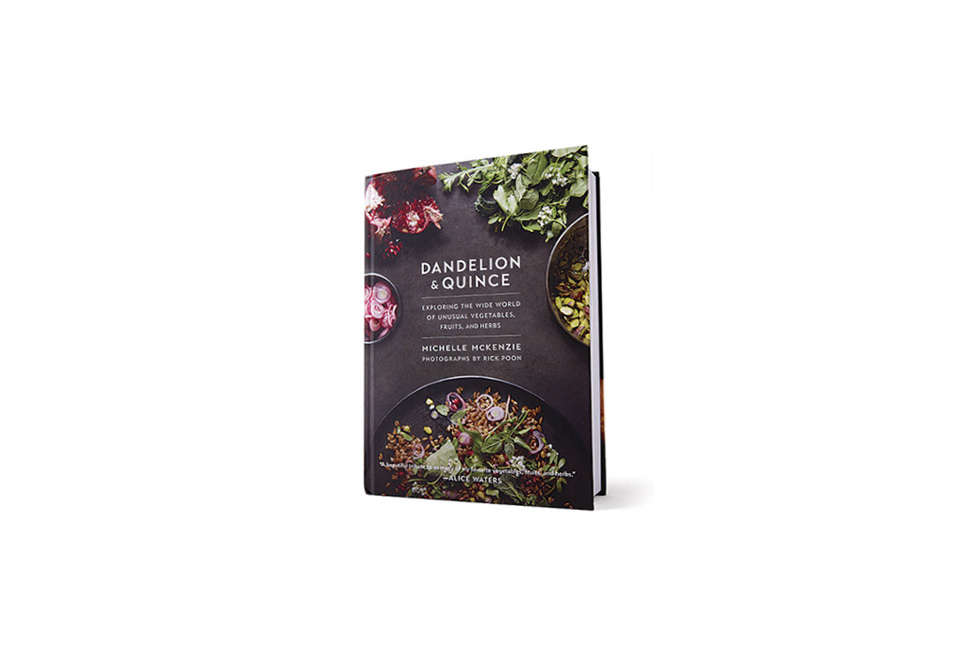
Dandelion & Quince: Exploring the Wide World of Unusual Vegetables, Fruits, and Herbs, by Michelle McKenzie, was created for precisely that moment. Published by Roost Books in 2016, the illustrated cookbook explores more than 35 less-familiar plants and offers more than 150 recipes designed to make them useful rather than merely interesting. It earned recognition as a James Beard Award nominee in Vegetable Cooking and an IACP cookbook award runner-up, helping establish it as an important guide to adventurous, seasonal cooking.
But Dandelion and Quince is not really about collecting exotic ingredients for bragging rights. Its more valuable lesson is simpler: cooks often overlook delicious food because nobody has shown them what to do with it.
What Is Dandelion and Quince About?
The full title tells much of the story. McKenzie focuses on unusual vegetables, fruits, herbs, flowers, roots, leaves, and other edible plants that may appear at specialty grocery stores and farmers markets but rarely become weekly shopping-list regulars.
The book covers ingredients including dandelion greens, Buddha’s hand, burdock, cardoons, celeriac, daikon radish, fava leaves, fennel fronds, fig leaves, gooseberries, green garlic, horseradish, kohlrabi, kumquats, nettles, persimmons, pomegranates, purslane, quince, ramps, rose petals, sorrel, squash blossoms, sunchokes, and tomatillos. In other words, it is practically a support group for vegetables that have spent years watching broccoli get all the attention.
Each ingredient is treated as something to understand rather than fear. Instead of simply dropping an unusual vegetable into a complicated recipe, McKenzie discusses its character, seasonality, preparation, and compatible flavors before demonstrating ways to cook with it.
A Field Guide That Happens to Include Dinner
This structure makes the cookbook particularly useful. You can approach it with a specific question: What exactly is that strange fruit? Which part do I eat? Does it need peeling? Is it supposed to taste bitter? And, most importantly, did I just spend six dollars on a root I have absolutely no plan for?
Publishers Weekly praised the book’s practical approach, noting that many featured foods are ingredients shoppers have probably seen without knowing how to use. The recipes also tend to employ recognizable cooking methods, so the ingredients may be adventurous without requiring the cook to become a laboratory technician.
Michelle McKenzie Makes Unusual Produce Less Intimidating
McKenzie’s background helps explain why the book balances curiosity with instruction. She worked as the longtime program director and chef at 18 Reasons, a San Francisco community cooking school, and studied nutrition and biochemistry at the University of North Carolina at Chapel Hill before attending the Natural Gourmet Institute for Health and Culinary Arts.
That combination of culinary instruction, science, and hands-on cooking is visible throughout Dandelion & Quince. The book does not assume that readers already know what cardoons taste like or why someone would willingly bring nettles into the kitchen. It begins with the ingredient itself.
The result is teaching rather than showing off. That distinction matters. Plenty of cookbooks can make an unusual vegetable look beautiful in a professionally photographed kitchen. A useful cookbook makes you believe you could buy it Saturday morning and cook it Saturday night.
Dandelion Greens: Bitterness Becomes an Ingredient
Dandelion is an ideal symbol for the book because Americans are trained to see it as a lawn problem long before considering it food. Culinary dandelion greens, however, bring an assertive bitterness that can become surprisingly elegant when handled thoughtfully.
The James Beard Foundation highlighted McKenzie’s baby dandelion salad pairing the greens with fresh figs and pancetta. The combination illustrates one of the cookbook’s most useful principles: strong flavors do not always need to be eliminated. They can be balanced.
Sweet figs soften bitterness. Pancetta supplies salt, fat, and savory depth. An acidic vinaigrette brings brightness. Suddenly the allegedly difficult green makes perfect sense.
Learning to Appreciate Bitter Foods
Modern grocery stores often favor mild produce because it is easy to sell. Yet bitterness is an essential part of a broad culinary vocabulary. Radicchio, mustard greens, dandelion, horseradish, and some herbs demand more involvement from the cook, but they also create contrast.
The trick is rarely to smother them until they surrender. Instead, consider partners: sweetness, creamy dairy, rich meat, toasted nuts, fruit, acidity, or good olive oil. Once you think in terms of balance, bitter vegetables stop behaving like troublesome houseguests.
Quince: The Fruit That Rewards Patience
If dandelion represents the overlooked weed, quince represents the overlooked fruit.
A raw quince can seem remarkably uncooperative. It is hard, aromatic, and generally much more appealing after cooking than when eaten straight from the hand. Apply heat, sugar, and patience, however, and quince develops into something fragrant, complex, and deeply suited to fall cooking.
McKenzie uses quince in dishes such as a quince, almond, and brown butter torte, demonstrating the book’s talent for connecting unfamiliar produce with reassuring culinary forms. A reader may not know quince, but cake is familiar territory.
This technique appears repeatedly throughout the book: the ingredient is allowed to be unusual while the cooking process provides a handrail.
Recipes That Turn Curiosity Into Practical Cooking
Dandelion and Quince contains plenty of combinations that sound restaurant-worthy, but one reason critics responded positively is that the book remains surprisingly practical.
Buddha’s Hand and Citrus
Buddha’s hand may be among the strangest fruits at an American specialty market. Instead of the familiar round shape of a lemon or orange, it divides into multiple yellow finger-like sections.
McKenzie’s approach demonstrates that novelty can become useful once cooks stop asking, “What on Earth is this?” and start asking, “What flavors does it contribute?” One notable example is her six-citrus rice salad, which incorporates thinly shaved Buddha’s hand as part of a larger citrus composition. The San Francisco Chronicle highlighted the dish while naming Dandelion & Quince among its favorite cookbooks of 2016.
Fig Leaves Beyond the Fig
The book also challenges the habit of treating only the obvious part of a plant as edible. Fig leaves, celery leaves, fava leaves, fennel fronds, blossoms, and other commonly ignored components receive attention.
This can change the economics of cooking as well as its flavor. If a bunch of produce comes with edible tops, leaves, or stems, learning to use them creates additional meals from something that might otherwise land in the compost bin.
Nettles Without the Drama
Nettles have possibly the worst marketing department in the vegetable kingdom. “Stinging” is right there in the name.
Yet when correctly identified and properly handled, culinary nettles have a long history as food. Dandelion & Quince treats them as an ingredient rather than a stunt, placing them in preparations such as soup. The important lesson is not that everyone must immediately start filling reusable shopping bags with prickly vegetation. It is that appropriate preparation can transform an intimidating ingredient into an approachable one.
The Farmers Market Philosophy Behind Dandelion and Quince
American farmers markets are important not only because they sell tomatoes that occasionally taste like actual tomatoes. They can also expose shoppers to crop varieties and specialty produce that large supermarkets may not routinely carry.
USDA resources emphasize that seasonal availability varies with region, weather, and growing conditions, while farmers markets help connect communities directly with producers. This makes them a particularly useful environment for the style of cooking encouraged by Dandelion & Quince.
Instead of entering the market with a rigid recipe and hunting for twelve predetermined ingredients, the book encourages a more flexible pattern:
- See what looks particularly good.
- Ask the farmer what it is.
- Learn how people usually prepare it.
- Think about complementary flavors.
- Take it home and experiment.
This may sound obvious, yet it represents a meaningful shift. Grocery shopping becomes part of cooking rather than merely the administrative work required before cooking can begin.
Seasonal Cooking Without Becoming a Food Snob
There is a dangerous stage in seasonal cooking where enthusiasm can mutate into self-importance. One minute you are buying fresh persimmons; the next you are giving your relatives a lecture because somebody served asparagus at the wrong time of year.
Dandelion and Quince works better when interpreted as an invitation rather than a rulebook.
Seasonality offers inspiration. A market’s changing inventory naturally prevents a cook from repeating the same ten dishes indefinitely. Spring might introduce green garlic and fava leaves. Summer offers blossoms, berries, herbs, and tomatillos. Cooler seasons can turn attention toward persimmons, quince, roots, bitter greens, and citrus.
The point is not culinary purity. It is noticing what is available and developing enough confidence to respond to it.
Why Dandelion and Quince Still Feels Relevant
The cookbook was released in August 2016, but its central idea has aged remarkably well because it addresses a problem that has very little to do with culinary trends.
Most home cooks want variety. At the same time, many hesitate to spend money on an ingredient they do not understand. That hesitation creates a loop: unfamiliar vegetables are not purchased because people do not know how to cook them, and people never learn how to cook them because they do not purchase them.
Dandelion & Quince breaks that loop.
It encourages readers to build transferable skills: tasting carefully, understanding bitterness and acidity, recognizing seasonal produce, using more of the plant, making substitutions, and adjusting recipes according to what is available.
Those lessons remain useful even if you never cook a single recipe exactly as written.
It Also Makes Better Use of the Produce Aisle
Think about the average supermarket produce department. Hundreds of ingredients may technically be available over the course of a year, yet many households cycle through a short cast of reliable performers: potatoes, onions, carrots, lettuce, broccoli, tomatoes, bananas, apples.
There is nothing wrong with those foods. Broccoli has worked hard for its reputation.
But adding celeriac one week, persimmons the next, or mustard greens after that expands both flavor and cooking knowledge. Variety becomes less about searching the internet for another way to roast chicken and more about changing the plants surrounding that chicken.
Who Should Read Dandelion and Quince?
This cookbook makes the most sense for home cooks who enjoy farmers markets, community-supported agriculture boxes, specialty grocery stores, gardening, seasonal eating, or simply learning what unfamiliar foods can do.
It is especially useful for cooks who have ever received a CSA box containing an unidentified leafy object and stared at it as if expecting the vegetable to introduce itself.
Beginners can use the plant profiles as introductions. More experienced cooks may find the flavor combinations valuable because the recipes suggest new ways of approaching ingredients they already recognize.
Readers looking exclusively for fast weeknight recipes built around standard supermarket staples may find other cookbooks more immediately convenient. But anyone interested in becoming a more intuitive cook is likely to understand why Dandelion & Quince received serious attention from cookbook critics and major culinary awards.
What Dandelion and Quince Teaches Beyond Recipes
The strongest idea in the book may be that cooking confidence is not the ability to memorize hundreds of recipes. It is the ability to meet an ingredient you have never cooked before and make a reasonable plan.
You examine it. You taste when appropriate. You consider texture. You decide whether it needs heat, acidity, sweetness, fat, or salt. You compare it with ingredients you already know. Then you cook.
Sometimes dinner will be excellent. Occasionally it will be educational in the way people describe disasters after sufficient time has passed.
Both outcomes make you a better cook.
A Practical Experience With the Dandelion and Quince Approach
To understand what the Dandelion & Quince philosophy can offer, imagine approaching a farmers market with one simple rule: buy one edible plant you have never cooked before.
The first challenge arrives almost immediately. Familiar produce suddenly becomes incredibly persuasive. Tomatoes practically shout, “You already know how to make pasta sauce!” Potatoes offer the comforting certainty of roasting. Meanwhile, a pile of kohlrabi sits quietly in the corner looking like a small purple satellite.
You choose the kohlrabi.
The purchase itself changes the trip. Instead of merely paying, you ask the grower how it tastes. The answer gives you a starting point: crisp, mildly sweet, somewhere in the cabbage family. You learn that both the bulb and tender leaves can be useful. Now the strange object has stopped being strange. It has become dinner.
Back home, the instinct may be to search for an elaborate “authentic kohlrabi recipe.” A more useful experiment is to compare the vegetable with foods you already understand. If it is crisp and pleasantly mild, perhaps it can be sliced raw. If its dense flesh behaves like other sturdy vegetables, perhaps roasting will work.
You divide it in half. One portion is cut into thin matchsticks and tossed with lemon juice, olive oil, salt, herbs, and something crunchy. The other half goes into a hot oven until the edges brown.
The raw version is fresh and crisp. The roasted version becomes sweeter. Neither requires culinary wizardry. The supposedly unusual ingredient responds to ordinary techniques.
On another visit, the experiment might be dandelion greens. Their bitterness can initially seem aggressive, especially to a palate accustomed to lettuce. Instead of declaring them terrible and filing the experience under “things healthy people pretend to enjoy,” you adjust the surrounding flavors. Add something rich, something sweet, and enough acid to sharpen the whole dish. Suddenly the bitterness has a role.
Quince teaches a different lesson. Raw, it can feel stubborn and unrewarding. Cooking it slowly demonstrates that an ingredient’s first impression is not necessarily its final personality. Aroma develops. Texture softens. Flavor deepens. Patience becomes part of the recipe.
After several trips like these, the biggest change is not a new favorite vegetable. It is behavior.
You begin looking at fennel fronds instead of throwing them away. Radish tops raise questions. A basket of unusual citrus becomes intriguing rather than impractical. When a recipe calls for one bitter green and the market has another, substitution feels possible rather than illegal.
That is the real experience at the heart of Dandelion and Quince. The book expands the kitchen by expanding what the cook notices.
Eventually, farmers-market shopping stops being a mission to locate ingredients and becomes a conversation between season, grower, cook, and appetite. You still buy potatoes. Of course you buy potatoes. But now the mysterious knobby vegetable sitting beside them has a fighting chance.
Conclusion: Curiosity May Be the Most Useful Kitchen Tool
Dandelion & Quince succeeds because it makes adventurous cooking feel achievable. Michelle McKenzie does not treat uncommon vegetables, fruits, herbs, leaves, flowers, and roots as culinary trophies. She treats them as food waiting for someone to understand them.
With more than 150 recipes and profiles of more than 35 plants, the book offers enough practical guidance to help readers move beyond the comfortable center of the produce aisle. Yet its lasting value comes from something broader: it teaches curiosity.
Buy the unfamiliar fruit. Ask the farmer about the strange green. Learn why bitterness is useful. Cook the part you normally discard when it is safely edible. Let seasons influence dinner. Make mistakes. Taste again.
A kitchen does not become more interesting because it contains more expensive equipment. Sometimes it becomes more interesting because somebody finally decides to bring home the quince.
Note: Some plants discussed in wild-food cooking, including dandelions and nettles, require correct identification and safe handling. Do not forage or eat unidentified plants, and avoid plants exposed to pesticides, herbicides, roadside contamination, or other potentially unsafe conditions.














