
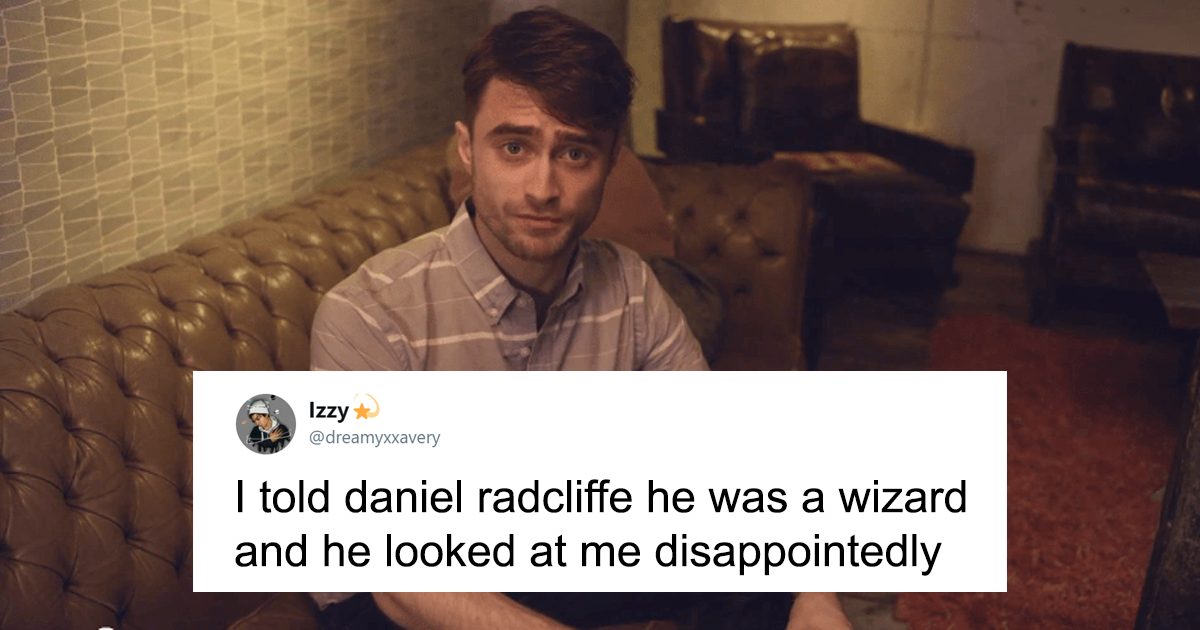
Meeting a celebrity sounds wonderfully simple when it happens inside your imagination. You walk over calmly, deliver one sparkling sentence, receive an appreciative laugh, and leave with a photograph in which neither of you is blinking. Perhaps the celebrity even pauses and says, “You know, you are unusually charming. Would you like to join my inner circle?”
Reality usually chooses a different script. Your heart accelerates, your vocabulary abandons the building, and the carefully rehearsed compliment becomes a question about chicken nuggets. Instead of creating a treasured memory, you accidentally ask a world-famous actor to sign something called “penguin paper.”
That painfully human gap between expectation and performance powered a viral Twitter conversation in November 2018. A user asked people to reveal the stupidest things they had ever said to celebrities, beginning with her own confession: she told Lady Gaga that the singer resembled “Mary Antoinette” when she meant Marie Antoinette. Hundreds of users responded with equally awkward celebrity encounters.
What followed was less a collection of failures than a glorious museum of temporarily malfunctioning brains. The exhibits included mistaken identities, accidental oversharing, terrible puns, unnecessary information, and questions no publicist could possibly have prepared for.
Note: The celebrity encounter examples below are paraphrased from public accounts. A brief awkward exchange should not be treated as a complete portrait of either the fan or the celebrity involved.
The Viral Question That Opened the Awkwardness Floodgates
The original prompt was irresistible because almost everyone understands the danger. Even people who do not follow celebrity news can imagine the pressure of suddenly meeting someone whose face they have seen on screens, album covers, posters, or magazine pages for years.
On November 6, 2018, Twitter user @rachymarshall invited followers to share their worst verbal disasters around famous people. Publications including BuzzFeed, Teen Vogue, Glamour, and Bored Panda quickly collected the funniest responses as the thread spread across the internet.
The appeal was immediate. These were not carefully polished promotional interviews or suspiciously perfect meet-and-greet stories. They were snapshots of ordinary people realizing, several seconds too late, that their mouths had become independent contractors.
The Funniest Things Fans Said to Celebrities
Lady Gaga Became the Wrong Antoinette
The story that launched the thread remains one of its finest examples. The fan wanted to compare Lady Gaga’s elaborate appearance to Marie Antoinette. Unfortunately, the sentence arrived with the first name Mary.
It was not insulting. It was not invasive. It was simply historically incorrect in a way that probably caused every forgotten high school history lesson to return at once. The mistake is particularly funny because the intended compliment was obvious. The brain had all the correct ingredients; it merely assembled them while wearing oven mitts.
Taylor Swift Was Asked Whether She Was a Hologram
One overwhelmed fan reportedly asked Taylor Swift whether she was actually a hologram. The question makes almost no practical sense, yet it perfectly captures the unreality of seeing an enormously famous person standing nearby.
Another fan received a compliment from Swift about a necklace and immediately explained that it had been purchased through a two-for-$20 sale. Swift reportedly responded politely, despite wearing a jacket worth considerably more. The exchange transformed a glamorous celebrity meeting into a spontaneous retail briefing.
This is what makes the best awkward celebrity encounters so charming. The fan is offered a magical moment and responds with clearance information.
Brendon Urie Received an Important Chicken-Nugget Inquiry
When one fan met musician Brendon Urie, excitement apparently destroyed every prepared question. What emerged instead was a request to know when he had last eaten chicken nuggets.
Perhaps the fan had planned to discuss songwriting, touring, performance, or artistic inspiration. Perhaps the nuggets had simply been waiting in the subconscious for their moment. Either way, Urie was confronted with the kind of hard-hitting culinary journalism that awards committees consistently overlook.
Harry Styles Was Given an Immediate Bathroom Update
Harry Styles greeted one fan by asking how they were doing. The fan responded by announcing a need to use the restroom.
Technically, this was an honest answer. It was also efficient, medically relevant, and completely free of celebrity worship. While other fans might offer praise, this person delivered a live report from the bladder department. Another admirer apologized repeatedly to Styles while attempting to express affection, turning a joyful introduction into something resembling a tiny emotional hostage negotiation.
Adam Driver Met Another Licensed Driver
A teenage fan who met Adam Driver showed him a driver’s license and made a pun about also being a driver. According to the fan’s account, the actor offered a restrained laugh.
Was it a great joke? No. Was it the kind of joke that becomes irresistible when the celebrity’s surname has been sitting there all day, practically begging for trouble? Absolutely. Somewhere in the world, another person is still preparing to tell Christian Bale about hay.
Jude Law Signed the Penguin Paper
One admirer encountered Jude Law without a normal autograph book. The only available writing surface was a pad decorated with penguins. Under pressure, the fan urgently requested that the actor sign the penguin paper.
Law reportedly laughed and agreed. This is an important detail because it reveals that an awkward sentence does not necessarily ruin an encounter. Sometimes it improves the story. A standard autograph might be forgotten in a drawer. An autograph on penguin stationery becomes family history.
Miranda Kerr Complimented a Fan’s Scent
After meeting model Miranda Kerr in Central Park, one fan was told that they smelled good. A smooth response might have mentioned perfume or simply offered thanks. Instead, the fan attributed the scent to sweat.
There is confidence, and then there is accepting an international model’s compliment by advertising your perspiration. Yet the reply probably succeeded because it was unexpectedly genuine. Nobody could accuse that fan of using a rehearsed line.
Bebe Rexha Was Mistaken for Rita Ora
Celebrity misidentification supplied another category of disaster. At a red-carpet event, a fan began calling enthusiastically for Rita Ora, only to realize that the person in view was Bebe Rexha.
Similar mistakes happen to entertainers more frequently than audiences might assume. Katharine McPhee once shared footage of a reporter apparently mistaking her for Sophia Bush and referring to a television role that McPhee had never played. McPhee later joked about the mix-up, demonstrating that mistaken identity can become good comedy when everyone survives the initial confusion.
Why Do Intelligent People Say Ridiculous Things Around Celebrities?
Familiarity Collides With Complete Unfamiliarity
A fan may know a celebrity’s songs, interviews, characters, clothing, pets, favorite snacks, and several years of personal trivia. The celebrity, meanwhile, knows nothing about the fan. This imbalance can create a peculiar emotional experience: one person feels familiar, while the other remains a stranger.
Researchers and media scholars describe these one-sided connections as parasocial relationships. The concept dates to the 1950s, when Donald Horton and R. Richard Wohl examined how mass media could create an illusion of face-to-face intimacy between audiences and performers. Social media has intensified that feeling by placing celebrity updates, videos, jokes, and personal disclosures directly into a fan’s daily feed.
Then the fan encounters the real person. The familiar public image and the unfamiliar human being suddenly occupy the same space. The brain tries to reconcile them while also managing excitement, self-consciousness, and the knowledge that this moment may never happen again.
The result is often linguistic mashed potatoes.
Embarrassment Is a Social Emotion
Embarrassment belongs to a group of self-conscious emotions connected to social standards and other people’s judgments. Research describes emotions such as embarrassment, guilt, shame, and pride as forces that help people respond to social expectations. In other words, embarrassment hurts because humans care deeply about how they appear to others.
A celebrity encounter raises the stakes. The fan may feel watched by friends, security employees, cameras, other fans, and the celebrity. Every ordinary conversational choice suddenly appears to require the precision of a spacecraft landing.
That pressure encourages overthinking. Instead of saying, “I enjoy your work,” the speaker mentally reviews 14 possible alternatives. By the time a sentence is selected, half of it belongs to one option and half belongs to another. This is how Marie becomes Mary and a group hug becomes an accidentally suggestive request to be sandwiched between two actors.
There Is Almost No Time to Recover
Many celebrity meetings happen in tightly controlled environments. A fan may have only a few seconds at a signing table, backstage entrance, convention, red carpet, or organized photo opportunity.
Normal conversation allows time for clarification. A celebrity meet-and-greet can feel like speed dating conducted during an evacuation drill. Once the strange sentence escapes, a staff member may already be guiding the next person forward.
The fan then spends the next decade inventing better responses while shampooing.
Why Twitter Loved These Celebrity Encounters
The Stories Made Fame Feel Less Intimidating
The thread placed celebrities in unusual but relatable situations. Instead of controlling an interview or performing onstage, famous actors and musicians were reacting to penguin stationery, mistaken names, discount jewelry, and urgent restroom announcements.
Most of the stars in the shared accounts appeared to respond with patience, laughter, or politeness. That softened the social distance between celebrity and fan. The famous person remained famous, but the interaction became recognizably human.
Public Embarrassment Became Collective Comedy
A private mistake can feel unbearable because the person assumes nobody else has ever behaved so awkwardly. A viral thread reverses that assumption. Hundreds of similar confessions turn an individual humiliation into a group activity.
The format also lets storytellers control the memory. They choose the wording, explain what they intended to say, and invite others to laugh with them rather than at them. Retelling the incident transforms it from evidence of personal failure into entertaining social currency.
Celebrity Twitter Had Already Made Awkwardness a Genre
Long before this particular thread, online comments directed at famous people had become entertainment in their own right. Jimmy Kimmel’s recurring “Mean Tweets” segment invited celebrities, musicians, and athletes to read harsh or bizarre comments about themselves. Many participants responded with jokes, disbelief, or corrections of the commenters’ spelling.
The awkward-fan thread offered a gentler reversal. Instead of celebrities facing foolish comments from distant critics, fans volunteered their own failures. The humor came from nervous affection rather than hostility.
How to Talk to a Celebrity Without Becoming Tomorrow’s Viral Story
Prepare One Simple Sentence
A short statement is easier to deliver than a speech. Mention one specific performance, song, book, game, or project that mattered to you. “Your album helped me through a difficult semester” is more memorable and manageable than a complete biography of your emotional development.
Avoid Questions About Private Matters
Social media can make fans feel unusually close to public figures, but familiarity with a celebrity’s content is not the same as a mutual friendship. Modern fandom can become unhealthy when admiration turns into entitlement to a star’s private time, relationships, body, or personal information.
Ask about the work when questions are welcome. Do not demand explanations about gossip, health, family conflicts, romantic relationships, or other subjects that would be inappropriate with any stranger.
Accept That Awkwardness May Still Win
No amount of preparation can guarantee a flawless celebrity interaction. Your voice may become unexpectedly quiet. You may forget a name you have known for 12 years. You may call an award-winning singer a hologram.
The goal is not perfection. The goal is to remain respectful. A harmless verbal stumble usually becomes a funny memory. Boundary-crossing behavior becomes something else entirely.
Experiences Behind the Awkward Celebrity Moment
A Composite Fan Experience: From Perfect Plan to Word Salad
Consider a typical experience assembled from the patterns found throughout these public stories. A fan learns that a favorite actor will attend a convention. For several days, the fan prepares a thoughtful statement about a performance that provided comfort during a difficult period.
The sentence is excellent. It is warm without being intrusive, specific without becoming a lecture, and brief enough for a crowded signing line. The fan practices it in the mirror, in the car, and while making coffee. A friend listens to six rehearsals and confirms that the speech sounds completely normal.
Then the actor appears.
The person who previously existed at a comfortable distance on a television screen is suddenly sitting eight feet away, drinking bottled water and looking undeniably three-dimensional. The fan’s heartbeat becomes a percussion solo. Every prepared word disappears except “performance,” “thank you,” and possibly “potato.”
When it is finally time to approach, the actor smiles and asks a simple question: “How is your day going?”
The fan’s brain receives this familiar greeting as though it were an advanced mathematics problem. Instead of saying, “Great, thank you,” the fan announces that the parking garage was confusing. The actor nods kindly. Attempting to recover, the fan begins the prepared compliment but combines it with an unrelated thought about the weather.
The finished statement suggests that the actor’s dramatic performance caused rain.
A photograph is taken. The fan walks away, initially delighted, then suddenly aware of every word spoken. Within three minutes, the encounter has been analyzed from 12 angles. By dinner, the fan has produced several imaginary versions in which the conversation was charming, sophisticated, and free of parking information.
Yet something changes when the story is shared with friends. They laugh, but not cruelly. One admits to forgetting their own name while meeting a musician. Another recalls thanking a professional athlete for “being tall.” Someone else once told a comedian that he looked tired and spent the rest of the evening trying to determine whether it had sounded sympathetic or insulting.
The embarrassing encounter becomes funny because it is no longer isolated. It joins a much larger archive of human beings failing to remain composed around people they admire.
This shared experience explains why the original Twitter thread attracted so much attention. Readers were not merely laughing at foolish comments. They were recognizing the universal terror of wanting to make a good impression and watching that desire sabotage itself.
In hindsight, the imperfect encounter may even be more valuable than the polished one imagined beforehand. A generic compliment could blur into hundreds of similar interactions. The odd remark becomes distinctive. The celebrity may forget it, but the fan gains a story capable of making friends laugh for years.
That does not mean people should deliberately say ridiculous things to celebrities. Planned weirdness often feels forced, and performers should not be treated as props in someone else’s viral-content strategy. The best stories are funny precisely because the awkwardness is accidental and the admiration is sincere.
The practical lesson is reassuring: embarrassment is survivable. Most harmless mistakes feel far larger to the speaker than they appear to everyone else. A celebrity who has met thousands of nervous fans has almost certainly heard stranger comments. The sentence replaying in your mind at 2 a.m. may have occupied only five seconds of the other person’s day.
So, should an unexpected celebrity encounter occur, breathe, be respectful, and say something simple. Should your brain ignore that advice and ask an Oscar winner about chicken nuggets, accept your fate gracefully. You may not leave with your dignity completely intact, but you will probably leave with an excellent story.
Conclusion: The Stars Are Famous, but the Awkwardness Is Universal
The viral collection of stupid things people said to celebrities succeeded because it turned starstruck embarrassment into communal entertainment. Fans misremembered historical names, confused one celebrity with another, delivered unnecessary bodily updates, displayed novelty stationery, and introduced famous people to jokes that should probably have remained in rehearsal.
Behind the laughter is a surprisingly warm idea. Fame does not remove the basic uncertainty of human conversation. Celebrities still receive confusing comments, fans still panic, and both sides often rescue the moment with patience and humor.
A flawless meeting might produce a nice photograph. An awkward meeting produces a legend. Just remember that when your carefully prepared tribute somehow becomes a detailed explanation of where you bought your socks.














