
Good friendship is already a slightly mysterious human activity. You remember birthdays, pretend not to judge questionable pizza toppings, answer the occasional midnight message, and somehow learn when “I’m fine” means “I’m fine” and when it defires an entirely different rulebook.
It doesn’t. However, a few thoughtful adjustments can make communication clearer, social situations more comfortable, and the friendship far more enjoyable for both of you.
First, a terminology note matters. In current U.S. diagnostic practice, Asperger’s disorder is no longer a separate diagnosis in the DSM framework; it was incorporated into autism spectrum disorder (ASD). Some people who were previously diagnosed with Asperger’s still use that term because it is familiar or meaningful to them. Others prefer “autistic person,” “person with autism,” or another description. The polite strategy is wonderfully simple: use the language your friend prefers.
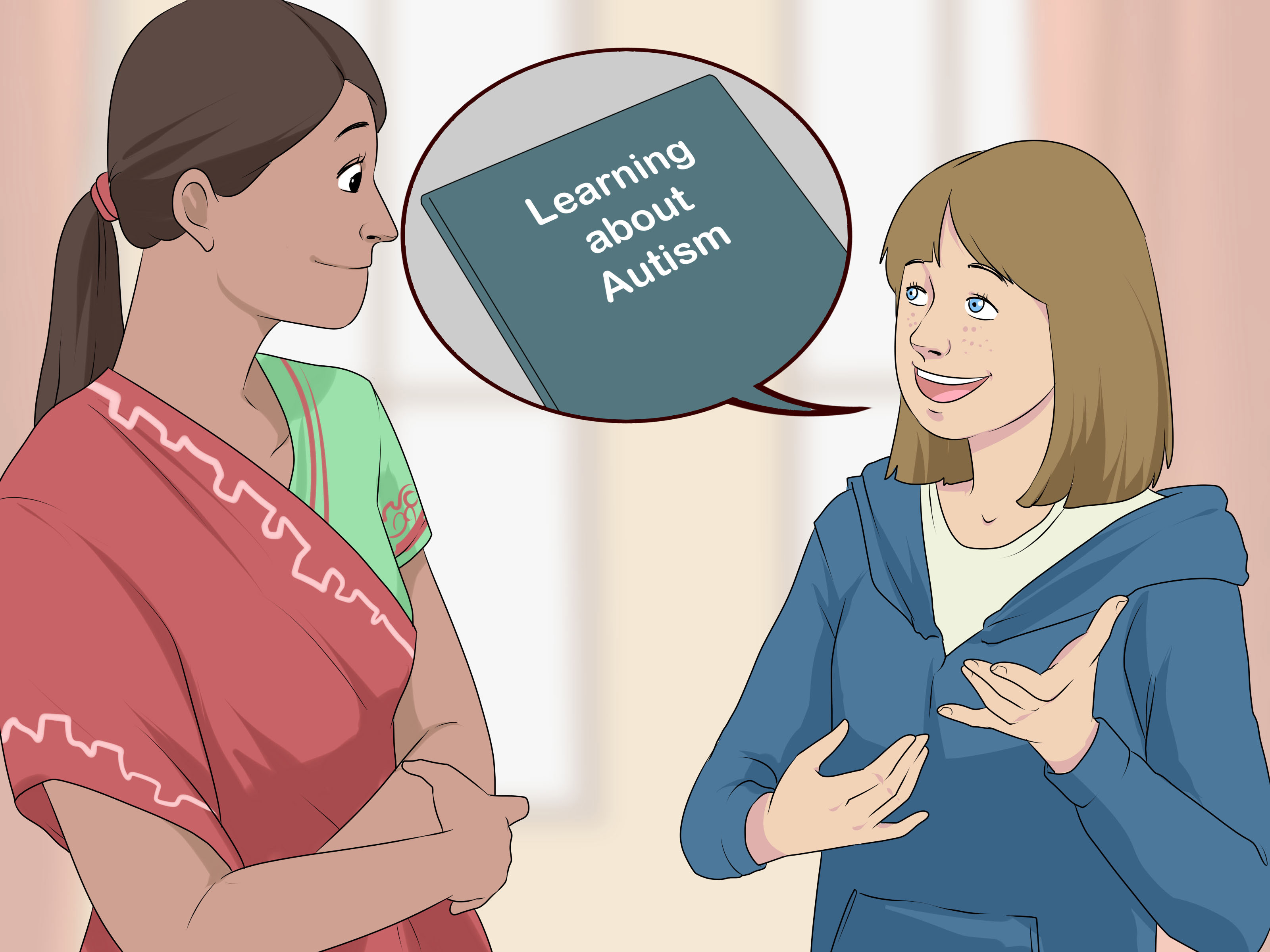
Learning how to be a good friend to someone who has Asperger’s syndrome is not about fixing their personality or becoming their unofficial therapist. It is about understanding that people may communicate, process sensory information, and handle social expectations differently. Your job is still the classic friendship job: be respectful, honest, reliable, and capable of sharing the last French fry occasionally.
Start by Seeing the Person, Not the Diagnosis
Autism is a spectrum, which means there is enormous variation in communication styles, interests, sensory experiences, strengths, and support needs. Two autistic people may have very little in common beyond meeting diagnostic criteria. National health and autism organizations consistently emphasize this individual variation. les like this one can offer useful principles, but your friend is the final expert on your friend.
Ask instead of assuming
You might read that autistic people dislike loud places and immediately cancel every concert invitation. Unfortunately, your friend may love live metal shows and own ear protection specifically so they can stand three rows from the speakers. Another person may find a moderately busy coffee shop exhausting.
Try questions such as, “Is this place comfortable for you?” or “Would you rather hang out somewhere quieter?” These questions do not need dramatic concern. Ask them the same way you would ask whether someone prefers Thai food or tacos.
Avoid treating preferences as symptoms. Someone who wants advance notice before plans change is not necessarily “being difficult.” Someone who needs alone time after a party is not automatically upset with you. Curiosity is far more useful than amateur diagnosis.
Don’t talk down to your friend
An adult with Asperger’s syndrome is an adult. A teenager is a teenager. Intelligence, speech style, eye contact, and social fluency are not interchangeable measurements.
Do not suddenly switch to the voice people reserve for toddlers and unusually nervous hamsters. Speak naturally. If your friend needs clarification, provide it. If they know far more than you about astronomy, computer architecture, medieval warfare, or Japanese trains, prepare to be thoroughly educated.
Communicate Clearly and Directly
Social communication differences are a central feature of autism. These may involve understanding tone, facial expressions, body language, conversational expectations, indirect language, or information that has not been explicitly stated. The exact experience varies significantly by person. , the practical lesson is simple: do not make your friend complete an emotional escape room every time you have something important to say.
Say what you actually mean
Suppose you want to leave a party. Saying, “Wow, it’s getting kind of late,” may seem like an obvious signal to you. Your friend might reasonably answer, “Yes, it is 11:37.” Technically? Flawless response.
Instead, say, “I’m getting tired and I’d like to leave in about ten minutes.”
If you are upset, explain the issue calmly. Rather than saying, “You should know what you did,” try, “I felt ignored when you changed the subject while I was telling you about my job interview.” That gives your friend actual information to work with.
Clear communication is not rude. In fact, many friendships would improve dramatically if everybody stopped expecting other humans to receive encrypted messages through eyebrow movements.
Clarify jokes and sarcasm when necessary
Some autistic people enjoy sarcasm and wield it with terrifying precision. Others may interpret certain statements literally, particularly when context or tone is unclear.
You do not have to abandon humor. Just notice what works between you. When a joke is misunderstood, explain it without embarrassment: “Sorry, I was joking. I didn’t mean that literally.” Then move on.
Never deliberately use sarcasm to confuse your friend and then mock them for missing it. That is not playful teasing; it is using a communication difference as entertainment.
Give time to process and respond
Your friend may occasionally pause before answering a complicated or emotional question. Resist the urge to fill every second of silence with seven additional questions.
Processing time is not the same as ignoring you. Ask your question, wait, and allow the conversation to breathe. In emotionally intense situations, your friend may even communicate more comfortably by text. Written communication can provide extra time to organize thoughts, although preferences differ from person to person.
Respect Sensory Needs and Social Energy
Sensory differences involving sound, light, touch, smell, taste, or other sensations are common in autism. Some environments can therefore be distracting, uncomfortable, or overwhelming. Autism resources also describe the value of considering sensory demands rather than assuming a person’s reaction is simply bad behavior. settings thoughtfully
A crowded sports bar may combine televisions, music, shouting, clattering dishes, flashing screens, and a waiter asking a question precisely when everyone else cheers. For some people, this is “Saturday night.” For others, it is an unwanted audition for life inside a blender.
Ask your friend what environments work best. Good options might include a quiet restaurant, museum, park, bookstore, gaming session, movie at home, hiking trail, or activity centered on a shared interest.
If you are attending a busy event, practical details can help. Explain where you are going, approximately how long you plan to stay, and whether leaving early is possible. Predictability may reduce unnecessary stress for some autistic people.
Don’t take every cancellation personally
Social interaction can require substantial energy, particularly when a person is also managing sensory input or consciously monitoring social expectations. Some autistic adults describe masking or camouflaging their natural communication and behavior to fit social norms, which can be exhausting. ays, “I can’t hang out tonight,” do not immediately build a three-season television drama about the collapse of your friendship.
You can answer, “No problem. Let’s try another day.”
Of course, friendship still involves mutual effort. If repeated cancellations are hurting you, discuss the pattern directly and kindly. Autism does not mean your feelings disappear. Healthy friendship means finding a system that respects both people.
Learn to Appreciate Different Ways of Showing Friendship
One person shows affection by giving hugs. Another remembers exactly which cookie you mentioned liking nine months ago. Another sends you a 1,400-word explanation of why your laptop is overheating and includes links to replacement fans.
All three may care deeply.
Don’t measure caring only by eye contact or facial expressions
Your friend may not maintain typical eye contact, use expected facial expressions, or react to emotional news in the way you anticipate. Do not automatically conclude that they are bored, dishonest, or uncaring.
Pay attention to their broader pattern of behavior. Do they remember important details? Help with practical problems? Share things connected to your interests? Check on you in their own way? Invite you into topics that matter deeply to them?
Friendship is better measured over time than during a five-second inspection of someone’s face.
Notice practical expressions of empathy
Imagine telling your friend, “I’m stressed because my car keeps breaking down.” You expect, “I’m so sorry. That sounds terrible.” Instead, your friend immediately asks for the model year, symptoms, and dashboard warning lights.
At first, that may feel emotionally flat. But the problem-solving response may be an attempt to help because your problem matters to them.
You can still explain what you need. Try, “I appreciate the help. Right now, I mostly need to vent for five minutes.” Direct guidance gives your friend a fair opportunity to support you effectively.
Take an Interest in Their Interests Without Making Them a Joke
Focused or highly intense interests can be part of an autistic person’s experience. Your friend may know a spectacular amount about one or more subjects.
This can be one of the genuinely fun parts of the friendship.
Listen with real curiosity
You do not have to become equally passionate about subway maps, marine biology, vintage calculators, fantasy lore, or the complete manufacturing history of vacuum cleaners. You can still ask thoughtful questions.
People generally enjoy having their interests respected. Autistic people are not mysterious space visitors in this regard.
At the same time, your attention has limits. If you need to change topics, be straightforward: “I like hearing about this, but my brain is running out of fuel. Can we switch topics?” That is kinder than pretending enthusiasm until your soul quietly leaves your body.
Share your interests too
A good friendship should not become a one-person lecture series. Tell your friend about your hobbies, frustrations, goals, and wonderfully unnecessary opinions.
If conversational balance is difficult, establish patterns naturally. You might say, “I want to tell you what happened at work after you finish this story.” Clear transitions can help both people participate.
Be Reliable and Honest
Reliability is valuable in any friendship, but clarity and predictability may be especially helpful when your autistic friend finds unexpected changes difficult.
Give notice when plans change
Sometimes plans collapse. Cars get flat tires. Meetings run late. Cats perform mysterious acts of sabotage.
When possible, communicate the change early. Instead of disappearing and sending “sorry lol” four hours later, say, “I can’t meet at 6:00. Could we move dinner to 7:30 or choose another day?”
Specific alternatives make the situation easier to understand and solve.
Be honest about boundaries
Do not expect your friend to guess when you need space. Say, “I can’t talk tonight, but I’ll message you tomorrow.” If a repeated behavior bothers you, describe it respectfully.
For example: “When you correct small details while I’m telling a personal story, I lose my train of thought. Could you save corrections until I finish?”
Specific feedback is usually more useful than calling someone “annoying,” “weird,” or “too much.” Those labels provide plenty of pain and approximately zero instructions.
Support Your Friend Without Trying to Change Who They Are
Being a supportive friend does not mean coaching someone to appear less autistic. Friendship should create room for authenticity, not become a twenty-four-hour performance review.
Don’t force eye contact
If your friend listens while looking away, let them look away. Eye contact is not the official receipt proving that a conversation occurred.
You can ask whether they heard you if necessary. Demanding “Look at me when I’m talking to you” may create discomfort while doing little to improve understanding.
Respect harmless stimming and self-regulation
Stimming can include repetitive movements or interactions with objects and may serve regulatory purposes for some autistic people. The American Psychiatric Association has noted that repetitive self-stimulatory behavior can have a purpose for the individual. ocks, fidgets, taps, or uses another harmless strategy, do not automatically tell them to stop because other people might think it looks unusual.
Safety concerns are different. But “this makes strangers curious” is not, by itself, a safety emergency.
Ask before stepping in
When your friend seems overwhelmed, you may want to rescue them immediately. First, when possible, ask what would help.
“Do you want to leave?”
“Would you like me to talk to them?”
“Do you need quiet, or do you want company?”
Helping without asking can sometimes create another layer of stress. Support should increase your friend’s control over the situation rather than take it away.
Include Them Without Pressuring Them
A person may decline ten invitations and accept the eleventh. Unless your friend tells you to stop inviting them, occasional invitations can communicate, “You’re welcome here.”
Make invitations specific
“We should hang out sometime” is socially popular but operationally useless.
Try: “I’m going to the science museum Saturday at 1:00 with Maya and Chris. We’ll probably stay two hours. Want to come?”
Now your friend knows the activity, time, group size, and approximate duration. They can make an informed decision.
Accept a no without conducting an investigation
If your friend declines, avoid demanding a courtroom-quality explanation.
“No worries, maybe next time” is enough.
Respecting a person’s limits makes future invitations feel safer. Pressure, guilt, and “Come on, be normal for once” accomplish the opposite.
Defend Your Friend Without Speaking Over Them
Autistic people may encounter teasing, exclusion, stereotypes, or deliberate attempts to exploit social misunderstandings. A good friend should not quietly join the audience.
If someone mocks your friend’s communication style, you can say, “That’s not funny,” or “Leave them alone.” You do not need a PowerPoint presentation with dramatic entrance music.
However, avoid turning your friend into an inspirational charity project. Do not share their diagnosis with other people without permission. Do not tell personal stories about their struggles merely to demonstrate how wonderfully accepting you are.
When possible, follow your friend’s lead. Ask privately, “Would you like me to say something when that happens?” Some people appreciate intervention. Others prefer to respond themselves.
Remember That Friendship Must Work Both Ways
Understanding autism does not require abandoning your own needs or tolerating harmful behavior.
You are allowed to have boundaries. You are allowed to feel hurt. You are allowed to ask for apologies and changes in behavior.
The important distinction is between a neurological communication difference and a pattern of disrespect.
Suppose your friend unknowingly says something blunt that hurts you. Explain the impact and allow room for clarification. If they repeatedly insult you after clearly understanding your boundary, “They have Asperger’s” should not become a permanent excuse.
Likewise, you will make mistakes. You may use an unclear hint, choose an overwhelming restaurant, or misunderstand your friend’s reaction. Apologize, learn, and continue.
The goal is not perfect autism etiquette. The goal is a durable relationship where two imperfect humans become better at understanding each other.
Conclusion: Be the Friend Who Makes Understanding Easier
Learning how to be a good friend to someone who has Asperger’s syndrome begins with a surprisingly ordinary idea: know the individual.
Communicate directly. Ask about sensory preferences. Respect alone time. Do not force eye contact or mock harmless differences. Enjoy shared interests, give specific feedback, and be honest about your own boundaries. Most importantly, stop treating your friend’s diagnosis as a personality summary.
Research on communication between autistic and non-autistic people increasingly supports the idea that misunderstanding can be mutual rather than a failure located entirely within the autistic person. Studies related to the “double empathy” problem have explored how differences in communication style can make understanding harder across neurotypes. uage: sometimes your friend does not understand your signals, and sometimes you do not understand theirs. Congratulationsyou have discovered the most human part of human relationships.
A good friendship creates a bridge in both directions.
Friendship in Real Life: Experiences and Lessons That Often Matter
Consider a composite experience that reflects a common friendship misunderstanding. Alex and Jordan have been friends for several months. Jordan, who is autistic and still sometimes uses the Asperger’s label, rarely initiates text conversations. Alex always sends the first message.
After a while, Alex becomes frustrated. The internal story begins: “Jordan clearly doesn’t care. I’m doing all the work.”
Eventually, Alex asks directly, “I’ve noticed I usually text first. Does talking with me feel like a chore?”
Jordan is genuinely surprised. From Jordan’s perspective, Alex texts whenever Alex wants to talk. Jordan responds quickly, remembers the details of previous conversations, and enjoys every exchange. Jordan had never interpreted message initiation as a measurement of affection.
Nothing magical happens. Jordan does not instantly transform into a person who sends twelve “good morning!” GIFs before breakfast. But Jordan sets a weekly reminder to check in, while Alex stops interpreting every quiet day as rejection.
The lesson is not that autistic friends never initiate communication. Many do. The lesson is that two people may attach completely different meanings to the same social pattern. One clear conversation can be more productive than three weeks of privately writing a tragedy.
Now imagine another friendship. Priya loves trying new restaurants. Her autistic friend, Sam, repeatedly chooses the same diner. Priya assumes Sam is stubborn. Sam assumes Priya knows that unfamiliar restaurants can be stressful because of unpredictable noise, menus, seating, and food textures.
Neither person has actually explained anything.
They eventually create a simple compromise. Priya sends restaurant information in advance. Sam looks at menus and photos before deciding. Sometimes they try a new place. Other times they return to the diner where the server already knows Sam’s order.
The solution is almost comically unexciting. There is no dramatic breakthrough beneath inspirational piano music. Two friends exchange useful information and adjust their plans.
Another experience may involve emotional support. Marcus loses a job and calls his friend Elena. Elena immediately begins suggesting résumé changes, certification programs, and companies that are hiring. Marcus becomes annoyed because he wants sympathy, not a career consultant.
Instead of deciding Elena is cold, Marcus says, “I know you’re trying to help. Can you just listen tonight? Tomorrow I’ll take the practical suggestions.”
Elena replies, “Okay. Do you want me to ask questions or mostly listen?”
That question becomes part of their friendship. Before launching into a difficult topic, either person may ask, “Comfort or solutions?” It turns out this is useful even for people who are not autistic. Frankly, humanity could print the question on mugs.
There can also be difficult experiences. A friend may say something painfully blunt. A plan change may lead to visible distress. You may feel embarrassed when your friend misses a social expectation that seems obvious to you.
Good friendship does not require pretending these moments are always easy. It requires handling them without humiliation.
Talk privately rather than publicly shaming your friend. Describe what happened. Explain your perspective. Listen to theirs. Ask what might work next time.
For example, “When you said my presentation was boring in front of my coworkers, I felt embarrassed. Honest feedback is okay, but I’d prefer you give criticism privately.” That is specific. Your friend now knows both the problem and the preferred alternative.
You may also discover unexpected benefits in a friendship where communication styles differ. Directness can reduce guessing games. Deep interests can lead to memorable conversations. Loyalty and consistency may be highly valued. A friend who does not automatically follow every social convention may offer a perspective you genuinely needed to hear.
Still, avoid turning these qualities into new stereotypes. Not every autistic person is brutally honest, exceptionally loyal, mathematically gifted, technically skilled, or secretly able to calculate the day of the week for March 18, 1847. People remain inconveniently individual.
The richest experiences tend to come when friends learn each other’s personal operating instructions. Maybe your friend prefers text over phone calls. Maybe you need verbal reassurance. Maybe they require advance notice for group events, while you need occasional spontaneity. Maybe both of you hate crowded bars and discover that a weekly takeout-and-movie tradition is vastly superior anyway.
Over time, these adjustments often stop feeling like “autism strategies.” They simply become the language of that friendship.
That may be the most useful experience-based lesson of all: a strong friendship is not built by memorizing a list of behaviors associated with Asperger’s syndrome. It is built through repeated moments of asking, listening, clarifying, forgiving, and showing up.
You learn that silence does not always mean anger. Your friend learns that you sometimes need emotional validation before problem-solving. You learn which environments are exhausting for them. They learn which jokes make you laugh every single time, despite being objectively terrible.
Eventually, understanding becomes less theoretical and more personal.
And that is friendship: not perfectly reading another person’s mind, but caring enough to keep learning how they communicate.










