
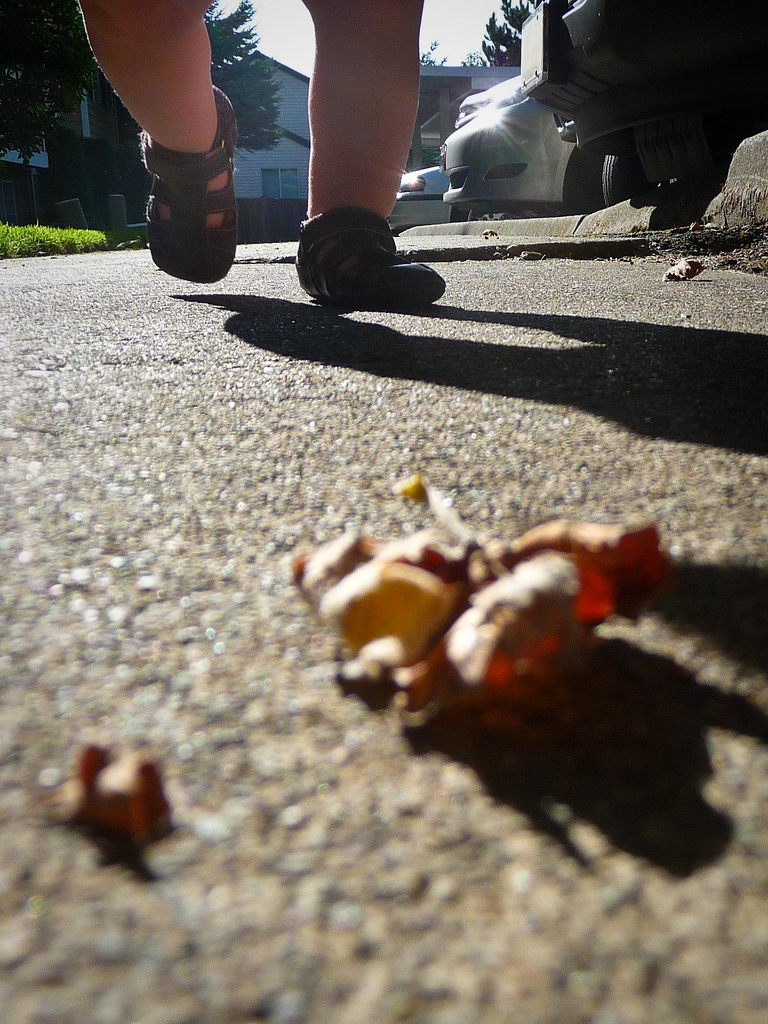
Some pleasures are too small for a calendar invite and too important to ignore. Stomping dry crunchy leaves on the sidewalk is one of them. It costs zero dollars, requires no app download, and delivers a tiny percussion concert directly under your shoes. One minute you are walking like a normal adult with responsibilities, errands, and a suspiciously long grocery list. The next minute, you spot a curled brown leaf sitting on the concrete like nature’s bubble wrap, and suddenly your foot has a mission.
That first crackle is ridiculous in the best way. It is crisp, dramatic, and strangely satisfying, like the leaf has been rehearsing all autumn for its one big solo. The sound is not just noise. It is a seasonal signal. It tells you the air has changed, the trees have finished their flashy fashion show, and the sidewalk has become a temporary playground. In the spirit of 1000 Awesome Things, this ordinary moment deserves a full standing ovationpreferably while wearing sneakers and aiming for the crunchiest leaf in the pile.
Why Crunchy Leaves Feel So Awesome
The joy of stepping on dry leaves is part sound, part touch, part nostalgia, and part harmless mischief. It gives you immediate feedback: foot goes down, leaf goes crunch, brain says, “Excellent work, team.” Unlike many modern rewards, there is no waiting, no buffering wheel, and no password reset. The satisfaction arrives instantly.
Dry leaves are especially fun because they behave like tiny natural instruments. When leaves lose moisture, they become lighter, more brittle, and more likely to curl. A curled leaf traps a little air underneath it, so when your shoe lands, the structure collapses with a bright snap. A damp leaf, by comparison, usually gives you the sad, flat sound of a wet napkin giving up on life. Not awesome. Not even close.
The Science Behind the Perfect Leaf Crunch
Autumn leaves begin their dramatic transformation when shorter days and cooler temperatures signal trees to conserve energy. Chlorophyll, the green pigment that helps leaves capture sunlight, breaks down. As the green fades, yellow and orange pigments become easier to see, while some trees also produce red and purple pigments. Eventually, many deciduous trees seal off their leaves and let them fall.
Once leaves land on sidewalks, they continue to dry. Moisture evaporates, the leaf surface stiffens, and the veins become more rigid. The best crunchy leaves are usually fully dry, slightly curled, and not glued to the pavement by rain. In other words, the sidewalk leaf must be emotionally ready for its destiny.
There is also a practical reason the sound feels so pleasing: it is clear, brief, and predictable. Your brain loves patterns it can control. Step, crunch. Step, crunch. Step, mega-crunch because you found a whole pile near the curb. Congratulations, you have accidentally invented autumn jazz.
A Tiny Childhood Memory Hiding in Plain Sight
Stomping leaves often feels nostalgic because it brings back the kind of childhood fun that required no equipment. No one needed to organize it. No one had to read instructions. You simply walked home from school, saw a line of leaves along the sidewalk, and accepted the challenge like a tiny warrior in a zip-up jacket.
That is why the moment hits differently. Dry leaves do not just crunch; they unlock memories. Maybe you remember walking through a neighborhood after Halloween, when plastic pumpkins were still on porches and everyone’s yard smelled faintly like wood smoke and cold air. Maybe you remember racing a sibling to the biggest leaf pile. Maybe you remember being told not to drag leaves into the house and then absolutely dragging leaves into the house.
Nostalgia can make small moments feel larger because it connects the present to a comforting version of the past. A crunchy leaf on a sidewalk is not only a leaf. It is a tiny time machine with a stem.
Why Sidewalk Leaf Crunching Is an Everyday Mood Booster
Walking itself is already good for the body and mind. Add trees, fresh air, autumn color, and a soundtrack of crispy leaves, and the ordinary walk becomes a mini reset. You do not have to hike a mountain or book a cabin in Vermont to enjoy fall. Sometimes the best version of the season is waiting beside a mailbox, near a bus stop, or under the big maple tree that has been dropping leaves like it is trying to win a neighborhood contest.
Nature has a way of slowing people down. Even a quick walk outdoors can shift attention away from screens, errands, and mental clutter. Crunching leaves adds playfulness to that experience. It turns the walk into a game: find the driest leaf, avoid the suspicious wet ones, aim for the pile that looks like it has maximum sound potential, and try not to look too proud when the crunch is perfect.
The Sidewalk Becomes a Seasonal Playground
In summer, sidewalks are just sidewalks. In winter, they may become icy obstacle courses. In spring, they host puddles, petals, and worms making questionable travel decisions. But in fall, sidewalks become stages for one of nature’s simplest performances. The leaves gather along edges, corners, cracks, and curbs, practically begging someone to walk through them.
The best part is that everyone understands the urge. A child does it with full enthusiasm. A teenager may pretend not to care, then quietly step on the biggest leaf available. An adult may maintain a serious face while carefully adjusting their path for maximum crunch coverage. A dog will not understand the science, but will support the chaos completely.
How to Identify the Crunchiest Leaves
Not all fallen leaves are created equal. Some are crisp little masterpieces. Others are soggy traps disguised as fun. To become a true sidewalk leaf-crunch expert, look for these signs.
1. Choose Leaves That Look Curled
Flat leaves are unpredictable. They may crunch, but they may also lie there silently, which is honestly rude. Curled leaves have more structure, more trapped air, and more dramatic collapse potential. If a leaf looks like a tiny taco, it is probably a strong candidate.
2. Avoid Dark, Wet Leaves
Wet leaves are usually darker, heavier, and plastered to the ground. They do not crunch so much as squish. Also, wet leaves can be slippery, so save your dignity and your ankles by stepping carefully after rain.
3. Look Near Curbs and Fence Lines
Wind often pushes dry leaves into little sidewalk borders. These spots can create a satisfying chain reaction: one step, five leaves, one excellent crackly chorus. It is the pedestrian version of hitting every green light.
4. Listen for Variety
Oak leaves often sound firm and papery. Maple leaves can produce big, satisfying crackles when fully dry. Smaller leaves may make a lighter rustle. The best autumn walk has all three: snap, crackle, and that soft shuffling sound that says, “Yes, you are walking through a postcard.”
The Funny Social Rules of Crunching Leaves
There is an unspoken etiquette to leaf stomping. If you are alone, crunch freely. If you are walking with someone, share the good leaves. Do not hog the entire curb pile unless you are under the age of seven or having a truly difficult week. If someone else clearly spotted a magnificent curled leaf first, let them have it. We live in a society.
Also, never stomp leaves in a way that creates a mess for someone else. A neat row of leaves on a public sidewalk is fair game. A carefully raked pile in someone’s yard is not. That pile belongs to a homeowner who has probably already fought gravity, wind, and one very unhelpful rake. Respect the pile.
There is also a safety note worth keeping: dry leaves can hide uneven pavement, acorns, small branches, or slippery patches underneath. Crunch with joy, but do not sprint blindly through a leaf pile like a cartoon character with excellent health insurance.
Why This Tiny Moment Belongs on a List of Awesome Things
Great everyday pleasures usually share a few traits. They are simple. They are available to almost everyone. They make the day feel a little more alive. Stomping dry crunchy leaves checks every box. It is not grand or expensive, but that is exactly the point. It reminds us that delight does not always arrive wearing a tuxedo. Sometimes it shows up as a dead leaf on a sidewalk making a sound like a tiny bag of chips.
In a world that often pushes people to chase bigger, faster, louder experiences, the leaf crunch is refreshingly small. It asks for attention, not money. It rewards presence, not performance. You have to notice the sidewalk. You have to choose your step. You have to be willing to look slightly silly for half a second. That is a fair trade.
The Best Places to Enjoy Crunchy Leaves
Some spots are naturally better for leaf crunching than others. Tree-lined neighborhoods are classics because leaves gather along long sidewalks and driveways. Parks offer wider paths and bigger drifts, especially near mature oak, maple, sycamore, beech, and sweetgum trees. College campuses can also be excellent, thanks to broad walkways and old trees that seem personally committed to autumn drama.
Small downtown streets can surprise you too. A single street tree outside a coffee shop may drop enough leaves to turn a quick errand into a seasonal celebration. Parking lots are less charming, but even there, a dry leaf skittering across the pavement can become a small invitation to play.
Morning vs. Afternoon Crunch
Morning leaves may still be damp from dew, so the sound can be muted. Afternoon is often better, especially after a sunny, breezy day. By then, the leaves have dried out, curled up, and prepared themselves for greatness. Late afternoon also adds golden light, which makes everything look more cinematic. Suddenly you are not just walking to buy milk. You are the main character in a cozy fall movie with excellent shoe placement.
Crunchy Leaves and the Art of Paying Attention
One reason this experience feels so good is that it rewards noticing. The sidewalk is full of small details: the shape of a leaf, the way wind arranges a pile, the difference between a golden maple leaf and a brown oak leaf, the tiny scrape a dry stem makes across concrete. These details are easy to miss when your mind is racing. But the moment you start looking for crunchy leaves, the walk becomes richer.
That is the secret behind many awesome things. They are not hidden because they are rare. They are hidden because we stop paying attention. Dry crunchy leaves are everywhere in fall, but they only become awesome when you meet them halfwaywith curiosity, a decent pair of shoes, and the courage to step slightly off your normal walking line.
How to Turn a Regular Walk Into a Crunch Walk
If you want to turn an ordinary autumn walk into a full crunchy-leaf experience, start by putting your phone away for a few minutes. Listen first. You may hear wind moving through branches, leaves scraping along the pavement, or the soft rush of traffic in the distance. Then look for leaves that are dry, curled, and gathered in small clusters.
Walk slowly enough to enjoy the sound. Try stepping lightly on single leaves, then more firmly on a pile. Notice the difference. A single leaf gives you a clean snap. A pile gives you a layered crackle, like nature applauding your footwear. Bonus points if you find a long stretch of sidewalk where leaves line the edge like a golden-brown carpet. That is not a sidewalk anymore. That is a crunch runway.
Extra Experiences: The Crunchy Leaf Moments We Secretly Remember
There is a special kind of autumn afternoon when crunchy leaves become impossible to resist. The sky is bright but not hot, the air smells clean and slightly woody, and the neighborhood feels quieter than usual. You are walking somewhere ordinaryhome, school, the store, the mailboxand then you see it: a perfect leaf. It is curled at the edges, dry as toast, and sitting alone on the sidewalk like it has been waiting for you specifically. You adjust your step. Your shoe lands. The leaf breaks with a crisp little pop. For no logical reason, your day improves by about twelve percent.
Then the hunt begins. You start scanning the sidewalk like a treasure hunter. There is one near the curb. Crunch. Another beside a driveway. Crunch. A small pile collected around a storm drain. Careful, carefulthen crunch, crunch, crunch. Suddenly the walk has a rhythm. You are no longer just moving through the neighborhood. You are conducting a tiny autumn orchestra with your feet.
Some of the best crunchy leaf memories happen on the way home after a long day. Maybe your backpack is too heavy, your jacket zipper is being dramatic, or your coffee has gone cold. Then a breeze sends a few leaves sliding across the sidewalk, and you step on one at the exact right moment. It is such a small victory, but it feels personal. The leaf was moving. You timed it. The universe may be chaotic, but for one second, you and that leaf had an appointment.
There are family versions of this experience too. A parent walking with a child might pretend not to notice the child aiming for every leaf, then quietly start doing the same thing. Soon both are zigzagging down the sidewalk, laughing at the loudest crunches and accusing each other of stealing the good ones. Even grandparents get involved. No one fully outgrows the pleasure. They simply learn to do it with a more respectable face.
Dogs add another layer of comedy. A dog may leap into a leaf pile with total confidence, then emerge wearing half the season on its fur. The human tries to keep walking normally while the dog attacks a leaf as if it has insulted the family. Meanwhile, the sidewalk continues offering crunchy opportunities, and everyone involved is having a better walk than planned.
The best experience, though, might be the solo crunch walk. No conversation, no schedule pressure, just the sound of shoes, leaves, and cool air. You notice porch pumpkins, bare branches, the last red leaves clinging to a tree, and the way sunlight catches the sidewalk. For a few minutes, life feels manageable because the next good thing is simple: find the next leaf and step exactly there.
That is why stomping dry crunchy leaves belongs among life’s awesome things. It is playful without being complicated, nostalgic without being sad, and satisfying without needing a reason. It reminds us that joy can be small, seasonal, and slightly silly. And sometimes, that is the best kind.
Conclusion: The Sidewalk Symphony of Fall
Stomping dry crunchy leaves on the sidewalk is one of those tiny pleasures that proves happiness does not always need a big stage. It can happen between errands, during a walk home, or on a quiet afternoon when the trees have dropped their confetti and the sidewalk is ready for its annual concert.
The science is simple: leaves dry, curl, and crack. The feeling is bigger: nostalgia, play, attention, and a little harmless triumph with every step. So the next time autumn leaves gather on the sidewalk, do not rush past them. Choose the curled one. Aim carefully. Step down. Enjoy the crunch. Awesome.
Note: This article is fully rewritten for web publication and informed by real background information on fall foliage, walking, nature exposure, nostalgia, and seasonal garden ecology.














