
America is a buffet of contradictions. You can buy cereal that turns milk neon, pickles the size of baseball bats, and hot sauce that requires a waiver and possibly a priest. But some foodsbeloved, bizarre, dangerous, endangered, or simply unluckyhave been pushed off U.S. shelves by federal law, import rules, public health concerns, or conservation policy.
Before we grab the tiny shopping cart and roll through the forbidden-food aisle, one clarification matters: not every item on this list is banned in every possible form. Some are no longer sold in their original recipe. Some are restricted unless processed under very specific rules. Some were once considered delicacies but are now protected because the animals involved are, frankly, trying very hard not to disappear forever.
So, yes, this is a list of foods you can no longer buy in the United Statesbut with the kind of accuracy that keeps your article useful instead of sounding like it was written by a raccoon with a Wi-Fi connection.
Why Do Foods Disappear From U.S. Stores?
Foods vanish from the American market for several big reasons: food safety, choking hazards, illegal additives, endangered species protections, import restrictions, and reformulations after regulatory action. In plain English, the government steps in when a product could poison people, mislead consumers, harm protected wildlife, or hide a small plastic toy inside a chocolate egg like a tiny lawsuit waiting to hatch.
Some rules are old. Some are surprisingly recent. And some make perfect sense once you understand the backstory, even if they break the heart of one very determined foodie somewhere.
1. Kinder Surprise Eggs
The chocolate egg with a toy inside
Kinder Surprise Eggs are famous around the world: a hollow chocolate egg with a plastic capsule and toy hidden inside. Children love them. Collectors love them. U.S. customs officers, however, do not appear emotionally available for them.
The problem is not the chocolate. It is the non-food object embedded inside the candy. U.S. law restricts confectionery products that contain non-nutritive objects unless they meet narrow safety conditions. The concern is choking, especially for small children who may treat the whole thing as an edible treasure chest.
That is why the original Kinder Surprise Egg is not legally sold in the United States. However, Americans can buy Kinder Joy, a different product designed with the toy and candy separated. It is less “secret toy hidden in chocolate cave” and more “organized snack with boundaries.” Very American, honestly.
2. Traditional Scottish Haggis With Sheep Lung
The authentic version cannot be sold here
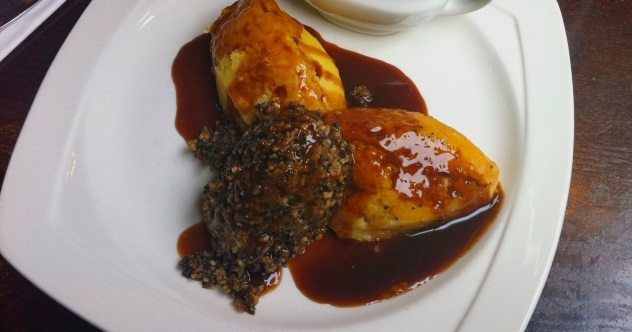
Haggis is Scotland’s legendary savory pudding made with sheep organs, oats, suet, onion, and spices. Traditional recipes often include sheep lung, which is exactly where the U.S. rulebook clears its throat.
In the United States, livestock lungs are not allowed to be saved for human food. That means authentic Scottish haggis made with sheep lung cannot be imported or sold in its traditional form. You may find American-made haggis-style products, but they are usually lung-free versions that try to capture the spirit of the dish without violating federal meat regulations.
To be fair, haggis is already a food that requires a pep talk before eating. The U.S. version simply removes the lung and adds a footnote. Scotland may not approve, but customs does.
3. Original Four Loko
The caffeinated alcoholic formula that got reformulated
Four Loko still exists. The original Four Loko does not. That distinction matters because the early version mixed alcohol with caffeine and other stimulants, creating a beverage with the energy of a nightclub and the decision-making skills of a raccoon in a dumpster.
In 2010, federal regulators warned several companies that caffeine added to alcoholic malt beverages was considered an unsafe food additive. The original caffeinated alcoholic drinks were removed or reformulated. Four Loko survived as a brand, but the version people remember from the late-2000s panic era is no longer legally sold in the United States.
Today’s Four Loko is strong, colorful, and still not exactly a green smoothie. But the infamous caffeine-plus-alcohol formula that made headlines is gone from U.S. shelves.
4. Sassafras Root Beer Made With Safrole
The old-fashioned flavor that had to change
Classic root beer once owed much of its distinctive flavor to sassafras root. The issue is safrole, a naturally occurring compound found in sassafras oil. After safety concerns emerged, safrole and sassafras oil were prohibited as food additives in the United States.
That does not mean root beer disappeared. Modern root beer makers use safrole-free sassafras extracts, wintergreen, vanilla, licorice, birch, and other flavorings to create that nostalgic soda-shop taste. The drink survived; the old safrole-containing version did not.
In other words, you can still enjoy a frosty mug of root beer. You just cannot buy the version your great-grandfather may have knownthe one with a regulatory asterisk floating in the foam.
5. Fresh Ackee
The Jamaican fruit with a serious safety rule
Ackee is Jamaica’s national fruit and a key ingredient in ackee and saltfish. When properly ripened and processed, it is delicious: buttery, savory, and often compared to scrambled eggs in texture. When unripe, however, ackee can contain dangerous levels of hypoglycin A, a toxin associated with severe illness.
Because of that risk, fresh ackee is not freely imported and sold in the United States. Canned and frozen ackee may be legally available when it comes from approved processors that meet safety requirements. That is why you may see ackee in Caribbean markets, but not piled high in the produce section like apples, oranges, or emotionally expensive berries.
The rule is not anti-ackee. It is anti-poisoning, which is a pretty popular position among diners.
6. Wild Beluga Caviar From Threatened Sturgeon
The luxury food restricted for conservation
Beluga caviar has long been considered one of the most luxurious foods in the world. It comes from beluga sturgeon, a slow-growing fish that can live for decades and became heavily overexploited because humans looked at fish eggs and said, “What if we made this cost more than rent?”
To protect threatened beluga sturgeon populations, the United States restricted imports of beluga sturgeon caviar and meat from key regions. The point was conservation: if demand keeps rewarding overharvesting, the species loses.
Today, shoppers may find legal farmed caviar from other sturgeon species, and limited legally produced alternatives exist under strict rules. But the old image of wild beluga caviar flowing freely into the U.S. luxury market is no longer reality.
7. Shark Fins
The soup ingredient removed from legal commerce
Shark fin soup has been served as a prestige dish in some culinary traditions, but the trade in shark fins has raised major conservation and animal welfare concerns. Shark finning, in particular, is widely criticized because it may involve removing fins and discarding the rest of the animal.
Federal law now prohibits the possession, transport, sale, and purchase of shark fins in the United States, with limited exceptions. That means shark fin products are effectively off the legal menu nationwide.
This is one of the clearest examples of a food disappearing not because of a recipe problem, but because the ingredient is tied to severe ecological damage. Sometimes the most responsible order is simply: “I’ll have anything else, thanks.”
8. Most Imported Puffer Fish, Also Known As Fugu
The delicacy that can become deadly
Fugu, the Japanese puffer fish delicacy, is famous for one extremely memorable fact: prepared incorrectly, it can kill you. Puffer fish may contain tetrodotoxin, a potent toxin that cannot be destroyed by cooking or freezing. That is not a seasoning note. That is a plot twist.
The United States tightly restricts imported puffer fish products. Personal importation is prohibited, and legal access is limited to very specific sources and controls. This means ordinary shoppers cannot simply buy fugu at the grocery store for a casual Tuesday dinner.
In Japan, licensed chefs train carefully to prepare it. In the U.S., regulators treat it with the caution one might apply to a fish wearing a tiny “Do Not Improvise” sign.
9. Sea Turtle Meat And Eggs
A former food now protected by law
Sea turtle meat and eggs have been eaten in various parts of the world and were once more common in trade. Today, sea turtles are protected under conservation laws because many populations have been threatened by hunting, egg collection, habitat loss, fishing bycatch, and pollution.
In the United States, sea turtle products are not legal foods for commercial sale. The shift reflects a broader change in how society views wildlife: some animals are not ingredients; they are protected species with a very strong claim to being left alone.
Sea turtle soup may sound like something from an old banquet menu, but in modern America, it belongs in history books, not restaurants.
10. Packaged Foods Made With Partially Hydrogenated Oils
The trans fat era came to an end
For decades, partially hydrogenated oils were used in packaged cookies, crackers, frozen desserts, microwave popcorn, frostings, and other processed foods because they improved texture and shelf life. Unfortunately, they were also the main source of artificial trans fats in the food supply.
After extensive research linked artificial trans fats to increased heart disease risk, the FDA determined that partially hydrogenated oils were no longer generally recognized as safe for use in food. Manufacturers reformulated products, and many familiar snacks changed quietly in the background.
This is not one vanished brand but an entire category of old recipes. The cookies may still be on the shelf, but the trans-fat-heavy versions from the past are gone. Your arteries, unlike your nostalgia, probably approve.
What These Banned Or Restricted Foods Have In Common
At first glance, this list looks chaotic. Chocolate eggs, haggis, caviar, shark fins, root beer, and caffeinated party drinks do not exactly belong in the same recipe box. But they share a theme: food is never just food. It is law, culture, science, trade, ethics, agriculture, and sometimes a choking hazard wearing a tiny plastic hat.
The United States does not ban foods simply because they are strange. If that were true, spray cheese would need a good attorney. Instead, restrictions usually involve a specific risk. Some foods may contain toxins. Some rely on ingredients that regulators consider unsafe. Some harm endangered animals. Some contain objects that do not belong inside candy. Some products are not banned as names, but their original formulas are no longer legal.
That is why accuracy matters when writing about banned foods in America. A dramatic headline may say, “You can’t buy this food anymore,” but the real answer is often: “You can’t buy the original version, the unsafe version, the wild version, or the imported version unless it meets strict conditions.” Less catchy, yes. More useful, absolutely.
Are These Foods Illegal To Eat Or Just Illegal To Sell?
There is a difference between a food being illegal to sell, illegal to import, illegal to possess, or unavailable because companies reformulated it. For example, the original caffeinated Four Loko formula is not sold because the product changed after federal action. Kinder Surprise Eggs are restricted because of the toy embedded inside the chocolate. Shark fins are prohibited in commerce under federal conservation law. Fresh ackee is restricted because unsafe ripeness and processing can create real health risks.
So, before assuming every item is treated the same way, think of food law like a spice rack: many containers, similar labels, very different contents. One rule protects children from choking. Another protects consumers from toxins. Another protects endangered wildlife. Another removes an unsafe additive from processed foods.
The result is the same for shoppers: you will not find these foods in their original or restricted forms at a normal American store.
Experience Section: What It Feels Like To Hunt For Foods You Can No Longer Buy In The United States
Researching foods you can no longer buy in the United States is like opening a pantry and finding a law library inside. At first, the topic sounds simple. You imagine a neat little list of forbidden snacks, maybe with a dramatic villain soundtrack. Then you start looking closer and realize the truth is more interesting: many of these foods did not disappear because Americans disliked them. They vanished because the country decided that taste, tradition, and novelty all have limits when safety or conservation is involved.
The funniest part is how ordinary some of these foods look from the outside. A Kinder Surprise Egg does not appear threatening. It looks cute, cheerful, and perfectly designed to be given by an aunt who forgot to ask about customs regulations. But inside that chocolate shell is a toy capsule, and inside the legal discussion is a serious concern about children choking. Suddenly, the candy aisle feels less like a place for impulse buys and more like a courtroom with sprinkles.
Then there is haggis. Talking about haggis in America often turns into a comedy routine before the facts even arrive. People hear “sheep lung” and immediately start making the facial expression usually reserved for expired milk. But traditional haggis is a meaningful cultural food, not a dare. The U.S. restriction is not about mocking Scottish cuisine; it is about a rule that livestock lungs cannot be used for human food. That makes the American haggis experience a little bittersweet: you can find substitutes, but purists will always know something is missing.
Ackee offers a different lesson. It reminds us that a food can be treasured, traditional, and still require careful handling. Properly processed ackee is beloved for good reason, especially in Jamaican cooking. But unripe ackee can be dangerous, so the U.S. system focuses on approved processing and import controls. This is where food regulation feels less like a ban hammer and more like a kitchen timer: annoying, perhaps, but meant to prevent disaster.
The luxury foods on the list create another kind of discomfort. Beluga caviar and shark fins were never everyday groceries for most Americans, but their stories show how status foods can pressure fragile ecosystems. A spoonful of caviar or a bowl of soup may look small on the table, yet the supply chain behind it can be enormous. Once you understand that, “rare delicacy” starts sounding less glamorous and more like nature sending an invoice.
And then there are reformulated products, such as original Four Loko and trans-fat-heavy packaged snacks. These are especially strange because they feel recent. Many people remember buying or seeing them. They did not vanish into ancient culinary history; they were edited out of modern shelves. The packaging may look familiar, but the formula changed. It is like meeting an old friend who now drinks water, goes to bed early, and says things like, “I’ve been prioritizing wellness.”
In the end, the experience of exploring these foods is surprisingly useful. It shows that the American food system is not static. Ingredients change. Imports get reviewed. Species receive protection. Products reformulate. Cultural favorites adapt. The grocery store may look stable, but behind every shelf is a moving system of science, law, business, and public pressure. Sometimes that system overcorrects. Sometimes it moves too slowly. But when it works well, it helps keep dangerous, deceptive, or destructive products away from the dinner table.
The biggest takeaway is not that America bans “weird” food. America sells plenty of weird food. The real takeaway is that every food has a backstory, and some backstories end with a government agency saying, “Not in that form, not anymore.”
Conclusion
The story of 10 foods you can no longer buy in the United States is not just about strange laws or missing snacks. It is about how food culture changes when safety science, environmental protection, and consumer rules collide with tradition and appetite.
Some of these foods are gone in their original form, like caffeinated Four Loko or safrole-based root beer. Some are restricted because they can be dangerous if handled poorly, like fresh ackee and fugu. Others are removed from commerce because the cost to wildlife is too high, like shark fins, sea turtle products, and wild beluga caviar.
Food nostalgia is powerful, but so is the need to protect people, animals, and ecosystems. Besides, America still has plenty of legal culinary chaos left. We may have lost Kinder Surprise Eggs, but we still have deep-fried butter at state fairs. The republic endures.













