
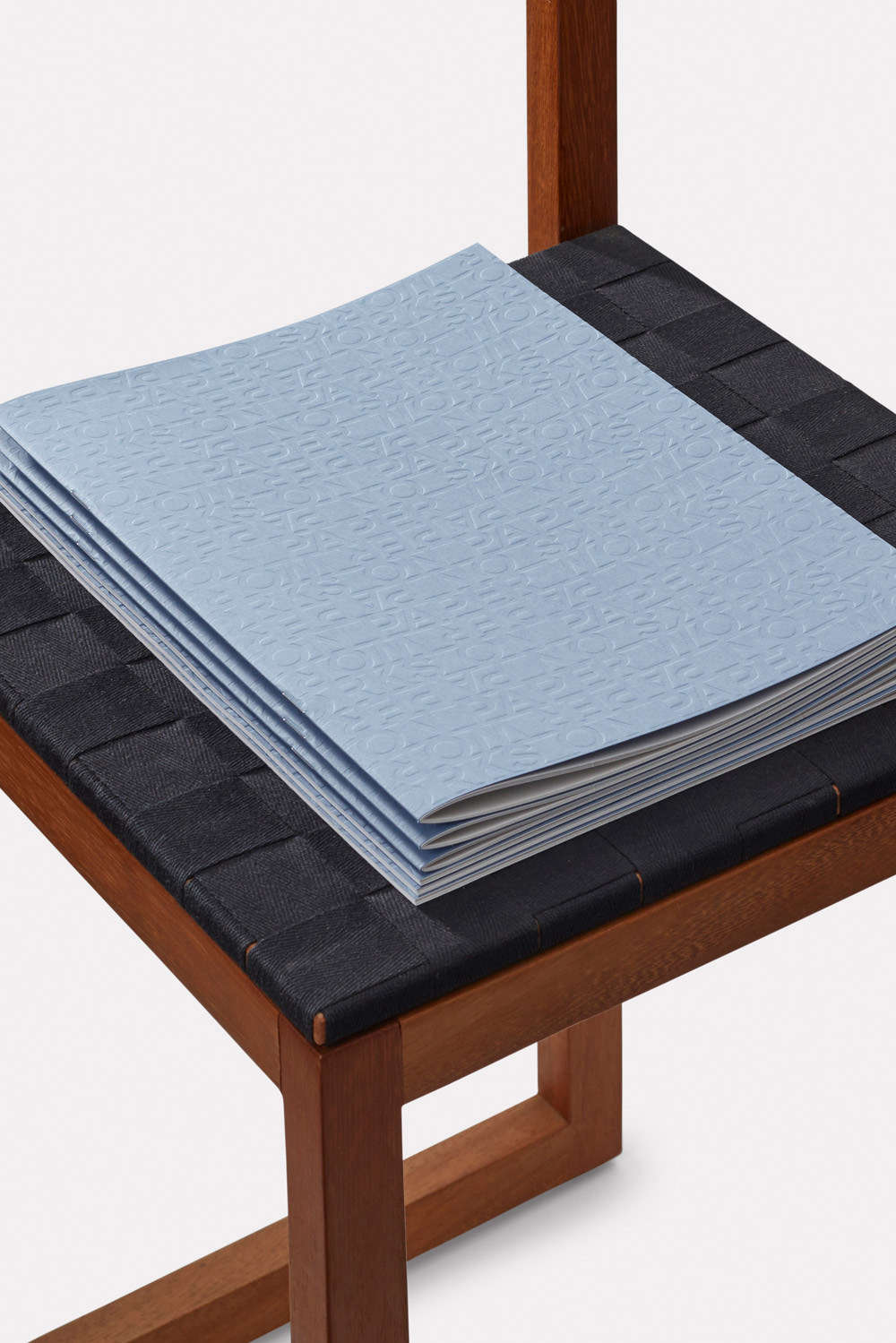
Works on Paper Journal is the kind of independent art publication that makes a persuasive case for slowing down, turning a page, and spending several uninterrupted minutes with an idea. Created by Permanent Collection co-founders Mariah Nielson and Fanny Singer, the journal brings together art criticism, design history, personal essays, creative writing, and visual research in a compact, collectible format.
Despite the name, this is not a blank notebook waiting for someone to sketch a tasteful pear. It is an editorial project devoted to thoughtful conversations about objects, images, artists, collections, memory, and reproduction. Across three volumes, the publication asks deceptively simple questions: Why do we collect things? What can truly be permanent? What happens when an original object is copied, reissued, photographed, remembered, or transformed?
The answers are intelligent without becoming stiff, scholarly without requiring a dictionary the size of a paving stone, and personal enough to remind readers that art is experienced through ordinary life.
What Is Works on Paper Journal?
Works on Paper is an independent art and design journal published by Permanent Collection. The project provided Nielson and Singer with a format for commissioning original research, creative writing, and criticism from artists, curators, historians, designers, and cultural writers.
The known series consists of three annual volumes published from 2016 through 2018. Each edition contains 32 full-color pages and was produced in a small print run in London. The journals were designed by A Practice for Everyday Life, a London studio known for editorial identities, books, exhibitions, and cultural projects.
A consistent blind-debossed cover gives the volumes a recognizable family resemblance, while the cover color changes from one edition to the next. That restrained approach is important. The publication does not yell from the bookshelf like a magazine promising “47 SHOCKING THINGS ABOUT CERAMICS.” It quietly waits to be noticed.
More Than a Branded Magazine
Companies frequently publish journals that are essentially catalogs wearing intellectual eyeglasses. Works on Paper Journal takes a different route. It may have originated within a design brand, but its essays are not extended advertisements for coats, cups, or kitchen tools.
Instead, the journal expands the questions already present in Permanent Collection’s work: How should an older design be interpreted? What makes an object worth keeping? Can a reproduction honor an original without pretending to replace it? How do personal memories affect the value of material things?
The Founders and Their Editorial Philosophy
Permanent Collection was founded in 2016 by Mariah Nielson and Fanny Singer, two Northern Californians who met while studying in England. Nielson trained in design history and has worked as a curator while directing the estate of her father, artist J.B. Blunk. Singer studied art history and has worked as a writer, critic, curator, and author.
Their friendship reportedly began when they noticed each other wearing similar vintage navy coats at a London gathering. For most people, matching outerwear produces a compliment and perhaps an awkward photograph. For Nielson and Singer, it helped inspire an entire design company.
The founders shared an interest in objects that survive changing fashions because their materials, proportions, construction, and usefulness remain convincing. Permanent Collection initially reinterpreted garments and household objects from historical or personal sources, collaborating with specialized makers rather than chasing a conventional seasonal schedule.
That curatorial philosophy shaped Works on Paper. Each issue begins with a broad theme, but contributors are given enough freedom to approach it through biography, criticism, cultural history, memoir, architecture, literature, photography, craft, or the occasional beautifully strange detour.
Three Volumes, Three Enduring Questions
Volume One: Collecting and Collections
The first volume, published in 2016, considers “collecting and collections.” Its contributors include Hilton Als, Negar Azimi, Jeremy Deller, Mark Dion, Jason Farago, Fritz Haeg, Gemma Holt, Thessaly La Force, and Filipa Ramos, among others.
Rather than treating collecting as a hobby reserved for people with climate-controlled storage rooms, the volume explores the emotional, intellectual, and social reasons people preserve things. A collection may consist of museum-quality objects, but it can also be made from photocopies, discarded photographs, family possessions, memories, or images that commercial culture considers worthless.
In “Collecting the Forgotten,” Hilton Als describes developing an eclectic personal taste that included photocopied zines, do-it-yourself books, and photographs given to him by artists. The essay proposes that collecting can be an act of attention. Something overlooked by the market may still possess enormous private meaning.
Negar Azimi’s “The Cindy Sherman of Egypt” examines the archive of Armenian-Egyptian photographer Van Leo, born Levon Boyadjian. Van Leo created numerous theatrical self-portraits in which he used costumes, lighting, makeup, and physical transformation to appear as dramatically different characters. The photographs raise questions about identity, performance, preservation, and the mysteries that remain even after an archive is assembled.
Volume One therefore treats a collection not as a pile of expensive trophies but as a constructed way of seeing. What people save reveals what they valueand sometimes what the rest of society failed to value soon enough.
Volume Two: Permanence
The second volume, released in 2017, revolves around “permanence.” Contributors include Mark Danner, Ann Hamilton, Ben Eastham, Fionn Meade, Marina McDougall, Amy Sherlock, Alex Heminway, and Stephen Thomas.
Permanence is an especially clever theme for a publication associated with a company called Permanent Collection. Instead of simply praising durable objects, the journal complicates the term. Bodies change, nations reinvent their stories, memories fade, artworks deteriorate, and even the sturdiest chair eventually develops opinions about gravity.
In Amy Sherlock’s “Matter Mixed with Void,” a temporary fog sculpture by Fujiko Nakaya becomes a starting point for thinking about mortality, memory, still-life painting, and the instability hidden inside apparently solid things. Fog can be recreated, but it never assumes exactly the same form. Its permanence lies in a concept or process rather than in a fixed physical object.
Fionn Meade’s “Becoming American” examines the complicated position of James Baldwin, whose physical and intellectual movement between the United States and Europe helped him analyze American identity from both inside and outside it. Here, permanence is not presented as stillness. Identity remains alive precisely because it is continually questioned.
The volume’s strongest idea may be that longevity does not require immobility. A work, belief, object, or cultural identity can endure by being reconsidered, repaired, translated, and placed into new relationships.
Volume Three: Originals and Reproductions
The third volume, published in 2018, explores “originals and reproductions.” Its contributors include Cole Akers, Carson Chan, Ann Gallagher, Anthony Huberman, Emily King, Laura McLean-Ferris, Aram Moshayedi, Mariah Nielson, Lou Stoppard, Harry Thorne, and artist Anicka Yi.
This theme sits at the center of modern visual culture. Digital images are duplicated instantly. Historic furniture is reissued. Fashion designs return with slightly altered sleeves. Museum objects circulate through photographs, postcards, catalogs, and social media. Sometimes the reproduction is informative; sometimes it is transformative; sometimes it is a sad beige imitation that should apologize to the original.
Emily King’s essay about architect and designer Owen Jones traces the relationship between color, printing technology, ornament, and influence. Jones went to extraordinary lengths to reproduce the patterns and colors he studied at the Alhambra, even establishing a press to achieve the desired printing quality. His publications influenced Victorian design and demonstrate that reproduction can actively create taste rather than merely reflect it.
Laura McLean-Ferris uses Marcel Duchamp’s hand-drawn Tzanck Check as a route into questions about originality, value, bodies, money, handwriting, and mechanical production. Duchamp created the check to pay a dental bill, meticulously drawing something that imitated a machine-printed financial document. It was simultaneously payment, forgery, joke, drawing, and artworka particularly efficient object, considering most checks manage to be only one of those things.
Mariah Nielson’s “Blunk Cups” offers an intimate case study in reproduction. Her father, J.B. Blunk, made ceramics for everyday use from local clay. Permanent Collection later worked with an Oakland studio to create porcelain casts based on four of his cups. The new versions retain fingerprints, forms, and surface textures from the originals while openly differing in clay, color, and production method.
The project does not claim that reproduction can duplicate history. Instead, it asks whether a thoughtful reinterpretation can carry an object’s spirit into new homes and daily routines.
Why the Name “Works on Paper” Matters
In museums and galleries, “works on paper” is a broad category that includes drawings, watercolors, prints, collages, photographs, artist books, studies, and mixed-media pieces created on paper or a similar support.
Paper often gives viewers unusually direct access to artistic thought. A drawing may record the first appearance of an idea. A print may translate that idea through a technical, collaborative process. A handwritten correction, accidental mark, crease, or pinhole can reveal how the artist worked.
The title of the journal operates on several levels. The publication is literally ink on paper. It also contains writing about artists and material culture. Most importantly, it celebrates the exploratory qualities traditionally associated with paper: immediacy, intimacy, experimentation, portability, and the visible development of thought.
A large painting can enter a room like it owns the building. A small paper publication invites you to lean closer.
The Journal as a Collectible Design Object
The physical presentation of Works on Paper Journal reinforces its editorial ideas. The unchanging debossed cover structure creates continuity, while the shifting colors distinguish individual themes. Small print runs give each volume the character of an edition rather than a disposable periodical.
This does not mean readers must handle it with white gloves while dramatic museum music plays in the background. Permanent Collection’s wider philosophy favors beautiful objects that remain useful. The journal is designed to be read, revisited, stacked, lent to a friend, annotated carefully, or placed on a table where it may provoke a conversation.
Its 32-page format also encourages editorial discipline. Contributors cannot wander through 80 pages of theoretical shrubbery before reaching a point. The pieces tend to concentrate on one object, person, artwork, memory, or contradiction and allow larger ideas to emerge from it.
That scale makes the publication approachable. Readers can finish an essay in one sitting while still encountering arguments substantial enough to revisit later.
What Makes Works on Paper Journal Distinctive?
It Connects Scholarship With Everyday Life
The journal moves comfortably between museum collections, family kitchens, historical archives, political identity, handmade ceramics, literature, fog, clothing, photography, and teeth. Its subjects may be intellectually ambitious, but they remain connected to lived experience.
It Treats Objects as Carriers of Ideas
A cup is never only a cup. It may contain evidence of a maker’s hands, a family ritual, a regional material, a design philosophy, and an argument about reproduction. The publication trains readers to look at objects slowly enough for those layers to become visible.
It Welcomes Different Types of Expertise
The contributor lists combine critics, curators, artists, historians, designers, editors, and creative writers. This mixture prevents the journal from sounding like a single institutional voice. One essay may be analytical, another autobiographical, and another pleasantly difficult to classify.
It Respects the Reader
The publication does not flatten complicated subjects into inspirational slogans. It assumes that readers can follow an argument, recognize uncertainty, and enjoy an unanswered question. That confidence feels refreshing in an era when content is often reduced to seven tips, four hacks, and a photograph of someone pointing at a headline.
Who Will Enjoy Works on Paper Journal?
The journal is particularly well suited to artists, curators, designers, collectors, art-history students, independent publishers, museum professionals, and readers interested in material culture. It may also appeal to people who enjoy publications such as exhibition catalogs, artist books, literary journals, and small-run design magazines.
Readers do not need specialized academic knowledge. Some familiarity with modern art and design can add context, but the strongest essays begin with tangible details: a photograph, a cup, a building, a book, a fog installation, or an inconvenient trip to the dentist.
Collectors seeking the physical editions should remember that the series was produced in limited runs. Availability may vary, particularly in the secondary market. Condition matters, but so does intended use. A pristine copy may be desirable; a carefully read copy with intelligent margin notes can have a different charm.
Experiencing Works on Paper Journal as a Reader
The most rewarding way to approach Works on Paper Journal is not to race through it as though a quiz will appear at the end. Its compact size may suggest a quick read, but the essays work better when given room to echo.
A typical reading experience begins with the object itself. Before reaching the first essay, you notice the debossed cover, the restrained typography, and the relationship between paper, ink, image, and empty space. Nothing seems desperate for attention. That calmness changes the pace at which you read.
Then an essay introduces one apparently manageable subject. Perhaps it is an old photograph, a set of handmade cups, or a printed study of architectural color. Within a few paragraphs, the subject has opened into a larger question about memory, authenticity, value, technology, or cultural history. The movement feels natural because the argument grows from a physical detail rather than descending from a cloud of abstract terminology.
The experience is similar to visiting a small exhibition with an excellent curator. There may be fewer objects than expected, but the relationships between them become unusually clear. You leave thinking not only about what you saw but also about the things waiting at home: the chipped bowl inherited from a relative, the postcard kept for no logical reason, or the coat repaired so many times that it has become half garment and half family biography.
Volume One may prompt readers to reconsider their own collections. Open a drawer and you may discover ticket stubs, letters, stones, matchbooks, recipe cards, or photographs that have survived several moves despite possessing little resale value. Their importance lies in the private system of meaning built around them.
Volume Two can change the way permanence is understood. Instead of asking whether something lasts unchanged forevera standard that eliminates nearly everything except possibly plastic lawn furniturethe essays encourage readers to consider continuity through adaptation. A tradition can survive by being reinterpreted. A memory can endure through retelling. An artwork can remain relevant because each generation sees it differently.
Volume Three makes ordinary reproductions feel intellectually suspicious in the best way. After reading about copied forms, printed color, forged checks, and cast ceramics, it becomes difficult to look at a reissued chair or digitized museum image without asking what was preserved, what was altered, and who benefited from the translation.
The journal also rewards rereading. On a first pass, a reader may follow the story. On a second, connections appear between essays: collecting becomes a form of reproduction, reproduction becomes a strategy for permanence, and permanence depends on decisions about what deserves to be collected.
Reading selected essays online can communicate the ideas, but the physical journal contributes another layer. Page dimensions, sequencing, paper texture, image placement, and cover design all participate in the argument. In this sense, the publication practices what it discusses. It is not merely writing about material culture; it is a carefully made material object.
The best final experience is conversation. Hand an issue to an artist, architect, writer, collector, or incurably curious friend and ask which object they would preserve if monetary value were irrelevant. The answer will probably reveal more than a standard question about favorite artists. It may also produce a 40-minute discussion about a dented saucepan. That is not a failure. That is the journal doing its job.
Why Works on Paper Journal Still Feels Relevant
Although its three-volume run dates from 2016 to 2018, the questions explored by Works on Paper have become even more urgent. Digital culture produces limitless copies while making physical artifacts feel newly precious. Brands continually mine archives for old designs. Museums digitize collections to increase access. Artists work across handmade and algorithmic processes. Consumers want durable products but also demand novelty.
The journal offers no simple rule for navigating these contradictions. Instead, it demonstrates a method: study the original closely, understand its context, acknowledge what cannot be duplicated, and make transformations honestly.
That approach applies beyond art publishing. It can guide restoration, fashion, architecture, product design, collecting, estate management, and even personal decisions about what to keep. A permanent collection is not created by saving everything. It emerges through careful selection, sustained attention, and a willingness to live with the consequences of taste.














