
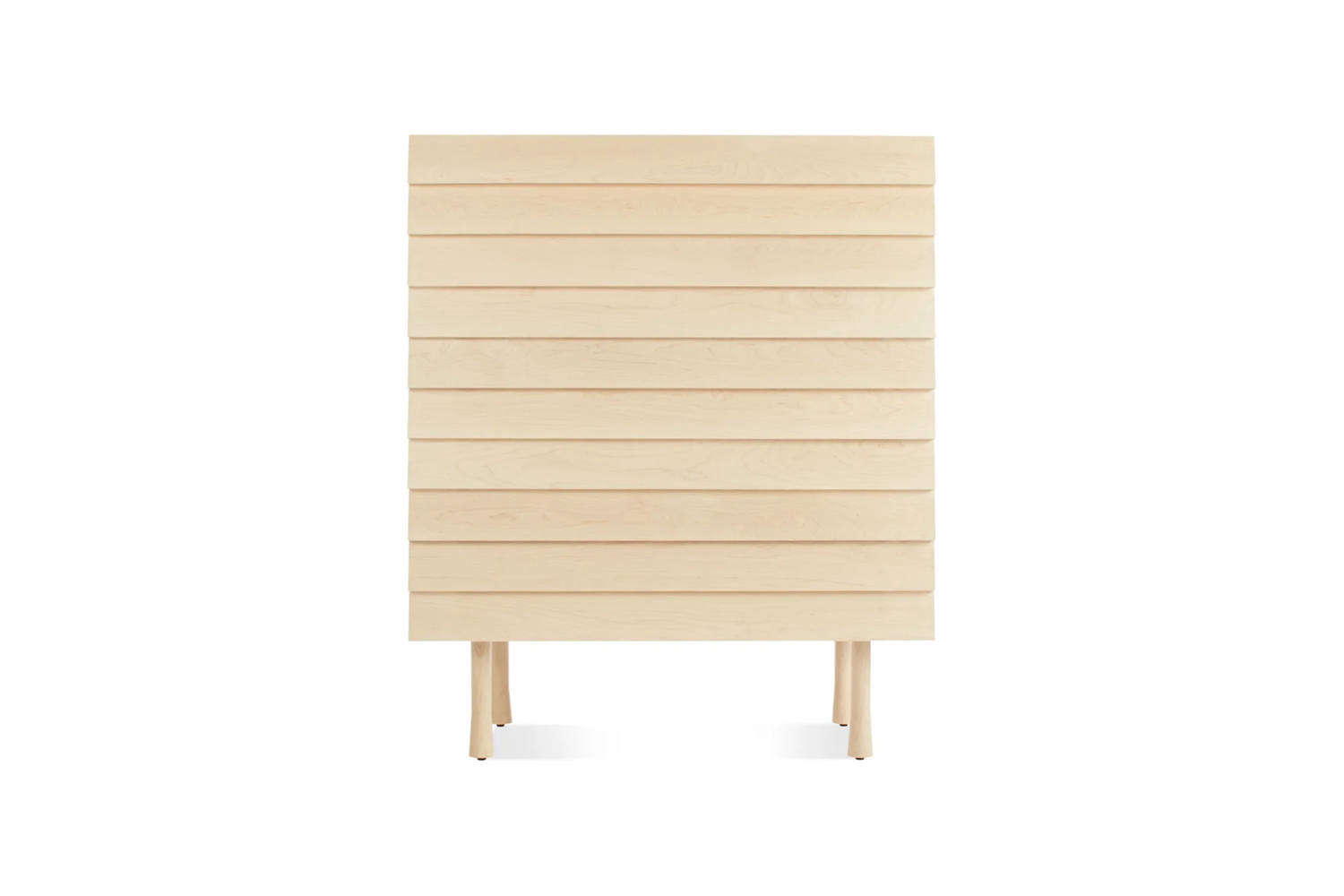
The Lap Tall 4 Drawer Dresser is what happens when practical bedroom storage decides it would also like to be architecture. Instead of relying on decorative knobs, busy trim, or hardware that catches your sweater at precisely the wrong moment, this modern dresser uses overlapping wooden drawer fronts to create texture, hidden pulls, and a remarkably clean facade.
Originally developed as part of Blu Dot’s Lap collection, the tall four-drawer design combines a compact footprint with substantial vertical storage. Historical product listings identify the tall model at approximately 38 inches wide, 20 inches deep, and 46 inches high. That makes it large enough to organize a useful portion of a wardrobe without spreading across an entire bedroom wall like a wooden aircraft carrier.
This guide examines the dresser’s design, materials, storage potential, styling options, safety considerations, and everyday usability. It also explains how to decide whether a tall four-drawer dresser is the right choice for your room, because beautiful furniture is considerably less charming when it blocks the closet door.
What Is the Lap Tall 4 Drawer Dresser?
The Lap Tall 4 Drawer Dresser is a vertically proportioned clothing-storage cabinet with four full-width drawers. Its defining feature is a series of overlapping drawer fronts that resemble understated clapboard siding. The edges create horizontal shadow lines while concealing the gaps between drawers and functioning as integrated hand pulls.
This approach gives the dresser a nearly uninterrupted front. From a distance, it looks more like a sculptural wooden cabinet than a conventional chest of drawers. Up close, the layered construction provides enough visual rhythm to prevent the design from becoming cold or anonymous.
Key Product Characteristics
- Four vertically stacked storage drawers
- Overlapping drawer fronts with concealed hand pulls
- Soft-closing or self-closing drawer hardware
- Solid wood drawer fronts paired with wood-veneer panels
- Distinctive angled legs in wood or powder-coated steel
- Adjustable foot glides for leveling
- A tall profile designed to conserve floor space
- Some assembly required, depending on the version
Product names and available configurations may vary between current and archived listings. Shoppers should confirm the measurements, finish, hardware, anti-tip equipment, and delivery details for the exact model being offered.
Why the Design Looks Different
Most dressers reveal exactly how they work. You see four rectangular drawers, four sets of handles, and enough seams to create a small geometric festival. The Lap dresser hides much of that information.
Its overlapping fronts disguise the drawer separations and produce a more monolithic appearance. The layers still show where one drawer ends and another begins, but the effect is softer and more deliberate. This gives the piece a minimalist identity without reducing it to a blank box.
Texture Without Visual Clutter
The clever part of the design is that the texture serves a practical purpose. The projecting edges provide a place for your fingers, eliminating the need for external knobs or pulls. Fewer visible components allow the wood grain, proportions, and angled base to become the main attractions.
That makes the dresser especially suitable for modern, Scandinavian-inspired, Japandi, contemporary, and midcentury-influenced bedrooms. It can also work in a more traditional room as a clean counterpoint to upholstered beds, patterned rugs, or vintage lighting.
The Legs Add Personality
The dresser’s legs prevent its rectangular cabinet from looking overly serious. Their angled form echoes the lines created by the overlapping drawer fronts. Depending on the finish, the legs may blend with the body or create a contrasting accent.
Wood legs produce a warmer, quieter appearance. Powder-coated steel legs create a sharper, more graphic effect. A bright leg color can turn the dresser into a focal point, while black or matching wood keeps the overall composition calm.
Materials and Construction
The Lap collection has been offered in combinations of solid maple or ash, wood veneer, and metal. Whitewashed maple versions use solid maple on the drawer fronts, with maple veneer on the top and side panels. Dark versions have used stained ash fronts with ash-veneer surfaces. Some configurations feature solid wood legs, while others use powder-coated steel plate.
This is a common premium-furniture construction strategy. Solid wood is used where tactile quality and edge detail matter most, while veneer creates broad, visually consistent surfaces. Veneer is not automatically a sign of poor quality; when properly applied to a stable substrate, it can minimize some of the movement that occurs as solid wood responds to changing humidity.
What to Inspect Before Buying
Whether purchasing new, secondhand, or as an ex-display piece, examine the furniture carefully. Check that the veneer lies flat, the drawer fronts remain aligned, and the finish is consistent. Open every drawer fully and listen for rubbing, scraping, or clicking. A soft-close drawer should move smoothly, engage its closing mechanism near the end of its travel, and return without slamming.
Also inspect the legs, corners, back panel, and connection points. Adjustable glides should turn freely and contact the floor evenly. On used furniture, minor surface scratches may be acceptable, but swollen panels, separating veneer, badly misaligned drawers, or damaged mounting points can require more work than a cheerful afternoon with a screwdriver.
Questions About Indoor Air Quality
Furniture containing plywood, medium-density fiberboard, particleboard, or other composite wood components sold in the United States should meet applicable federal formaldehyde-emission requirements. When product details are unclear, ask the seller whether composite wood components are labeled as TSCA Title VI compliant.
New furniture may also carry odors from finishes, packaging, adhesives, or warehouse storage. Ventilating the room after delivery is a sensible precaution, particularly for people who are sensitive to odors. Persistent irritation or a strong smell that does not fade should be discussed with the manufacturer or retailer.
Does a Tall Four-Drawer Dresser Save Space?
A tall dresser does not magically create square footage, although furniture advertisements occasionally behave as though it has negotiated a private treaty with physics. What it does is use vertical space more efficiently than a wide, low dresser.
At roughly 38 inches wide, the Lap Tall 4 Drawer Dresser can fit on walls that would not accommodate a six- or eight-drawer horizontal unit. Its approximately 46-inch height provides meaningful storage while keeping the footprint relatively compact.
Rooms Where the Format Works Well
- Small primary bedrooms with limited wall space
- Guest rooms that need storage without bulky furniture
- Studio apartments with clearly defined storage zones
- Bedrooms with large closets but insufficient folded-clothing storage
- Home offices that need concealed storage for supplies or electronics
- Hallways or dressing areas with enough depth for drawer clearance
The format is less suitable when you need a long surface for a large mirror, changing pad, television, or extensive display. A tall dresser offers less usable top area than a horizontal model, so the choice depends on whether drawer capacity or surface space matters more.
How to Measure Your Room Before Ordering
Start by marking the dresser’s proposed width and depth on the floor with painter’s tape. This simple exercise is much more informative than staring at an empty wall and announcing, “That looks about right.”
Allow Space for the Drawers
The cabinet may be about 20 inches deep, but an open drawer requires additional clearance in front. Leave enough room to stand comfortably, open a drawer fully, and remove clothing without backing into the bed. A practical planning target is approximately 30 to 36 inches of open circulation space in front, although the correct distance depends on the drawer extension and room layout.
Measure the Delivery Route
Check exterior doors, elevators, hallways, stair turns, bedroom doors, and ceiling height. Remember that packaging can add several inches to each dimension. Freight furniture is not the ideal object for discovering that your staircase contains a surprise corner.
Check Baseboards and Wall Outlets
Deep baseboards can prevent the back of a dresser from sitting close to the wall. Electrical outlets, vents, switches, and heating units may also affect placement. The anti-tip restraint must reach suitable wall structure, so include anchoring access in the plan rather than treating it as an optional mystery for delivery day.
How to Organize the Four Drawers
Four drawers encourage a simple category-based system. The exact arrangement should follow your daily routine, but frequently used lightweight items generally belong near the top, while heavier or less frequently used clothing works better below.
Drawer One: Everyday Essentials
Use the top drawer for underwear, socks, sleep accessories, and other small items. Dividers are valuable here because a large undivided drawer can transform six matching pairs of socks into seventeen single socks with complicated personal histories.
Drawer Two: Shirts and Lightweight Clothing
File-fold T-shirts, tanks, workout tops, or casual shirts so each item remains visible. Vertical folding reduces the need to lift an entire stack whenever you want the shirt at the bottom.
Drawer Three: Activewear, Pajamas, or Accessories
This drawer can hold leggings, joggers, pajamas, scarves, or seasonal accessories. Group related garments in small bins if several categories share the space.
Drawer Four: Heavier Clothing
Place jeans, sweaters, and heavier folded garments in the bottom drawer. Keeping weight lower can support better stability, although it does not replace proper wall anchoring.
Avoid overfilling the drawers. Excessive pressure can make clothing snag, interfere with the soft-close hardware, and encourage you to force the drawer shut using techniques normally associated with compacting trash.
Styling the Lap Tall 4 Drawer Dresser
Because the dresser already has a textured front and distinctive base, the top does not need an elaborate collection of decorative objects. A few pieces with different heights will look more intentional than a crowd of unrelated items.
Use One Vertical Element
A lamp, vase, framed artwork, or tall plant can provide height. Place it slightly off center rather than arranging everything in a rigid line. For wall-mounted art, choose a piece or grouping that feels proportionate to the dresser’s width.
Add a Tray for Small Objects
A shallow tray gives watches, keys, perfume, and jewelry a defined home. It also makes cleaning easier because you can move several objects at once instead of relocating them individually while reconsidering every decision that led to owning twelve nearly empty bottles.
Leave Some Surface Empty
Negative space is part of the design. Leaving a portion of the top clear allows the dresser’s shape and finish to remain visible. It also provides a practical landing area for folded laundry.
Coordinate Rather Than Match
The dresser does not have to match the bed exactly. A whitewashed maple version can complement an upholstered bed, pale oak nightstands, warm textiles, and matte-black lighting. A black ash version works well with walnut, leather, brushed metal, muted paint colors, and graphic artwork.
Cleaning and Long-Term Care
Dust the dresser with a soft, dry or slightly damp microfiber cloth. Follow the manufacturer’s care instructions before applying polish, wax, oil, or commercial cleaner. A product that makes one finish glow can make another look as though it lost an argument with a chemistry set.
Wipe spills promptly and avoid leaving wet glasses directly on the top. Coasters, trays, and felt pads can protect the finish from moisture, heat, and scratches. Keep the piece away from prolonged direct sunlight when possible because strong ultraviolet exposure can fade or change wood finishes unevenly.
Maintain moderate indoor humidity to reduce wood movement. Periodically check the legs, glides, drawer alignment, and anti-tip hardware. If a drawer begins rubbing, do not repeatedly force it. Remove some weight, inspect the slide mechanism, confirm that the cabinet is level, and follow the manufacturer’s adjustment instructions.
Dresser Safety Is Not Optional
Tall clothing-storage furniture should be secured to the wall with an appropriate anti-tip restraint. Modern federal stability requirements have improved the safety of newly manufactured dressers sold in the United States, but anchoring remains an essential household precaution.
Use hardware suitable for the dresser, wall material, and wall structure. Fastening only to drywall may be inadequate unless the specified anchor system is designed and rated for that installation. When uncertain, consult the product instructions or hire a qualified installer.
Additional Safety Practices
- Do not allow children to climb, stand, or hang on drawers.
- Open only one drawer at a time.
- Place heavier contents in the lower drawers.
- Keep tempting objects, toys, and remote controls off the top.
- Do not place a television on the dresser unless the manufacturer approves that use.
- Inspect the restraint after moving the furniture or changing rooms.
- Replace damaged, missing, or recalled anchoring components.
Who Should Consider This Dresser?
The Lap Tall 4 Drawer Dresser is best suited to buyers who value modern design, distinctive wood detailing, concealed pulls, and efficient vertical storage. It makes particular sense when floor space is limited but a basic budget dresser feels too temporary or visually ordinary.
It may not be the right choice for shoppers who need maximum storage at the lowest price, prefer traditional metal handles, or want a wide surface for a television or oversized mirror. Families with very young children should also consider whether the concealed pull design and drawer height fit their daily needs, while still anchoring the unit regardless of the answer.
Because this is a premium design, compare it with solid-wood chests, custom cabinetry, and other well-constructed modern dressers. Evaluate the drawer interiors, warranty, delivery service, return policy, replacement-part availability, and actual finish samples rather than judging solely from photographs.
Final Verdict
The Lap Tall 4 Drawer Dresser succeeds because its decorative idea and practical function are the same thing. The overlapping fronts create texture, disguise drawer seams, and provide integrated pulls. Soft-close hardware improves everyday use, while the tall proportions provide useful storage without consuming an excessive amount of wall space.
Its combination of solid wood, veneer, careful detailing, and unusual legs gives it more personality than the average rectangular chest. The trade-offs are a premium price, limited top surface, substantial delivery requirements, and the need for careful measurement and anchoring.
For the right bedroom, however, it offers a satisfying balance of order and character. It stores clothes, avoids visual clutter, and looks interesting without shouting for attention. In furniture terms, that is an impressive amount of emotional maturity.
Experiences With a Lap Tall 4 Drawer Dresser
The first noticeable experience with a tall four-drawer dresser is how much less wall it occupies than a traditional horizontal model. In a compact bedroom, that difference can change the entire layout. A narrow section beside a closet or opposite the foot of the bed suddenly becomes useful storage rather than the place where a laundry basket goes to begin a new civilization.
Taping out the dresser’s dimensions before delivery is especially helpful. The outline may initially look modest, but adding the projected depth of an open drawer reveals the true working area. In practice, comfortable drawer access matters more than whether the closed cabinet technically fits. A dresser that leaves only a few inches between the open drawer and the bed will inspire creative sideways movements for approximately three days, followed by permanent annoyance.
The overlapping fronts create a different daily interaction from ordinary hardware. Instead of reaching for a knob, the hand finds the edge beneath the drawer face. The action quickly becomes natural, and the absence of handles makes the front easier to wipe clean. It also means there is nothing protruding to catch loose clothing. This seems like a tiny benefit until the morning a sweater sleeve passes the dresser without being unexpectedly detained.
Soft-close hardware is another feature that becomes more valuable through repetition. The final movement feels controlled, and late-night drawer use creates less noise. However, soft-close mechanisms are happiest when drawers are not overloaded. Packing bulky sweaters above the drawer walls can cause friction and prevent the system from engaging properly. A little unused space is not wasted capacity; it is what allows the furniture to function without a wrestling match.
A four-drawer layout also encourages better wardrobe editing. With a six- or nine-drawer dresser, it is easy to dedicate an entire compartment to clothing that might someday return to fashion through a sequence of highly improbable events. Four generous drawers require clearer categories. Daily essentials, shirts, lounge clothing, and heavier garments form a practical starting system. Seasonal rotation can keep those categories manageable.
The taller top surface changes how the dresser is styled. It is convenient for setting down folded laundry, but it may be too high for some people to use comfortably as a vanity. A small lamp, tray, and framed artwork generally feel more balanced than a collection of low decorative objects. Taller users may appreciate the surface height, while shorter users should confirm that frequently handled items remain within easy reach.
Finish choice has a major effect on the room. Whitewashed maple tends to brighten smaller bedrooms and works easily with cream, gray, pale blue, and natural textiles. Black ash gives the cabinet more visual weight and can anchor rooms with light walls or soft furnishings. Dust and fingerprints may be more apparent on some dark finishes, while pale wood can show colored spills, so neither option has achieved complete immunity from ordinary life.
Leveling the dresser is one of the least glamorous but most important parts of setup. Even a slight floor slope can affect drawer alignment. Adjustable foot glides help, but each adjustment should be small and deliberate. Once level, the dresser should be anchored to suitable wall structure. Anchoring may add time to installation, but it is part of completing the setup, not an accessory to reconsider after everyone has become emotionally attached to the furniture’s current location.
Over months of use, the best maintenance habit is simply paying attention. A new rubbing sound, uneven drawer gap, loose leg, or changing veneer edge is easier to address early. Regular dusting, quick spill cleanup, sensible loading, and occasional hardware checks require little effort. The reward is furniture that continues to feel refined instead of gradually becoming an expensive box that makes concerning noises.
The strongest overall experience is the combination of visual calm and practical order. The dresser does not advertise every drawer or demand an elaborate decorating scheme. It stands quietly, stores everyday clothing, and adds just enough shape and texture to feel designed. That restraint is precisely what makes it memorable.













