
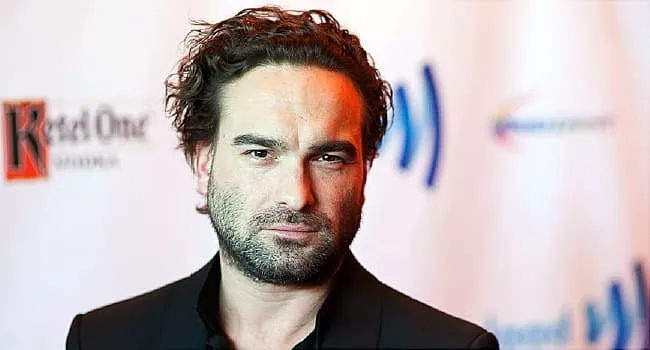
Some actors arrive in Hollywood like fireworks. Johnny Galecki arrived more like a slow-burning lamp with excellent timing: warm, clever, and surprisingly hard to ignore once it is switched on. For millions of viewers, he is forever linked to Leonard Hofstadter, the bespectacled heart of The Big Bang Theory. For others, he is David from Roseanne, Rusty from National Lampoon’s Christmas Vacation, or that familiar face who keeps showing up in pop culture like an old friend who somehow still has better hair than most of us.
This interview-style feature takes a closer look at the actor behind those roles: how he started, why audiences connected with him, what made his sitcom work feel so durable, and why his post-Big Bang years have been notably quieter, moodier, and more private. In other words, this is a Q&A with Johnny Galecki in spirit: less red-carpet fluff, more career archaeology, with just enough charm to keep things from sounding like a museum plaque.
Q: Who is Johnny Galecki beyond Leonard Hofstadter?
Johnny Galecki’s appeal has always come from the fact that he rarely seems to be “performing celebrity.” Even when he became one of the most recognizable faces on network television, he never projected the energy of a man desperate to be seen from space. He came across as grounded, dryly funny, slightly wry, and just self-aware enough to make fame look like something he tolerated rather than worshipped.
That low-key quality matters. Plenty of TV stars become famous for a role and then spend years fighting it like a guy trying to free himself from a sweater stuck over his head. Galecki, by contrast, seemed to understand exactly what kind of performer he was: an actor who could play intelligence, insecurity, longing, and sarcasm in the same beat. He does not bulldoze a scene. He sneaks into it, sharpens it, and somehow ends up being the emotional hinge.
That is a big reason the phrase “Johnny Galecki interview” still sparks interest years after The Big Bang Theory ended. Fans are not just curious about the star. They are curious about the temperament. How did someone so understated become such a central figure in modern sitcom history? The answer starts very early.
Q: How did Johnny Galecki get started so young?
Before he became the poster child for lovable TV brainpower, Galecki was already building a career the old-fashioned way: working young, working often, and working before most kids have figured out how to fake enthusiasm for algebra. Born in Belgium and raised in Illinois, he got involved in performance early and came up through theater in the Chicago area. That Midwestern beginning matters, because it seems to have shaped the practical, unflashy energy he later carried into television.
The truly wild part of the story is not that he moved toward acting. It is how early adulthood came knocking. As a teenager, Galecki ended up in California and, in a now-famous detail from his own recollections, stayed behind for work even as the rest of his family headed back to Illinois. That is not the usual starter pack for a sitcom star. Most teenagers are learning to parallel park badly. Galecki was learning how to be on his own while also building a career.
That experience may explain why he often comes across as older than his fame. Even in his younger roles, there is a watchfulness to him. He does not play characters like someone trying to win the room with pure volume. He plays them like someone who has spent time observing the room first. That instinct, subtle as it is, became one of his greatest professional assets.
Q: Why was Roseanne such a turning point?
If The Big Bang Theory made Galecki globally famous, Roseanne helped teach viewers what he could do. His role as David Healy began as a smaller opportunity and became one of the defining parts of his early career. On paper, David could have been just another sitcom boyfriend: soft-spoken, supportive, a little awkward, and there to bounce off bigger personalities. In practice, Galecki turned him into something more textured.
David worked because Galecki understood how to play vulnerability without making it syrupy. He gave the character a bruised sweetness, but also a believable sense of humor and a quiet stubbornness. He was not just “the nice one.” He felt like a real teenager trying to survive a loud, chaotic, working-class universe with his dignity mostly intact. On a show built around larger-than-life comedic rhythms, he found a human size that made the material land even harder.
His chemistry with Sara Gilbert was another major factor. Their scenes had an ease that many sitcom romances spend entire seasons trying to fake. It helped that Galecki had the rare ability to make silence useful. He could deliver a joke, sure, but he could also let discomfort, longing, or disappointment sit in the air for a second longer than expected. That gave Roseanne an emotional realism that viewers still remember.
In retrospect, David Healy feels like a preview of what Galecki would later perfect: the art of playing the guy who looks ordinary until you notice he is carrying half the scene’s emotional weight.
Q: What made Leonard Hofstadter such a lasting character?
Let us be honest: in less capable hands, Leonard could have become a one-note TV archetype. Smart guy. Glasses. Neuroses. Endless romantic frustration. Insert joke, collect paycheck, repeat until syndication does the rest. But Galecki gave Leonard something more useful than quirk. He gave him elasticity.
Leonard was the emotional bridge inside The Big Bang Theory. Sheldon was the engine, Penny was the audience surrogate, and the wider ensemble added color, momentum, and comic contrast. Leonard, meanwhile, had the difficult job of keeping the show tethered to recognizable feelings. He could be irritated, jealous, hopeful, petty, generous, insecure, romantic, and deeply tired, sometimes all before the commercial break. That is not easy sitcom work. That is character calibration.
Galecki’s performance also protected Leonard from becoming too self-pitying. Even at the character’s most frustrated, there was usually a flicker of self-awareness that kept him likable. He knew when Leonard was being noble and when Leonard was being ridiculous. That distinction is the difference between a durable sitcom lead and a weekly headache.
The role also benefited from Galecki’s chemistry with his castmates, especially Jim Parsons and Kaley Cuoco. With Parsons, he played exasperation like a finely tuned instrument. With Cuoco, he made the long-running Penny-Leonard relationship feel less like a network obligation and more like a strange, funny, occasionally messy bond between people who kept choosing each other anyway. That relationship gave the show a beating heart under all the physics jokes and comic-book references.
For SEO purposes, yes, this is where we say it clearly: Johnny Galecki’s Big Bang Theory era was not just commercially massive. It was creatively important for understanding his range. Leonard Hofstadter was a sitcom role, but it required dramatic timing, comic restraint, and the ability to look simultaneously smart and emotionally doomed. That is a very specific skill set. Not everyone has it.
Q: Did Galecki ever feel boxed into one kind of role?
A little, maybe, but not in the way people assume. Galecki has often seemed less interested in blowing up his image than in nudging it sideways. Over the years, he built a film and TV résumé that shows more variation than casual viewers might remember. He was Rusty Griswold in a holiday comedy that became an annual American ritual. He popped up in films like I Know What You Did Last Summer, Vanilla Sky, Hancock, In Time, and Rings. He also moved into producing, which is usually a sign that someone wants more control over the kinds of stories getting made.
That producer instinct is revealing. It suggests Galecki was never content being only the guy standing on the tape mark and hitting the punch line. He has spoken publicly about producing projects such as The Master Cleanse, and the behind-the-scenes aspect of the business seems to suit him. It fits the broader impression he gives off: curious, collaborative, and more interested in shaping a thing well than in hogging the spotlight while doing it.
In a career full of recognizable work, that may be one of the more underrated parts of the Johnny Galecki story. He did not spend decades in the industry by being loud. He did it by being useful. Hollywood, despite all appearances, actually values that from time to time.
Q: What happened after The Big Bang Theory ended?
After one of the biggest sitcom runs of the 21st century, Galecki did something almost suspiciously reasonable: he stepped back. Instead of launching into a frantic post-finale image overhaul, he leaned toward privacy, family life, and a literal change of scenery. He moved to the Nashville area after years in California and spoke candidly about never quite feeling like Los Angeles fit him. That is the kind of quote that lands because it sounds lived-in, not focus-grouped.
His home life has also become a larger part of the public picture, though he still keeps it relatively guarded. Recent profile coverage revealed his marriage to Morgan Galecki, their daughter, and his life as a father. The portrait that emerges is not one of a man running from fame exactly, but of someone uninterested in performing it 24/7. He appears to prefer a carefully edited public life: enough to stay present, not enough to turn existence into content.
Even his home reflects that sensibility. Coverage of his Nashville property painted a picture that is less “minimalist celebrity beige” and more “gothic curiosity cabinet with excellent taste.” Honestly, good for him. If you survive decades in Hollywood and end up with a whimsically dark library instead of a personality crisis, that is a win.
There have been difficult chapters too, including the loss of his California ranch in a fire years ago. But the through line in public accounts is resilience rather than spectacle. Galecki tends not to package hardship for applause. He acknowledges it, thanks the people who helped, and moves on. In celebrity culture, that almost counts as a radical act.
Q: What makes Johnny Galecki so easy to root for?
He seems to understand scale. That sounds abstract, but it matters. Galecki knows how big a scene should be, how small a line reading should stay, and how much emotion to reveal without smothering it. He is a proportion actor. That is part of why he works so well in ensemble comedy. He never seems to confuse being central with being dominant.
He also has a face that can do three useful things at once: look amused, wounded, and skeptical. That alone can carry an entire episode of network television. Add sharp comic instincts and a refusal to overplay sympathy, and you get a performer people trust. Viewers return to Johnny Galecki roles because he rarely begs for affection. He earns it sideways.
There is also something refreshing about how unmanufactured his persona feels. He has had famous relationships, a major television career, public success, and the kind of résumé that could justify a larger ego. Yet the image that persists is not peacocking. It is competence. Smart scripts, good timing, emotional precision, dry humor, and an ability to make highly specific characters feel weirdly universal.
Experiences fans still have with Johnny Galecki’s work
One reason the phrase “Q&A With Johnny Galecki” remains appealing is that viewers do not just remember his characters. They remember where they met them. Maybe it was on a family couch during a holiday rerun of Christmas Vacation, when Rusty Griswold looked like every American teenager who had been drafted into seasonal chaos against his will. Maybe it was through late-night reruns of Roseanne, where David Healy felt like the patron saint of shy boys trying to keep up with louder households. Or maybe it was through the comfort-TV ritual of The Big Bang Theory, a show many people watched while eating takeout, folding laundry, procrastinating productively, or pretending they totally understood the science talk.
That is the interesting thing about Galecki’s screen presence: it attaches itself to routine. He is not an actor audiences only associate with prestige viewing or one giant dramatic monologue. He is woven into the everyday experience of television. His work is rewatchable in the truest sense. You do not need to schedule your life around it. You let it live in your life.
There is also a multigenerational quality to his career that keeps him relevant. Parents who knew him from Roseanne watched him again on The Big Bang Theory. Younger viewers who found him as Leonard later discovered he had been floating around pop culture long before that, quietly collecting credits and sharpening his craft. He is one of those actors whose résumé makes you say, “Wait, he was in that too?” in the best possible way.
Watching Galecki across decades also creates a specific viewing experience: you start to notice how consistent he is. The settings change. The hair changes. The wardrobe definitely changes, sometimes with crimes against fabric. But the fundamentals stay steady. He listens well on screen. He reacts precisely. He does not flatten jokes by pushing too hard. He makes awkwardness feel human instead of cartoony. That reliability is deeply satisfying for audiences, even if they do not always have the vocabulary to explain why.
And then there is the comfort factor. Galecki belongs to that rare category of actors who can make a show feel livable. Not glamorous. Livable. His characters often seem like people you could actually know: the funny friend, the thoughtful ex, the guy who says the thing everyone else was trying not to say. That familiarity is part of the pleasure. Viewers are not just watching plot. They are spending time with a tone.
In the streaming era, where content often arrives shouting for attention like a man with a megaphone in a candle shop, Galecki’s style feels even more valuable. He reminds audiences that charisma does not always need fireworks. Sometimes it is timing. Sometimes it is restraint. Sometimes it is the look a character gives after a terrible decision, as if to say, “Well, this seems bad, and yet here we are.” Johnny Galecki has built an entire career out of understanding that feeling.
That is why revisiting his work can feel oddly personal. You are not just rewatching an actor. You are re-entering entire seasons of your own life: old apartments, school nights, holiday marathons, first binge-watch obsessions, familiar theme songs, and the gentle rhythm of sitcom comfort. Galecki’s performances have aged well because they were rarely chasing coolness. They were chasing truth inside comedy. Cool expires. Truth hangs around.
Final thoughts
So what does a real Q&A with Johnny Galecki reveal, even when assembled from years of public interviews and profiles? It reveals an actor who built a remarkably durable career by doing deceptively difficult things very well. He made softness interesting. He made intelligence funny without turning it into parody. He made vulnerability look lived-in rather than decorative. And he did it while avoiding the exhausting self-mythology that swallows so many stars.
In an industry that loves reinvention, Galecki’s greatest trick may be that he never seemed desperate to reinvent himself at all. He just kept refining the craft, choosing interesting lanes, and letting the work speak in a voice that was unmistakably his. Not flashy. Not forced. Just sharp, human, and quietly memorable.













