
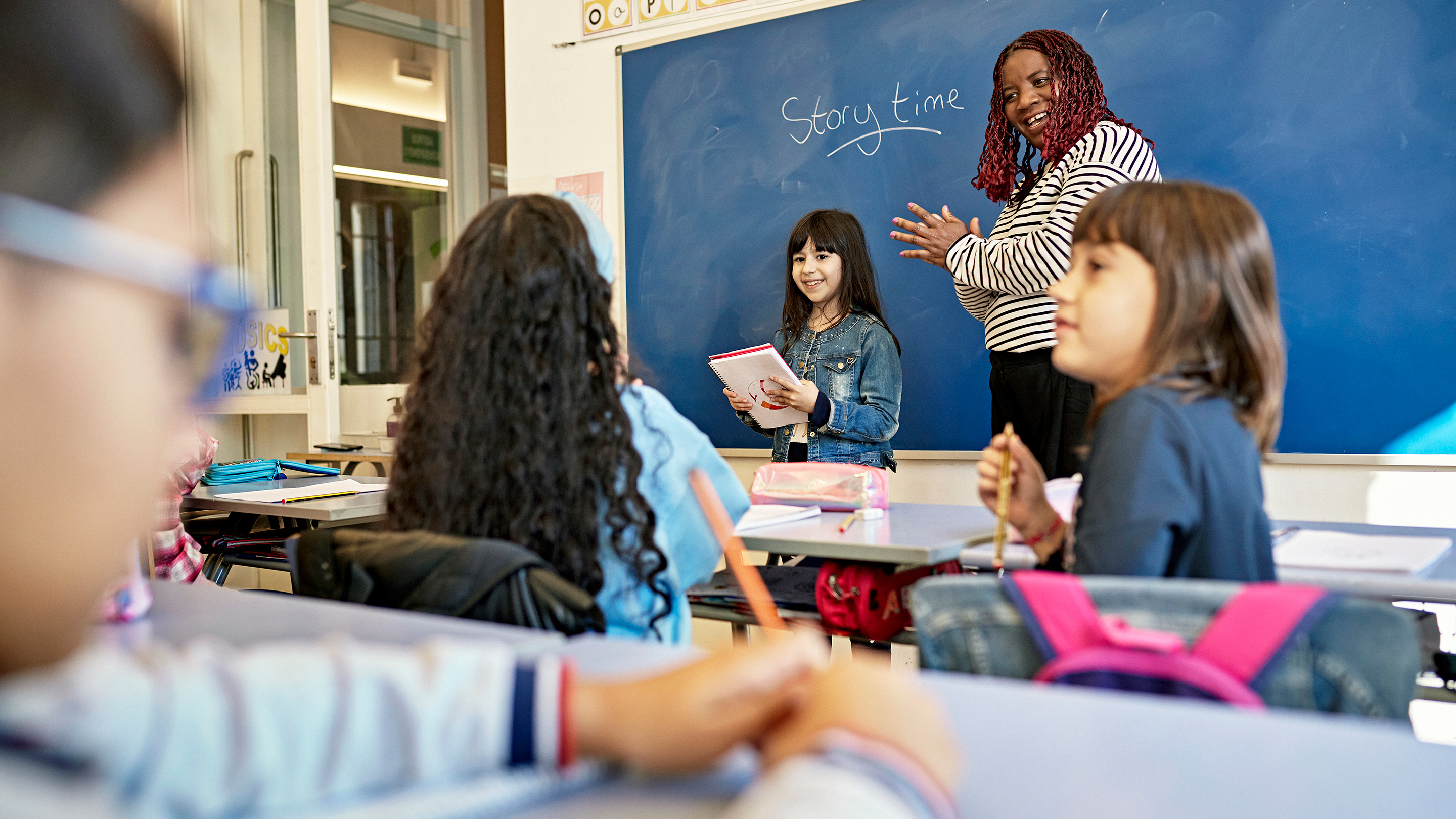
Every classroom has a few natural storytellers. You know the ones: they can turn a missing pencil into a three-act mystery, complete with suspects, dramatic pauses, and a twist ending involving the class hamster. But storytelling is not only for the child who already loves the spotlight. Every young student can learn to shape ideas, describe experiences, listen closely, and share stories with confidence.
Encouraging young students to be storytellers is one of the most joyful ways to build literacy. Storytelling strengthens oral language, vocabulary, reading comprehension, narrative writing, listening skills, social connection, and creative thinking. It also helps children understand that their voices matter. That is a big deal, especially for students who may not yet see themselves as “good writers.” Before a child can write a strong story, they often need the chance to tell it, act it out, draw it, revise it aloud, and test it on a real audiencepreferably one that laughs at the funny parts and does not correct every comma like a tiny grammar police officer.
This guide explores practical, research-informed ways teachers and parents can help young students become enthusiastic storytellers. From oral storytelling circles to picture prompts, story maps, puppets, family interviews, and digital storytelling, the goal is simple: create a classroom culture where stories are welcomed, practiced, celebrated, and improved.
Why Storytelling Matters for Young Learners
Storytelling may look playful, but it does serious academic work. When children tell stories, they practice sequencing events, choosing precise words, explaining cause and effect, describing characters, and organizing ideas. Those same skills later appear in reading comprehension and writing assignments. A student who can explain, “First the dragon lost his glasses, then he sneezed fire on the birthday cake, so everyone had toast instead,” is already working with beginning, middle, end, conflict, consequence, and humor.
Oral language is the foundation of literacy. Young children learn how words sound, how sentences work, how ideas connect, and how conversation moves back and forth before they master written text. Storytelling gives them a meaningful reason to use language. Instead of practicing vocabulary in isolation, students use words to build scenes, solve problems, and entertain listeners.
Storytelling also supports social and emotional learning. When students tell personal stories, they reveal what they notice, value, wonder about, and fear. When classmates listen, they learn empathy. A classroom storytelling routine can turn a room full of separate desks into a community of listeners, laughers, question-askers, and “Wait, what happened next?” people.
Start With Oral Storytelling Before Writing
Many young writers freeze when handed a blank page. The page looks official. It has expectations. It silently whispers, “Spell everything correctly or else.” Oral storytelling removes that pressure. Students can begin by speaking their ideas before writing them down.
Try a simple routine called “Tell It Before You Write It.” Ask students to turn to a partner and tell a short story about something that happened to them, something they imagined, or something inspired by a picture. Their partner’s job is to listen and ask one helpful question: “What happened next?” “How did the character feel?” or “Where were they?” This quick oral rehearsal helps students discover missing details before drafting.
Example Activity: The 60-Second Story
Give students one minute to tell a complete story using three prompts: somebody, wanted, but. For example: “A penguin wanted to become a tap dancer, but the ice kept cracking.” Students then add “so” and “finally” to finish the story. This structure is simple, memorable, and flexible enough for kindergarten through upper elementary grades.
After several oral rounds, students can draw their story or write a few sentences. The oral version becomes the bridge to the written version. Nobody has to leap across the literacy canyon in one dramatic jump.
Create a Story-Friendly Classroom Culture
Students become storytellers when storytelling becomes normal. That means stories should not appear only during a once-a-year creative writing unit squeezed between testing season and the mysterious week when every glue stick disappears. Make storytelling part of everyday classroom life.
Begin morning meetings with a “tiny tale.” Invite one student to share a 30-second story about something surprising, funny, kind, or confusing. Use read-aloud time to pause and ask, “How would you tell this part in your own words?” Let students retell a science concept as a story: “The water droplet’s wild vacation through the water cycle.” Let them explain math mistakes as detective stories: “The Case of the Missing Decimal.”
A story-friendly classroom does not require fancy materials. A basket of puppets, picture cards, interesting objects, sticky notes, story dice, or student drawings can launch dozens of narratives. The most important material is psychological safety. Students need to know their stories will be heard respectfully, not mocked, rushed, or graded to death before they can breathe.
Use Mentor Texts to Show How Stories Work
Great storytellers are also great listeners. Children learn narrative patterns by hearing many stories: picture books, folktales, family stories, poems, fables, legends, comics, and short personal narratives. Mentor texts help students notice how authors create characters, build suspense, use dialogue, describe settings, and end with satisfaction.
During read-alouds, pause for quick “story detective” moments. Ask: Who is the main character? What does the character want? What problem gets in the way? Which words helped you picture the scene? Where did the author make you laugh, worry, or guess? These questions teach story elements without turning a wonderful book into a worksheet wearing a fake mustache.
Story Elements to Teach Explicitly
Young students benefit from clear, repeated language. Use simple terms such as character, setting, problem, events, solution, feeling, and message. Display them on a story anchor chart. Add icons or drawings for emerging readers. Then revisit the same language when students tell, draw, act, and write their own stories.
For example, after reading a picture book, students might use a five-box story map: character, setting, problem, three big events, and ending. Later, they can use the same map for original stories. This builds independence because students internalize the shape of narrative.
Let Students Move, Draw, and Act
Some students do their best thinking while moving. Others need to draw before they can speak. Some need to become the bear, the astronaut, the annoyed sandwich, or the villainous broccoli before they can explain the plot. Storytelling should welcome multiple modes of expression.
Story acting is especially powerful for young children. A student dictates a short story to the teacher, then classmates act it out. The author sees their words become action. The audience learns to listen for sequence and character. Everyone discovers that stories are not dead sentences trapped on paper; they are living ideas.
Drawing also supports storytelling. Ask students to sketch the most important scene, then tell the story from the picture. Encourage labels, speech bubbles, arrows, and emotion faces. A child who is not ready to write a paragraph may still be able to draw a wonderfully complicated scene involving a pirate ship, a thunderstorm, and a cat who clearly has management responsibilities.
Use Prompts Without Limiting Imagination
Creative writing prompts can help students begin, especially when they claim they have “nothing to write about,” which usually means “I have twelve ideas, but none of them feel safe enough yet.” Good prompts open doors. Weak prompts lock students into one narrow answer.
Offer prompts that invite choice. Instead of “Write about a dog,” try “A pet discovers a secret door. What happens next?” Instead of “Write about your weekend,” try “Tell about a time something did not go as planned.” Students can choose real, imaginary, funny, dramatic, or mysterious responses.
Prompt Ideas for Young Storytellers
Try these classroom-ready starters: “The backpack started talking during math.” “A tiny dragon moved into the school library.” “The moon sent a letter to Earth.” “Someone found a map under the cafeteria table.” “A character wanted to be brave but had one very unusual fear.” Prompts like these encourage narrative writing, creative thinking, and playful risk-taking.
Keep prompt writing low-stakes. Not every story needs to become a polished final draft. Some stories are practice swings. Some are experiments. Some are gloriously weird and should be allowed to remain that way.
Support English Language Learners and Quiet Students
Storytelling can be especially valuable for multilingual learners, but only when teachers provide support. Students may have rich stories in their home language while still developing English vocabulary. Invite students to plan in one language, tell with gestures, use drawings, work with a partner, or include key words from their home language. A student’s full language background is a strength, not a problem to hide in the supply closet.
Total physical response, puppets, sentence frames, picture cards, and repeated story structures help students participate. Useful frames include: “One day ___.” “The problem was ___.” “I felt ___ because ___.” “Then something surprising happened: ___.” These supports reduce anxiety and help students focus on meaning.
Quiet students also need gentle entry points. Do not force every child to perform for the whole class immediately. Begin with whisper storytelling to a stuffed animal, partner sharing, small groups, audio recording, or drawing-plus-telling. Confidence grows when students experience success in small steps.
Teach Listening as Part of Storytelling
A storyteller needs an audience, and an audience needs manners. Listening is not passive. It is an active literacy skill. Teach students how to look at the speaker, notice important details, ask thoughtful questions, and respond kindly.
Create a simple listener checklist: I listened without interrupting. I noticed one strong detail. I asked one question. I gave one compliment. This helps students understand that storytelling is a shared experience. The teller and the listeners build the moment together.
After a student tells a story, invite classmates to respond with “glows and grows.” A glow names something that worked: “Your ending surprised me.” A grow offers a helpful suggestion: “I wanted to know more about the monster’s cave.” Keep feedback specific, brief, and kind. Young storytellers need coaching, not a courtroom cross-examination.
Connect Storytelling to Reading and Writing Skills
Storytelling should not replace writing instruction; it should strengthen it. Once students have told a story aloud, they are better prepared to write because they already know the basic path. Teachers can then guide them through drafting, revising, editing, and publishing.
Use storytelling to teach revision. Ask students to retell the same story three times, each time improving one feature. First, add setting details. Next, add dialogue. Then, improve the ending. Students quickly learn that stories can change and improve. Revision becomes less scary when it begins in speech.
Storytelling also improves comprehension. When students retell a story they have read, they must decide what matters most. They practice sequence, cause and effect, character motivation, and theme. Retelling is not copying; it is rebuilding meaning in their own words.
Bring Families Into the Storytelling Process
Families are full of stories: childhood memories, migration journeys, recipes, holiday traditions, funny mistakes, neighborhood legends, and “the time your uncle tried to fix the sink and created an indoor waterfall.” Inviting family stories into school helps students see storytelling as part of real life, not just an assignment.
Send home simple interview questions: What was school like when you were young? What is a story you remember from your childhood? What is a family tradition? What is a funny thing that happened in our family? Students can return with notes, drawings, or oral retellings.
Be sensitive. Not every student has the same family structure or access to family history. Offer flexible options: interview a neighbor, caregiver, school staff member, or older friend. The goal is connection, not pressure.
Try Digital Storytelling Carefully
Digital storytelling can motivate students by combining voice, images, text, and music. Young students might record themselves reading an original story, create a slideshow with drawings, or use a tablet to photograph story scenes built with blocks. Digital tools can give students an authentic audience and help reluctant writers express ideas in multiple ways.
Keep the technology simple. The story should lead; the tool should follow. If students spend forty minutes choosing explosion sound effects and three minutes thinking about the plot, the lesson has wandered into the digital swamp. Set clear goals: plan the story, record a clear voice, match images to events, and share responsibly.
Assessment: What to Look For
Assessing storytelling does not mean grading every pause, gesture, or invented dinosaur name. Look for growth over time. Can the student tell events in order? Include a character and setting? Explain a problem? Add details? Use new vocabulary? Speak clearly enough for a listener? Respond to questions? Revise after feedback?
A simple rubric with four categories works well: story structure, language and detail, voice and expression, and listening/responding. Use student-friendly language. For example: “My story has a beginning, middle, and end.” “I used words that help people picture it.” “I practiced using my storyteller voice.” “I listened and helped other storytellers.”
Common Challenges and Simple Fixes
“My Students Say They Have No Ideas”
Build an idea bank. Use photos, objects, classroom events, read-alouds, questions, and “what if” prompts. Let students collect ideas in notebooks or folders. The best cure for no ideas is not a lecture; it is a pile of interesting sparks.
“One Student Talks Forever”
Use time limits and roles. A talking stick, timer, or story structure helps enthusiastic students focus. Teach them that a strong storyteller leaves the audience wanting more, not checking the clock and aging visibly.
“Students Copy Each Other”
Celebrate variation. If everyone starts with the same prompt, compare how different the stories become. Teach students to borrow structures, not steal whole stories. “A character wants something but faces a problem” is a structure. “My penguin tap dancer named Gerald” belongs to Gerald’s author.
Conclusion: Growing Confident Young Storytellers
Encouraging young students to be storytellers is not an extra activity reserved for rainy Fridays. It is a powerful literacy practice that helps children speak, listen, read, write, imagine, and connect. When students tell stories, they learn how ideas move. They discover that words can build worlds, solve problems, explain feelings, and make people laugh so hard they snort apple juice.
The best storytelling classrooms are not silent rooms where children wait for permission to have ideas. They are active, language-rich communities where students talk before writing, listen before responding, revise before publishing, and celebrate the many voices in the room. With consistent routines, supportive prompts, mentor texts, movement, drawing, family connections, and kind feedback, every child can grow as a storyteller.
Classroom Experiences: What Storytelling Looks Like in Real Life
In real classrooms, storytelling rarely looks perfect at first. It looks like wiggly bodies, half-finished sentences, nervous giggles, and one child who begins every story with “Once upon a time there was an explosion.” That is normal. The magic appears when teachers treat those messy beginnings as raw material instead of mistakes.
One effective experience is the “story object basket.” A teacher places random items in a basket: a plastic key, a feather, a toy car, a shell, a button, and a tiny notebook. Students choose one object and invent where it came from. The plastic key might open a dragon’s mailbox. The feather might belong to a bird who delivers weather reports. The button might have fallen off a giant’s pajama shirt. This activity works because students do not have to invent from nothing. The object gives them a starting point, and imagination does the rest.
Another classroom experience is partner retelling after a read-aloud. After hearing a story, students turn to a partner and retell the most important events using their fingers: first, next, then, after that, finally. At first, many students forget details or jump straight to the ending. With practice, they begin to include character motivation, setting, and problem-solving. This simple routine strengthens comprehension and prepares students for written summaries.
Story circles also build confidence. Students sit in a circle, and each child adds one sentence to a shared story. The teacher may begin: “On Monday morning, our classroom door would not open because…” One student adds, “A family of raccoons was having breakfast inside.” Another adds, “They were eating our math worksheets with maple syrup.” The story becomes ridiculous, but students learn flexible thinking, listening, sequence, and collaboration. They also learn that not every idea has to be perfect to move the story forward.
For quieter students, audio storytelling can be a breakthrough. Some children are uncomfortable standing in front of classmates but will happily record their story in a quiet corner. Listening to their own recording helps them notice unclear parts and revise. A student may say, “I forgot to tell why the robot was sad,” then record again with more detail. That is revision without the red pen drama.
Family storytelling projects can be especially meaningful. A student might interview a grandparent about a childhood game, ask a caregiver about a favorite meal, or collect a funny family memory. When these stories are shared in class, students discover that everyone carries history. They also hear different rhythms of language, different traditions, and different ways of making meaning. The classroom becomes bigger than its walls.
The most important experience teachers report is this: once storytelling becomes routine, students begin to see themselves differently. The reluctant writer becomes the expert on monster habitats. The quiet child becomes the author of a tender story about a lost kitten. The student who struggles with spelling becomes the class champion of plot twists. Storytelling gives young learners a place to begin, a reason to keep going, and an audience that reminds them their words are worth hearing.
Note: This body-only HTML article is written for web publication in standard American English and synthesizes reputable U.S.-based literacy and education guidance without inserting source links into the article.













