
Imagine visiting your doctor because your heart occasionally feels as if it is auditioning for a drum solo. The examination looks normal, the symptoms politely disappear, and you go home with the medical equivalent of, “Let us know if it happens again.”
That frustrating gap between what happens in a clinic and what happens during ordinary life is exactly where a soft skin electronic tattoo, commonly called an e-tattoo, could become valuable. Instead of checking your body for a few minutes, this ultrathin wearable sensor can remain attached to the skin while you work, sleep, exercise, argue with customer service, or encounter any other event that makes your blood pressure interesting.
The technology matters because cardiovascular disease remains the leading cause of death in the United States. High blood pressure is also extraordinarily common, affecting nearly half of American adults under current definitions. A comfortable device capable of continuously recording cardiovascular signals could reveal warning patterns that a single office measurement misses.
An e-tattoo is not a crystal ball, a robotic physician, or an excuse to ignore chest pain. However, it represents a major shift in wearable health technology: electronics that behave less like a gadget strapped to your body and more like a temporary second skin.
What Exactly Is a Soft Skin E-Tattoo?
Despite the futuristic name, most electronic tattoos do not involve needles or permanent ink. They are thin, flexible electronic systems transferred or laminated onto the skin much like a temporary tattoo or medical dressing.
The defining feature is mechanical compatibility. Human skin stretches, folds, wrinkles, sweats, and changes shape constantly. Traditional electronic components prefer to remain flat and rigid, which makes the relationship between ordinary circuitry and skin somewhat like forcing a dinner plate to perform yoga.
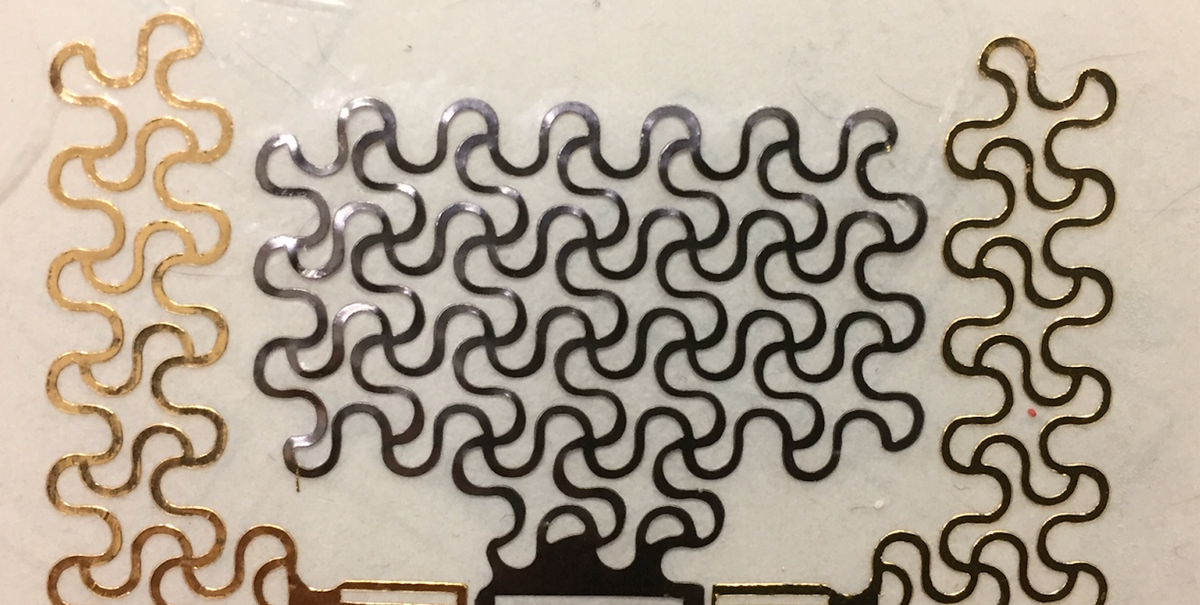
E-tattoos solve that problem with ultrathin materials, flexible polymers, conductive films, and serpentine-shaped electrical connections. The wavy structures can expand and contract without immediately breaking. Because the sensor sits directly against the body, it can maintain close contact and capture subtle electrical, mechanical, thermal, or chemical signals. A major 2024 scientific review described e-tattoos as ultrathin, skin-soft electronics designed to conform to the body without significantly obstructing natural movement.
The Materials Doing the Heavy Lifting
Different prototypes use different combinations of materials. Graphene is especially attractive because it is extremely thin, electrically conductive, lightweight, and flexible. Gold, silver-based inks, liquid metals, conductive polymers, and piezoelectric materials may also appear in various designs.
One influential heart-monitoring e-tattoo developed at the University of Texas at Austin used gold electrodes to detect electrical heart activity and a piezoelectric polymer called polyvinylidene fluoride, or PVDF, to sense tiny chest vibrations. The mechanical sensor was only tens of micrometers thick and arranged in a winding mesh that could stretch with the skin.
How an E-Tattoo Listens to Your Heart
Your heart produces more than one kind of useful signal. An electrocardiogram, or ECG, records the electrical activity that coordinates each heartbeat. A seismocardiogram, or SCG, records extremely small chest vibrations created by cardiac motion, blood movement, and the opening and closing of heart valves.
Doctors normally gather these clues with separate equipment. ECG testing typically requires adhesive electrodes and wires, while mechanical or acoustic activity may be evaluated with other sensors or a stethoscope. Researchers realized that collecting both signal types at the same moment could provide a more complete view of cardiac performance.
In 2019, a University of Texas team reported a chest-mounted e-tattoo that could record ECG and SCG signals synchronously. The combined system allowed researchers to calculate cardiac time intervals, including the period between electrical activation and mechanical events in the heartbeat. These intervals can help describe how efficiently the heart is contracting and pumping.
Think of ECG as reading the heart’s electrical instructions and SCG as checking whether the machinery followed those instructions. Seeing both sides of the process can reveal information that either signal may not provide alone.
From Wired Prototype to Mobile Monitor
Early versions demonstrated the sensing concept but still depended on external wiring. By 2023, the researchers had developed a wireless chest e-tattoo weighing approximately 2.5 grams. It used a small replaceable battery, consumed less than a few milliwatts, and was designed for more than 40 hours of operation.
That version was tested on five healthy participants during daily activities. It simultaneously recorded electrical and mechanical cardiac signals while allowing the wearers to move outside a traditional laboratory setup. The study was preliminary and small, but it demonstrated how the technology could move from a carefully controlled experiment toward practical ambulatory monitoring.
This evolution matters. A sensor that performs beautifully while its wearer sits perfectly still in a laboratory is scientifically interesting. A sensor that performs while its wearer walks, sleeps, reaches for groceries, and attempts to assemble flat-pack furniture is medically useful.
Continuous Monitoring Could Catch What a Checkup Misses
Many cardiovascular symptoms are intermittent. An abnormal rhythm may appear for several minutes and then vanish. Blood pressure can change with sleep, stress, exercise, meals, medication, posture, pain, and countless other factors. A brief measurement at a clinic captures only one frame from a much longer movie.
Continuous monitoring offers context. Instead of recording only that an unusual event occurred, a wearable sensor could show when it happened, how long it lasted, what the heart was doing immediately beforehand, and whether the pattern repeated.
That does not mean more data automatically produces better medicine. A mountain of noisy readings can become a digital junk drawer. The real opportunity lies in combining reliable sensors with algorithms that identify meaningful changes and present clinicians with useful summaries rather than 40 hours of cardiovascular spaghetti.
A Blood Pressure Tattoo Without the Squeezing Cuff
Blood pressure monitoring is another promising application. Conventional cuffs are useful and well established, but they provide measurements at selected moments and can be uncomfortable when repeatedly inflated.
In 2022, researchers from the University of Texas at Austin and Texas A&M University reported graphene e-tattoos that measured blood-pressure-related changes through electrical bioimpedance. The system applied a small electrical current and analyzed how the body’s tissues responded as blood volume changed.
During the study, the tattoos supported more than 300 minutes of continuous monitoring. The reported accuracy met a high performance classification under the study conditions, although the technology still required modeling, calibration, and broader validation before routine clinical adoption.
Unlike a watch, a tattoo-style sensor can remain closely attached to the same position. That stability may reduce errors caused by sliding, loose contact, or changes in the distance between the sensor and the underlying artery. Researchers have also argued that electrical approaches may avoid some limitations associated with purely optical measurements across different skin tones and body shapes.
Beyond the Heart: What Else Could E-Tattoos Monitor?
The skin is an information-rich surface. Electrical activity from the brain, muscles, eyes, and heart can be detected from different locations. Temperature, movement, hydration, strain, sweat composition, and wound conditions may also be measured with specialized designs.
Modern e-tattoo research includes sensors for ECG, electromyography, electroencephalography, respiration, skin temperature, motion, pressure, and biochemical markers. Experimental systems have also explored wound monitoring, electrical stimulation, human-machine control, and energy harvesting from movement, heat, wireless fields, or chemical reactions.
Electronic Tattoos for Mental Workload
In 2025, University of Texas researchers introduced a wireless forehead e-tattoo designed to measure brain activity and eye movement. Six participants completed memory tasks of increasing difficulty while the device recorded EEG and EOG signals.
The researchers used the signals to distinguish levels of mental workload and identify patterns associated with increasing cognitive demand and fatigue. Potential future applications include monitoring people in safety-critical jobs, such as pilots, drivers, medical workers, and air traffic controllers. The study was tiny and exploratory, but it showed that an e-tattoo could collect more than basic pulse information.
Of course, a forehead sticker that announces, “Your brain is done for today,” may create awkward moments during budget meetings. Still, fatigue detection could become valuable when a lapse in concentration carries serious consequences.
Why Softness Is a Medical Feature, Not a Fashion Choice
Comfort affects data quality. A bulky sensor may be removed early, worn incorrectly, or avoided entirely. A stiff device can shift during motion, creating artifacts that resemble genuine physiological changes.
A soft, conformable tattoo moves with the skin and can maintain a stable sensor-body interface. Better contact generally means cleaner signals, fewer interruptions, and less temptation for the wearer to peel the device off after lunch.
Breathability is equally important. Skin trapped under an impermeable layer can accumulate heat and moisture, potentially causing discomfort or irritation. Researchers are experimenting with porous structures, ultrathin films, breathable conductive networks, and skin-friendly adhesives that allow water vapor to escape while preserving electrical performance.
Removing the Battery Problem
Batteries add thickness, weight, maintenance, and disposal concerns. Some research teams are therefore developing battery-free electronic tattoos powered wirelessly by a nearby reader.
One published prototype used a roughly five-micrometer-thick printed circuit with a wireless power-transfer coil. When a scanning device approached the tattoo, the system received energy, collected ECG information, and transmitted heart-rate data through a reusable electronic module. The disposable printed section reportedly cost less than one dollar in materials during the research project.
Battery-free designs may be useful for scheduled check-ins, hospital rounds, or applications where continuous transmission is unnecessary. Fully continuous remote monitoring, however, still requires dependable power, communication, storage, or a nearby energy source.
What Must Improve Before E-Tattoos Become Routine?
Clinical Validation
Many e-tattoo studies involve small groups of healthy volunteers. That is a reasonable starting point, but a medical device must work across ages, diseases, skin types, medications, climates, body shapes, and daily activities.
A heart monitor must distinguish a dangerous event from motion, coughing, poor adhesion, sweat, or someone sleeping in a position best described as “human pretzel.” Larger clinical trials will need to show that the devices reliably detect specific conditions and improve decisions or outcomes.
Durability and Skin Safety
A practical sensor must survive stretching, showers, perspiration, clothing friction, temperature changes, and repeated movement. Adhesives must hold securely without damaging sensitive skin. Conductive materials and encapsulation layers must remain biocompatible during the intended wear period.
Long-term use raises additional questions. How often should the tattoo be replaced? Can residue affect later readings? Will repeated application cause irritation? Can the electronics be recycled? A device that saves the heart while declaring war on the epidermis would be an incomplete victory.
Data Privacy and Cybersecurity
Continuous health monitoring creates highly personal data. Heart rhythms, stress responses, sleep patterns, location-linked activity, and neurological signals could reveal more about a person than a step counter ever dreamed of knowing.
Medical-grade e-tattoos will need secure wireless communication, careful access controls, transparent data policies, and protection against unauthorized monitoring. Patients should know what is collected, where it is stored, who can view it, and whether it may be used for purposes beyond treatment.
Regulation and Responsible Claims
A research prototype is not automatically a medical product. In the United States, sensor-based digital health devices marketed for diagnosis or treatment generally must satisfy applicable FDA requirements for their specific intended use. The FDA maintains information about authorized wearable technologies, including patches, rings, watches, and bands, but authorization applies to individual products and claims rather than an entire technology category.
Consumers should be skeptical of any future “health tattoo” advertised as diagnosing every disease from one mysterious squiggle. Legitimate devices will need evidence, defined limitations, regulatory review where required, and instructions explaining when users must seek professional care.
Could an E-Tattoo Actually Save Your Life?
Potentially, but not by performing a superhero landing on your chest.
The life-saving value would come from earlier recognition. A clinically validated e-tattoo might capture an abnormal rhythm, reveal poorly controlled nighttime blood pressure, document symptoms during daily activity, or show changes suggesting that treatment needs adjustment. Earlier information could lead to earlier testing, diagnosis, medication changes, or intervention.
The word might remains important. Current prototypes demonstrate impressive sensing capabilities, but most still require larger studies, manufacturing improvements, regulatory evaluation, and integration into clinical workflows. A sensor cannot help if its readings are inaccurate, ignored, overwhelming, or disconnected from qualified medical care.
An e-tattoo should also never be treated as permission to delay emergency help. Chest pressure, severe shortness of breath, sudden weakness, fainting, or symptoms of a possible heart attack or stroke require immediate medical attention, regardless of what a wearable device displays.
A Realistic E-Tattoo Wear-Test Experience
The following scenario is a realistic composite based on published prototype designs and reported testing rather than a claim of personal use.
The experience would probably begin less dramatically than the name suggests. There would be no buzzing tattoo needle, leather chair, or debate about whether a flaming skull is appropriate for a cardiology appointment. A clinician or technician would clean and dry the selected area, position the flexible sensor, and press it onto the skin beneath a thin dressing.
At first, the wearer might expect to feel sophisticated machinery. Instead, the most noticeable sensation could be the edge of the medical film or the small reusable module containing the battery and wireless electronics. A well-designed e-tattoo would be light enough to forget during ordinary movement.
The first hour might involve cautious behavior. The wearer would bend slowly, reach overhead, and check the mirror repeatedly to make sure the device had not migrated toward the shoulder. Once it remained in place, normal activity would resume. Walking to work, climbing stairs, drinking coffee, and sitting through a stressful meeting would suddenly become part of a cardiovascular dataset.
The invisible benefit would be continuity. A standard office ECG records a short period under controlled conditions. The e-tattoo would follow the wearer through transitions: resting to moving, calm to stressed, awake to asleep. Those transitions are often where symptoms appear.
A companion phone application might show connection status, battery level, signal quality, and a simplified heart-rate display. Ideally, it would not fire an alarm every time the wearer sneezed. Effective software would separate routine variations from patterns that genuinely deserve attention.
Sleeping with the device could be the most revealing test of comfort. A rigid monitor may press into the body or snag on clothing. A soft tattoo-style sensor should flex with the chest and remain relatively unobtrusive. Side sleeping, blankets, perspiration, and nighttime movement would still test the adhesive and signal-processing algorithms.
By the next day, the wearer might become strangely aware of every heartbeat. Continuous monitoring can reassure people, but it can also encourage obsessive checking. Thoughtful product design would therefore limit unnecessary alerts and explain that normal physiology varies from minute to minute.
At the end of the monitoring period, the sensor would be peeled away like a medical dressing. Mild redness might occur with some adhesives, while significant irritation would need to be reported. The valuable part would arrive afterward, when software converted thousands of measurements into a manageable report.
A clinician would not need every wobble and waveform. The useful summary might identify episodes of unusual rhythm, changes in cardiac timing, symptom-linked events, signal quality, and periods when the device lost contact. The patient could then discuss specific moments instead of trying to remember whether the flutter happened Tuesday afternoon or sometime during a cooking show.
The experience would be less like wearing a miniature hospital and more like carrying a quiet witness. It would not diagnose every sensation or guarantee safety. Its greatest contribution would be recording what the body did when no doctor happened to be watching.
The Future May Be Thinner Than a Bandage
The most exciting thing about electronic tattoos is not that they look futuristic. It is that they could make advanced monitoring feel ordinary.
Future e-tattoos may combine heart rhythms, blood pressure, temperature, movement, respiration, hydration, biochemical markers, and treatment functions in one soft platform. Artificial intelligence could help identify changes while preserving battery life and reducing unnecessary data transmission. Disposable sensor layers might connect to reusable electronics, lowering cost and waste.
The winning technology will not necessarily be the one with the longest feature list. It will be the one people can comfortably wear, clinicians can trust, health systems can support, regulators can evaluate, and patients can afford.
A soft skin e-tattoo may eventually help detect trouble before symptoms become an emergency. Until then, it is best understood as a remarkably promising bridge between the human body and digital medicine: light enough to forget, sensitive enough to listen, and potentially smart enough to tell us when the heart needs attention.













