
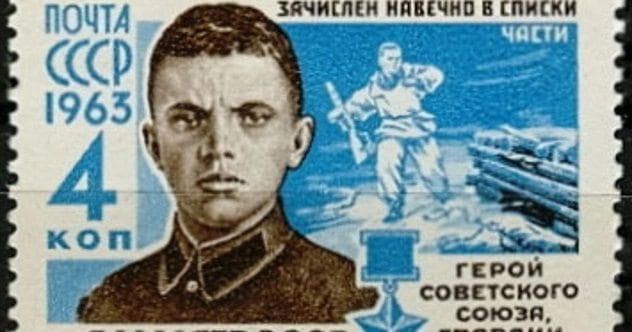
Every nation keeps a mental trophy cabinet. Its own commanders are brave, its rebels are freedom fighters, and its victories prove that destiny has excellent taste. Across the border, however, the same people may appear in textbooks as traitors, fanatics, spies, or inconvenient obstacles who refused to lose on schedule.
The phrase “national heroes of our enemies” is deliberately provocative because the word enemy is rarely permanent. France and England fought for generations before becoming allies. The United States once tried to destroy the political movement that now governs a unified Vietnam. Indigenous leaders condemned as dangerous rebels are increasingly recognized as defenders of sovereignty, territory, and culture.
Why Yesterday’s Enemy Can Become Today’s Hero
National heroes are not produced by courage alone. They are shaped by public memory. Governments build monuments, schools simplify complicated lives, and popular culture adds dramatic speeches that nobody bothered to write down at the time.
Yet mythology does not automatically erase genuine achievement. Many historical figures remembered by former enemy nations displayed remarkable leadership, endurance, intelligence, or moral courage. Understanding them does not require switching teams. It simply requires admitting that the people shooting in the opposite direction also had families, principles, fears, and a version of history in which they were defending home.
1. Joan of Arc: France’s Teenager Who Terrified England
From an Unknown Village to the Siege of Orléans
Joan of Arc was born around 1412 while France and England were grinding through the Hundred Years’ War. As a teenager, she claimed that heavenly voices had instructed her to support Charles VII and help drive English forces from France. In 1429, she joined the French effort to relieve Orléans, where her presence energized troops and transformed a desperate defense into a symbol of national revival.
Joan did not personally invent French military strategy while everyone else stood around polishing helmets. Experienced commanders planned the campaigns, but her confidence, religious authority, and willingness to stand near the fighting gave the French cause a powerful emotional center.
Her Death Made Her More Powerful
Burgundian troops captured Joan in 1430 and transferred her to English custody. A church court convicted her of heresy, and she was burned at the stake in Rouen in 1431. A later investigation overturned the judgment in 1456. France transformed her into a patriotic icon, and the Catholic Church canonized her in 1920.
To English authorities, Joan had been a dangerous political and religious problem. To France, she became proof that national resistance could wear armor, carry a banner, and still be young enough to complain about chores.
2. William Wallace: The Scottish Rebel England Called a Traitor
The Real Victory Behind the Movie Legend
William Wallace became one of the leading figures in the First War of Scottish Independence after King Edward I of England attempted to dominate Scotland. In September 1297, Wallace and Andrew Moray defeated a larger English force at Stirling Bridge. The Scots exploited the narrow crossing, preventing the English army from using its numbers effectively.
The victory turned Wallace into a national leader, and he was appointed Guardian of Scotland. His success was not permanent. Edward defeated his army at Falkirk in 1298, after which Wallace resigned his guardianship but continued supporting Scottish independence.
A Martyr With a Hollywood Makeover
Wallace was captured in 1305, taken to London, convicted of treason, and executed with deliberate brutality. He reportedly rejected the treason charge on the reasonable technicality that he had never sworn allegiance to Edward.
Later poetry, novels, monuments, and the movie Braveheart enlarged Wallace’s legend. Kilts, romances, and certain cinematic speeches belong more to entertainment than documented history. Even so, the historical Wallace remains important: he helped turn resistance into a national cause and became Scotland’s enduring answer to the question, “What if surrender is not on today’s agenda?”
3. Saladin: The Crusaders’ Enemy Who Earned Their Respect
The Commander Who Retook Jerusalem
Salah al-Din Yusuf ibn Ayyub, known in the West as Saladin, was a Kurdish military and political leader who founded the Ayyubid dynasty and united substantial territories in Egypt and Syria. His defining victory came at the Battle of Hattin in 1187, where his forces destroyed a major Crusader army. Jerusalem surrendered soon afterward.
For Christian Europe, the loss was a disaster that inspired the Third Crusade. For the Muslim world, Saladin became the leader who restored Jerusalem to Muslim rule after decades of Crusader control.
The Chivalrous Imageand the Complicated Reality
Saladin developed a reputation for generosity and restraint, particularly because Jerusalem’s surrender did not produce a massacre comparable to the bloodshed associated with the Crusaders’ capture of the city in 1099. European writers eventually portrayed him as a model of chivalry and a worthy opponent of Richard the Lionheart.
That polished image should not turn him into a medieval humanitarian with a customer-service award. He was an ambitious ruler who waged wars, executed opponents, and used religion to legitimize power. His legacy is compelling precisely because admiration crossed enemy lines without eliminating the harder truths of medieval politics.
4. Toussaint Louverture: The Revolutionary Who Shook an Empire
From Enslavement to Command
Toussaint Louverture was born enslaved in the French colony of Saint-Domingue, the enormously profitable plantation society that later became Haiti. When an uprising against slavery erupted in 1791, Toussaint emerged as an unusually capable military and political leader.
His alliances shifted with the rapidly changing politics of the French Revolution. After revolutionary France abolished slavery in its colonies, he joined the French side and fought Spanish and British forces. He eventually became the dominant authority in Saint-Domingue and issued a constitution in 1801 that granted the colony considerable autonomy while naming him governor for life.
A Freedom Fighter With Authoritarian Edges
Toussaint defended emancipation, but he also imposed strict labor rules to restore the plantation economy. His government therefore combined liberation with coerciona reminder that revolutionary leaders can break one system while borrowing uncomfortable tools from another.
Napoleon sent an expedition to restore French control. Toussaint was arrested in 1802, deported to France, and imprisoned, dying in 1803. Haiti declared independence in 1804. He did not live to witness the final victory, but Haitians remember him as one of the central architects of the world’s most successful revolt against colonial slavery.
5. Tecumseh: The Leader Who Tried to Stop American Expansion
A Confederation Larger Than One Nation
Tecumseh, a Shawnee leader born around 1768, attempted to build a broad Indigenous confederation capable of resisting American settlement in the Old Northwest. He argued that no single tribe had the right to sell shared Indigenous land without the consent of all affected peoples.
His political vision took him across a huge territory as he sought alliances among Native communities. American officials viewed him as a major threat because he challenged both individual land treaties and the assumption that westward expansion was inevitable.
America’s Enemy, Canada’s Defender
During the War of 1812, Tecumseh allied with Britain, whose support offered the best available chance of creating a protected Indigenous homeland. His warriors helped pressure American forces at Detroit, contributing to one of the war’s most embarrassing early reverses for the United States.
Tecumseh died at the Battle of the Thames in 1813. His confederation weakened after his death, and the British abandoned plans for an Indigenous buffer state. In American expansionist narratives, he was an enemy combatant. In Indigenous and Canadian memory, he became a brilliant defender who recognized that divided nations would be pushed aside one treaty at a time.
6. Sitting Bull: The Lakota Leader Who Refused Reservation Rule
More Than the Man Standing Behind Custer’s Defeat
Sitting Bull was a Hunkpapa Lakota spiritual and political leader known for bravery, generosity, and resistance to U.S. control. He opposed treaties and policies that confined Lakota people to reservations while outsiders occupied Indigenous hunting grounds, including the Black Hills.
Before the Battle of the Little Bighorn in 1876, Sitting Bull participated in a Sun Dance and reported a vision of soldiers falling into the Lakota camp. Lakota, Northern Cheyenne, and Arapaho warriors later destroyed five companies of the U.S. Seventh Cavalry under George Armstrong Custer. Sitting Bull was an influential leader at the encampment, although he was not the tactical battlefield commander popular retellings sometimes suggest.
Exile, Surrender, and a Violent End
After years of military pressure, Sitting Bull led followers into Canada. Hunger and shrinking resources eventually forced him to return, and he surrendered in 1881. He later appeared for a time in Buffalo Bill’s Wild West showan extraordinary transition from hunted resistance leader to celebrity performer in America’s traveling version of its own conquest.
Indian police killed him during an attempted arrest in 1890 amid government fears surrounding the Ghost Dance movement. Once portrayed simply as a hostile chief, Sitting Bull is now more widely understood as a leader defending political autonomy, land, and cultural survival.
7. Ho Chi Minh: The Revolutionary Who Outlasted Two Western Powers
National Independence and Communist Revolution
Ho Chi Minh spent decades organizing Vietnamese opposition to colonial rule. After Japan’s defeat in World War II, he proclaimed the independence of the Democratic Republic of Vietnam in September 1945. His declaration borrowed language associated with American and French revolutionary ideals, but France attempted to restore its colonial authority.
The resulting First Indochina War ended after the French defeat at Dien Bien Phu in 1954. Vietnam was temporarily divided, and Ho became the leader of North Vietnam. His government then supported the struggle to overthrow the U.S.-backed government in South Vietnam.
Liberator, Authoritarian, or Both?
Vietnamese state memory presents Ho as the modest father of national independence. Streets, schools, portraits, and the name Ho Chi Minh City reinforce that status. American wartime accounts, by contrast, treated him primarily as a Communist enemy linked to a broader Cold War threat.
Both views can hide uncomfortable details. Ho was a committed nationalist and a committed Communist. His government built an authoritarian one-party state, conducted harsh political campaigns, and restricted dissent. He nevertheless became the central symbol of a movement that survived French colonial warfare and enormous American military power. He died in 1969, six years before the war ended and Vietnam was reunified.
8. Võ Nguyên Giáp: The Teacher Who Defeated Better-Equipped Armies
The Architect of Dien Bien Phu
Võ Nguyên Giáp began his career as a teacher and political organizer rather than a formally trained professional soldier. He helped build the armed forces of the Viet Minh and became Ho Chi Minh’s most famous military commander.
At Dien Bien Phu in 1954, Giáp’s forces transported artillery through difficult terrain, dug extensive trenches, and gradually strangled an isolated French garrison. The victory shattered France’s political willingness to continue its colonial war and made Giáp an international symbol of anti-colonial strategy.
Victory Through Patience and Enormous Cost
During the war against South Vietnam and the United States, Giáp supported a strategy combining conventional warfare, guerrilla operations, political organization, and the willingness to endure losses that would be unacceptable to a democratic opponent. Although his precise role in every major campaignespecially the 1968 Tet Offensiveremains debated, his name became shorthand for Vietnamese military resilience.
American commanders often possessed superior aircraft, firepower, mobility, and technology. Giáp focused on time, political endurance, logistics, and the enemy’s willingness to continue paying. It was not glamorous warfare. It was history’s longest and least pleasant waiting game, played with artillery.
9. Richard Sorge: The Soviet Hero Hidden Inside Nazi Germany
The Spy With an Almost Unbelievable Cover
Richard Sorge was a German-born Communist who worked for Soviet military intelligence. In Tokyo during the 1930s, he presented himself as a committed Nazi journalist and gained access to the German Embassy. His charm, political knowledge, and enthusiastic social life helped him collect intelligence from German and Japanese sources.
Sorge warned Moscow that Germany was preparing to invade the Soviet Union in 1941. Joseph Stalin, suspicious of intelligence that contradicted his expectations, failed to act adequately on multiple warnings. Sorge later reported that Japan was unlikely to attack the Soviet Far East unless German forces achieved major victories.
Important Intelligence Is Not the Same as Magical Intelligence
His reporting contributed to Soviet assessments that allowed forces to be shifted westward, although popular claims that Sorge single-handedly saved Moscow exaggerate what historians can prove. Intelligence rarely works like a movie scene in which one folder lands on a desk and instantly wins the war.
Japanese authorities arrested Sorge in 1941 and executed him in 1944. The Soviet government did not publicly recognize him until 1964, when he was named a Hero of the Soviet Union. Germany saw a traitor, Japan saw an enemy agent, and the Soviet Union eventually celebrated one of the most effective spies in modern history.
10. John Rabe: The Nazi Party Member Who Protected Nanjing
An Unlikely Defender During an Atrocity
John Rabe was a German businessman and Nazi Party member working for Siemens in China. When Japanese forces captured Nanjing in December 1937, mass killing, rape, looting, and other atrocities engulfed the city.
Rabe helped organize the International Committee for the Nanking Safety Zone, which attempted to shelter civilians in a protected area. He used his German nationality, Nazi Party credentials, and connections to challenge Japanese soldiers when he could. Refugees also crowded onto his property, where a large Nazi flag was reportedly displayed in the hope that Japanese aircraft would avoid bombing an ally’s compound.
Moral Courage From a Deeply Compromised Man
After returning to Germany, Rabe tried to publicize what had happened. The Gestapo detained and questioned him, and the government prevented him from continuing his campaign. After World War II, his Nazi membership initially placed him under suspicion, while Chinese residents who remembered his actions provided support to his impoverished family.
Rabe presents the most uncomfortable kind of hero: a man affiliated with a monstrous political movement who nevertheless acted courageously during another nation’s atrocity. Recognizing what he did in Nanjing does not rehabilitate Nazism. It demonstrates that individuals can make humane choices even while standing inside institutions built around inhuman ideas.
What Studying the Heroes of Former Enemies Teaches Us
Begin With the Other Side’s Vocabulary
The most useful experience when studying historical enemies is noticing how quickly the language changes. One source says “rebellion”; another says “war of independence.” One describes “pacification”; another records destroyed villages, seized land, and forced relocation. The underlying event has not moved an inch, but the moral camera has changed position.
A practical way to read these stories is to write down the labels used for the same person. William Wallace can be a rebel, traitor, guardian, patriot, outlaw, and martyr. Ho Chi Minh can be a colonial liberation leader, Communist revolutionary, dictator, or national founder. None of those labels is automatically false. The mistake is assuming that one label completes the biography.
Separate Courage From the Cause
Another valuable lesson is that courage does not certify political innocence. A person may display extraordinary discipline or bravery while supporting a government that commits serious abuses. Military talent is a skill, not a halo. Heroic reputations become dangerous when admiration for a battlefield achievement is expanded into permission to ignore everything else.
Saladin’s reputation for restraint should be considered alongside the realities of dynastic warfare. Toussaint Louverture’s defense of emancipation belongs beside his coercive labor policies. Ho Chi Minh’s anti-colonial legitimacy does not erase authoritarian rule. John Rabe’s rescue work does not make his earlier enthusiasm for Nazism charmingly eccentric.
Watch for the Myth-Making Machinery
National myths usually simplify a life into three easy acts: humble beginning, magnificent sacrifice, permanent moral victory. Real biographies are less cooperative. They contain failed campaigns, changing alliances, personal ambition, disputed quotations, and decisions that would make a public-relations department suddenly develop a migraine.
Movies are particularly effective myth factories. They give speeches to people who never delivered them, combine several historical figures into one convenient friend, and move battles to prettier locations. This does not make historical drama worthless. It makes it an invitation to investigate rather than a substitute for investigation.
Visit the Places Where Memory Is Displayed
Museums, monuments, battlefield parks, cemeteries, and national holidays reveal how societies choose to remember. The most informative detail is not always the statue itself. It may be the wording on a plaque, the events left out of an exhibition, or the fact that one community calls a location a victory site while another treats it as sacred ground or the scene of a massacre.
Digital archives offer a similar experience. Reading a government report beside a survivor’s testimony can expose the distance between policy language and lived reality. Official documents often describe strategy, territory, and acceptable losses. Personal accounts describe hunger, confusion, damaged families, and the sound made by an army arriving outside the window.
Use Empathy Without Turning It Into Excuse-Making
Understanding why people admired an enemy leader is not the same as endorsing every part of that leader’s program. Historical empathy means reconstructing what choices looked like to people at the time. It does not require pretending that cruelty was harmless because everyone had excellent tailoring and dramatic facial hair.
When readers examine heroes across enemy lines, war becomes harder to package as a simple contest between civilization and villainy. That discomfort is useful. It replaces cartoon history with human history, where worthy causes can produce terrible actions, flawed people can perform courageous deeds, and former enemies can eventually recognize one another’s losses.
Conclusion: History Looks Different From Across the Border
The ten national heroes in this list did not fight for the same ideology, religion, government, or vision of freedom. Some resisted invasion. Some opposed colonialism. Some defended Indigenous sovereignty. One secretly transmitted intelligence while posing as a supporter of the regime he was betraying. Another used his membership in a hateful political party to shield civilians from an allied army.
Their reputations remain complicated because heroism is never merely a record of what happened. It is an argument about what those events mean. A defeated rebel may become the spiritual founder of a nation. A feared commander may become a respected former adversary. A political enemy may be remembered at home as the person who refused to let a stronger power decide his country’s future.
Studying the heroes of former enemies does not weaken respect for one’s own history. It strengthens historical judgment. It reminds us that patriotism should be capable of surviving contact with another perspectiveand that the person labeled a villain in Chapter Six may simply be reading from a different edition.
Research Note
This article synthesizes historical material from museum, government, educational, journalistic, and reference resources, including the Smithsonian Institution, National Park Service, U.S. Department of State Office of the Historian, U.S. Army Center of Military History, United States Holocaust Memorial Museum, National Geographic, History, The Atlantic, The New Yorker, HistoryNet, Historic Environment Scotland, the National Portrait Gallery, SAGE scholarly research, and Encyclopaedia Britannica reference material.













