
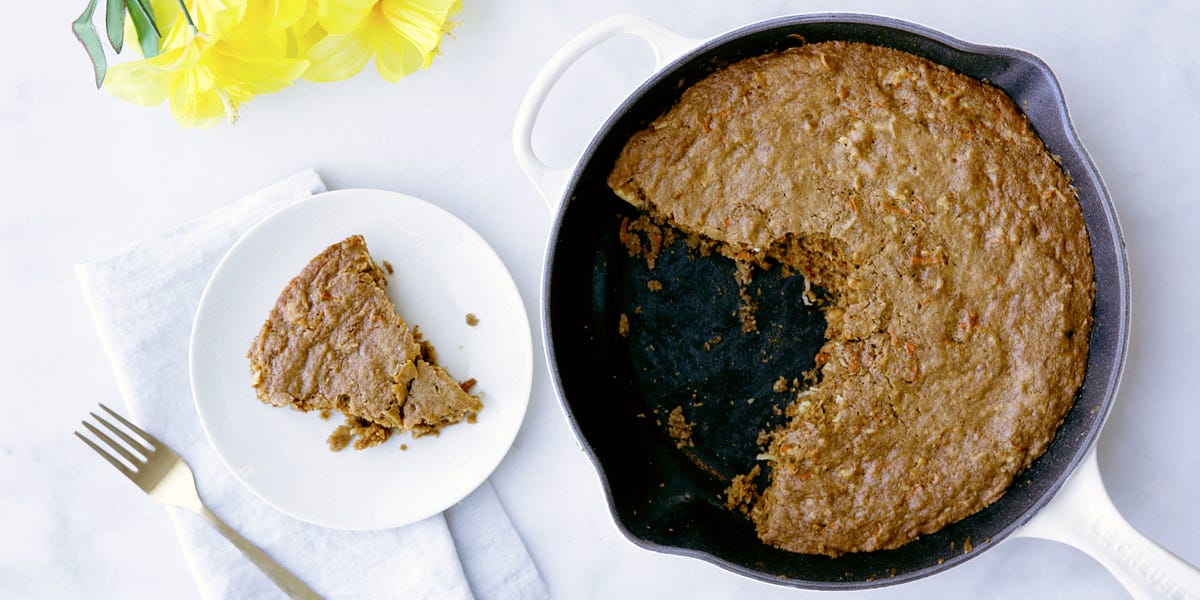
Carrot cake and blondies are both excellent desserts, but they usually live very different lives. Carrot cake arrives wearing cream cheese frosting and expecting a fork. A blondie shows up in a square pan, asks for a napkin, and disappears before anyone admits to taking the last piece. A carrot cake skillet blondie brings those two personalities together in one warm, chewy, spice-scented dessert.
The idea is especially appealing because it captures many of the flavors associated with classic carrot cakebrown sugar, cinnamon, ginger, carrots, walnuts, coconut, and vanillawithout requiring multiple cake pans, layers of frosting, or the emotional event known as washing six mixing bowls.
This version takes inspiration from the Good Housekeeping Test Kitchen’s well-known skillet blondie approach while incorporating techniques commonly recommended by established American baking resources for chewy blondies, cast-iron desserts, and carrot-based cakes. The result is a practical home-baker’s guide that explains not only what to do, but why each step matters.
What Is a Carrot Cake Skillet Blondie?
A traditional blondie is essentially the caramel-loving cousin of a brownie. Instead of relying on cocoa or melted chocolate for its primary flavor, a blondie generally gets its personality from brown sugar, butter, vanilla, and eggs. Brown sugar contributes both sweetness and the deeper molasses notes that make a good blondie taste somewhere between a buttery cookie and a piece of caramel.
The carrot cake variation adds finely shredded carrots and warm spices to that familiar base. Walnuts bring crunch, coconut contributes additional texture and sweetness, and a cast-iron skillet creates browned edges while keeping the center soft.
Unlike a fluffy carrot layer cake, this dessert should be comparatively dense and chewy. You are not trying to make a cake that happens to contain carrots. You are making a blondie that has borrowed carrot cake’s spice cabinet.
Why Bake a Blondie in a Cast-Iron Skillet?
A 10-inch cast-iron skillet is particularly useful here because cast iron retains heat exceptionally well. Once hot, it continues transferring heat into the dough, encouraging deeper browning around the edges.
That gives you one of the best parts of a skillet dessert: contrasting textures. The perimeter can become golden and slightly crisp while the middle remains tender and pleasantly gooey.
There is also a practical advantage. The butter can be melted directly in the skillet, the pan becomes naturally coated with some of that butter, and the same skillet goes into the oven. Fewer dishes rarely make dessert taste worse.
Carrot Cake Skillet Blondie Ingredients
The following formula makes one approximately 10-inch skillet blondie and serves about eight people.
Dry Ingredients
- 1 1/3 cups all-purpose flour
- 1/2 teaspoon ground cinnamon
- 1/4 teaspoon ground ginger
- 1/4 teaspoon baking soda
- 1/4 teaspoon baking powder
- 1/2 teaspoon kosher salt
Wet Ingredients
- 1/2 cup unsalted butter
- 1 cup firmly packed dark brown sugar
- 1 large egg
- 1 1/2 teaspoons pure vanilla extract
Carrot Cake Mix-Ins
- 1/2 cup finely shredded carrot
- 1/4 cup chopped walnuts
- 1/4 cup shredded coconut
- 1/3 cup chopped semisweet or dark chocolate, optional
The original Good Housekeeping directions reference chopped chocolate even though the quantity is not included in the current online ingredient list. For a home adaptation, chocolate can therefore be treated as optional rather than essential. About one-third cup provides noticeable chocolate pockets without overwhelming the carrot-and-spice character.
Why These Ingredients Work
Dark Brown Sugar Adds More Than Sweetness
Dark brown sugar contains more molasses flavor than ordinary granulated sugar, giving the blondie its caramel-like backbone. It also contributes moisture, which helps create the dense, soft texture associated with good blondies.
Light brown sugar works if that is what you have, but dark brown sugar produces a stronger butterscotch-like flavor that pairs especially well with cinnamon, ginger, walnuts, and carrots.
Use Freshly Shredded Carrots
Fresh carrots contain moisture that becomes part of the finished texture. Grate them finely rather than leaving large strands. Smaller pieces distribute more evenly and soften quickly during the relatively short bake.
Pre-shredded bagged carrots are convenient for salads but are often thicker and drier. They can work, but freshly grated carrots generally disappear into the blondie more gracefully.
Walnuts Provide Contrast
A chewy blondie benefits from something crunchy. Walnuts contribute richness without competing heavily with the warm spices.
Pecans are an equally good alternative. Toasting the nuts briefly before adding them intensifies their flavor, although it is optional if you’re aiming for maximum weeknight efficiency.
Coconut Is a Small Ingredient With a Big Job
Shredded coconut adds another layer of chewiness and subtle sweetness. Even people who do not immediately identify coconut in the finished blondie may notice that the texture is more interesting than that of a plain bar cookie.
How to Make Carrot Cake Skillet Blondies
Step 1: Preheat the Oven
Heat the oven to 350°F with a rack near the center.
Give the oven enough time to reach its actual baking temperature. Putting blondies into a barely warm oven can lengthen the bake and interfere with the balance between browned edges and a moist center.
Step 2: Combine the Dry Ingredients
In a medium bowl, whisk together the flour, cinnamon, ginger, baking soda, baking powder, and salt.
Whisking before the wet ingredients arrive helps distribute the leaveners and spices evenly. Nobody wants one blondie wedge containing all the ginger while another tastes like beige furniture.
Step 3: Melt the Butter
Place a 10-inch cast-iron skillet over medium-low heat. Add the butter and let it melt gently.
You can stop as soon as it is melted, or cook it slightly longer until it begins smelling nutty for a deeper flavor. If browning the butter, watch carefully. There is a surprisingly narrow border between fragrant brown butter and something resembling evidence from a tiny kitchen fire.
Step 4: Stir in the Brown Sugar
Add the dark brown sugar to the melted butter and whisk or stir for roughly one minute.
You are not trying to make caramel. The goal is simply to warm the sugar and combine it thoroughly with the butter.
Remove the skillet from the heat. Let the mixture cool briefly so it is warm rather than aggressively hot before the egg is introduced.
Step 5: Make the Blondie Batter
Pour the butter-and-sugar mixture into the dry ingredients. Add the egg and vanilla, then stir with a wooden spoon or sturdy spatula until just combined.
The batter will be considerably thicker than ordinary cake batter. That is exactly what you want.
Avoid excessive mixing once flour has been incorporated. Vigorous overmixing can encourage additional gluten development and push the texture from satisfyingly chewy toward oddly tough.
Step 6: Fold in the Carrots and Extras
Add the shredded carrots, walnuts, coconut, and optional chopped chocolate.
Fold until everything appears evenly distributed. Make sure there are no enormous carrot colonies hiding in one corner of the bowl.
Step 7: Return the Batter to the Skillet
Spread the batter evenly in the buttery cast-iron skillet. A flexible spatula works especially well because this is a thick dough-like batter rather than something that will level itself.
Press it all the way toward the edges, keeping the thickness reasonably even.
Step 8: Bake Until Golden
Bake for approximately 20 to 25 minutes.
The edges should be golden and set. The center should no longer look liquid, but it does not need to look bone-dry.
A toothpick inserted near the center can come out clean or with a few moist crumbs. For a particularly gooey blondie, removing it when moist crumbs remain usually gives a softer result after cooling.
Remember that cast iron holds considerable heat. The blondie continues cooking slightly after the skillet leaves the oven, so waiting for a completely dry center can produce an overbaked dessert.
The Secret to Chewy, Not Cakey, Blondies
Texture is where blondies become surprisingly serious business.
The best versions generally rely on a relatively high proportion of brown sugar and butter combined with modest leavening. Carrot cake, meanwhile, is traditionally lighter and more cake-like. Combining the two means resisting the urge to add too much baking powder or too many eggs.
For this recipe, one egg is enough to bind the mixture while keeping the finished blondie dense.
Another important factor is baking time. Blondies often firm substantially as they cool. A center that seems almost too soft immediately after baking may become perfectly chewy 20 or 30 minutes later.
Should You Serve It Warm or Cool?
Both answers are correct, which is extremely convenient.
For a Gooey Skillet Dessert
Let the blondie rest for roughly 10 to 15 minutes, then serve wedges directly from the skillet.
A scoop of vanilla ice cream is particularly good because it melts into the warm brown-sugar center. Toasted coconut, chopped walnuts, or a small drizzle of caramel can make the presentation even more dramatic.
For Clean Blondie Slices
Allow the skillet to cool substantially before cutting. Cooling lets the butter, sugar, and starches settle into a firmer structure.
If your goal is neat bars for a bake sale, lunch box, picnic, or party tray, patience beats enthusiasm.
Can You Add Cream Cheese Frosting?
Absolutely, although it changes the personality of the dessert.
A plain skillet blondie emphasizes brown sugar, toasted edges, spices, and chewiness. Cream cheese frosting moves it closer to traditional carrot cake.
For a light topping, beat softened cream cheese with a little butter, confectioners’ sugar, vanilla, and a tiny pinch of salt. Spread a thin layer over a completely cooled blondie.
Do not frost the blondie while warm unless your goal is cream cheese soupwhich sounds innovative until it is flowing off the skillet.
Keep cream-cheese-frosted blondies refrigerated rather than storing them like unfrosted cookie bars.
Easy Variations
Brown Butter Carrot Blondie
Cook the butter a few minutes longer until the milk solids become golden and smell toasted. Brown butter magnifies the nutty and caramel notes already present in the dessert.
Pecan Carrot Cake Blondie
Replace walnuts with chopped pecans. Pecans are slightly sweeter and pair beautifully with dark brown sugar.
White Chocolate Version
Fold in white chocolate chips instead of semisweet chocolate. The result is sweeter and more dessert-like, so you may prefer using a modest amount.
Raisin and Walnut Version
Add a few tablespoons of raisins for a more traditional carrot cake personality. Golden raisins are particularly attractive because they provide sweetness without dominating the skillet.
Orange-Spiced Blondie
Add finely grated orange zest. Citrus cuts through the butter and brown sugar, making the dessert taste brighter while still working naturally with carrots and cinnamon.
Common Mistakes to Avoid
Using Too Much Carrot
If half a cup is good, two cups must be spectacular, right? Unfortunately, baking does not always reward optimism.
Carrots contain substantial moisture. Adding far more than the recipe calls for can make the center heavy, wet, or difficult to bake through.
Overbaking
This is probably the easiest way to ruin an otherwise excellent blondie. The center should be set but still moist when the skillet leaves the oven.
Remember that residual heat from cast iron keeps working after baking.
Adding the Egg to Extremely Hot Butter
Let the butter-sugar mixture cool briefly before adding the egg. Otherwise you risk partially cooking the egg before the batter is mixed.
Cutting Immediately
Hot blondies are delicious but structurally ambitious. If you attempt perfectly neat squares five minutes after baking, expect dessert rubble.
For clean slices, wait until the blondie has cooled.
Overmixing the Batter
Once the flour has disappeared, stop. The batter does not need a workout program.
How to Store Carrot Cake Blondies
Unfrosted blondies can generally be covered tightly and kept at room temperature for about three days while maintaining good eating quality. An airtight container helps prevent the cut edges from drying out.
For longer storage, freeze individual pieces. Wrap them well, place them in a freezer-safe container, and thaw at room temperature when needed.
If you add cream cheese frosting, refrigerate the blondies in a covered container. Bring an individual piece out shortly before serving if you prefer a softer texture.
What to Serve With a Carrot Cake Skillet Blondie
This dessert is rich enough to stand alone, but several pairings work especially well:
- Vanilla bean ice cream
- Salted caramel ice cream
- Freshly whipped cream
- Hot coffee
- Black tea or chai
- A small drizzle of caramel sauce
- Toasted walnuts or pecans
- A dusting of confectioners’ sugar
For entertaining, place the warm skillet on a heat-safe trivet and serve it family-style. Put ice cream nearby and watch eight civilized adults suddenly develop competitive instincts.
Practical Baking Experiences and Lessons From Making Carrot Cake Skillet Blondies
The most useful lesson with a carrot cake skillet blondie recipe is that small details affect texture far more than elaborate techniques do. This is not a complicated dessert, but treating it like an ordinary cake can produce disappointing results.
Experience 1: Finely Grated Carrots Work Better
One of the first things you notice when experimenting with carrot desserts is the enormous difference between thick supermarket carrot shreds and freshly grated carrots.
Thick pieces remain surprisingly noticeable after a short blondie bake. They are not necessarily unpleasant, but they create little fibrous strands throughout an otherwise soft bar.
Using the finer side of a box grater produces a more integrated texture. The carrot almost melts into the blondie, contributing moisture and sweetness without announcing itself in every bite.
Experience 2: The Skillet Changes the Timing
Cast iron behaves differently from a glass or lightweight metal baking pan. It takes time to heat but holds onto that heat with impressive determination.
When the skillet has already been warmed on the stovetop to melt butter, the batter begins its oven journey in a warm pan. As a result, the edges can cook faster than someone accustomed to a room-temperature baking dish might expect.
Checking the blondie around the 20-minute mark is therefore worthwhile. Waiting automatically for 30 minutes because another blondie recipe uses that timing can leave the edges far drier than intended.
Experience 3: The Center Looks Softer Than You Think It Should
The temptation to keep baking is powerful when the center still appears slightly soft.
Experience quickly teaches the opposite lesson: blondies that appear completely firm while sitting in a 350°F oven may become disappointingly dry once they cool.
A better target is a set surface, browned edges, and a center that feels soft but not liquid. Give it 15 minutes in the skillet and the difference is dramatic.
Experience 4: Toasting the Nuts Is Worth Five Minutes
Untoasted walnuts work perfectly well. Toasted walnuts, however, are much more noticeable.
A few minutes in a dry skillet or oven wakes up their oils and gives them a deeper flavor that stands up to dark brown sugar and cinnamon.
This is especially worthwhile if you are skipping chocolate or frosting. With fewer competing flavors, good walnuts become one of the main attractions.
Experience 5: Brown Butter Makes the Recipe Feel More Expensive
Perhaps the easiest upgrade is allowing the butter to brown before mixing in the sugar.
As butter cooks, its milk solids toast and develop hazelnut-like aromas. Combined with brown sugar and vanilla, this creates a surprisingly sophisticated flavor from basic grocery-store ingredients.
The important part is stopping when the butter smells nutty and has visible golden-brown flecks. Keep cooking much longer and your elegant brown butter becomes burned butter, which has significantly worse public relations.
Experience 6: Resting Time Is Part of the Recipe
A blondie eaten straight from the skillet and one eaten 45 minutes later can seem like two different desserts.
The hot version is softer, sweeter, and almost pudding-like in the center. After cooling, the structure becomes denser and noticeably chewier.
Neither is objectively better. For an after-dinner skillet dessert with ice cream, warm is wonderful. For portable blondie squares, cooling is essential.
Experience 7: Keep the Recipe Simple Before Customizing It
Carrot cake encourages ingredient enthusiasm. Raisins! Pineapple! Coconut! Three kinds of nuts! Chocolate! Frosting! More frosting!
Eventually the blondie can become a pantry-cleaning exercise rather than a coherent dessert.
A better approach is to make the basic version first. Then change one or two elements at a time. Pecans instead of walnuts, orange zest, white chocolate, or brown butter are easy upgrades because each contributes something specific without destroying the balance.
Final Thoughts
The appeal of a Good Housekeeping-style carrot cake skillet blondie is not that it perfectly reproduces carrot cake. It is that it captures the flavors people love about carrot cake and packages them in a faster, chewier, less ceremonial dessert.
You get cinnamon and ginger, buttery brown sugar, sweet carrots, coconut, crunchy walnuts, and beautifully browned skillet edges. Preparation is straightforward, cleanup is manageable, and the entire dessert can move from pantry to table without the frosting architecture required by a traditional layer cake.
Serve it warm with vanilla ice cream when you want maximum gooeyness, or cool it completely for neat blondie wedges. Either way, it proves that carrots can participate in dessert without pretending to make dessert health food.
Editorial note: This article is an independently written and expanded recipe guide informed by established American test-kitchen, baking, cast-iron cooking, and food-storage guidance. Ingredient quantities and optional variations have been clarified for practical home baking rather than reproduced as a duplicate of any single published recipe.













