
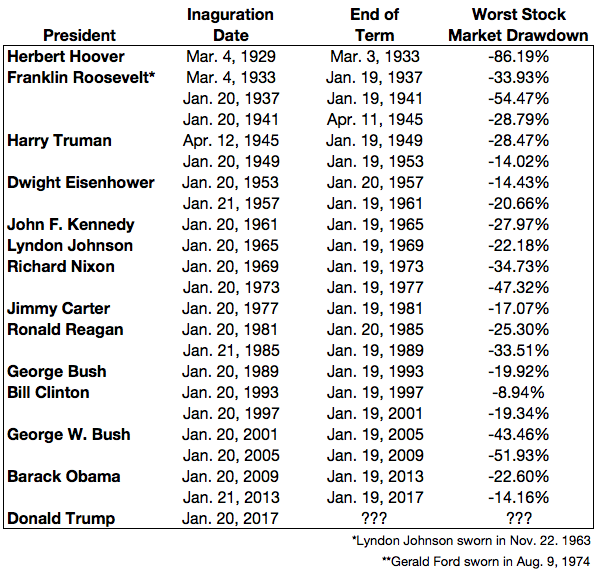
Every four years, Americans choose a president, cable news chooses a collection of alarming graphics, and investors choose whether to panic before breakfast. Campaign promises are dissected, proposed tax rates are fed into spreadsheets, and market commentators confidently explain why one candidate will make stocks soar while the other will apparently send the economy back to the age of bartering goats.
But does the stock market really care who the president is?
The most accurate answer is: yes, but not as much as many investors assume. Presidents can influence taxes, trade, regulation, government spending, energy policy, health care, immigration, and the appointment of key officials. Those decisions can materially affect individual industries and companies. However, long-term stock market performance is driven by a much larger collection of forces, including corporate earnings, inflation, interest rates, technological innovation, productivity, consumer demand, global events, and the starting valuation of stocks.
In other words, the occupant of the White House matters, but the president does not sit behind a giant desk containing buttons labeled “Bull Market” and “Recession.”
What Historical Stock Market Returns Tell Us
Historical records do not reveal a simple partisan formula for investing. Stocks have risen and fallen under both Democratic and Republican presidents. Bull markets, bear markets, recessions, wars, financial crises, and technological booms have also occurred under both parties.
Vanguard examined market history dating back to 1860 and found no statistically meaningful difference between the returns of a balanced 60% stock and 40% bond portfolio in presidential election years and non-election years. Its analysis calculated an average annual return of 8.7% during presidential election years, compared with 7.7% during other years. The numerical difference existed, but it was not statistically strong enough to support a reliable election-based trading strategy.
Dimensional Fund Advisors reached a similar practical conclusion after reviewing long-term data: shareholders invest in businesses rather than political parties, and stocks have not displayed a dependable preference for one party. Companies continue developing products, competing for customers, controlling costs, and pursuing profits regardless of which campaign signs are decorating America’s front lawns.
T. Rowe Price found that average and median S&P 500 returns were modestly lower in presidential election years than in other years over the period from 1927 through 2023. However, the firm also warned that the sample contained only 24 presidential elections. Several of those years coincided with enormous nonpolitical events, including the Great Depression, World War II, the technology bubble, the global financial crisis, and the COVID-19 pandemic. That makes it difficult to separate presidential influence from everything else happening in the world.
Correlation Is Not the Same as Causation
Investors often compare average returns under Democratic and Republican presidents and then declare one party “better for stocks.” The problem is that presidents inherit economies already moving in a particular direction.
A newly inaugurated president may enter office during a recession that began before Election Day. Another may inherit low inflation, strong consumer demand, rapidly rising corporate profits, and unusually cheap stock valuations. Giving either president full credit or blame would be like reviewing a restaurant based only on who carried the meal from the kitchen.
The market also anticipates future developments. Stock prices may begin responding to an expected recession, tax change, or election result months before it officially occurs. By the time a president signs a bill, much of the expected effect may already be reflected in prices.
What Actually Moves the Stock Market?
Corporate Earnings
A share of stock represents partial ownership of a business. Over long periods, stock prices are therefore closely connected to companies’ ability to generate revenue, profits, and cash flow.
The Bureau of Economic Analysis describes corporate profitability as an essential measure of corporate financial health and economic performance. Profits fund dividends, share repurchases, hiring, research, expansion, and capital investment. A president may help shape the business environment, but businesses still have to sell something customers want at a price that produces a profit.
A brilliant campaign speech cannot rescue a company with collapsing sales, obsolete products, and a chief executive who believes “innovation” means changing the logo from blue to slightly darker blue.
Interest Rates and Federal Reserve Policy
Interest rates can influence stock valuations more directly than election slogans. Lower rates may reduce borrowing costs, encourage investment, and make the future earnings of companies more valuable in today’s dollars. Higher rates can slow economic activity and make bonds or cash more competitive with stocks.
The Federal Reserve sets monetary policy to influence short-term interest rates and broader financial conditions. Changes in the federal funds rate can affect household spending, business investment, employment, inflation, bond yields, and equity valuations. The Fed also operates with a degree of independence intended to support decisions based on economic data rather than short-term political demands.
Federal Reserve research has found that monetary policy affects stocks through several channels, including bond yields, expected dividends, and the additional return investors demand for accepting equity risk. This helps explain why investors sometimes pay more attention to a Federal Open Market Committee press conference than to an entire week of campaign rallies.
Inflation and Economic Growth
Moderate economic growth can support sales and profits. Excessive inflation, however, may raise labor and material costs, weaken consumer purchasing power, and encourage tighter monetary policy.
Presidents can affect inflation and growth through fiscal, trade, energy, and regulatory policies, but they do not control every input. Supply disruptions, foreign conflicts, commodity prices, demographic changes, consumer behavior, and Federal Reserve decisions all play a role.
Valuations and Investor Expectations
A strong economy does not automatically guarantee strong future returns. Investors may already have paid an exceptionally high price for expected growth. Conversely, markets may rally during bad economic news if conditions are less terrible than investors feared.
This is one of the stock market’s favorite tricks: reacting not to whether the news is good or bad, but to whether it is better or worse than whatever Wall Street had already imagined.
How a President Can Influence Stocks
Tax Policy
Changes in corporate tax rates can alter after-tax earnings, while changes in capital gains, dividend, estate, and individual income taxes can affect investor behavior. A lower corporate tax rate may increase reported profits, but the market reaction depends on whether the change was expected, how it is financed, and whether Congress passes it in the proposed form.
Regulation
Presidential administrations can strengthen or loosen regulations affecting banks, technology companies, pharmaceutical manufacturers, energy producers, insurers, telecommunications firms, and other industries.
Regulatory changes often matter more to specific sectors than to the entire market. An environmental rule could pressure one group of energy companies while benefiting clean-technology providers. Drug-pricing policy could hurt some pharmaceutical businesses but reduce costs for hospitals, insurers, or consumers.
Trade and Tariffs
Tariffs can protect certain domestic producers, but they can also raise costs for companies that import parts or finished goods. Retaliatory tariffs may hurt exporters. The final result depends on supply chains, currency movements, pricing power, exemptions, and how trading partners respond.
This is why a tariff announcement can send steelmakers higher, retailers lower, and economists into a vigorous debate involving enough charts to wallpaper a medium-sized apartment.
Government Spending
Infrastructure programs, defense budgets, health care spending, subsidies, and research funding can create opportunities for selected industries. At the same time, larger deficits may increase government borrowing and contribute to higher long-term interest rates.
The president proposes budgets and policy priorities, but Congress controls appropriations and must pass major tax and spending legislation. The Congressional Budget Office evaluates both presidential and congressional proposals because fiscal outcomes are products of the broader legislative process, not presidential preference alone.
Why Congress Matters Almost as Much as the President
A president’s ability to enact an agenda depends heavily on the House of Representatives and the Senate. Unified government can make substantial legislation easier to pass. Divided government can force compromise, delay proposals, or prevent major policy changes entirely.
T. Rowe Price notes that single-party control of the White House and Congress increases the potential for meaningful legislation, while divided government generally makes sweeping changes more difficult. Investors should therefore examine the complete policy environment rather than treating the presidential election as the only contest on the ballot.
Markets sometimes welcome divided government because it reduces the probability of dramatic legislative change. At other times, gridlock can create problems involving budgets, debt limits, emergency funding, or necessary reforms. The market does not love gridlock in every situation; it merely appreciates predictability.
Lessons From Major Market Episodes
The Global Financial Crisis
The financial crisis illustrates why assigning market performance to a single president is misleading. The housing and credit collapse developed during George W. Bush’s administration, while the recession, financial rescue measures, and recovery extended into Barack Obama’s presidency.
The S&P 500 fell approximately 57% from its October 2007 peak to its March 2009 trough. The crisis involved housing leverage, complex financial products, bank failures, credit-market stress, monetary intervention, and emergency legislation. Reducing that episode to a red-team-versus-blue-team scorecard would ignore nearly everything that caused it.
The COVID-19 Crash and Recovery
In 2020, the S&P 500 fell 33.8% between February 19 and March 23 as the pandemic disrupted travel, commerce, employment, and global supply chains. Governments and central banks responded with extraordinary fiscal and monetary measures. The index recovered its previous high by August and finished the year with an 18.4% total return.
The president influenced the policy response, but the market was also reacting to the virus, vaccine development, Federal Reserve actions, emergency spending, digital-business growth, and changing expectations about reopening. The episode showed that even during an election year, an unexpected global shock can make campaign analysis look like a very small footnote.
Does the Market Prefer One Political Party?
Historical averages are frequently used to claim that stocks perform better under one party. Such comparisons may be mathematically correct for a chosen period, yet still be poor forecasting tools.
The number of presidencies is small. Starting valuations differ. Economic cycles overlap administrations. Congress may be controlled by another party. Federal Reserve policies change independently. Wars, pandemics, energy shocks, and technological breakthroughs arrive without checking the party registration of the president.
Moreover, markets are forward-looking. A president may receive credit for gains driven by innovations developed years earlier or blame for a downturn whose causes were already embedded in the financial system.
The useful conclusion is not that politics is irrelevant. It is that political party alone is too crude a variable for predicting returns.
Should Investors Change Their Portfolios Before an Election?
Selling stocks solely because a disliked candidate might win creates two difficult decisions: when to sell and when to buy back. An investor can correctly predict the election and still incorrectly predict the market’s reaction.
Prices respond to expectations rather than personal feelings. A policy an investor dislikes might be less aggressive than markets feared. A business-friendly proposal might increase deficits or interest-rate expectations. A candidate considered “bad for stocks” might inherit accelerating profits and falling inflation.
Investor.gov emphasizes that long-term investment plans are designed to withstand short-term fluctuations and that time in the market generally matters more than attempting to time every market move. Diversification and an asset allocation based on financial goals are usually more dependable than turning a retirement account into an electoral prediction market.
A More Sensible Election-Year Checklist
- Review whether your stock-and-bond allocation still matches your goals and risk tolerance.
- Rebalance when your portfolio has drifted materially from its target allocation.
- Maintain adequate emergency savings so short-term volatility does not force you to sell.
- Evaluate policy effects at the industry and company level rather than relying on party labels.
- Avoid making permanent investment decisions in response to temporary political anxiety.
- Consider taxes, transaction costs, and the difficulty of choosing a reentry point before selling.
Experience-Based Lessons From Investing Through Election Seasons
The following lessons reflect common investor experiences and historical market behavior rather than a claim of personal trading performance.
Imagine an investor named Daniel who has spent several years contributing regularly to a diversified retirement portfolio. During an election campaign, Daniel hears that Candidate A will destroy the technology industry, while Candidate B will bankrupt energy companies. Every television guest seems remarkably certain, despite frequently disagreeing with the guest sitting six inches away.
Daniel considers moving his entire portfolio to cash. The decision feels responsible because it replaces uncertainty with apparent safety. Yet cash is not a complete escape from risk. Inflation can reduce its purchasing power, and the market can rise while Daniel waits for a calmer political environment that never quite arrives.
Election Day comes, the candidate Daniel feared wins, and stock futures initially fall. Daniel congratulates himself. By the end of the following trading session, however, investors have reconsidered the likely composition of Congress, the difficulty of passing the candidate’s most aggressive proposals, and the possibility of business-friendly provisions elsewhere in the agenda. Stocks reverse direction.
Daniel now faces a more stressful question than the original one: when should he reinvest? After a 3% rally? After the inauguration? After the first budget? After the next Federal Reserve meeting? Waiting for absolute clarity is appealing, but markets usually begin moving before clarity arrives.
A second investor, Maria, takes a different approach. She dislikes the same election outcome but separates her political beliefs from her investment process. She reviews her emergency fund, confirms that her portfolio remains diversified, and checks whether any holding has become too large. She continues making scheduled contributions.
Maria does not ignore policy. She examines which companies might be affected by changes in taxes, trade, health care, regulation, and government spending. However, she avoids assuming that campaign promises will become law exactly as advertised. She recognizes that Congress, courts, agencies, economic conditions, and public reaction can modify or delay an administration’s plans.
Over the next year, some policy-sensitive industries move sharply. A few of Daniel’s original fears prove correct, others prove exaggerated, and several market-leading companies succeed for reasons barely mentioned during the campaign. New products gain customers, corporate earnings change, interest-rate expectations shift, and global developments compete with Washington for investors’ attention.
The experience produces several practical lessons. First, emotional certainty is not the same as predictive accuracy. Second, correctly forecasting policy does not guarantee correctly forecasting stock prices because the expected policy may already be priced in. Third, broad market indexes contain companies capable of adapting to changing political environments. Businesses alter supply chains, pricing, investment plans, and product strategies rather than waiting helplessly for the next election.
Most importantly, Daniel learns that an election-driven exit requires an election-driven reentry plan. Without one, “I will wait until things settle down” can become months or years outside the market. Maria’s approach is less dramatic and much less entertaining on television, but it is better aligned with long-term investing: establish a diversified plan, manage risks that can be controlled, and avoid betting an entire financial future on one political forecast.
Conclusion: The President Matters, but Fundamentals Matter More
The stock market cares about presidents because presidential policies can affect taxes, trade, regulation, government spending, and business conditions. Election results may also create short-term volatility as investors update expectations about future legislation.
However, the market cares even more about earnings, inflation, interest rates, valuations, innovation, productivity, and economic growth. Congress, the Federal Reserve, global events, courts, regulators, businesses, and consumers all influence the outcome.
Historical evidence offers no reliable rule that investors should buy stocks under one party and sell them under the other. Markets have prospered and struggled under both. A president can influence the wind, but no president completely controls the weather.
For most long-term investors, the better strategy is to remain diversified, rebalance when necessary, maintain sufficient liquidity, and evaluate actual policies instead of campaign theater. Vote according to your values, but manage your portfolio according to your goals, time horizon, and tolerance for risk.
Editorial note: This educational article synthesizes historical research and market analysis from U.S. government agencies, investment firms, index providers, and investor-education resources. It is general information and not individualized investment, tax, or legal advice.














