
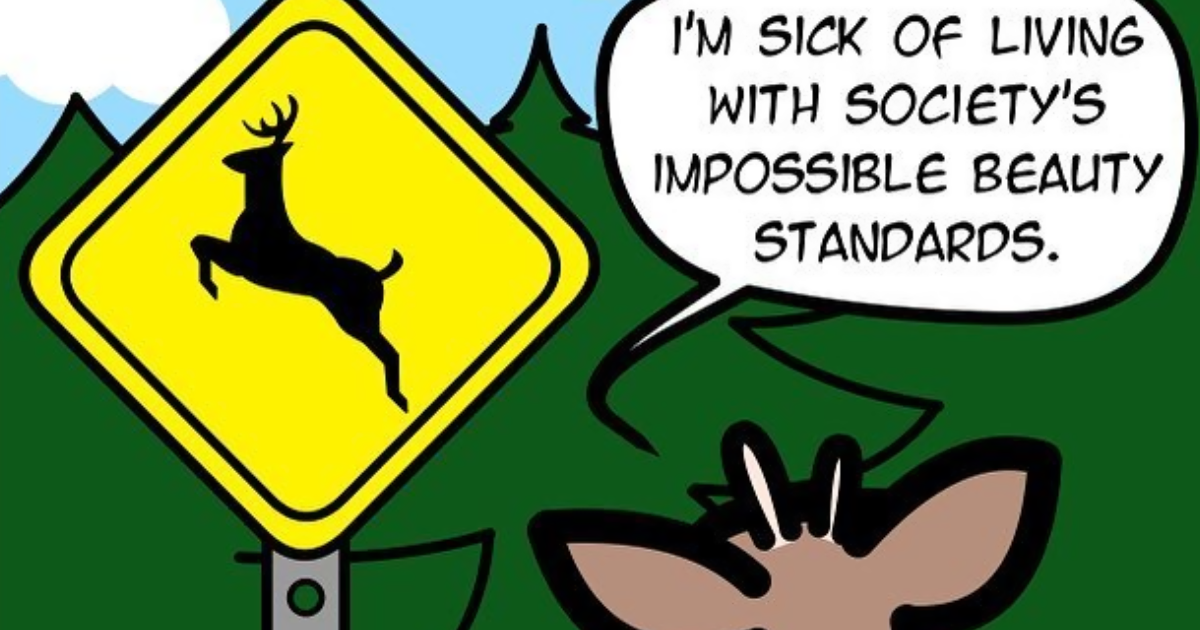
Life is full of inspirational messages. Follow your dreams. Believe in yourself. Be the best version of you. Meanwhile, your alarm clock is screaming, your phone battery is at 3%, and the “quick” software update has entered its second hour. This is where cynical humor earns its seat at the tableprobably after checking whether the table is structurally sound and emotionally available.
My 44 Comics With Cynical Humor is a collection built around simple drawings, familiar situations, and punchlines that arrive like trapdoors. The comics invite readers into ordinary scenes involving relationships, technology, social rules, ambition, fear, language, and everyday stupidity. Then, just when everything appears understandable, the final panel quietly removes the floor.
The result is not merely dark humor for the sake of being dark. These comics use absurdity and skepticism to reveal how strange normal life already is. They make readers laugh, pause, and occasionally wonder whether the joke is funny because it is clever or because it has accurately diagnosed humanity.
A Cheerful Comic Universe With One Raised Eyebrow
Nate Walker began creating Nate Inc. Comics in 2015 despite having no formal drawing experience. He committed to publishing regularly, initially using geometric, almost toy-like characters because they were manageable to draw. What started as an effort to improve his artistic skills developed into a continuing webcomic project centered on nonsense, imagination, and unexpected humor.
That background matters because the visual simplicity is not an obstacle the comics must overcome. It is part of their identity. The characters do not need elaborate costumes, cinematic backgrounds, or seventeen pages of tragic backstory. They need a recognizable expression, a readable situation, and enough time to make one terrible decision.
Walker has also identified webcomic creators such as Extra Fabulous Comics and Jake Likes Onions as early inspirations. Over time, his work expanded beyond the original geometric cast into traditionally drawn strips while keeping a similarly absurd tone.
This evolution reflects one of the most encouraging lessons in online cartooning: a creator does not have to wait until every artistic skill is fully developed. Clear ideas, consistency, and a distinctive voice can carry a comic while the artwork continues to improve. Waiting for perfection is often just procrastination wearing glasses.
What Cynical Humor Means in These Comics
Cynical humor assumes that people, institutions, machines, and occasionally household objects are not quite as noble or competent as advertised. It looks at a comforting idea and asks, “That sounds lovely, but what is it hiding?”
That does not mean every joke is bitter. The collection moves between sarcasm, absurd comedy, visual wordplay, dark twists, and social commentary. Sometimes the joke exposes hypocrisy. Sometimes it interprets a familiar phrase too literally. Sometimes an innocent character misunderstands the situation so completely that logic files a resignation letter.
Sarcasm and cynical comedy also require more mental participation than straightforward statements. Readers must recognize the literal meaning, detect the intended contradiction, understand the context, and connect the joke to a shared social expectation. Research into sarcasm has shown that interpreting it engages complex language and social-processing skills rather than simple word recognition.
The Punchline Is a Trapdoor
Many of the strongest strips follow a compact structure. The first panel establishes something familiar. The second strengthens the reader’s assumption. A later panel appears to confirm where the story is going. Then the final image reveals that the comic has been playing a different game.
The technique works because audiences automatically predict what comes next. A conversation about love should end warmly. A motivational speech should inspire someone. A helpful device should solve a problem. A heroic rescue should rescue the correct person. Cynical comics exploit those expectations with the enthusiasm of a cat discovering an unattended glass of water.
The twist does not have to be enormous. It only needs to be surprising in retrospect. The ideal reaction is not, “That makes no sense.” It is, “I should have seen that coming, and I resent the comic for being right.”
Ordinary Life Supplies the Best Material
The collection frequently turns routine experiences into miniature disasters. Technology becomes aggressively literal. Social etiquette collapses under examination. Romantic expectations encounter inconvenient reality. Motivational language produces consequences no motivational speaker included in the seminar brochure.
This focus on ordinary life makes the humor accessible. Readers do not need specialized knowledge to understand why an overly helpful phone assistant, a poorly phrased request, an awkward relationship, or an uncooperative mirror can become funny. The jokes begin with situations nearly everyone recognizes and then push them one step beyond reasonable behavior.
Cute Drawings Make Sharp Jokes Sharper
Visual contrast is another important ingredient. The characters look approachable, colorful, and uncomplicated. Their world appears safe enough for a children’s educational program. Then someone says something existentially alarming.
That mismatch gives the darker punchlines extra force. If every panel looked grim, the audience would prepare for grimness. Friendly artwork lowers the defenses. It says, “Nothing terrible will happen here,” which is exactly what suspicious artwork would say.
Why 44 Comics Work Better as a Collection
A single cynical comic delivers one quick surprise. A group of 44 creates a rhythm. Readers begin looking for patterns while the artist keeps changing the method of attack.
One strip might rely on wordplay. The next may use visual misdirection. Another might end with a character revealing selfish motives. A fourth could take a familiar expression literally. The changing structures prevent the experience from becoming predictable, even though unpredictability itself becomes the collection’s promise.
The format also suits online reading. Short webcomics can be understood quickly on phones, shared without lengthy explanations, and revisited when the joke contains a visual detail that becomes meaningful after the ending. The Library of Congress has recognized webcomics as an important born-digital form and has developed archives to preserve examples created specifically for online audiences.
Web publishing also allows the audience to participate. Readers add interpretations, alternative punchlines, personal stories, and jokes beneath the original work. A four-panel comic can become the opening statement in a much larger conversation, although internet comment sections occasionally redefine “conversation” as “competitive shouting with avatars.”
The Anatomy of an Effective Cynical Comic
1. Begin With Something Familiar
A joke needs a stable surface before it can pull the rug away. Familiar situations allow readers to understand the premise immediately: a date, a workplace conversation, an emergency, a wish, a self-help promise, or a discussion with a piece of technology.
The faster the audience recognizes the situation, the more space remains for the twist. A short comic should not require three paragraphs explaining the regional tax code unless the punchline is that nobody understands the regional tax code.
2. Let the Reader Make the Wrong Prediction
The creator does not need to hide all information. In fact, the best twists often show readers exactly what is happening while encouraging them to interpret it incorrectly.
Comics are especially effective at this because readers construct meaning between panels. Researchers studying visual narratives describe this process as “closure”: the audience mentally supplies actions and connections that are not explicitly drawn. Text and images work together, and neither necessarily reveals the complete story alone.
A cynical comic can weaponize that mental cooperation. The reader completes the scene in the most reasonable way possible. The artist then reveals that reason was never invited.
3. Stop Immediately After the Punchline
Explaining a joke is like performing an autopsy on a balloon animal. You may discover how it was constructed, but nobody is having more fun.
Strong short-form comics end as soon as the surprise lands. They trust readers to understand the contradiction and fill in the consequences. An extra panel can weaken the impact by repeating information the audience already processed.
4. Keep the Artwork Easy to Read
Simple artwork works beautifully when every visual element has a purpose. Character positions, expressions, props, speech balloons, and panel order should guide the eye without confusion.
American cartooning has a long tradition of using visually direct ideas to criticize complicated systems. Rube Goldberg, for example, created absurdly elaborate machines as humorous commentary on technology that supposedly makes life easier. Nate Inc. Comics use a different visual style, but the underlying principle is related: simplify the presentation so the absurdity becomes impossible to miss.
5. Aim the Joke Carefully
Cynical humor is strongest when it targets recognizable behavior, hypocrisy, selfishness, empty language, or uncomfortable truths. It becomes weaker when the entire joke depends on humiliating someone who has little power in the situation.
The difference is not merely about politeness. A well-aimed joke gives the audience something to recognize. A poorly aimed joke offers shock without insight. Surprise may earn a reaction, but observation earns a reread.
Recurring Themes Behind the Cynicism
Technology That Understands Words but Not People
Modern devices promise convenience, intelligence, and personalized assistance. Comedy begins when those promises are interpreted with brutal literalness. A machine can technically follow a command while completely missing why the human issued it.
These jokes remain relatable because everyone has argued with a navigation app, an automated support system, or a device that insists it is helping while creating a brand-new category of problem.
Relationships, Expectations, and Selective Honesty
Romantic humor often depends on the gap between what people say and what they mean. Characters declare devotion, seek reassurance, offer compliments, or attempt emotional honesty. Cynical comedy then reveals the hidden negotiation beneath the conversation.
The jokes work because affection and self-interest can exist simultaneously. Humans are complicated creatures capable of love, sacrifice, loyalty, and checking whether anyone else is paying for dinner.
Motivation Meets Reality
Inspirational language is an ideal target because it compresses complicated problems into attractive slogans. “Never give up” sounds powerful until it is applied to a terrible plan. “Follow your heart” becomes less useful when the heart has no budget, qualifications, or sense of direction.
The comics do not necessarily reject optimism. They challenge optimism that has not met evidence yet.
Mortality in a Friendly Art Style
Death, fear, loneliness, and meaninglessness can appear in cynical comics without turning the entire collection into a funeral brochure. Humor creates emotional distance, allowing readers to look at uncomfortable subjects without being overwhelmed by them.
Dark comedy is not universally comforting, however. Humor preferences differ, and research suggests that people often respond best to styles that fit their existing tastes. Other studies distinguish between lighter humor associated with positive emotions and darker styles that may be connected with distress when used habitually or aggressively.
Why Cynical Humor Can Feel Surprisingly Comforting
Cynical comics tell readers they are not the only people who notice the contradictions of modern life. The cheerful advertisement does seem suspicious. The productivity advice does ignore the existence of exhaustion. The smart device is behaving like a confused intern with administrator access.
Recognition creates relief. During stressful circumstances, humorous media and memes can increase positive emotions and make difficult information feel easier to process. An American Psychological Association report on meme exposure during the COVID-19 pandemic found that humorous content was associated with stronger positive emotional responses and greater confidence in coping with stress.
Satirical traditions have long used laughter to encourage skepticism. MAD magazine, for example, built much of its cultural identity by mocking consumerism, political posturing, mass media, and institutional authority. Beneath the silliness was an invitation to question what audiences were being told.
The same basic energy exists in small online comics. The scale is different, but the impulse remains: identify an assumption, exaggerate it, and see whether it survives.
Lessons for Aspiring Webcomic Creators
The history of Nate Inc. Comics offers several useful lessons for anyone thinking about publishing original cartoons.
Consistency Can Develop Skill
Walker began without extensive drawing experience and improved through repeated publication. Regular work creates practical problems that tutorials alone cannot reproduce. How should dialogue fit inside a panel? Which expression communicates disappointment? How many details can be removed before a chair becomes an unexplained rectangle?
Readable Ideas Beat Decorative Confusion
Beautiful art can strengthen a comic, but technical detail cannot rescue a joke that lacks structure. Readers must understand the setup, identify the characters, follow the panel order, and recognize the twist.
A Distinct Voice Matters More Than Chasing Trends
Online trends move quickly. Copying every popular format may generate temporary attention, but a recognizable perspective builds a lasting audience. Nate Inc. Comics developed an identity around geometric figures, nonsense, cynicism, compact setups, and unexpected endings.
Write More Ideas Than You Publish
Not every clever thought becomes a strong strip. Some premises need a better ending. Others need fewer words. A few should be thanked for their service and quietly escorted from the building.
Keeping an idea file allows creators to revisit unfinished concepts, combine unrelated observations, and test several punchlines before committing to the final version.
My Experience Reading and Thinking Through the 44 Comics
Reading a large group of short cynical comics creates a different experience from reading one isolated strip on social media. At first, I approached the collection casually, expecting a few quick jokes before moving on. That plan failed almost immediately. Each ending created enough curiosity to make the next comic feel necessary.
The first thing I noticed was the efficiency. There is very little wasted movement. A character enters, a situation becomes clear, and the joke arrives before the reader has time to build defensive walls. The comics do not beg for attention. They quietly set a plate of cookies on the table and allow you to discover that one cookie contains an existential crisis.
I also began paying closer attention to my own predictions. With every new strip, I tried to guess the ending. Sometimes the setup appeared obvious, and I felt confident that I understood the direction. Those were usually the moments when the final panel proved that confidence is simply embarrassment warming up.
As a reader, that repeated misdirection was enjoyable. As someone interested in writing, it became educational. I started mentally separating each comic into its structural parts: the assumption, the distraction, the withheld detail, and the reversal. The simple artwork made this analysis easier because there was no visual clutter to hide the mechanics.
Another memorable part of the experience was the emotional range hiding beneath the humor. Some jokes were playful and ridiculous. Others touched on insecurity, loneliness, selfishness, death, or disappointment. Yet the collection rarely felt oppressively bleak. The absurdity kept the darker observations at a manageable distance.
That balance changed how I thought about cynical humor. Cynicism is often treated as the opposite of hope, but these comics suggest a more complicated relationship. Mocking an empty slogan does not always mean rejecting encouragement. Sometimes it means wanting encouragement that acknowledges reality. Laughing at human selfishness does not prove that everyone is terrible. It proves that everyone is capable of being terrible in extremely creative ways.
I found myself recognizing personal habits in the jokes. The tendency to overthink a simple conversation. The expectation that technology should understand an unclear request. The desire for honest advice immediately followed by regret when someone provides it. The comics exaggerate these behaviors, but exaggeration works only because a recognizable truth is already present.
The experience also reinforced the value of restraint. A short comic cannot explain every motivation or consequence. It must trust the reader to participate. The blank space between panels becomes part of the joke, and the silence after the ending gives the punchline room to expand.
Most importantly, the collection reminded me that creative work can begin before technical confidence arrives. The early geometric style did not prevent the artist from developing an audience or communicating an idea. The limitations became recognizable features. That is encouraging for anyone who has postponed a project because the first version might look imperfect.
It probably will look imperfect. That is what first versions do. They arrive wearing mismatched socks and asking whether there will be snacks. The only reliable path toward a better comic is to create the imperfect one, study what works, and make another.
By the end of the collection, I was not simply laughing at 44 unrelated punchlines. I was noticing a consistent worldview: ordinary life is absurd, language is unreliable, technology is overconfident, people are suspiciously complicated, and a simple drawing can expose all of this in seconds.
Conclusion: Laughing Because the Alternative Requires Paperwork
My 44 Comics With Cynical Humor succeeds because it combines approachable artwork with sharp reversals and recognizable observations. The strips do not require elaborate explanations. They take familiar ideas, tilt them a few degrees, and reveal the absurd machinery underneath.
The collection also demonstrates how webcomics can turn limitations into strengths. Simple characters improve readability. Short setups make the endings faster. Everyday subjects create an immediate connection. Cynicism provides the bite, while absurdity prevents the experience from becoming unbearably serious.
These comics may not restore anyone’s faith in humanity, but they can make humanity considerably more entertaining. Considering the current warranty conditions, that seems like a reasonable achievement.
Note: This article is an original editorial analysis inspired by Nate Inc. Comics and broader research into webcomics, visual storytelling, satire, sarcasm, and humor psychology. It does not reproduce the original comic strips or their complete dialogue.














