
Some habits get treated like social crimes. Nap at 2 p.m. and people act like you have resigned from adulthood. Talk to yourself in the grocery aisle and suddenly you are “concerning.” Enjoy a little gossip, a square of dark chocolate, or a gloriously messy desk, and someone is ready to hand you a self-improvement book with a judgmental sticky note on page one.
But here is the delicious plot twist: many “bad habits” are not bad at all when practiced with common sense. In fact, some are surprisingly good for your body, brain, mood, creativity, relationships, and daily productivity. The key is not pretending every questionable habit is secretly a medical miracle. The key is moderation, timing, and intention. A nap can refresh you; a three-hour accidental coma at 5 p.m. may sabotage bedtime. Coffee can support alertness; six cups after dinner is a horror movie for your nervous system.
So before you shame yourself for being human, let us take a smarter look at 24 habits with bad reputations that may actually help you live better, think clearer, and feel more balanced.
Why “Bad” Habits Are Not Always Bad
Habits often get labeled good or bad because of how they look from the outside. Rest looks lazy. Boundaries look rude. Daydreaming looks unproductive. A cluttered desk looks like a stationery tornado. But health is not about appearances; it is about patterns. A habit that supports recovery, connection, problem-solving, or emotional release can be useful even if it does not look perfectly polished.
The healthiest version of these habits usually has three things in common: it is moderate, it serves a purpose, and it does not harm your responsibilities, relationships, or long-term well-being. With that in mind, let us defend the misunderstood.
24 Surprisingly Healthy Habits With Bad Reputations
1. Taking Naps
Napping is often accused of being lazy, but a short nap can be a power tool for energy and focus. A 10- to 30-minute nap may improve alertness, mood, and mental clarity without turning you into a groggy couch fossil. The trick is to nap early enough in the day and keep it short. Think “battery recharge,” not “hibernation rehearsal.”
2. Drinking Coffee
Coffee has been blamed for everything from jitters to personality overconfidence, but moderate coffee drinking can fit into a healthy lifestyle. Coffee contains antioxidants and may support alertness, mood, and metabolic health. The catch is obvious: timing and quantity matter. Morning coffee? Helpful. Espresso at 10:47 p.m.? That is not a beverage; that is a decision with consequences.
3. Fidgeting
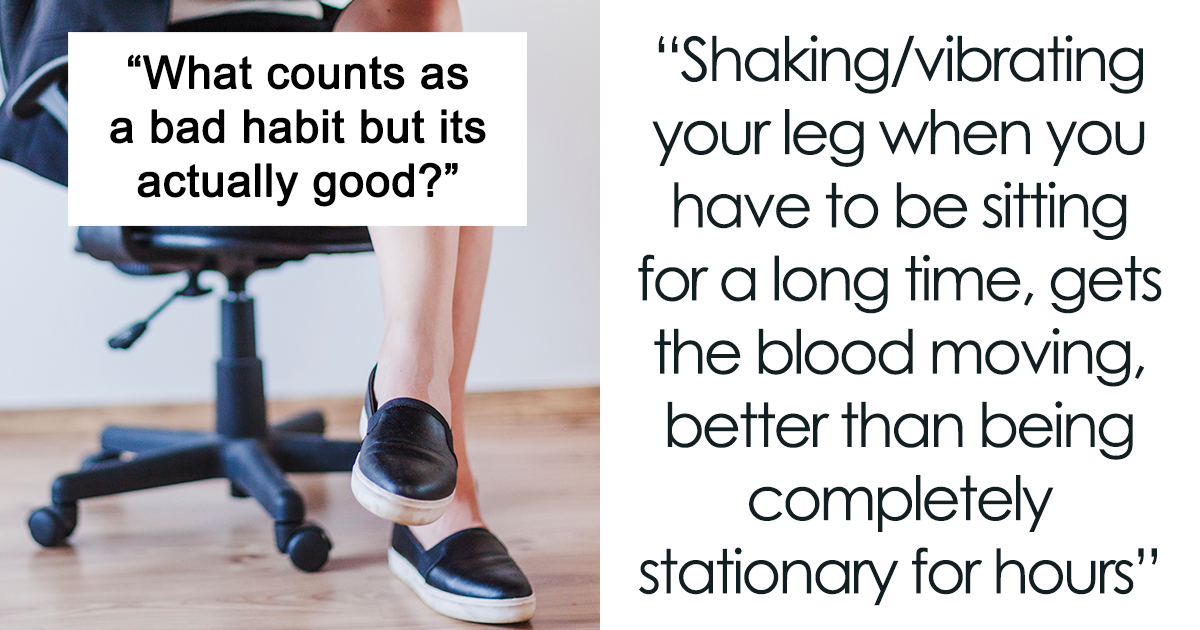
Fidgeting gets treated like a lack of discipline, especially in offices and classrooms. But small movementstapping your foot, shifting posture, pacing during callscan contribute to non-exercise activity thermogenesis, or NEAT. That means your body burns energy through everyday movement outside formal workouts. It is not a replacement for exercise, but it is proof that your restless leg may be doing more than annoying the conference table.
4. Daydreaming
Daydreaming looks like your brain has left the building, but it can help with creativity, planning, and emotional processing. When your mind wanders, it often connects ideas that focused thinking misses. Some of your best solutions may arrive while staring dramatically out a window like the main character in a low-budget indie film.
5. ProcrastinatingStrategically
Chronic procrastination can absolutely create stress, missed deadlines, and chaos. But a brief, intentional delay can sometimes help your brain incubate ideas. If you step away from a project and return with a sharper angle, that is not laziness; that is creative marination. The difference is whether you are delaying to thinkor delaying because the task has become emotionally radioactive.
6. Saying No
Saying no has a terrible reputation among people-pleasers, but it is one of the healthiest boundaries you can build. Saying yes to everything can lead to resentment, burnout, and a calendar that looks like it was assembled by a villain. A respectful no protects your time, energy, attention, and mental health. It also makes your yes more meaningful.
7. Spending Time Alone
Alone time is often confused with loneliness, but they are not the same thing. Healthy solitude can help you calm down, recharge, reflect, and reconnect with your own priorities. Ten quiet minutes without notifications can feel weird at first, mainly because your brain is used to being chased by digital raccoons. Stay with it. Solitude can be deeply restorative.
8. Having a Messy Desk
A messy desk can be a problem if you lose your passport, tax forms, or emotional stability under a pile of receipts. But a little disorder may encourage creative thinking. Research has suggested that messy environments can nudge people toward novelty and unconventional ideas. Translation: your desk may not be “messy.” It may be “in beta.”
9. Talking to Yourself
Talking to yourself is not automatically strange; it can be a useful form of self-coaching. Saying a task out loud can help you focus, remember steps, regulate emotions, and organize your thoughts. Athletes, performers, and students often use self-talk to stay calm and motivated. The grocery store version“We came for eggs, not seven kinds of cheese”is also valid.
10. Chewing Gum
Chewing gum can look casual or even rude in the wrong setting, but sugar-free gum has real oral health benefits. Chewing sugar-free gum after meals increases saliva flow, which helps wash away food particles and neutralize acids. Just choose sugar-free gum and do not chew like you are trying to intimidate the room.
11. Eating Dark Chocolate
Chocolate has long been treated like a guilty pleasure, but dark chocolate contains flavanols and other compounds linked with heart-health benefits. The keyword is dark, and the other keyword is moderation. A square or two can be a satisfying treat. A family-size bar eaten over the sink at midnight is more of a plot development.
12. Eating Carbs
Carbohydrates have been unfairly dragged through the wellness mud. Highly refined carbs can be easy to overeat, but healthy carbohydratessuch as oats, beans, fruit, vegetables, and whole grainsprovide fiber, vitamins, minerals, and fuel. Your brain and muscles appreciate quality carbs. They do not appreciate being blamed for every pair of tight jeans in America.
13. Eating Healthy Fats
For years, fat was treated like the nutritional villain. But healthy fats from foods like olive oil, nuts, seeds, avocado, and fish support cell function, nutrient absorption, and heart health. The type of fat matters more than the mere existence of fat. In other words, almonds and deep-fried mystery nuggets should not be placed in the same moral category.
14. Snacking
Snacking is not automatically mindless munching. A planned snack can stabilize energy, prevent extreme hunger, and help you meet nutrient needs. The best snacks usually include fiber, protein, or healthy fat: apple with peanut butter, Greek yogurt, nuts, hummus with vegetables, or whole-grain crackers. The goal is to snack like a prepared adult, not like a raccoon in a vending machine.
15. Crying
Crying gets labeled weak, but it is a normal emotional release. A good cry can reduce tension, communicate distress, and help people process feelings instead of stuffing them into an internal junk drawer. Crying all the time or feeling unable to function deserves support, but occasional tears are not a failure. They are emotional weather.
16. ComplainingConstructively
Constant complaining can train your attention toward negativity, but constructive complaining can be healthy. Naming what is wrong can reduce emotional pressure and help you identify solutions. The upgrade is simple: complain with a purpose. “This is frustrating, and here is what needs to change” is useful. “Everything is terrible forever” is a group project nobody signed up for.
17. Swearing
Swearing is not ideal in every setting. Please do not test this during a job interview. But research has found that using swear words can increase pain tolerance in certain situations. A well-timed expletive after stubbing your toe may be less a moral collapse and more a tiny emergency coping strategy. Context, as always, is everything.
18. Gossiping Responsibly
Malicious gossip can harm reputations and relationships. But not all gossip is cruel. Sharing social information can help people bond, understand group norms, avoid unsafe situations, and make sense of confusing behavior. Healthy gossip is accurate, not vicious, and ideally useful. “Be careful, that person keeps missing payments” is different from “Let us destroy Karen because she bought a weird hat.”
19. Playing Video Games
Video games are often blamed for wasted time, but many games require problem-solving, reaction speed, spatial awareness, memory, and teamwork. Strategy, puzzle, and action games can challenge the brain in ways that passive scrolling does not. The healthy version includes limits, sleep protection, and a life outside the screen. Basically: enjoy the quest, but remember to hydrate the actual human holding the controller.
20. Laughing at Silly Things
Laughing at ridiculous memes, dumb jokes, or your own cooking disaster is not immature; it is stress relief with sound effects. Laughter can relax muscles, stimulate circulation, ease tension, and support social connection. Your body does not require the joke to be sophisticated. Sometimes “the dog sneezed weird” is enough medicine for the moment.
21. Taking Breaks
Breaks can look unproductive to people who worship busyness, but working nonstop often leads to sloppy thinking. Short breaks help reset attention, reduce fatigue, and prevent burnout. A walk around the block, a stretch, or five quiet minutes can make the next work session better. Productivity is not about pretending to be a printer with legs.
22. Getting Sunlight
Sun exposure has a scary reputation because too much ultraviolet radiation increases skin cancer risk. That warning matters. Still, safe sunlight exposure can support vitamin D production, mood, and circadian rhythm regulation. Morning light is especially helpful for sleep timing. Be smart: avoid burning, use sun protection, and treat sunlight like seasoningvaluable, but not something you pour on recklessly.
23. Doing “Lazy” Rest Days
Rest days are often misunderstood as lack of commitment. In reality, recovery is part of progress. Muscles repair, energy stores replenish, and the nervous system gets a break. If you train hard every day without recovery, your body may eventually file a formal complaint through fatigue, soreness, irritability, or injury. Rest is not quitting. Rest is maintenance.
24. Writing Down Your Feelings
Journaling can seem dramatic, especially if you imagine a teenager writing “nobody understands me” in glitter pen. But expressive writing can help people process stress, clarify emotions, and notice patterns. You do not need a leather-bound diary or poetic suffering. A simple note like “I am angry because I feel ignored, and I need to address it calmly” can turn emotional fog into a map.
How to Make “Bad” Habits Work for You
The secret is not to romanticize every impulse. It is to refine it. If a habit helps you recover, connect, think, move, or communicate better, it may deserve a place in your life. If it consistently creates harm, avoidance, or regret, it needs boundaries.
Use the “after test.” Ask yourself how the habit makes you feel afterward. A nap that leaves you refreshed is useful. A nap that ruins your sleep is not. A complaint that helps you solve a problem is constructive. A complaint spiral that makes everyone emotionally tired is not. A messy desk that sparks ideas is charming. A messy desk that contains unpaid bills from the previous presidential administration needs intervention.
Personal Experiences: Learning to Stop Judging Useful Habits
Most people do not wake up one day and suddenly become balanced, hydrated, emotionally intelligent adults who chew sugar-free gum and set boundaries with the calm confidence of a monk. For many of us, learning which “bad habits” are actually helpful happens through trial, error, embarrassment, and the occasional snack eaten directly from the pantry while pretending to “organize.”
Take rest, for example. Many people grow up believing that constant busyness proves value. If you are exhausted, you must be important. If your calendar is full, you must be winning. But eventually the body starts sending strongly worded emails: poor sleep, brain fog, irritability, and the mysterious urge to cry because someone asked, “What do you want for dinner?” That is often when a person discovers that taking breaks, napping, and having real rest days are not luxuries. They are basic operating requirements.
There is also a quiet freedom in learning to say no. At first, it can feel rude. You may over-explain, apologize three times, and offer a 600-word emotional footnote. But after a while, you realize that healthy people do not need you to sacrifice your entire nervous system to prove you care. A clear “I cannot make it this time” protects relationships better than a resentful yes. Boundaries may feel uncomfortable at first because they are new, not because they are wrong.
Then there is the messy desk defense. Some people genuinely think better with everything neatly labeled. Others need a bit of visible chaos to connect ideas. A notebook here, a sticky note there, a coffee mug that has become part of the office ecosystemit can all become part of a creative rhythm. The problem is not mess itself; the problem is mess that blocks function. A creative pile is one thing. Losing your phone under three months of receipts is another.
Even emotional habits can become healthier when you stop judging them. Crying, journaling, talking to yourself, and constructive complaining all have something in common: they move thoughts and feelings out of the pressure cooker. When people bottle everything up, emotions do not disappear. They usually leak out as sarcasm, headaches, doom-scrolling, or a sudden argument about dishwasher loading technique. Expressing what you feelprivately in writing, out loud to yourself, or calmly with another personcan prevent small frustrations from turning into emotional fireworks.
One of the most surprising lessons is that play matters. Video games, laughter, daydreaming, and even silly conversations can seem unimportant compared with work and responsibilities. But the brain needs challenge, novelty, humor, and imagination. A life with no play may look disciplined from the outside, but inside it often feels dry and brittle. The goal is not to abandon responsibility. The goal is to make space for moments that remind you that you are a person, not a productivity appliance.
Food habits carry the same lesson. Many people spend years fearing carbs, fats, snacks, coffee, and chocolate, only to learn that nutrition is more nuanced than “good food versus bad food.” Oats are carbs. Beans are carbs. Avocados contain fat. Nuts contain fat. Dark chocolate can be enjoyed. Coffee can be part of a healthy morning. A planned snack can save you from arriving at dinner with the appetite of a mythological beast. The more you understand food, the less you need to fear it.
In real life, healthy habits rarely look perfect. They look like choosing a walk instead of another hour of scrolling. They look like taking sunlight with sunscreen. They look like laughing at a terrible joke because your shoulders finally dropped. They look like writing one honest paragraph instead of sending one angry text. They look like saying, “I need a break,” before your brain becomes soup.
The best habits are not always the ones with the cleanest reputation. Sometimes they are the misunderstood ones you learn to use wisely. The point is not to turn every guilty pleasure into a wellness brand. The point is to stop confusing shame with self-improvement. When practiced with awareness, many habits we judge harshly can become tools for energy, creativity, resilience, and joy.
Conclusion
Bad reputations are not always fair. Napping, coffee, carbs, solitude, messy desks, crying, swearing, gaming, and even a little responsible gossip can have benefits when they are used thoughtfully. The real question is not whether a habit looks impressive. The real question is whether it helps you function, feel, connect, recover, or grow.
So the next time someone gives your short nap, dark chocolate square, or self-talk session the side-eye, remember this: wellness is not about looking perfect. Sometimes it is about knowing yourself well enough to use ordinary habits in surprisingly healthy ways.
Note: This article is for general informational and lifestyle purposes only. It is not medical advice. Anyone with health conditions, sleep problems, anxiety, dietary restrictions, or medication concerns should speak with a qualified healthcare professional before changing routines.














