
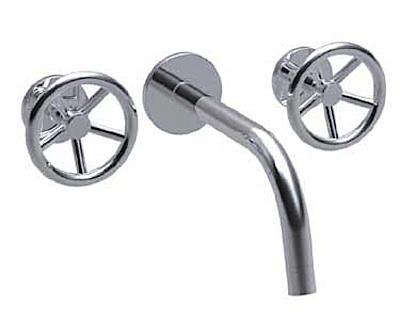
The Watermark Designs Brooklyn Collection proves that a faucet does . It can walk into the room wearing work boots, carrying a toolbox, and looking suspiciously like it knows how to repair a steam pipe.
Known officially as Brooklyn 31, this coordinated collection draws inspiration from the gate valves found in mid-century Brooklyn apartment buildings. Designed with Incorporated Architecture & Design and introduced in 2008, it transforms utilitarian plumbing hardware into sculptural fixtures for bathrooms, kitchens, bars, showers, and other carefully designed spaces.
der>
What Is the Watermark Designs Brooklyn Collection?
The Brooklyn Collection is a family of luxury plumbing fixtures manufactured and customized by Watermark Designs in Brooklyn, New York. The defining visual feature is its industrial valve-inspired handle. Rather than hiding the mechanical origins of plumbing, the design celebrates them.
Large wheel handles, substantial fittings, softly squared or curved spouts, visible junctions, and richly finished metal surfaces give the collection its recognizable personality. The faucets look as though they could have been rescued from an old boiler room, cleaned up, and invited to live beside a marble sink. Fortunately, their inner workings belong to the modern era.
The collection is not limited to one widespread bathroom faucet. Watermark organizes Brooklyn 31 across lavatory, bath, shower, W/C, kitchen and bar, and accessory categories. That breadth allows a designer to repeat the same industrial design language throughout a roomor across an entire housewithout making every fixture identical.
tion>
The Story Behind the Industrial Design
Many industrial-style faucets imitate generic factory equipment. The Watermark Brooklyn faucet has a more specific reference point: gate valves and garden-hose fittings associated with New York City buildings. That local inspiration keeps the design from feeling like industrial décor purchased by the pound.
Gate-Valve Handles as Functional Sculpture
A gate-valve wheel is designed to be grasped and turned, so it already possesses a strong tactile quality. Reinterpreting that shape as a faucet handle creates an object that feels mechanical without becoming awkward. The wheel introduces curves and visual movement, while the body of the faucet supplies architectural lines and weight.
This combination works particularly well in rooms that need one memorable focal point. A Brooklyn faucet can provide character in a simple powder room where the remaining ingredients are restrained: a stone backsplash, a wall-mounted basin, a rounded mirror, and a single sconce. It can also hold its own in a larger space filled with patterned tile, veined marble, dark cabinetry, or exposed brick.
Why the Design Has Lasted
Brooklyn 31 appeared before industrial faucets became a familiar category in residential design. Its continued presence demonstrates the advantage of beginning with a genuine architectural reference rather than chasing a temporary decorative trend.
The collection also avoids becoming a historical reproduction. It borrows the visual vocabulary of old mechanical equipment but adapts that language to contemporary plumbing configurations. The result can feel appropriate in a converted loft, a traditional brownstone, a modern farmhouse, or a newly built minimalist home.
tion>
Brooklyn Faucet Configurations
Before choosing a finish, decide how the fixture must function. Brooklyn Collection faucets are available in numerous formats, and the correct configuration depends on the sink, countertop, plumbing rough-in, available space, and daily habits of the people using it.
Widespread Lavatory Faucets
A widespread faucet separates the hot handle, cold handle, and spout into three components. This arrangement gives the Brooklyn wheel handles room to breathe and is one of the best ways to showcase the collection’s sculptural character.
Widespread models are well suited to generously sized vanities and traditional three-hole sink layouts. Because the components are installed separately, the spacing and alignment must be planned carefully. The payoff is a balanced composition that looks custom rather than preassembled.
Single-Hole and Monoblock Faucets
A single-hole faucet is a practical choice for a compact vanity, bar sink, or streamlined countertop. It reduces visual clutter and can simplify cleaning because fewer components meet the counter. This configuration is also useful when the countertop has already been drilled for one faucet hole.
Do not assume that a smaller mounting footprint means a small visual presence. The distinctive handle and robust metalwork still give a Brooklyn single-hole model plenty of personality.
Wall-Mounted Faucets
A wall-mounted Brooklyn faucet can be especially dramatic because the spout and controls appear to emerge directly from the backsplash. It frees countertop space, works beautifully with vessel and undermount basins, and emphasizes the collection’s architectural qualities.
Wall mounting requires more advance coordination than deck mounting. The plumber, cabinetmaker, stone fabricator, and designer must agree on the finished wall thickness, basin height, spout reach, drain position, and exact rough-in location. A current Brooklyn wall-mounted lavatory model with an 8 3/4-inch spout, for example, is specified at 1.2 gallons per minute and requires a compatible in-wall valve.
3>Kitchen and Bar Faucets
The Brooklyn aesthetic extends beyond the bathroom. Kitchen and bar options can include single-hole faucets, gooseneck forms, pull-down models, side-spray arrangements, widespread configurations, bar faucets, and pot fillers, depending on the current catalog. One Brooklyn deck-mounted, single-hole kitchen model is listed with a 1.75-gallon-per-minute flow rate. That is a useful reminder that flow rates differ by product type and model. Buyers should always review the specification sheet for the exact SKU instead of applying the bathroom faucet rating to a kitchen fixtureor vice versa. 3>Bath, Shower, and Coordinating Accessories
Brooklyn 31 also supports tub fillers, shower controls, hand showers, showerheads, toilet-area fittings, towel bars, rings, hooks, and other accessories. This makes it possible to coordinate the visible hardware without repeating the same shape everywhere. A thoughtful scheme might use wheel handles on the lavatory faucet and shower controls, then repeat the selected finish on quieter accessories. That approach creates continuity while preventing the room from looking like a gate-valve showroomwhich, admittedly, would be a very specific decorating choice.
Choosing a Finish for Brooklyn Collection Faucets
Finish selection changes the personality of these faucets almost as much as the mounting style. Watermark offers an extensive finish program that includes familiar choices such as polished chrome, polished nickel, satin nickel, matte black, gunmetal, and polished natural brass, along with aged, antiqued, copper-toned, gold-toned, and specialty finishes.
Polished Chrome and Polished Nickel
Polished chrome sharpens the industrial geometry and reflects surrounding colors. It is a sensible choice for crisp white bathrooms, black-and-white tile, stainless kitchen appliances, or rooms that need a bright metallic accent.
Polished nickel generally appears warmer than chrome. It can bridge traditional and contemporary elements, particularly when paired with cream stone, warm white paint, dark wood, or unlacquered brass accents elsewhere in the room.
Matte Black and Gunmetal
Matte black emphasizes silhouette. The wheel handles become bold graphic shapes, making the finish effective against pale stone, white tile, or softly colored plaster. Gunmetal offers a related but more nuanced effect, with enough metallic depth to avoid reading as completely flat.
Dark finishes also reveal water spots in some environments, especially where the water supply is mineral-heavy. A soft-cloth wiping routine is not glamorous, but neither is a faucet wearing a polka-dot costume of dried droplets.
Natural Brass and Living Finishes
Living finishes are intended to change as they are handled and exposed to water, air, cleaning routines, and environmental conditions. This gradual patina can make a Brooklyn faucet feel even more authentic because the surface records how the fixture is used.
That change should be considered a design feature, not a maintenance failure. Homeowners who expect every component to remain perfectly identical may prefer a more stable plated or coated finish. Those who enjoy variation, depth, and visible aging may find natural brass or another living finish especially rewarding.
Order Coordinating Pieces Together
Hand-finished metal can show natural variation. Watermark recommends ordering fixtures intended for the same space at the same time so they can move through finishing together. Even then, slight differences may occur, especially with relieved, aged, and living finishes.
tion>
Performance, Water Use, and Product Specifications
A beautiful faucet still has to deliver water predictably. Every Brooklyn configuration should therefore be evaluated by its current technical documentation, not by appearance alone.
Check the listed flow rate, valve requirements, spout reach, spout height, mounting-hole dimensions, maximum deck thickness, connection sizes, handle clearance, and included components. Wall-mounted products may require a separately ordered rough valve, while customized countertops may require special shank lengths ordered with the faucet.
The EPA’s WaterSense program limits labeled bathroom sink faucets and accessories to a maximum of 1.5 gallons per minute. A Brooklyn lavatory model specified at 1.2 gallons per minute falls below that flow threshold, but buyers should not assume this means every model carries WaterSense certification. Certification and flow rate are related questions, not interchangeable ones.
For fixtures that contact drinking water, buyers may also wish to verify the exact model’s certifications or listings for relevant standards such as NSF/ANSI/CAN 61 and NSF/ANSI/CAN 372. These standards address drinking-water contact and lead-content requirements. Confirm compliance using the current product documentation, certification database, and applicable local plumbing code.
tion>
Installation Planning: Measure Before the Marble Arrives
Premium fixtures reward careful planning and punish improvisation. Unfortunately, plumbing improvisation usually occurs five minutes after someone says, “That hole looks close enough.”
Match the Faucet to the Sink
Choose the sink before finalizing faucet reach and height. The water stream should land near the drain rather than striking the back wall or front slope of the basin. A spout that is too short may splash onto the counter; one that reaches too far may interfere with comfortable handwashing.
Confirm the Hole Pattern
Single-hole, centerset, widespread, and wall-mounted faucets require different mounting conditions. Existing holes can limit replacement choices, while new construction offers more freedom. For widespread faucets, measure the center-to-center distance between the outer holes and compare it with the manufacturer’s installation drawing.
Coordinate Wall-Mounted Rough-Ins Early
The final location of a wall-mounted faucet depends on finished surfaces, not unfinished studs. Tile, backer board, stone slabs, plaster, and waterproofing can all affect the finished wall plane. The valve must be installed within the approved depth range, and the spout should be positioned high enough for hand clearance without causing excessive splash.
Flush the Supply Lines
Construction debris can damage cartridges, seals, and aerators. Watermark’s warranty terms emphasize proper installation practices, including flushing the plumbing lines before installation. This small step can prevent a brand-new faucet from developing a drip before the protective film has even left the mirror.
tion>
Cleaning and Maintaining the Finish
Routine care should be gentle. Watermark advises against abrasive products, harsh chemicals, alcohol, aggressive solvents, and rough pads that may scratch polished metal. A soft damp cloth and warm water are the safest starting point for everyday cleaning.
For water spots or mineral residue, the manufacturer recommends a diluted solution of equal parts white vinegar and water, followed by a clean-water rinse. Do not allow cleaning products to dry on the surface. Wipe the fixture dry with a soft microfiber cloth to reduce spotting.
Living finishes require a different mindset from permanently coated finishes. Their color and sheen may evolve, particularly in areas touched frequently. Protective faucet wax can slow changes and help maintain luster, but it will not freeze the surface in time.
If a faucet begins to drip, the cause may be a worn or damaged cartridge, O-ring, washer, or seal. Sediment, hard water, debris, and overtightening can contribute. Check warranty conditions and obtain genuine replacement parts before disassembling a specialized fixture.
tion>
Advantages and Trade-Offs
Why Homeowners and Designers Choose Brooklyn Faucets
- Distinctive identity: The valve-inspired handles create an immediate focal point.
- Coordinated range: Lavatory, bath, shower, kitchen, bar, and accessory options support a unified design.
- Finish flexibility: Numerous metal treatments allow the same form to feel polished, moody, traditional, or aged.
- Custom character: Separate choices for configurations, finishes, and handle details produce a more tailored result.
- Long-lived aesthetic: The collection’s architectural inspiration has remained relevant since its 2008 introduction.
Points to Consider Before Ordering
- Advance planning: Wall-mounted and multi-piece fixtures require precise rough-in coordination.
- Finish variation: Handmade, relieved, and living finishes may not appear perfectly uniform.
- Maintenance expectations: Specialty surfaces need appropriate cleaning and may develop patina.
- Model-specific components: Valves, drains, extension kits, or other rough parts may be ordered separately.
- Custom-order policies: Bespoke products and finish combinations may have restricted cancellation or return terms.
Design Ideas for Watermark Brooklyn Faucets
Industrial Powder Room
Pair a wall-mounted Brooklyn faucet in gunmetal or matte black with a compact stone basin, off-white handmade tile, and a frameless mirror. Add one warm wall sconce so the room feels atmospheric rather than factory-themed.
Brownstone-Inspired Bathroom
Use polished nickel or aged brass with marble, painted wood cabinetry, traditional molding, and unlacquered hardware. The mechanical handle introduces tension, preventing the room from becoming overly formal.
Modern Kitchen
A dark Brooklyn kitchen faucet can become the visual anchor of a pale quartz or natural-stone island. Repeat the finish sparingly on cabinet hardware or lighting rather than matching every metallic surface.
Loft-Style Primary Bath
Combine exposed brick or concrete-look tile with a freestanding tub, wall-mounted lavatory faucets, and coordinated shower controls. Keep textiles soft and lighting warm so the room feels residential, not like a very luxurious utility tunnel.
Extended Experience: What Living With Brooklyn-Style Fixtures May Feel Like
The following is a realistic, scenario-based ownership experience rather than a claim of personal product testing. It reflects the practical details homeowners commonly encounter when selecting, installing, and maintaining substantial designer faucets.
The first surprise is usually scale. Product photography makes industrial fixtures look dramatic, but seeing a Brooklyn faucet beside an actual sink reveals how much visual weight the wheel handles carry. On a small vanity, they can become the entire composition. On a wide double vanity, they create rhythm and help the counter feel deliberately furnished rather than merely equipped.
During specification, the finish sample becomes more useful than expected. A brass tone viewed on a screen may look golden, brown, pink, or nearly black depending on the display and lighting. In a real room, the finish reacts to wall color, stone undertones, daylight, and warm or cool bulbs. Holding a sample beside the countertop often resolves in five minutes what a week of online debating could not.
Installation is where enthusiasm meets arithmetic. A deck-mounted widespread faucet is relatively familiar to an experienced plumber, but a wall-mounted design creates more decisions. The sink height, rim thickness, backsplash depth, spout projection, handle radius, and finished wall must all cooperate. When these measurements are correct, the result looks effortless. When they are wrong, water may strike the basin at an unfortunate angle and begin auditioning for a role as a countertop sprinkler.
Once installed, the tactile experience is a major part of the appeal. The wheel handle feels deliberate. Turning it is more ceremonial than flicking a small lever, which can make an ordinary routine feel surprisingly satisfying. The fixture’s substantial shape also changes how the room is perceived: guests notice it, touch it, and often ask about it before commenting on more expensive surfaces.
Daily cleaning habits become apparent quickly. Polished finishes show fingerprints, while dark finishes may reveal pale mineral spots. A soft microfiber cloth stored nearby makes maintenance easy. The owner who wipes the faucet after a heavy splash will probably enjoy a more consistently polished appearance than the owner who waits for Saturday to launch a full-scale cleaning operation.
A living finish creates the most personal ownership experience. Areas touched frequently begin to shift before protected surfaces do. One handle may age slightly differently if it is used more often. Some homeowners love this evidence of daily life; others may initially wonder why their carefully coordinated fixtures are developing individual personalities. Knowing in advance that patina is expected makes the process far more enjoyable.
The collection is most successful when it is given room to lead. Surrounding it with too many industrial clichésexposed bulbs, pipe shelves, metal signs, faux factory clockscan make the design feel staged. Pairing it with natural stone, quiet cabinetry, handcrafted tile, or warm wood allows the faucet’s mechanical references to remain interesting rather than theatrical.
Over time, the strongest impression is not simply that the faucet looks expensive. It is that the fixture appears specific to the room. Its unusual handles, selected finish, mounting style, and coordinated components produce the sense that someone made a decision rather than choosing the first acceptable faucet in aisle seven.
Conclusion
Watermark Designs Brooklyn Collection faucets are for rooms that benefit from visible character. Their gate-valve inspiration, coordinated product range, extensive finish choices, and Brooklyn-made identity distinguish them from generic industrial fixtures.
The best results come from treating the faucet as architectural hardware rather than a last-minute accessory. Select the sink first, study the exact specification sheet, coordinate rough plumbing early, view real finish samples, and understand how the chosen surface will age. Do that groundwork, and Brooklyn 31 can turn the simple act of running water into one of the room’s defining design moments.













