
If Earth’s history had a “highlight reel,” mass extinctions would be the parts where everyone yells,
“NOPErewind!” and the planet calmly responds, “Can’t. Geology.” These events are the big ecosystem
faceplants: biodiversity drops fast, food webs unravel, and the fossil record becomes a very dramatic scrapbook.
Quick disclaimer before we scare the trilobites
Scientists typically use mass extinction for episodes where an unusually large share of species disappears
over a geologically short time. The famous “Big Five” are the headliners, but Earth has also had other
major die-offs, plus a few plausible “don’t-even-joke-about-it” scenarios. This article mixes the classics
with several other events and risks that could still qualify as mass extinction–level bad news for life as we know it.
The lineup: 10 extinction events worth not repeating
1) The End-Ordovician One: When the Ocean Got Hit With a Climate Whiplash
Around 445 million years ago, most complex life lived in the seaand then the sea got an unwanted makeover.
Evidence points to major climate disruption, including cooling and glaciation, paired with big sea-level changes.
That sounds like “just weather,” until you remember many marine ecosystems rely on shallow continental shelves.
Shrink the shelves, shift ocean circulation, and suddenly habitats vanish like someone hit “delete” on a coral reef file.
Why it would really suck: it’s a reminder that you don’t need an asteroid to cause a mass die-offjust a fast
enough environmental shift in the places where most species actually live.
2) The Late Devonian: The Slow-Motion Reef Disaster
The Late Devonian extinctions weren’t a single “one bad day” event; they were more like a rough season that
kept getting renewed. Reef ecosystems took a huge hit, and many lines of evidence point to widespread
ocean oxygen problems (deoxygenation/anoxia) that can suffocate marine food webs from the bottom up.
Imagine trying to keep a city running while the power grid flickers for yearsexcept the “city” is the ocean
and the “power” is oxygen plus stable chemistry.
Why it would really suck: reefs are biodiversity engines. When they wobble, lots of other species wobble with them.
And the Devonian shows that long, drawn-out stress can be just as devastating as a single catastrophe.
3) The Capitanian (Middle Permian): The “Underrated” Mass Extinction With a Volcanic Suspect
The Capitanian extinction doesn’t get as much pop-culture love as “the dinosaurs,” but it’s a serious
biodiversity punch. Many researchers connect it to large-scale volcanism and environmental disruption
(think: greenhouse gases, ocean chemistry changes, and oxygen stress).
The exact chain of cause-and-effect is still an active research topic, but the takeaway is clear:
big volcanic episodes can act like a planetary-scale thermostat punchoften followed by ecological chaos.
Why it would really suck: it’s a preview trailer for how “Earth burps” (giant eruptions) can destabilize oceans
and climate in ways life struggles to adapt to quickly.
4) The End-Permian “Great Dying”: The One That Nearly Hit the Reset Button
About 252 million years ago, Earth hosted the biggest known mass extinction in the fossil record.
It’s often nicknamed the “Great Dying” for a reason. Research commonly links the crisis to massive volcanism
(the Siberian Traps) and a nasty cascade: greenhouse warming, stressed oceans, and widespread oxygen loss.
When oceans lose oxygen and chemistry shifts, marine ecosystems can collapse like a house of cardsespecially
if the stress lasts long enough to outpace adaptation.
Why it would really suck: it wasn’t just a species swap; it was a broad ecological reformat. Recovery took a long time,
because rebuilding complex ecosystems is slower than breaking them (which is also true of IKEA furniture).
5) The End-Triassic: When Volcanism Helped Break Up Pangaea and the Food Web
Around 201 million years ago, life got another major stress test near the Triassic–Jurassic boundary.
A leading suspect is the Central Atlantic Magmatic Province (CAMP), a gigantic volcanic episode tied to the breakup
of Pangaea. Large-scale eruptions can inject enormous amounts of carbon dioxide and other gases into the system,
pushing climate warming and amplifying ocean and atmosphere instability.
Why it would really suck: it shows how Earth’s internal geology can reshape the surface worldcontinents, climate,
and biodiversityat the same time. When the planet remodels, species don’t get a temporary rental.
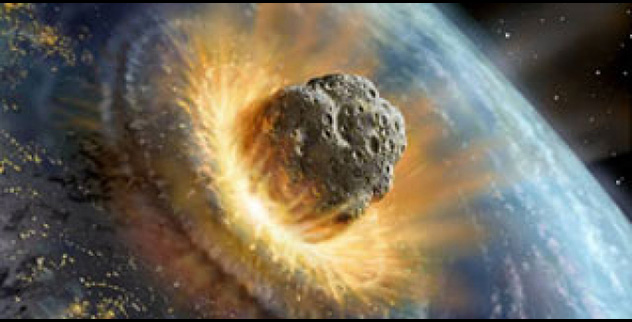
6) The K–Pg (Dinosaur-Killer): The Impact That Made “Bad Day” Look Like an Understatement
About 66 million years ago, a large impact at Chicxulub is strongly linked to a global extinction that took out
non-avian dinosaurs and many other groups. A key clue: a globally recognizable boundary layer enriched in iridium,
an element more common in many space rocks than in Earth’s crust. The aftermath likely included rapid climate
disruption and a brutal hit to photosynthesismeaning the base of many food chains took a direct punch.
Why it would really suck: it’s the extinction story people remember because it’s cinematic,
but the real lesson is ecological: if you break primary productivity, everything above it starts to wobble.
Also, it’s awkward that “space” occasionally sends reminders that Earth is, in fact, in space.
7) The Paleocene–Eocene Thermal Maximum (PETM): When Warming Reached the Deep Ocean
The PETM (~56 million years ago) wasn’t one of the “Big Five,” but it featured rapid global warming and major
changes in the carbon cycleplus a notable extinction of deep-sea benthic foraminifera (tiny organisms with
outsized importance for marine ecosystems and the carbon pump).
Think of benthic forams as part of the ocean’s behind-the-scenes maintenance crew; when the maintenance crew
disappears, systems can get weird fast.
Why it would really suck: it highlights that warming isn’t just a surface issue. When deep ocean conditions shift,
the planet’s largest habitat starts sending distress signals.
8) The Late Pleistocene Megafaunal Crash: Goodbye Mammoths, Hello Awkward Ecosystems
Near the end of the last Ice Age, many regions lost a shocking number of large animalsmammoths, mastodons,
giant ground sloths, and more. Scientists debate the exact mix of causes (climate shifts, human impacts, habitat change),
and the answer may differ by region.
What’s not debated: ecosystems notice when the biggest movers, grazers, and predators vanish.
Remove large herbivores and you can change vegetation patterns, fire regimes, and nutrient cycling.
Why it would really suck: big animals do big jobs. When they disappear, the landscape doesn’t stay “normal”it
becomes a different system with different rules.
9) The Ongoing “Sixth” Mass Extinction: The One We’re Watching in Real Time
Many scientists argue we’re in (or approaching) a human-driven mass extinction, marked by accelerating extinctions,
shrinking populations, and widespread habitat loss. Even when a species isn’t fully extinct, losing populations
can erase local ecosystems’ resiliencelike removing rivets from an airplane and saying,
“Relax, the wings are still technically attached.”
Why it would really suck: because it’s not a mystery from rocksit’s a management problem unfolding around us.
The good news (yes, there’s good news) is that conservation works when it’s funded, enforced, and sustained.
10) A Supervolcano “Sunblock” Scenario: When the Sky Becomes a Filter Nobody Asked For
Supereruptions are rare, but their potential impacts are huge: vast ash fallout, major short-term climate cooling,
and serious stress on agriculture and ecosystems. Yellowstone is the celebrity in this category, mostly because
it sits under a national park and gets the “supervolcano” label, but scientists emphasize that a catastrophic
eruption there is extremely unlikely in any given year.
Why it would really suck: because modern ecosystemsand modern humansdepend on stable growing seasons,
predictable sunlight, and functioning supply chains. A multi-year climate shock is basically a group project where
everyone forgot to do their part, except the grade is “global biodiversity.”
What these extinctions have in common (besides being terrible)
1) Many are chemistry problems wearing a climate costume
Warming, acidification, and oxygen loss often travel together. For example, as carbon dioxide rises,
oceans absorb some of it, changing seawater chemistry in ways that make it harder for shell-building organisms
to build and maintain shells. Meanwhile, warmer water holds less dissolved oxygen, raising the odds of
deoxygenation stress in marine habitats. Once the base of the food web gets hit, the shock can climb the ladder fast.
2) “One cause” is usually a myth
Extinctions are often multi-trigger events: volcanism plus warming plus ocean stress; or impact plus climate
disruption plus food-web collapse. In real ecosystems, everything is connectedso catastrophes tend to be team efforts.
(Nature is very committed to collaboration, just not in the way we’d prefer.)
3) Recovery is slow because ecosystems are complicated
After a mass extinction, life doesn’t just “bounce back” like a rubber ball. It rebuilds like a city after a blackout:
first the basics, then the networks, then the complexity. Biodiversity can eventually return, but it often returns
as a different world with different dominant groups.
Experiences: what it feels like to bump into extinction stories in real life (500-ish words)
One weird thing about mass extinctions is that you can “experience” them without any time machinebecause their
fingerprints are everywhere once you know what to look for.
Start at a natural history museum. You’re standing in front of a fossil display, and it hits you that you’re looking
at the after photo. A trilobite isn’t just a cool bug-rock; it’s a reminder that entire successful lineages can vanish.
Museums also teach you how scientists read the planet’s autobiography: layers of rock as pages, chemical signatures
as punctuation, and sudden fossil disappearances as the cliffhangers nobody wanted.
Then there’s the “field trip” version of extinction awareness. Maybe you hike somewhere with exposed sedimentary layers,
or you visit a coastline where shells are everywhere. It’s easy to treat shells like decorative confetti until you learn
that ocean chemistry can decide whether shell-building is easy or hard. Suddenly, a beach becomes a lesson in
carbon cycles and fragilityplus sand in your shoes, because education is never free.
If you’ve ever watched a documentary that recreates Chicxulub, you’ve probably felt that strange mix of awe and dread:
awe at the scale of planetary forces, dread at how dependent life is on things like sunlight and stable temperatures.
It’s the same feeling you get when you read about ancient volcanic provinces: Earth’s interior is doing its own thing,
and the surface world just has to cope.
The most unsettling “experience,” though, is the modern one: realizing the sixth mass extinction conversation isn’t
ancient history. It’s the moment you notice fewer insects around porch lights, or you hear that a local wetland is being
drained, or you see coral bleaching photos and realize reefs aren’t just prettythey’re infrastructure for biodiversity.
You can feel your brain trying to protect itself by going numb, because the story is too big.
A healthier way to experience these topics is to turn curiosity into attention and attention into action.
You can volunteer for habitat restoration, support conservation groups, plant native species, reduce waste,
or simply learn to love “unpopular” animals that don’t get movie dealsfrogs, bats, mollusks, pollinators.
Mass extinctions teach a blunt lesson: ecosystems are networks. Modern conservation teaches a hopeful one:
networks can be repaired when people decide they matter.
And if you want one final, oddly comforting experience: look at birds. They’re living proof that even after a planet-level
catastrophe, some lineages adapt, persist, and diversify. It’s not a promise that everything will be finebut it’s evidence
that life can be resilient when we stop making the environment feel like a nonstop obstacle course.
Conclusion
Mass extinctions are Earth’s harsh reminders that life depends on stable conditionsespecially stable climate,
stable oceans, and stable food webs. The “Big Five” show what happens when those supports collapse.
The other events and scenarios show that you don’t need a single villain; you just need enough stress, fast enough,
in the wrong places. If there’s a takeaway that doesn’t taste like doom: the past proves ecosystems can recover,
but the present gives us a rare chance to prevent the worst outcomes before they fossilize into history.














