
Dry winter air has a special talent for making a house feel like a toasted cracker. Your skin gets flaky, your nose gets dramatic, your socks start throwing static-lightning at every doorknob, and the wood furniture begins acting like it is living through an emotional crisis. That is where a furnace humidifier earns its keep. A properly adjusted whole-house humidifier can make your home feel more comfortable, help reduce dry-air misery, and protect wood floors, trim, and furniture from extreme dryness.
The trick, however, is not to crank the setting until your windows look like a rainforest exhibit. Adjusting a humidifier on a furnace is all about balance. Too little humidity and the air feels harsh and dusty. Too much humidity and you can end up with foggy windows, damp surfaces, and conditions that your house definitely did not request. The good news is that most furnace humidifiers are not hard to adjust once you understand what the control is doing and how outdoor temperature affects the setting.
This guide walks through 10 simple steps to adjust your furnace humidifier safely and intelligently. It also explains the difference between manual and automatic controls, gives you a practical winter humidity table, and includes real-world homeowner experiences at the end so you can avoid the classic mistakes people make during heating season.
Why Adjusting a Furnace Humidifier Matters
A furnace humidifier adds moisture to the air that moves through your HVAC system. The goal is not to make the air feel tropical. The goal is to keep indoor humidity in a comfortable, healthy range while avoiding condensation and moisture damage. In many homes, especially during winter, the sweet spot is usually somewhere around 30% to 50% relative humidity, with many households feeling best closer to 30% to 40% during colder weather.
That range sounds simple until the weather changes. When outdoor temperatures drop, your windows and exterior surfaces get colder. If indoor humidity stays too high, moisture condenses on those surfaces. That is why a humidifier setting that feels perfect at 40°F outside can suddenly become too aggressive when the temperature falls to 10°F or below. In other words, your humidifier setting should not be treated like a tattoo. It is more like a winter wardrobe: useful, adjustable, and occasionally judged by the weather.
Before You Start: Know Your Humidifier Type
Most whole-house furnace humidifiers fall into one of three common categories:
- Bypass humidifiers, which use furnace airflow and often include a seasonal damper.
- Fan-powered humidifiers, which use their own fan to move air through the water panel.
- Steam humidifiers, which create steam and usually have more automated controls.
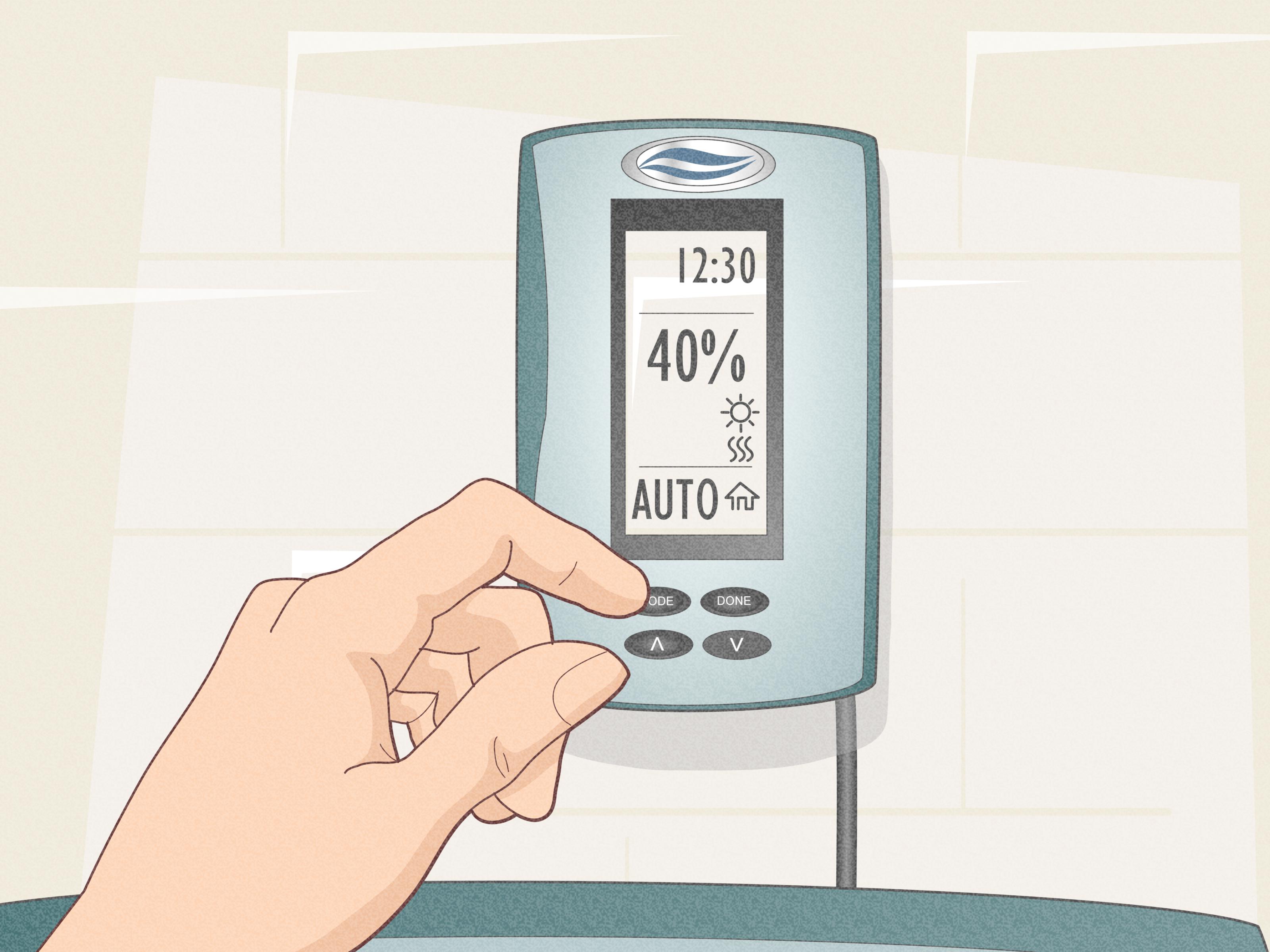
The control may be a simple round manual humidistat, a wall-mounted humidity control, or a thermostat with an automatic humidity mode. Manual controls usually require you to lower the setting as outdoor temperatures fall. Automatic controls often use an outdoor sensor or programmed logic to make those adjustments for you, which is nice because your humidifier then behaves less like a needy houseplant.
Simple Ways to Adjust a Humidifier on a Furnace: 10 Steps
Step 1: Find the Humidifier Control
Start by locating the control. It may be mounted on the return duct near the furnace, installed on a nearby wall, or built into a smart thermostat. Look for labels such as humidifier, humidity, humidistat, or a percentage display. If you see numbers like 20, 30, 40, and 50, congratulations: you have found the dial that decides whether your home feels pleasantly comfortable or like a dry sandwich bag.
Step 2: Figure Out Whether It Is Manual or Automatic
This matters a lot. A manual humidifier requires seasonal adjustment by you. An automatic humidifier usually changes output based on outdoor temperature and may only need small tweaks after installation. Check the face of the control or your thermostat menu. If it has settings like Auto, Manual, Off, or a comfort level scale, that tells you how much babysitting it expects from you.
Step 3: Check Your Current Indoor Humidity
Before changing anything, find out where you are starting. Use a hygrometer, a thermostat humidity reading, or the built-in humidity display if your system has one. If the air feels dry but your home is already at 45%, your issue may not be a lack of humidity. If your windows are fogging up and your reading is near 50% during a deep freeze, that is a giant clue that the setting is too high.
This step keeps you from making random adjustments based on vibes alone. Vibes are great for music playlists. They are less impressive when managing HVAC moisture.
Step 4: Start with a Reasonable Winter Target
For many homes in heating season, a safe starting point is 30% to 35% relative humidity. Some newer, tighter homes may handle a little more. Older homes with drafty windows may need less. If outdoor temperatures are mild, you may be able to run closer to 40% or even 45%. If it is extremely cold outside, a lower setting is usually wiser.
A commonly used manual guideline looks like this:
| Outdoor Temperature | Recommended Indoor RH |
|---|---|
| +40°F | 45% |
| +30°F | 40% |
| +20°F | 35% |
| +10°F | 30% |
| 0°F | 25% |
| -10°F | 20% |
| -20°F | 15% |
Think of that table as a practical guide, not a royal decree. Your home construction, windows, insulation, and air leaks all affect the final sweet spot.
Step 5: Turn the Dial or Setting Up in Small Increments
Avoid dramatic moves. Adjust the humidifier a little at a time, usually in 5% increments or one small notch on the dial. Big changes can lead to overshooting the ideal range and creating window condensation by accident. Subtle adjustments work better because humidity levels do not change instantly. Your house needs a little time to catch up.
For automatic controls, begin near the recommended normal setting and then fine-tune based on comfort and window conditions. For manual controls, match the setting to the current outdoor temperature and resist the urge to “just bump it way up for one day.” Houses remember. Windows especially remember.
Step 6: Make Sure the Humidifier Can Actually Operate
Sometimes the problem is not the setting. It is the setup. If you are testing the humidifier, make sure the furnace is calling for heat or the blower is running if your system requires airflow to operate. On a bypass humidifier, verify that the water supply valve is open and the seasonal damper is in the correct position for winter. On many units, the humidifier does not run just because you stared at it meaningfully.
Also check whether the humidifier is in Off, Test, or Summer mode. Leaving a control in test mode is a classic homeowner move right up there with buying batteries and forgetting why.
Step 7: Watch the Windows for 24 to 48 Hours
After adjusting the setting, give the system time to stabilize. Then look at your windows in the morning, when condensation is easiest to spot. If you see fogging, water droplets, or frost on the inside of the glass, indoor humidity is probably too high for the current weather. Lower the setting slightly and recheck the next day.
This is one of the best real-life tests because windows act like honest little tattletales. When the humidity is too high, they tell on you immediately.
Step 8: Check the Water Panel, Pad, or Canister
A clogged water panel can make the humidifier underperform even when the setting is correct. Mineral buildup reduces efficiency, limits evaporation, and may trick you into turning the control higher than necessary. Many evaporative whole-house humidifiers need a new water panel about once a year, and some models need more frequent replacement depending on design and water quality.
If your humidifier is working poorly, inspect the pad or canister according to the manufacturer guidance. This is also the moment to check for a blocked drain, crusty scale, or a panel that looks like it has been through a rough breakup.
Step 9: Adjust for Weather Changes, Not Just Comfort
Manual humidifiers need ongoing seasonal attention. If tonight will be much colder than today, lower the setting before the temperature drops. That helps prevent condensation from forming overnight. If the weather warms up, you may be able to raise the setting a little for more comfort.
This is why people sometimes think their humidifier is “inconsistent.” It is usually not being moody. It is just responding to physics, which, to be fair, can feel personal when your windows are wet.
Step 10: Shut It Down Properly When Heating Season Ends
When spring arrives and you are no longer running the furnace regularly, switch the humidifier to Off or the recommended summer mode. On many bypass models, close the damper for summer. This prevents unnecessary airflow through the bypass duct and keeps the system from operating when it is not needed. It is also a good time to clean the unit and replace the water panel if that fits your maintenance schedule.
Common Mistakes to Avoid
Turning the setting way up because the air feels dry
Dryness can come from several issues, including air leaks, high furnace runtime, dirty filters, or a humidifier that needs maintenance. Cranking the setting to 45% in bitterly cold weather is often how people end up with wet windows and regret.
Ignoring condensation
Window fog is not a charming winter accessory. It is a signal that the humidity is too high for the current conditions. Lower the setting rather than pretending your house has “atmosphere.”
Forgetting the seasonal damper
Bypass humidifiers often have a damper that should be open in winter and closed in summer. If it is in the wrong position, performance can suffer and airflow may not behave as intended.
Skipping maintenance
A humidifier with a dirty water panel or mineral buildup will not perform like it should. Maintenance is not the glamorous part of homeownership, but neither is scraping mystery residue off a neglected humidifier.
When You Should Call an HVAC Professional
Basic setting adjustments are homeowner-friendly. Wiring changes, plumbing issues, leaking components, control failures, and repeated water overflow are not. Call a licensed HVAC professional if:
- The unit will not run even when the furnace is heating and the control is set correctly.
- You see water leaking around the cabinet, drain, or supply line.
- The humidifier pad gets wet but humidity never rises.
- The control seems inaccurate or the system runs nonstop.
- You are unsure how to service a steam canister, wiring, or internal components safely.
A good service visit can solve in an hour what some homeowners lovingly fail to solve over the course of three weekends and one heated conversation with a screwdriver.
Real-World Experiences: What Homeowners Usually Learn the Hard Way
One of the most common experiences people report after adjusting a furnace humidifier is surprise at how little change is actually needed. A homeowner might assume the dial needs a huge jump because the air feels dry, only to discover that moving from 30% to 35% makes the house noticeably more comfortable within a day or two. Hands feel less dry. Static shocks calm down. Sleep gets better. The house stops feeling like it has been storing crackers in the ductwork. That small adjustment lesson comes up again and again: tiny changes are often enough.
Another frequent experience is the window test teaching a faster lesson than any manual ever could. Plenty of people set the humidifier by comfort alone, then wake up to fogged windows and think, “Well, that seems suspicious.” By the second morning, the evidence is clearer. The humidity was not just improving comfort. It was overshooting what the house could handle in that weather. After lowering the setting a little, the condensation fades and the system starts making more sense. That moment is when many homeowners stop treating the humidifier as a mystery box and start seeing it as a weather-based control.
Older homes create their own kind of learning curve. In a draftier house with older windows, the “ideal” setting on paper may still be too high in real life. Someone may aim for 40%, read that it should be fine, and then find that their particular home is happier at 30% to 35% when cold snaps roll in. On the other hand, a newer, tighter home with efficient windows might handle higher humidity without any fogging at all. That is why two neighbors can have the same furnace humidifier and completely different best settings. Houses have personalities. Some are cozy. Some are dramatic. Some leak air like they are being paid by the draft.
Maintenance also shows up in homeowner stories more often than people expect. Many assume the humidifier “just isn’t strong enough,” when the real issue is a water panel clogged with mineral deposits. After replacing the pad and cleaning the unit, the system suddenly performs like it should have all along. That experience tends to be equal parts relief and mild personal betrayal. The machine was fine. The neglected maintenance was the villain.
Then there is the seasonal damper story, which deserves its own sitcom episode. Someone spends half the winter adjusting the humidistat, checking the thermostat, and questioning reality, only to discover the bypass damper was closed the whole time. Or summer arrives, the cooling season starts, and the damper never gets shut. These are not rare events. They are homeownership classics. The bigger lesson is simple: before changing the control again, verify the mechanical basics. Water supply, airflow, pad condition, damper position, and mode setting all matter.
Over time, most homeowners settle into a routine. They learn their winter starting point, watch the forecast, lower the setting before major cold snaps, replace the water panel on schedule, and shut the system down properly in spring. Once that routine clicks, adjusting a furnace humidifier becomes less of a mystery and more of a quiet seasonal habit. It is not flashy, but neither is not getting shocked by your own blanket, and that is a kind of luxury too.
Conclusion
Learning how to adjust a humidifier on a furnace is mostly about understanding one simple truth: the right indoor humidity changes with the weather. Start with a reasonable winter target, make small adjustments, monitor your windows, and keep the unit maintained. If your humidifier has an automatic mode, let it do more of the work. If it is manual, use outdoor temperature as your guide and lower the setting before deep cold arrives.
Done correctly, a whole-house humidifier can make your home feel warmer, calmer, and far less crackly. Done incorrectly, it can turn your windows into moody little waterfalls. Aim for the first outcome. Your skin, your sinuses, and your furniture will all send silent thank-you notes.














