
Note: This article is based on public reporting, case updates, and historical summaries from CBS/AFP, The Brussels Times, The Bulletin, The Guardian, People, and Leiden Security and Global Affairs. Allegations and theories are described as allegations and theories, not proven facts.
Introduction: Belgium’s Nightmare With No Final Chapter
The Brabant Killers, also known as the Crazy Killers of Brabant, remain one of Europe’s most disturbing unsolved true crime cases. Between 1982 and 1985, a masked gang carried out a series of armed robberies and shootings across Belgium, mostly around Brabant, targeting supermarkets, stores, restaurants, a gunsmith, and ordinary people who had the bad luck to be in the wrong place at the worst possible time.
What makes the Brabant Killers case so horrifying is not only the body count, though that is terrible enough: 28 people were killed, including children, and many others were injured. The deeper horror is the pattern. The attackers often stole small amounts of money compared with the level of violence they used. They appeared organized, calm, and tactically skilled. They vanished after the final 1985 attack. And despite decades of investigation, thousands of leads, DNA testing, ballistics work, public appeals, and political pressure, no one has ever been convicted.
In a normal robbery, criminals want money and escape. In this case, the violence often seemed to be the point. That grim possibility has fueled theories ranging from elite criminal gangs to far-right destabilization plots, corrupt law enforcement connections, and old Belgian political tensions. Some theories belong in the “handle with tongs” drawer, but the unanswered questions are real. Let’s walk through 10 horrifying facts about the Brabant Killersand why this case still feels like a locked room mystery with the lights flickering.
10 Horrifying Facts About The Brabant Killers
1. The Gang Killed 28 People and Was Never Identified
The most chilling fact is also the simplest: the Brabant Killers murdered 28 people, including children, and none of the perpetrators has ever been positively identified by authorities. The crimes unfolded across two main waves between 1982 and 1985. Their targets included supermarkets, bars, restaurants, warehouses, and other civilian places where families and workers were simply living ordinary lives.
Investigators and media commonly described the core group as three masked men: “The Giant,” believed to be the tallest and possibly the leader; “The Killer,” associated with the most direct violence; and “The Old Man,” often described as the driver. These nicknames sound like characters from a pulp novel, but there was nothing fictional about the bodies left behind.
2. The Violence Was Far Greater Than the Financial Reward
One of the strangest elements of the Brabant Killers case is how little money the gang sometimes took. In several attacks, the cash haul was modest, especially compared with the risk of storming supermarkets with firearms, engaging police, and leaving witnesses everywhere. That imbalance has always made the case feel less like ordinary robbery and more like something darker.
Criminologists and journalists have often pointed out that violent robbers usually prefer efficiency. They want money, speed, and silence. The Brabant Killers created terror. They fired at customers, staff, police, and children. Their crimes looked less like thefts that turned violent and more like violent attacks with theft attached as a flimsy excuse. In true crime terms, that is the moment when the floorboards start creaking under your feet.
3. The Aalst Massacre Was the Gang’s Final and Bloodiest Attack
On November 9, 1985, the Brabant Killers attacked a Delhaize supermarket in Aalst. Eight people were killed and many others were injured. It became the deadliest and final known attack attributed to the gang. Then, as suddenly as they had appeared, the killers disappeared.
The Aalst attack is especially haunting because it unfolded in a public retail space. Supermarkets are supposed to be boring in the safest possible way: carts with squeaky wheels, cereal boxes, maybe a debate over which pasta sauce is on sale. The Brabant Killers turned that ordinary setting into a national trauma. Survivors and victims’ families have spent decades demanding answers, and the lack of resolution has only deepened the wound.
4. Children Were Among the Victims
The Brabant Killers case is often discussed in terms of political theories, police failures, and criminal networks. But at the center of the story are human beings, including children. Reports on the case repeatedly note that children were killed during the attacks. That fact strips away any temptation to treat the case like a clever mystery puzzle.
One survivor, David Van de Steen, was seriously injured as a child during the Aalst attack and lost close family members. His story has become one of the most painful reminders that the case is not just an unsolved file; it is a lifetime sentence for survivors. Every anniversary reopens the same question: how could a country spend 40 years investigating and still not name the killers?
5. Witnesses Saw Clues That Went Nowhere
In 2025, CBS/AFP reported a disturbing detail: two brothers, aged seven and 10 at the time of the Aalst attack, said they saw men fleeing and had written down a car registration number as part of a childhood hobby. Their notebook was reportedly placed in the case file, but the boys were not questioned for decades.
That detail feels almost unbearable. In a mystery novel, the notebook would be the key clue discovered in chapter three. In real life, according to reports, it became another symbol of missed opportunity. The Brabant Killers investigation has been criticized for chaos, delays, rivalries, and failure to properly pursue or preserve leads. The case did not merely go cold; in many ways, it seems to have been refrigerated, defrosted, dropped on the floor, and then put back in the fridge.
6. The Killers Appeared Tactically Skilled
Many observers have noted that the gang appeared unusually organized. The attackers were described as masked, heavily armed, and capable of moving with purpose during chaotic raids. Some reports and analyses have suggested their tactics resembled training more than improvisation.
This is one reason theories about former police, military, or gendarmerie involvement have persisted. To be clear, suspicion is not proof. But the killers’ weapons handling, ability to escape, and willingness to confront police helped create a lasting belief that these were not ordinary amateurs. They seemed to know how to create fear, control space, and leave quickly. That level of confidence is one of the reasons the Brabant Killers remain so frightening.
7. The Case Fed Theories About Political Destabilization
Belgium in the early 1980s was politically tense. The country faced social unrest, government instability, and anxieties tied to Cold War Europe. Leiden Security and Global Affairs has described the period as one of political instability and social unrest, with Belgium experiencing multiple governments and terrorist incidents during the broader era.
Because the Brabant Killers used extreme violence for relatively low financial gain, some investigators, journalists era.
Because the Brabant Killers used extreme violence for relatively low, and officials considered whether the attacks were designed to destabilize the Belgian state. Theories have pointed toward far-right networks, corrupt insiders, or extremist attempts to push public opinion toward stronger security measures. None of these theories has produced a conviction. Still, the fact that such ideas were taken seriously shows how abnormal the crimes appeared.
8. The “Giant” Deathbed Confession Did Not Solve the Case
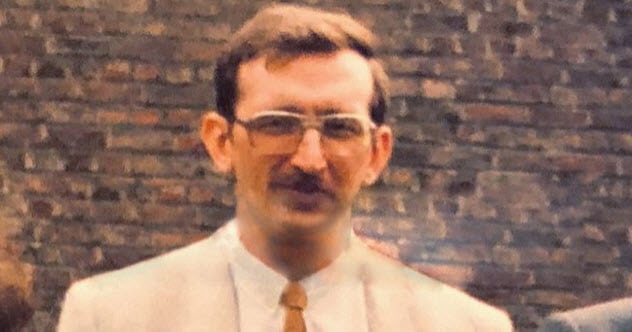
In 2017, the case exploded back into the news after reports that the brother of a deceased former Belgian policeman, Christiaan Bonkoffsky, claimed Bonkoffsky had confessed on his deathbed to being “The Giant.” The allegation seemed huge. Bonkoffsky had reportedly served in an elite gendarmerie unit, and some physical details appeared to fit long-discussed witness descriptions.
But the case did not suddenly wrap itself up like a tidy detective show. No convictions followed. Later reporting indicated that investigators did not confirm the deathbed claim as the solution to the case. The episode became another cruel twist: a possible answer that raised hope, then left families and the public still staring at the same blank wall.
9. Police Released an Old Mystery Photo Decades Later
In 2020, Belgian detectives reissued a photograph of an unknown man holding a SPAS-12 shotgun in a forest. The photo had reportedly been sent anonymously to investigators in 1986. Authorities appealed to the public for help identifying the man, saying the person in the image could be important to the case.
That is a horror-movie detail hiding inside a police file: an anonymous photograph, a man with a combat shotgun, a forest backdrop, and decades of silence. It also shows how long investigators continued trying to extract meaning from old evidence. But the appeal did not deliver the clean breakthrough the public hoped for. The mystery remained stubbornly alive.
10. The Investigation Was Officially Closed, Then New Leads Kept Emerging
In June 2024, Belgian federal prosecutors announced the closure of the investigation, saying active leads had been exhausted. The decision devastated victims’ families, especially because the case had already consumed roughly 40 years of effort. Prosecutors said modern methods had been used, including DNA comparison and ballistics analysis, but the results were not enough to bring charges.
Then came another twist. In 2025, courts and civil parties pushed for additional investigative steps, including witness hearings and a possible French connection involving two deceased French criminals, Thierry and Xavier Sliman. Whether those leads will produce anything meaningful remains uncertain. The horrifying part is that the case seems both closed and not closed, finished and unfinished, buried and still breathing.
Why the Brabant Killers Case Still Disturbs People
The Brabant Killers case is terrifying because it attacks several basic assumptions at once. People assume supermarkets are safe. They assume police investigations improve over time. They assume mass violence eventually produces answers. This case challenges all three assumptions.
It also has the structure of a nightmare: masked men, public places, children among the victims, tiny financial rewards, official mistakes, political shadows, and a sudden disappearance. Most true crime cases become less frightening when the motive is clear. The Brabant Killers case becomes more frightening the more you study it, because the motive remains foggy. Was it money? Terror? Power? Training? Political manipulation? A criminal gang with unusual discipline? A network protected by incompetence, corruption, or both?
The responsible answer is that we do not know. The useful answer is that uncertainty itself is part of the horror. A solved crime can become history. An unsolved crime stays present. It keeps asking questions at dinner, tapping on the window, and ruining everyone’s sleep schedule like the world’s worst podcast cliffhanger.
Experience Section: What It Feels Like to Research the Brabant Killers
Researching the Brabant Killers is not like reading a typical true crime story. Many cases follow a grim but familiar path: a crime occurs, investigators gather evidence, suspects emerge, someone is charged, and the public eventually gets a version of closure. This case refuses to behave. Every time you think you have found the central thread, it splits into five more threads, each one knotted around police mistakes, survivor memories, political tension, or a lead that arrived decades too late.
The first experience is confusion. Names appear in Dutch, French, and English. The gang is called the Brabant Killers, the Crazy Killers of Brabant, the Nijvel Gang, Bende van Nijvel, and Tueurs du Brabant. Even the geography can feel slippery for readers outside Belgium. Brabant was historically a Belgian province, later split into different regions, and the attacks crossed local boundaries. Before long, your browser tabs look like a detective’s corkboard, except instead of red string you have 27 open articles and a mild caffeine problem.
The second experience is disbelief. The crimes were brazen, public, and repeated. Witnesses survived. Vehicles were seen. Weapons were discussed. Suspects were considered. Yet the case still drifted into official failure. Modern readers are used to DNA databases, surveillance cameras, phone records, and digital footprints. The Brabant Killers operated before that world fully existed, but the more disturbing issue is not merely technological limitation. It is the long history of allegations about mishandled evidence, missed interviews, bureaucratic rivalry, and investigative tunnel vision.
The third experience is moral discomfort. True crime can easily become entertainment, and the Brabant Killers case resists that treatment. The details are too raw, especially the presence of children and families among the victims. The story may have the shape of a mystery, but it is not a puzzle box built for amusement. It is a record of people who went shopping, went to work, or drove home and never returned. Any article about the case has to keep that human reality in view.
The fourth experience is frustration. The 2024 closure of the investigation felt final, but later requests for additional steps showed that the families were not ready to let the case become a dusty archive. That persistence matters. It is easy for the public to move on because the events happened in the 1980s. Survivors cannot move on in the same way. For them, the case is not vintage crime content. It is memory, injury, grief, and unfinished justice.
Finally, researching the Brabant Killers leaves a reader with humility. The internet rewards confident explanations, but this case punishes overconfidence. Some theories are tempting. Some sound cinematic. Some may contain pieces of truth. But without convictions, evidence must be handled carefully. The most honest conclusion is also the most unsettling: the Brabant Killers created one of Belgium’s darkest criminal mysteries, and after four decades, the full truth remains just out of reach.
Conclusion: A Case That Still Refuses to Die
The Brabant Killers are not horrifying simply because they killed 28 people. They are horrifying because they exposed how fragile public safety can feel when violence is random, how painful justice becomes when evidence fails, and how long unanswered questions can haunt an entire country.
From the Aalst massacre to the mysterious “Giant,” from the anonymous shotgun photo to the possible French connection, every chapter seems to promise answers and then pull them away. The case is a reminder that the scariest true crime stories are not always the ones with the most elaborate monsters. Sometimes the most frightening sentence is much shorter: nobody was caught.













