
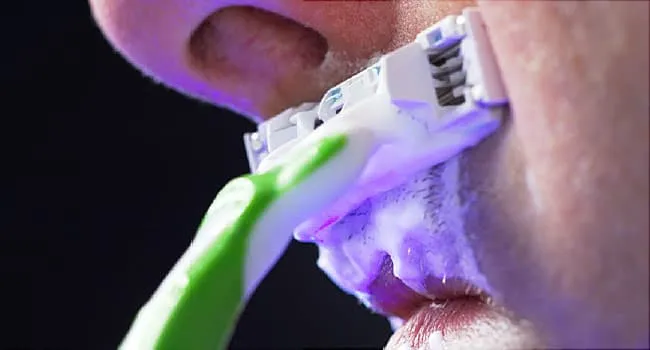
There is something wonderfully deceptive about shaving. You drag a sliver of steel across your face, leg, scalp, or underarm, and suddenly hundreds of stubborn hairs disappear. No tiny scissors. No dramatic sawing motion. No miniature lumberjack yelling “timber!” at every whisker. Just a blade, a little lubrication, and some surprisingly sophisticated physics.
So, how do razors cut hair for a close shave? The short answer is that an extremely thin blade edge concentrates force into a microscopic area until the hair shaft can no longer resist it. But a truly close shave involves much more than sharp steel. Hair hydration, blade geometry, shaving direction, friction, skin movement, hair elasticity, and even microscopic damage to the razor edge all affect what happens during a single stroke.
Understanding that process can help you get smoother results while reducing tugging, razor burn, ingrown hairs, and those mysterious little red bumps that appear just when your face was supposed to look especially respectable.
What Exactly Is a Razor Cutting?
The visible portion of a hair is called the hair shaft. Unlike the actively growing structures inside the follicle, the shaft above the skin consists largely of dead, keratinized cells. Its main structural component is keratin, a strong protein that gives hair its toughness.
A typical hair shaft contains an outer cuticle, a substantial cortex, and, particularly in thicker hairs such as beard hair, sometimes a central medulla. The cortex contributes much of the fiber’s mechanical strength.
That explains something every experienced shaver already knows without needing a microscope: facial stubble can be surprisingly stubborn. A beard may feel soft when long, but short whiskers behave like tiny springy wires.
Why Hair Can Resist a Razor
A razor is dramatically harder than hair, but cutting is not determined by hardness alone. The blade still has to create enough localized stress to break through the keratin structure.
When a razor edge meets a whisker, the hair may bend slightly before being severed. If the edge is dull, more force is required. Instead of producing an effortless slice, the razor begins pushing, bending, and tugging the strand before finally cutting it.
That pulling sensation is your face politely informing you that the blade has stopped doing its job efficiently.
The Physics Behind a Razor-Sharp Cut
The secret weapon of a razor is not enormous force. It is concentrated force.
Imagine pushing your palm against a cardboard box. Nothing exciting happens. Now imagine concentrating approximately the same pressure onto the edge of a knife. The outcome becomes dramatically different because the force is acting across a much smaller contact area.
A razor works on the same principle. Its cutting edge is honed incredibly thin. When that tiny edge contacts a hair, mechanical stress becomes concentrated along a very narrow line. Once that stress exceeds what the hair fiber can tolerate, the shaft deforms and fractures, producing a cut.
Biomechanical research on shaving has shown that several forces operate simultaneously: pressure pushing the razor toward the skin, drag as the cartridge moves across the surface, and the force required to cut individual hairs. A well-prepared, sharp razor reduces the amount of unpleasant pulling needed to complete that process.
Sharp Blades Cut; Dull Blades Push
This difference explains why replacing an old razor can feel almost magical.
A fresh blade meets a whisker with a finely defined edge and cuts with relatively little resistance. As a blade deteriorates, damaged areas along the edge interact less efficiently with hair. You compensate without realizing it by pressing harder or making more passes.
That is exactly what your skin did not request.
Why Water Makes Hair Easier to Shave
One of the easiest ways to improve a close shave requires no fancy razor technology whatsoever: hydrate the hair first.
Water penetrates the hair fiber and makes it more flexible and easier for a blade to cut. That is why dermatologists commonly recommend wetting the skin and hair before shaving, and why shaving immediately after a warm shower often feels dramatically smoother than attacking dry morning stubble.
Think of dry beard hair as uncooked spaghetti and properly hydrated beard hair as spaghetti that has spent some time in the pot. The comparison is not scientifically perfect, but your razor will understand the general concept.
Warm Water Plus Shaving Cream
A good shaving routine usually combines hydration with lubrication. Warm water softens the hair, while shaving cream, foam, soap, or gel helps maintain moisture and creates a slippery interface between blade and skin.
Lubrication matters because the razor is doing two jobs simultaneously. It must cut the hair while traveling extremely close to delicate skin. Reducing friction allows the cartridge or blade to move more smoothly, decreasing unnecessary scraping.
This is why dry shaving with a manual razor often feels rough even when the blade itself is reasonably sharp.
How a Razor Produces Such a Close Shave
A razor does not remove hair from the follicle. It cuts the exposed shaft close to the skin’s surface. The closer the blade can safely sever that shaft to where it emerges from the follicle, the smoother the result feels.
Blade angle plays an important role. The cutting edge must meet the hair efficiently without being directed deeply into the skin. Modern safety razors and cartridge systems control much of this geometry automatically through guards, cartridge positioning, blade spacing, and pivoting heads.
A traditional straight razor gives the user considerably more controland considerably more opportunity to discover why barbers practice before touching someone’s neck.
What Happens With Multiple Blades?
Modern multiblade cartridges can cut hair through a sequential process. As a leading blade engages a hair, the strand can be displaced slightly before being cut. Subsequent blades encounter the remaining hair almost immediately, allowing additional cutting very close to the skin before the strand fully settles back.
This helps explain why a multiblade cartridge can create an exceptionally smooth finish. It also explains why an ultra-close shave is not automatically the best choice for every person.
For someone prone to ingrown hairs, cutting a curly strand extremely short may increase the chance that its sharp tip will grow sideways or curve back into surrounding skin.
With the Grain vs. Against the Grain
Hair does not emerge in one universal direction. Beard hair may grow downward on the cheeks, sideways near the jaw, and seemingly follow a completely independent career plan on the neck.
Shaving with the grain means moving the razor in the direction that the hair naturally grows. This generally produces less resistance, less pulling, and a lower risk of irritation.
Shaving against the grain approaches hair from the opposite direction. It can produce an exceptionally close shave because the razor interacts more aggressively with the remaining stubble. However, it can also increase skin irritation and the likelihood of razor bumps in susceptible people.
A Practical Multi-Pass Strategy
People seeking extra smoothness can sometimes use progressive reduction instead of trying to achieve perfection in one heroic pass.
A typical approach is:
- First pass: shave with the grain.
- Second pass: shave across the grain if necessary.
- Final pass: consider carefully shaving against the grain only where your skin tolerates it.
The objective is to shorten the hair gradually instead of repeatedly bulldozing the same patch of skin.
Why Razor Blades Become Dull Even Though Hair Is Soft
Here comes one of shaving science’s best party facts: human hair is much softer than razor steel, yet hair can still damage a razor’s edge.
Researchers at MIT examined commercial razor blades under powerful microscopes and found that dulling was not simply a matter of the edge gradually becoming rounder. Under certain conditions, individual hairs could contribute to microscopic chipping along the blade.
The likelihood of damage was influenced by factors including the angle at which hair contacted the blade and microscopic variations in the steel structure. Once tiny damaged regions developed, further chipping could occur, progressively degrading cutting performance.
In other words, your beard does not overpower the razor. It slowly discovers the blade’s microscopic weak spots and annoys them repeatedly.
How You Know a Blade Is Losing Its Edge
You do not need laboratory equipment to recognize blade deterioration. Common clues include:
- Noticeably increased tugging
- Needing several strokes over one area
- Greater pressure required for the same result
- More redness after shaving
- Frequent missed hairs
- A rougher-feeling finish
A blade that still technically removes hair may therefore be past its comfortable working life.
Why Pressing Harder Usually Makes Shaving Worse
People naturally respond to poor cutting performance by pressing harder. Unfortunately, a razor is not a stubborn ketchup bottle.
Additional pressure pushes the shaving system more firmly against the skin. Instead of merely improving hair contact, it can increase friction and mechanical stress on the outer skin barrier. This raises the likelihood of irritation, tiny abrasions, nicks, and razor burn.
With a properly sharp blade, light controlled strokes should generally be enough. When substantial pressure suddenly becomes necessary, the better solution is often to improve preparation, clean the razor, or replace the blade.
The Difference Between Razor Burn and Razor Bumps
These terms are frequently used interchangeably, but they describe different problems.
Razor Burn
Razor burn is irritation associated with the physical shaving process. Friction, dry shaving, excessive pressure, repeated strokes, an old blade, or aggressive shaving direction can disrupt the outer skin barrier and produce redness, burning, tenderness, or itching.
Razor Bumps
Razor bumps are commonly associated with ingrown hairs. After a hair has been cut short, particularly when it is curly or coarse, its tip may penetrate surrounding skin as it grows. The resulting inflammatory response can create pimple-like bumps known medically as pseudofolliculitis barbae.
People with tightly curled facial hair can be especially susceptible. For them, the theoretical “closest possible shave” may not be the healthiest target. Leaving a tiny amount of stubble can sometimes produce happier skin.
How to Get a Close Shave Without Punishing Your Skin
The science translates into a remarkably simple routine.
1. Hydrate Before Shaving
Shave during or after a warm shower, or hold a warm damp cloth against the area first. Give water enough time to soften the hair.
2. Apply Adequate Lubrication
Use shaving cream or gel rather than sending a dry blade into battle. Cover the entire shaving area and avoid letting the product dry before the blade arrives.
3. Use a Sharp, Clean Razor
Hair, shaving product, skin cells, and debris can collect between blades. Rinse frequently while shaving so the cutting edges remain exposed.
4. Map Your Hair Growth
Before shaving, run your fingers over the stubble from different directions. The rougher direction is usually against the grain. Knowing the growth pattern is particularly useful around the neck.
5. Start With the Grain
Use short, controlled strokes in the direction of hair growth. This often removes most visible stubble with the least irritation.
6. Use Light Pressure
Let the blade geometry and sharp edge perform the cutting. Do not attempt to remove your beard and the upper floor of your epidermis in the same pass.
7. Minimize Repeated Passes
Repeatedly shaving the same spot increases blade contact with skin. If another pass is necessary, reapply lubrication rather than scraping the area dry.
8. Moisturize Afterward
A gentle moisturizer can help support the skin barrier after shaving. People with sensitive skin may prefer fragrance-free or alcohol-free products.
Do More Blades Always Mean a Better Shave?
No single blade configuration is best for everyone.
Multiple blades can provide an efficient, very close shave because several cutting edges work in sequence. A cartridge also makes blade angle easier to control for inexperienced users.
Single- and double-blade systems, however, may be preferable for some people who experience frequent razor bumps because they can reduce repeated ultra-close cutting. Electric shavers often leave hair slightly farther above the skin, which can sacrifice some smoothness but improve comfort for certain users.
The best razor is therefore not necessarily the one with the greatest number printed dramatically on the package. It is the razor that cuts efficiently while keeping your particular skin comfortable.
Does Shaving Make Hair Grow Back Thicker?
No. Shaving cuts the hair shaft above the skin. It does not change the follicle underneath, where hair growth is controlled.
Freshly shaved hair can temporarily feel thicker because the blade creates a relatively blunt cross-section. As that short strand grows, the blunt end feels coarse compared with longer hair that has naturally tapered and weathered.
The razor has changed the shape of the exposed tipnot upgraded your follicles to industrial-strength beard production.
Practical Shaving Experiences: What You Notice When the Science Meets the Bathroom Mirror
Technical descriptions of blade geometry are useful, but the mechanics become much easier to understand when you pay attention to what happens during an ordinary shave. Several common shaving experiences provide surprisingly good clues about what the razor is doing.
The Fresh-Blade Experience
One of the most obvious comparisons is shaving with a cartridge that has been used repeatedly and then switching to a fresh one. The difference is often noticeable on the first stroke. The new blade moves through stubble with less resistance, produces less audible scraping, and requires very little pressure.
The important lesson is not simply that “new blades are better.” It demonstrates how much cutting efficiency depends on edge condition. When a worn blade begins tugging, people frequently compensate by pushing harder. The shave may still look acceptable afterward, but the skin often feels warmer and more irritated because additional mechanical force was required.
The Shower Shave vs. the Rushed Shave
Another useful real-world comparison is a shave performed after several minutes in a warm shower versus a rushed shave over barely damp hair.
After thorough hydration, stubble often feels less rigid. The razor glides more easily, and stubborn areas require fewer repeat strokes. When the same hair is comparatively dry, the blade may catch or skip slightly as it encounters individual strands.
This is why preparation can sometimes improve a mediocre razor more effectively than buying an extravagant shaving cream with a name that sounds like a private members’ club.
Learning the Weird Geography of Your Neck
Many people initially assume that beard hair simply grows downward. Then they inspect the neck carefully and discover chaos.
One patch might grow toward the collarbone. Another may grow sideways toward the ear. A small section may form a swirl. Shaving straight downward across every area therefore means you could be shaving with the grain in one spot and directly against it two inches away.
People who take a few days to observe their natural growth pattern often find that irritation decreases once they change stroke direction accordingly.
The Temptation to Chase Perfect Smoothness
Perhaps the most important shaving experience occurs after the face already looks clean.
You run a hand over the jaw and detect one tiny patch of texture. The rational part of your brain says, “That is fine.” The shaving enthusiast says, “We are going back in.”
Then comes another pass. And another. Soon the microscopic stubble is gone, but the skin is red.
This demonstrates the fundamental compromise behind a close shave. Removing the last fraction of visible hair usually requires increasingly aggressive blade contact. At some point, every additional improvement in smoothness comes with a higher irritation cost.
For someone whose hair grows relatively straight and whose skin tolerates shaving well, an ultra-close final pass may be completely comfortable. Someone prone to ingrown hairs may get better long-term results by stopping slightly earlier.
Finding Your Personal Sweet Spot
A useful experiment is to change only one variable at a time over several shaves. Start by improving hydration. Then test a fresher blade. Next, map hair direction. Finally, reduce pressure and the number of passes.
Pay attention to how the skin feels immediately afterward and the following daynot just whether it feels perfectly smooth five minutes after shaving.
The best routine is the one that delivers acceptable closeness without creating a cycle of inflammation, bumps, and recovery. Shaving is ultimately an interaction among blade design, hair type, skin characteristics, and technique. Your bathroom mirror can therefore become a surprisingly effective little biomechanics laboratory, although goggles and a white coat remain optional.
Conclusion: A Close Shave Is Controlled Cutting, Not Brute Force
A razor achieves a close shave through remarkably precise mechanics. Its microscopic edge concentrates force onto individual hair shafts, breaking through keratin fibers while traveling only fractions of a millimeter above the skin. Hydration makes hairs easier to cut, shaving products reduce friction, sharp blades reduce tugging, and proper stroke direction helps control irritation.
Meanwhile, chasing excessive closeness can create problems of its own. Repeated strokes, aggressive pressure, dull blades, and cutting extremely close can contribute to razor burn or ingrown hairs. For that reason, the smoothest possible shave is not necessarily the best shave for every person.
The real secret is simpler: soften the hair, lubricate the skin, use a sharp blade, understand your growth pattern, and apply only as much cutting as your skin actually needs. Your razor should behave like a precision instrumentnot a lawn mower with unresolved anger issues.













