
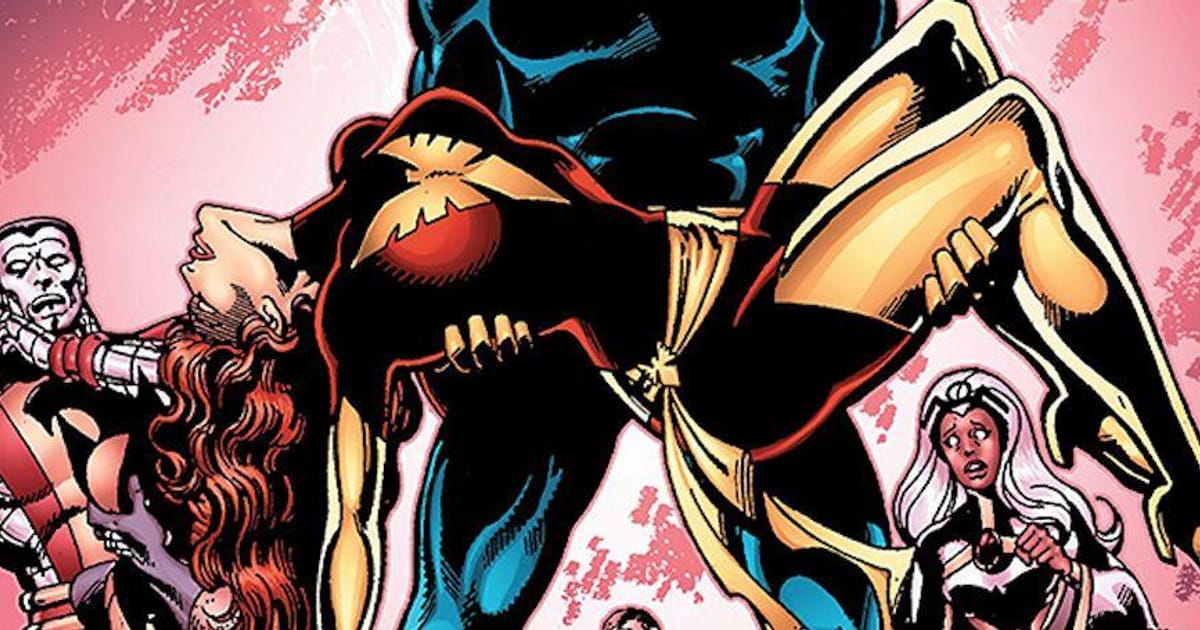
Jean Grey has died so many times that “death” should probably stop sending her calendar invites. In Marvel Comics, few characters have turned the revolving door between life, death, cosmic rebirth, and “surprise, I’m back again” into such a dramatic art form. But the real answer to how many times Jean Grey has died and come back to life is not as simple as a single number slapped on a trading card.
The honest answer is this: Jean Grey has had at least five major, story-defining deaths and resurrections in mainstream X-Men continuity. If you count Phoenix duplicates, temporary Phoenix-body deaths, near-deaths, time-displaced versions, and Krakoan resurrections, the number can climb higher. That is why comic fans can argue “one,” “five,” “seven,” or “too many to fit on a birthday cake” and still have a case.
So let’s separate the cosmic fire from the editorial smoke. This guide breaks down Jean Grey’s biggest deaths, how she returned, why the count is confusing, and why Marvel keeps sending its most famous redhead back through the flames.
The Short Answer: How Many Times Has Jean Grey Died?
For most readers, the best practical answer is: Jean Grey has died and returned five major times in the main Marvel Comics timeline. Those major moments are connected to the Phoenix Saga, the Dark Phoenix Saga retcon, New X-Men, Phoenix Endsong, House of X, and the 2023 Hellfire Gala fallout.
However, the “official fan debate” gets messy because Jean is not just Jean. She is also tied to the Phoenix Force, a cosmic entity of death and rebirth. Sometimes Jean dies. Sometimes the Phoenix dies while wearing her face. Sometimes her body is gone while her mind or spirit is hanging out in the White Hot Room, which is basically Marvel’s most intense cosmic waiting room.
Why Counting Jean Grey’s Deaths Is So Complicated
Most superheroes die once, come back once, and call it a day. Jean Grey said, “Cute. Let’s make it metaphysical.” The confusion begins because Marvel later revealed that the being who died in the original Dark Phoenix Saga was not exactly Jean’s original physical body. The Phoenix Force had copied her form, carried part of her essence, and placed the real Jean in a healing cocoon under Jamaica Bay.
That means the most famous Jean Grey death is both a Jean Grey death and not a Jean Grey death, depending on how strict you are. If you count the Phoenix copy as Jean because it had her memories, feelings, relationships, and soul-level connection, then yes, that death counts emotionally. If you only count Jean’s original body, then it becomes more complicated.
Comic book continuity: making tax law look like a coloring book since 1963.
1. The Phoenix Saga: Jean’s First Brush With Death
What happened?
Jean’s first major death-adjacent moment came during the original Phoenix Saga. The X-Men were returning to Earth in a damaged space shuttle, and Jean volunteered to pilot it through dangerous radiation. She was exposed to a lethal dose while trying to save her friends.
At that moment, the Phoenix Force responded to Jean’s psychic cry. It placed Jean’s injured body in a regenerative cocoon and created a Phoenix body based on Jean’s form and consciousness. To the X-Men, Jean seemed to have survived and emerged from Jamaica Bay transformed into Phoenix.
Did Jean really die?
This is where the debate starts. In the emotional reading, yes: Jean sacrificed herself and was reborn as Phoenix. In the technical retcon reading, her body survived in suspended healing while the Phoenix duplicate lived in her place.
Either way, this is the event that made Jean Grey and resurrection permanently linked. From this point forward, every Jean Grey story carried a faint smell of smoke and destiny.
2. The Dark Phoenix Saga: The Most Famous Jean Grey Death
What happened?
The Dark Phoenix Saga is the death that made Jean Grey a legend. Manipulated by Mastermind and overwhelmed by cosmic power, Phoenix became Dark Phoenix. Her destructive power reached a terrifying level, leading the Shi’ar Empire and other cosmic authorities to decide she was too dangerous to live.
On the Moon, the X-Men fought the Imperial Guard for her fate. In the end, Phoenix regained enough control to sacrifice herself rather than risk destroying more lives. It remains one of the most iconic endings in superhero comics.
How did she come back?
Years later, Marvel revealed that the original Jean Grey had been preserved in a cocoon under Jamaica Bay. She returned in connection with Fantastic Four #286 and X-Factor #1, allowing the original five X-Men to reunite.
This retcon changed everything. It allowed Jean to return without making her fully responsible for every act committed by Dark Phoenix, while still leaving her emotionally and spiritually tied to those events. Clean? Not exactly. Dramatic? Absolutely.
3. New X-Men: Jean Dies Again In Grant Morrison’s Run
What happened?
Jean’s next major death came during Grant Morrison’s New X-Men. First, Jean and Wolverine were trapped on Asteroid M as it moved toward the Sun. Wolverine fatally wounded her to spare her prolonged suffering, but the Phoenix connection awakened again and saved them.
Shortly afterward, Jean faced Xorn, who was posing as Magneto. In New X-Men #150, Xorn attacked Jean with a deadly electromagnetic pulse. This time, even the Phoenix power could not keep her standing in the ordinary world. Jean died in Cyclops’ arms, giving readers one of the most painful X-Men moments of the modern era.
How did she come back?
Jean’s spirit moved into the White Hot Room, the cosmic space deeply connected to the Phoenix Force. In the future-set finale of Morrison’s run, Jean as the White Phoenix of the Crown helped alter events so that Cyclops would keep the X-Men alive by moving forward instead of collapsing under grief.
Jean did not fully return to everyday life right away. This death kept adult Jean absent for years, making her eventual comeback feel much bigger than a standard comic book reset button.
4. Phoenix Endsong: A Resurrection That Went Very Wrong
What happened?
In X-Men: Phoenix Endsong, the Phoenix Force was resurrected too early and in a weakened state. It found Jean’s body and brought her back, but the process was unstable. Jean herself resisted because she knew the Phoenix was not ready and neither was she.
This story included several temporary fatal moments, including Wolverine repeatedly wounding Jean’s Phoenix-possessed body in an attempt to force the Phoenix back toward the White Hot Room. Eventually, Jean became the White Phoenix again, saved her friends, and returned to the White Hot Room.
Does this count as another death?
Yes, but with a footnote large enough to need its own parking spot. Phoenix Endsong is not a simple “Jean dies, Jean comes back” story. It is more like “Jean is partially resurrected, the Phoenix makes everything weird, several temporary deaths happen, and cosmic therapy is urgently needed.”
For a clean count, most readers treat Phoenix Endsong as one major resurrection cycle rather than counting every temporary wound as a separate full death.
5. Phoenix Resurrection: Jean Returns For Real
What happened?
After years away from the main X-Men cast, Jean returned in Phoenix Resurrection: The Return of Jean Grey. The Phoenix Force brought her back and attempted to bond with her again. Jean found herself in a strange psychic reality, slowly realizing that something was wrong.
The X-Men helped her remember who she was, what she had lost, and what the Phoenix wanted. Instead of embracing the cycle again, Jean rejected the Phoenix and chose to live as herself.
Why this return mattered
This was not just another comeback. It was Jean drawing a boundary with the cosmic force that had defined her for decades. For once, the story was not simply about Jean being powerful. It was about Jean choosing identity, memory, grief, and personal agency over cosmic destiny.
In other words, Jean did the superhero equivalent of saying, “I appreciate the flaming bird aesthetic, but I am trying boundaries now.”
6. House of X: Jean Dies During The Mother Mold Mission
What happened?
In Jonathan Hickman’s House of X, Jean joined a dangerous mission against Orchis to destroy Mother Mold, a Sentinel-creating threat that could lead to Nimrod and a catastrophic future for mutants. The mission succeeded, but the X-Men team was killed in action.
Jean survived part of the disaster, but Sentinels eventually destroyed her escape craft. It was a brutal team sacrifice and one of the first major demonstrations that the new Krakoan era was playing by different rules.
How did she come back?
Jean and the other fallen X-Men were restored through Krakoa’s Resurrection Protocols. The Five recreated mutant bodies, while Cerebro backups restored memories and identities. This system turned mutant death into something closer to a national emergency procedure than a final ending.
For Jean, it added another major death and return to her already crowded cosmic résumé.
7. The 2023 Hellfire Gala: Jean Dies Again During Fall Of X
What happened?
The 2023 Hellfire Gala was supposed to be a glamorous mutant event. Instead, Orchis turned it into a nightmare. Jean was attacked by Moira MacTaggert, weakened by Blightswill, and killed during the chaos. Even as she was dying, Jean continued helping the X-Men strategically and emotionally.
This death was especially important because Krakoa’s resurrection system was also disrupted. Jean could not simply be restored the usual way. Marvel used the moment to send her back into the mystery of the Phoenix, memory, choice, and the White Hot Room.
How did she come back?
Jean’s return unfolded through the Fall of X era, including her 2023 solo series and the larger endgame of the Krakoan storyline. She ultimately reconnected with the Phoenix on a grand cosmic scale and moved into a new role as Phoenix in the 2024 series.
By this point, death was not just something Jean escaped. It had become part of how Marvel explored her identity: woman, mutant, hero, Phoenix, survivor.
So What Is The Final Count?
Here is the cleanest way to count Jean Grey’s deaths:
Strict count: about five major deaths and returns
If you count only the biggest, story-defining Jean Grey death-and-return cycles, the number is around five: the Phoenix/Dark Phoenix era, New X-Men, Phoenix Endsong, House of X, and the 2023 Hellfire Gala/Fall of X resurrection arc.
Expanded count: seven or more
If you count temporary Phoenix-body deaths, Wolverine’s repeated fatal actions in Phoenix Endsong, time-displaced Jean Grey, and near-immediate revivals, the number can rise to seven or more.
Fan-joke count: infinity with better hair
And if you count every version, alternate timeline, Phoenix echo, future rebirth, and spiritual manifestation, then Jean Grey has died enough times that the Grim Reaper probably has her listed under “frequent flyer.”
Why Jean Grey Keeps Coming Back
Jean Grey returns because resurrection is built into her symbolism. The Phoenix is not just a power upgrade. It is a mythological idea: destruction, renewal, fire, rebirth, and transformation. Jean’s deaths are rarely random. They usually mark the end of one era and the beginning of another.
Her first Phoenix transformation turned the original X-Men story into cosmic drama. The Dark Phoenix Saga changed superhero tragedy forever. Her New X-Men death closed a bold modern chapter. Her Krakoan resurrection introduced a new mutant culture. Her Fall of X return helped reshape her into the Phoenix again for a new era.
That is why Jean’s deaths still matter, even though readers joke about them. Yes, she comes back often. But when the story works, she does not return unchanged. Each resurrection asks a new question: Is Jean a person, a symbol, a force, or all three?
Reader Experience: Why Jean Grey’s Deaths Still Hit Hard
Reading Jean Grey stories can feel like watching someone repeatedly walk into a burning building and come out carrying both trauma and plot importance. There is spectacle, of course. The Phoenix imagery is huge: fire, stars, cosmic judgment, glowing eyes, dramatic poses that could melt a refrigerator. But the reason these stories last is not just because Jean is powerful. It is because she is human underneath all that cosmic flame.
For many readers, the Dark Phoenix Saga feels unforgettable because it is not simply about a superhero losing control. It is about fear: fear of hurting people, fear of becoming something unrecognizable, fear that love may not be enough to save someone. Jean’s sacrifice works because the X-Men do not want to let her go, and neither does the audience.
Her later deaths create a different experience. In New X-Men, Jean’s death feels quieter and more personal. It is not just a cosmic explosion; it is the end of a marriage, a school era, and a version of the X-Men that had been evolving rapidly. Readers who followed that run often remember the emotional aftershock more than the mechanics of the death itself.
Then comes the Krakoan era, where resurrection becomes almost normal. At first, that makes death feel less frightening. If the Five can bring everyone back, why worry? But Jean’s history makes that question more interesting. She had been living with resurrection long before Krakoa made it official policy. Her story becomes a way to ask whether coming back always means healing, or whether some wounds follow you through every new body and every fresh start.
The best way to enjoy Jean Grey’s death-and-rebirth timeline is not to treat it like a scoreboard. It is more like a character study with flames. Each return reveals what Marvel wants Jean to represent at that moment: sacrifice, guilt, survival, independence, leadership, cosmic responsibility, or renewal.
That is also why new readers should not be embarrassed if they get confused. Everyone gets confused. Longtime X-Men fans can explain the Phoenix retcon with confidence right up until someone asks, “So was that really Jean?” Then the room goes quiet, someone opens a wiki, and three hours disappear.
My best advice for experiencing Jean Grey’s story is to read it emotionally first and technically second. Start with the big beats: Phoenix rises, Dark Phoenix falls, Jean returns, Jean dies again, Jean chooses herself, Jean becomes something larger. After that, the retcons and continuity details become seasoning instead of the whole meal.
Jean Grey’s many deaths are not a flaw by themselves. They are part of her strange magic as a character. She is the X-Men’s reminder that endings are powerful, but they are not always final. Sometimes the ashes are not the end of the story. Sometimes they are just Marvel clearing the stage for one more spectacular entrance.
Conclusion
So, how many times has Jean Grey died and come back to life? The most useful answer is that Jean Grey has experienced about five major death-and-resurrection cycles in core Marvel continuity, with an expanded count of seven or more depending on how you treat Phoenix duplicates, temporary deaths, and alternate versions.
But the number is only part of the fun. Jean Grey matters because every death and return changes the X-Men around her. She is not just a character who comes back. She is a character who forces Marvel to ask what rebirth really means. And honestly, if your codename is Phoenix, staying dead forever would be bad branding.
Note: This article uses a practical continuity count. Marvel stories involving alternate timelines, time-displaced Jean Grey, Phoenix echoes, and symbolic deaths may produce different totals depending on the counting method.













