
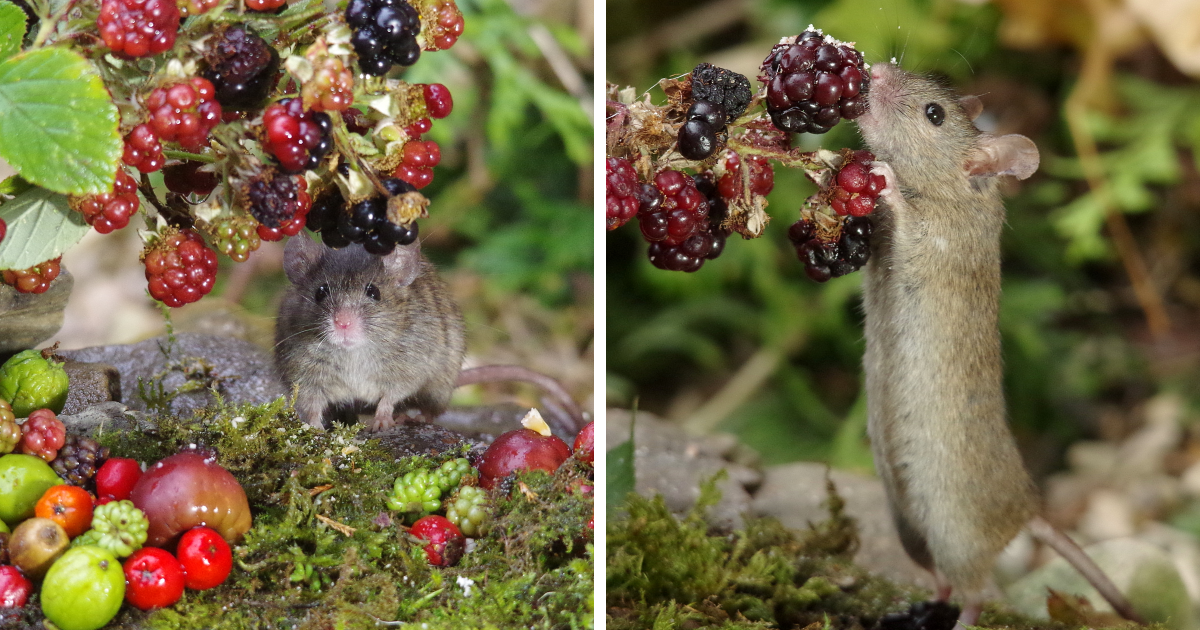
Some photos are technically brilliant. Some photos are emotionally brilliant. And every once in a while, a picture wanders in wearing both hats, carrying a blackberry, and stealing the entire internet’s heart. That is the magic behind I Photographed The Mouse By The Bramblesa title that sounds like the first line of a children’s book, a nature diary, and a very tiny Oscar campaign all at once.
At first glance, the appeal seems obvious: a mouse standing on its back legs, reaching for berries in a tangle of brambles, looking like a miniature forager with a better work ethic than most of us before coffee. But the deeper charm of this scene is not just cuteness. It is ecology, timing, storytelling, and photography all colliding in one thorny, berry-filled corner of the garden.
This article explores why the image works so well, what it reveals about backyard wildlife, why brambles are more than a messy patch of thorns, and how photographers can capture similar moments without turning into the overly enthusiastic neighbor who accidentally scares every living thing out of the yard. If you love wildlife photography, small mammal photography, backyard nature, or simply the sight of a mouse behaving like a polite fruit sommelier, you are in the right place.
Why This Tiny Scene Feels So Big
The phrase I Photographed The Mouse By The Brambles works because it promises more than a photo. It promises a moment. Not a generic nature shot. Not “rodent near plant.” Not “small blur vaguely near blackberry bush.” It suggests a lived encounterone of those quiet, lucky episodes where the world seems to pause long enough for a camera and a human to keep up.
That is the secret sauce of memorable nature photography: it tells a story before you even see the image. A mouse by the brambles is not standing in an empty studio. It exists in a habitat. The brambles matter. The berries matter. The posture matters. The reach matters. Even the thorns matter. Everything in the frame says this animal belongs to a real place, and that sense of place gives the image emotional weight.
Great wildlife images often work because they feel both familiar and surprising. We recognize hunger, curiosity, balance, caution, and determination. Yet we do not often get to see those qualities in something as small and quick as a mouse. Suddenly, an ordinary garden turns cinematic. One stem becomes a ladder. One berry becomes treasure. One mouse becomes the lead actor in the tiniest epic ever filmed.
Why the Mouse Was There in the First Place
Brambles Are Basically Nature’s Pantry With Security Fencing
There is a practical reason a mouse would show up around brambles. Blackberry and similar bramble thickets offer food, cover, and structure. In plain English, they are part snack bar, part fortress, part escape route. Dense berry-bearing shrubs support wildlife because they provide seasonal fruit, tangled protection from predators, and sheltered little pathways through the understory.
For small mammals, that kind of habitat is gold. A mouse does not want a wide-open lawn that screams, “Congratulations, you are now lunch.” It wants cover. It wants brushy edges. It wants places where stems, leaves, fallen canes, and shade create a maze that larger predators have to work harder to navigate. Brambles may look unruly to gardeners with perfectly sharpened pruners, but to a mouse they can feel like a luxury apartment with snacks included.
That matters because many mice and mouse-like small mammals use shrubby, brushy, or woodland-edge habitat. In North America, species such as deer mice and white-footed mice are strongly associated with places that offer cover and foraging opportunities. A patch of dense growth near berries is not random scenery. It is exactly the kind of environment where a tiny, alert, fast-moving animal can feed while keeping at least one whisker tuned to danger.
Berries, Seeds, Insects, and Opportunism
People often imagine mice as strict grain fanatics, as if every mouse spends its entire life shopping in the cereal aisle. Real life is messier and more interesting. Many wild mice are opportunistic omnivores. They eat seeds, fruits, nuts, flowers, and insects, and some species store food when conditions allow. So a mouse reaching for a ripe blackberry is not some absurd fairy-tale plot twist. It is perfectly believable behavior.
That detail is one reason the original image resonated so widely. The mouse is not doing a circus trick. It is being a mouse. A very photogenic mouse, yes, but still a mouse making logical use of a valuable food source. The photo feels magical because the behavior is real.
What the Image Reveals About Backyard Wildlife
One of the best things about backyard wildlife photography is that it reminds people nature is not only “out there” in remote parks and dramatic mountain valleys. Sometimes wildness is fifteen feet from the patio, just behind the shrubs, under the fence, near the compost pile, or by the blackberry canes you keep meaning to tame next weekend. Next weekend, of course, is where many gardening ambitions go to retire.
A mouse by the brambles shows how even modest habitat can support meaningful animal behavior. Shrubs, seed heads, brush piles, native plants, dead wood, and patches of dense cover can create a living network for small creatures. When people remove every tangle, every fallen branch, every “messy” edge, they often erase the very places wildlife uses to rest, hide, and forage.
That does not mean every yard should become a jungle with a homeowners association complaint attached. It means a garden can be managed with a little more ecological imagination. A tidy yard and a lifeless yard are not the same thing, and a slightly wild edge may be where the most interesting stories happen.
How to Photograph a Mouse by the Brambles Without Becoming the Villain
Let the Animal Stay in Charge
If a photo like this inspires you to grab your camera and race outside in your slippers, good. If it inspires you to chase a mouse through the garden like an overcaffeinated documentary crew, less good. Ethical wildlife photography starts with one simple rule: the animal’s well-being comes first.
That means giving the subject space, avoiding stress, and resisting the temptation to manipulate the scene for a cuter frame. Wildlife photographers are often encouraged to use distance, patience, and long lenses rather than closeness, pressure, or interference. If the animal changes behavior because of your presence, freezes unnaturally, bolts, or abandons cover, that is your cue to back off.
It is also worth being careful about food. In the original anecdote, the mouse was given seeds and peanuts as the berries ran low. That detail feels sweet, but modern ethical wildlife photography leans toward caution with baiting or feeding, especially when it changes behavior or conditions animals to expect handouts. The best images usually come from observation, not stage management. Nature is already dramatic. It does not need a producer.
Respect the Habitat Too
The brambles are not just background decoration. They are part of the survival system. Do not cut branches, clear leaves, or open up the cover just to get a cleaner shot. The messy frame may be the whole point. Those tangles protect the animal. In fact, a few stems crossing the edge of the frame can add intimacy and realism, making the image feel like a genuine encounter instead of a sanitized zoo-poster version of the wild.
Camera Tips for Small Mammal Photography
Use More Reach Than Ego
For tiny wildlife subjects, longer lenses are your best friend. A telephoto or a flexible zoom lets you stay farther away while still filling the frame. That helps in two ways: it is safer and calmer for the animal, and it gives you a better chance of getting natural behavior instead of the universal mammal expression for “absolutely not.”
Fast shutter speeds matter too. Mice are quick, twitchy, and not especially interested in helping you test your autofocus. If the animal is climbing, reaching, nibbling, or popping in and out of cover, prioritize a shutter speed that freezes motion. A little noise from a higher ISO is usually easier to forgive than a brilliant photo of a berry with a decorative blur attached.
Get Low, Focus on the Eye, and Keep the Setting
One of the simplest ways to improve nature photography is to get down to the animal’s eye level. That perspective makes the viewer feel present in the scene rather than looming over it like a judgmental giant. Eye-level images create intimacy, and with a subject this small, intimacy is the whole game.
Focus on the eye whenever possible. Sharp eyes pull viewers into the frame. Then let the brambles stay visible enough to tell the story. This is not just a mouse portrait. It is a mouse-in-habitat image. The berries, canes, shadows, and protective tangle explain why the encounter happened. Crop too tight, and you lose the entire plot.
Soft natural light helps as well. Early morning and late afternoon often create the kind of gentle light that flatters fur, berries, and leaves while keeping contrast from getting too harsh. Bright midday sun can turn a lovely wildlife moment into a technical argument between highlights and shadows.
Why the Photo Works as a Piece of Storytelling
The real strength of I Photographed The Mouse By The Brambles is not only that the subject is cute. It is that the scene contains action, setting, tension, and character. The mouse is reaching. The berry is just out of easy reach. The brambles are protective but prickly. The viewer can almost predict the next move.
That is why the image feels larger than life. It compresses the daily labor of a wild creature into one readable instant. We see balance, appetite, caution, and determination in a single frame. It is funny without being silly, tender without being sugary, and natural without feeling dull. In other words, it does exactly what the best wildlife storytelling does: it helps people care.
And once people care, they start noticing the overlooked corners of the world. The bramble patch looks different. The garden edge looks different. Even the “pest” category starts to wobble a bit when the so-called pest is standing on tiptoe like a berry critic with excellent taste.
Extended Experience: What It Feels Like to Photograph a Mouse by the Brambles
There is a particular kind of quiet that settles over a garden when you decide to stop trying to control it and simply watch. Not the silence of emptiness, but the silence of attention. Leaves move. A cane rocks slightly. A berry glows darker than the rest. Then something small shifts where a second ago there was only shadow, and suddenly the whole world shrinks to the space between two thorny stems.
That is what makes the experience of photographing a mouse by the brambles so memorable. It never feels grand in the moment. No dramatic soundtrack plays. No one announces that a once-in-a-lifetime wildlife event is about to occur. You are just there, waiting, holding still, trying not to breathe like a malfunctioning accordion, and then a mouse appears with the kind of purpose that makes humans seem wildly inefficient.
The first surprise is how deliberate the animal seems. A mouse does not wander toward the berries like a confused extra in the background of a movie. It studies, pauses, tests the stems, rises, balances, and reaches with astonishing precision. It knows the route, knows the risk, and knows exactly which berry is worth the effort. Watching that process changes the way you think about small creatures. They stop being background life and become individuals with timing, judgment, and attitude.
The second surprise is how much patience the moment requires from the photographer. You cannot command a mouse to repeat the move. You cannot politely request a better angle, a slower reach, or one more glance toward the lens. You wait for the head turn. You wait for the paw placement. You wait for the second when the body forms a clean line against the leaves and the berry catches a touch of light. Most of the experience is not clicking. It is noticing.
And then, when the frame finally comes together, it feels almost absurdly joyful. Not because you conquered nature or captured something rare and mysterious, but because for one tiny instant you were allowed to witness a life continuing exactly as it should. The mouse was not performing. The brambles were not props. The scene did not belong to the camera. The camera just happened to be invited.
That is also why the memory tends to outlast the photo. You remember the texture of the garden, the way the canes crossed like scribbled lines, the little stop-and-go movement, and the ridiculous dignity of a creature no bigger than your hand behaving like an acrobat, a forager, and a food critic all at once. You remember how quickly the moment ended. One second the mouse is upright among the berries; the next it vanishes into cover as if the garden folded over it like water.
In the end, the experience is not just about photographing a mouse. It is about being reminded that wonder does not always arrive in sweeping landscapes or once-a-year expeditions. Sometimes it lives in the backyard, under a thorny hedge, nibbling fruit with excellent timing. And if you are lucky enough to see itand patient enough to photograph ityou come away with more than a picture. You come away a little more alert to the quiet genius of ordinary wild things.
Conclusion
I Photographed The Mouse By The Brambles endures as a captivating idea because it blends sweetness with truth. The photo works not only because the mouse is adorable, but because the habitat makes sense, the behavior is believable, and the storytelling feels honest. Brambles provide food and protection. Mice use dense cover wisely. Good wildlife photography rewards patience, restraint, and respect. Put all of that together, and a backyard scene can feel every bit as rich as a much bigger wilderness story.
That may be the most useful lesson of all. You do not always need a plane ticket, a safari truck, or an impossible amount of expensive gear to make meaningful wildlife photos. Sometimes you need observation, care, good light, and the willingness to see a so-called ordinary animal as a worthy subject. Because once a mouse rises through the brambles toward a ripe berry, “ordinary” is officially off duty.














