
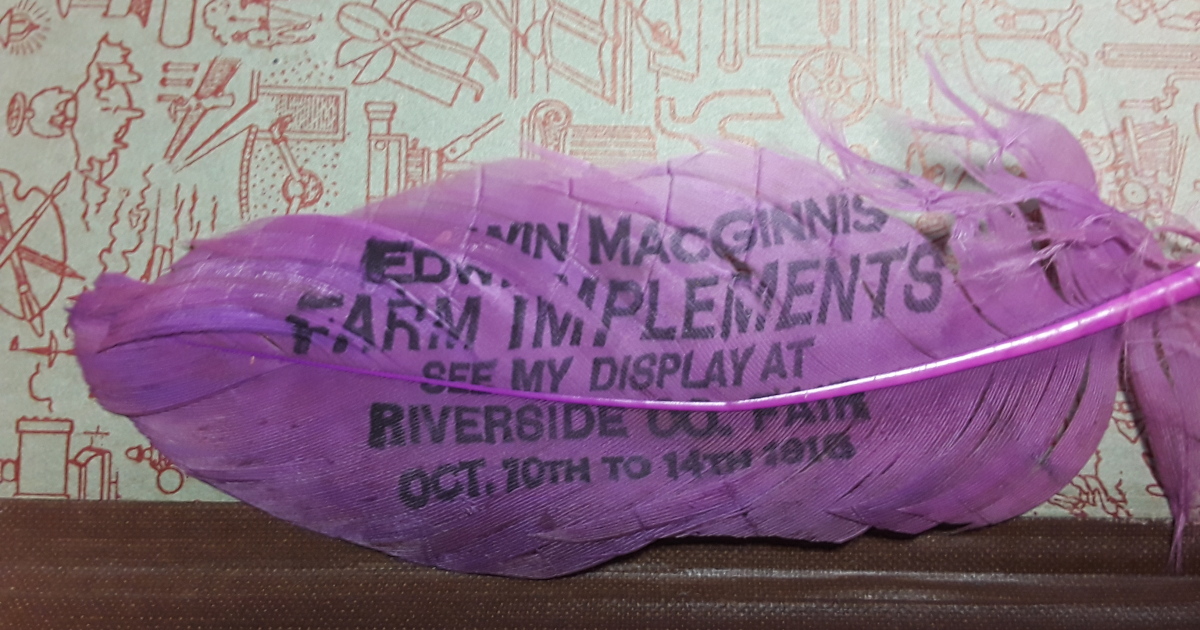
Every serious reader has experienced it: you are peacefully moving through a book when one sentence suddenly grabs your brain by the collar. Perhaps it is an obscure historical fact, an oddly useful scientific explanation, a handwritten message from a previous owner, or a fictional observation that describes your life more accurately than your closest friends do.
You stop reading. You reread the passage. Then you stare into the middle distance like someone in a movie who has just uncovered a government conspiracy.
The most interesting things found in books are not always the facts that sound impressive at dinner parties. Sometimes the discovery is personal. A paragraph can correct a belief you have carried for years, introduce you to a forgotten person, explain an everyday object, or provide the exact words for a feeling you could never name.
That is what makes this question so irresistible: What is the most interesting thing you have ever found in a book?
Why Book Discoveries Feel So Memorable
Books create a special environment for discovery. Unlike a rapidly moving social media feed, a book gives an idea time to unfold. The writer can provide context, evidence, examples, exceptions, and the occasional 12-page detour about the history of spoons.
In a Pew Research Center survey, learning, gaining knowledge, and discovering information was the most commonly named reason readers gave for enjoying books. Other readers valued imaginative escape, entertainment, and quiet relaxation.
Those motivations often overlap. A novel may entertain you while quietly changing your understanding of grief. A history book may teach you about an election while revealing how ordinary people behave under pressure. A cookbook may begin with soup and somehow end with a lesson about chemistry, migration, agriculture, and why your grandmother never measured anything.
The best book discoveries do more than add information. They reorganize information already inside your head.
Fascinating Facts That Make the Ordinary World Stranger
Some of the most satisfying discoveries explain things we see every day but rarely question. Why are manhole covers usually round? How did people coordinate time before standardized clocks? Why do old buildings have sealed doors, strangely placed windows, or metal stars attached to their walls?
A good nonfiction book can turn a walk around the block into an expedition. Suddenly, street signs, sewer grates, squirrels, bricks, weeds, and utility markings all seem to be communicating in a language you have only just begun to understand.
The “How Did I Never Know That?” Fact
This category includes facts that seem unbelievable only because nobody thought to mention them in school. Readers often encounter surprising information about animals, language, geography, food, technology, or the human body and immediately begin annoying everyone nearby with it.
That is part of the fun. An interesting fact refuses to remain politely inside the book. It demands to be shared with a partner who is trying to sleep, a coworker trapped near the coffee machine, or a family group chat that did not request a 600-word explanation of medieval plumbing.
The strongest examples are not merely weird. They connect to a larger idea. A fact about an animal may reveal how evolution solves problems. A fact about a word may preserve the history of trade or conquest. A detail about a familiar invention may expose the invisible labor behind modern convenience.
Historical Details That Change the Bigger Story
History books are especially good at producing intellectual plot twists. Popular history is often remembered as a neat sequence of famous people, dramatic speeches, and important dates. Detailed books make the past messy again.
Readers discover that enormous changes usually involved thousands of less-famous participants. They learn that a celebrated invention had multiple creators, that a supposed overnight revolution developed over decades, or that a familiar national story looks completely different when told by workers, women, Indigenous communities, immigrants, children, or people whose letters survived in an archive.
The Smithsonian Institution’s history-book coverage frequently emphasizes works that recover overlooked movements, question familiar narratives, and bring forgotten individuals back into view.
The Small Detail That Makes History Human
Sometimes the most interesting discovery is not a grand theory but a tiny domestic fact. A leader worried about unpaid bills. A soldier complained about the weather. A famous writer crossed out a supposedly immortal sentence six times. A scientific breakthrough happened beside notes about lunch.
These details shrink the emotional distance between the present and the past. Historical figures stop appearing as marble statues and become recognizable people who procrastinated, misunderstood each other, changed their minds, and occasionally made decisions that can be summarized as, “Well, that went badly.”
When the Most Interesting Thing Is Written in the Margin
Not every discovery was placed in a book by its author. Used books, family libraries, archives, and secondhand stores contain another layer of storytelling: the traces left by earlier readers.
Marginal notes can reveal agreement, outrage, confusion, jokes, calculations, translations, corrections, and private conversations conducted across time. The New York Public Library describes literary marginalia as a lasting record of both a book’s life and its readers’ lives.
Library of Congress collections contain books marked with comments, ownership inscriptions, corrections, and notes that help researchers trace where a volume traveled and how it was interpreted. Some sixteenth-century books contain annotations in several languages, turning a single physical object into a miniature map of cultural movement.
Old Readers Were Just as Opinionated as We Are
It is comforting to discover that readers hundreds of years ago also argued with authors. The technology was different, but the energy was familiar. Today, someone posts an angry review online. Centuries ago, someone wrote “nonsense” beside a paragraph and closed the book with tremendous satisfaction.
Medieval manuscripts are particularly entertaining. Their margins may contain animals, faces, jokes, imaginary creatures, and mysterious scenes of armored knights battling giant snails. Scholars still debate the meaning of some of these images, proving that even a thousand-year-old doodle can keep the comment section busy.
Objects Forgotten Between the Pages
Books can also function as accidental time capsules. Readers have used photographs, tickets, receipts, letters, pressed flowers, postcards, money, report cards, fabric, recipes, and important documents as bookmarks. Less elegantly, people have also used food.
A Library of Congress account of book lovers even mentions bacon being used as a bookmark, which suggests that humanity has always contained both scholars and agents of chaos.
A forgotten object can become more emotionally powerful than the text surrounding it. A train ticket suggests a journey. A photograph raises questions about the people pictured. A grocery list offers a tiny portrait of an ordinary day that would otherwise have vanished completely.
When such objects are found in secondhand books, the discovery creates a strange intimacy. The finder knows almost nothing about the previous owner, yet briefly touches the outline of that person’s life.
Fiction Can Reveal Facts About People
The most interesting thing found in a book does not need to be a verifiable piece of trivia. Fiction can reveal patterns of fear, loyalty, jealousy, ambition, shame, love, and self-deception that feel true even when every character is invented.
A novel allows readers to remain inside a decision long enough to understand why a person might make it. That does not automatically make every reader wiser or kinder, and research on fiction and empathy is more nuanced than enthusiastic headlines sometimes suggest. Still, studies and reviews have found associations between sustained fiction reading, perspective-taking, and certain forms of emotional understanding.
The Sentence That Names an Unnamed Feeling
Readers often remember a sentence because it gives language to an experience they thought was uniquely theirs. It may describe loneliness in a crowded room, the strange guilt of outgrowing a friendship, the exhaustion of caring for someone, or the realization that nostalgia is not necessarily a desire to return.
Such discoveries feel less like learning and more like recognition. The author did not provide new information about the external world. The author revealed something that had been hiding inside the reader.
This is one reason people describe certain books as life-changing. The book may not change the reader’s circumstances, but it changes the story the reader tells about those circumstances.
Practical Knowledge Hidden in Unexpected Books
Interesting discoveries are sometimes immediately useful. A memoir may include a surprisingly effective method for handling conflict. A book about architecture may improve the way someone arranges a room. A gardening guide may explain why a plant has been performing a slow, dramatic death beside the kitchen window.
Useful lessons can appear in unexpected genres:
- A biography may demonstrate how a creative person structured difficult work.
- A science book may teach readers to recognize misleading statistics.
- A travel narrative may explain an unfamiliar cultural custom.
- A novel may model an apology better than a communication manual.
- A history book may reveal why a modern law or institution works the way it does.
- A cookbook may preserve family history alongside instructions for dinner.
The trick is to remain curious without treating every printed sentence as sacred. Harvard’s guidance for reading research recommends approaching texts with curiosity, openness, and skepticism. That combination works for nearly every genre.
How to Share Your Most Interesting Book Discovery
A memorable response does not require an academic essay. However, “I learned a cool thing about birds” may leave other readers with several follow-up questions, beginning with “Which birds?”
Name the Book
Include the title and author whenever possible. Editions can differ, especially with translated, revised, or heavily illustrated works.
Explain the Discovery in Your Own Words
Summarize the idea rather than copying a long passage. This makes the response easier to understand and respects the author’s work.
Tell Us Why It Stayed With You
The personal reaction is often the most interesting part. Did the discovery correct something you had always believed? Did it make you laugh? Did it change a habit, settle an argument, inspire further research, or ruin a previously innocent object forever?
Separate Fact From Interpretation
A nonfiction claim, an author’s theory, a character’s opinion, and your personal conclusion are not necessarily the same thing. Clarifying the difference helps keep a lively discussion from turning into a festival of confident misinformation.
Examples of Discoveries Readers Might Share
One reader might choose a strange scientific fact that transformed a familiar animal into an evolutionary masterpiece. Another might discuss a biography that revealed how much of a famous achievement depended on assistants who received little recognition.
A fan of historical fiction might remember learning how expensive artificial light once was, making nighttime reading a privilege rather than an ordinary bedtime activity. A mystery reader might describe a clever explanation of probability. A fantasy fan might select a fictional proverb that became genuinely useful during a difficult period.
Someone browsing a secondhand store might not mention the text at all. Their most interesting discovery could be a decades-old love letter, a child’s drawing, or a furious note written by an earlier reader who strongly objected to chapter seven.
There is no wrong category. The discovery can be profound, ridiculous, practical, emotional, unsettling, or wonderfully useless. Indeed, wonderfully useless knowledge is one of civilization’s finest luxuries.
My Experience With the Ideas That Follow You Home
The most memorable reading experiences rarely begin with a plan. I may open a book expecting a straightforward explanation of one subject and leave with an entirely different question occupying my mind.
That happened while reading a book about urban history. The major events were interesting, but the detail that stayed with me concerned the hidden systems beneath ordinary streets. Pavement had always seemed like a finished surface: solid, boring, and mainly responsible for scraped knees. The book reframed it as a thin lid covering water pipes, sewers, cables, tunnels, foundations, discarded construction, and layers of earlier development.
After that, streets looked different. Road repairs no longer seemed like random holes created to delay traffic. They became temporary windows into the machinery that keeps a city alive. One small piece of information made an ordinary environment feel deeperliterally and intellectually.
Another lasting discovery came from reading about old manuscripts. I had assumed marginal notes were mostly a problem caused by students with pens and poor impulse control. Instead, annotations can help scholars identify owners, reconstruct intellectual relationships, trace arguments, and understand how a work was received.
That changed the way I viewed marked-up books. A clean volume may be beautiful, but an annotated copy can feel like a conversation. One reader underlines a sentence. Another adds a question. A third circles the question and writes an answer years later. The author may be gone, but the discussion continues.
Fiction has produced quieter discoveries. A character’s mistake may reveal a pattern that is difficult to notice in real life because real life does not provide chapter breaks, narrators, or helpful symbols. Watching a fictional person avoid an uncomfortable truth for 300 pages can make a reader reconsider the elegant collection of excuses arranged in their own head.
Books also teach through disagreement. Some of my most interesting reading experiences have involved authors whose conclusions seemed unconvincing. Working out exactly why I disagreed forced me to examine my assumptions, look for better evidence, and distinguish emotional resistance from a genuine weakness in the argument.
Then there are discoveries that are valuable mainly because they are delightful. An odd historical snack, an obsolete job, an animal with a ridiculous defense mechanism, or a medieval illustration featuring combat equipment and an extremely determined snail may not transform anyone’s career. It can still make the day more interesting.
The experience has taught me to record discoveries before they disappear. A note can include the book, page number, central idea, and a sentence about why it mattered. Without that final sentence, a highlighted passage may later become a mysterious yellow rectangle selected by a previous version of myself who is no longer available for questioning.
Sharing discoveries improves them. Other readers may add context, recommend related books, challenge an oversimplification, or explain that the “astonishing fact” was debunked fifteen years ago. That last possibility is slightly painful but useful. Curiosity works best when accompanied by humility.
Ultimately, the most interesting thing found in a book is rarely confined to the page. It follows the reader into conversations, habits, questions, and future reading. A good discovery opens a door. A great one makes you notice that the door had always been there.
Conclusion: What Did a Book Reveal to You?
Books contain facts, stories, arguments, illustrations, errors, mysteries, memories, and evidence of the readers who came before us. The most interesting discovery might explain the universe, expose a forgotten injustice, offer a useful technique, or simply prove that medieval artists had a magnificent sense of absurdity.
So, Pandas, search your shelves and your memory. What is the most interesting thing you have found in a book? Name the book, describe the discovery, and explain why it earned permanent residence in your brain. Bonus points when it is fascinating, verifiable, and strange enough to interrupt dinner.
Note: When sharing factual discoveries, include the book title and author and check whether newer research has updated or corrected the claim.













