
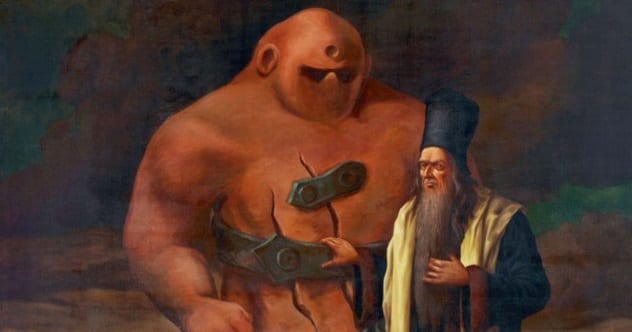
Some legends whisper. Golem stories stomp. They arrive covered in clay, wrapped in mystery, and carrying one giant question: what happens when human beings get a little too confident about playing creator?
If you have only met golems through fantasy games, comic books, or that one friend who says, “It’s basically a Jewish Frankenstein,” you are in for a much better story. The real golem legend is older, stranger, more thoughtful, and honestly more interesting than the pop-culture shorthand suggests. It lives at the crossroads of Jewish folklore, mysticism, ethics, fear, survival, and imagination.
Below are 10 intriguing facts about golems that explain where the legend came from, why it mattered, and why this clay giant still stomps around modern culture like it owns the place.
1. The word “golem” did not start out meaning “monster”
One of the most surprising facts about golems is that the word itself began in a much less dramatic place. In Jewish tradition, golem originally refers to something unfinished, unformed, or incomplete. In other words, the earliest sense of the term is less “rampaging mud titan” and more “prototype still in the workshop.”
That matters because it changes the whole mood of the legend. A golem is not just a creature. It is a being defined by incompleteness. It looks human, moves like a human, and serves human purposes, yet it lacks some essential spark that would make it fully human in the deepest spiritual sense.
That idea gives the golem legend its staying power. This is not merely a spooky tale about a giant made of clay. It is a story about limits. What can humans make? What can they imitate? And where does imitation stop being brilliance and start becoming hubris wearing a very muddy suit?
2. Golems are closely tied to the creation of Adam
If the golem sounds eerily familiar, that is because the legend echoes one of the oldest stories in the book: the creation of Adam from dust. In many interpretations of the golem myth, the artificial human made of clay reflects a daring attempt to imitate divine creation.
This connection is not accidental. Jewish thought often treats the golem as a shadow version of humanity’s first formation. God forms Adam and breathes life into him. Human beings, by contrast, may shape matter, recite sacred formulas, or manipulate holy letters, but they do not create life in the same complete, sovereign way. The result is something animate, yes, but unfinished.
That is one reason the golem remains such a fascinating symbol. It forces readers to confront a deeply uncomfortable truth: humans love building things that look like power. But a copy of creation is not the same thing as creation itself. The legend never lets you forget that distinction.
Why this matters for modern readers
Today, the golem reads like an ancient thought experiment about artificial life. The materials are older, the vocabulary is holier, and the special effects budget is terrible, but the central anxiety feels familiar. We still ask whether making something in our image means we understand what we are doing.
3. The famous Prague golem is legendary, but the legend grew later than many people think
Ask people about the golem legend and most will immediately mention Prague. That makes sense. The Prague golem is by far the best-known version of the story, usually linked with Rabbi Judah Loew, also called the Maharal of Prague. In the classic telling, he creates a golem to protect the Jewish community from violent antisemitic threats.
Here is the twist: the best-known Prague version did not solidify in the 1500s as a neat, neatly documented historical event. It gained fuller literary form much later, especially in the nineteenth century, when folklore, print culture, and Jewish storytelling helped turn the golem into a major symbolic figure.
That does not make the legend less important. Quite the opposite. Legends do not need a notarized birth certificate to matter. The Prague story became powerful because it answered a deep emotional need. It imagined protection in a world where Jewish communities often had very little of it.
So yes, the Prague golem is iconic. But it is best understood as a legendary tradition that developed over time, not a tidy historical police report from medieval Europe.
4. Rabbi Judah Loew was a real scholar, and the golem legend can overshadow his actual work
The Maharal of Prague was a real historical figure and an influential Jewish thinker. He was not just “that rabbi from the monster story.” In fact, one of the more ironic facts about golems is that the most famous golem-maker in folklore may be better known for a legend than for his substantial intellectual legacy.
That is a little unfair to him, honestly. Imagine spending your life producing serious scholarship and then centuries later everyone says, “Cool, but tell us more about your mud bodyguard.”
Scholars have long noted that the Maharal’s strong association with the Prague golem is difficult to verify historically. Some sources even stress that the connection is later, legendary, and atypical rather than solid biographical fact. Still, folklore loves a magnetic figure, and Rabbi Loew became exactly that: a wise, learned, spiritually powerful protector in a dangerous world.
The result is a fascinating double image. On one side is the historical rabbi, theologian, and philosopher. On the other is the legendary master who animates clay. The tension between those two images is part of what makes the golem tradition so compelling.
5. Golems were not always created for war; sometimes they were servants, helpers, or warnings
Modern fantasy often treats a golem like a fantasy tank: big, strong, quiet, and available for smashing. But older golem stories are more varied than that. In some versions, the golem is a protector. In others, it performs labor or simple tasks. In still others, it becomes a cautionary example of how a useful creation can turn dangerous when control slips.
This range is important for SEO-minded readers and folklore nerds alike because it shows that the golem legend is not a one-note horror story. It is a flexible cultural symbol. The same creature can represent security, obedience, spiritual ambition, comic mishap, or disaster waiting for one badly worded instruction.
And that badly worded instruction is where things usually go sideways. A golem is often powerful but literal. It follows orders without wisdom, force without judgment, movement without conscience. Sound familiar? Yes, the legend remains painfully modern.
6. In many stories, words literally make the golem live
If the golem has a superpower, it is language. Many golem traditions emphasize that sacred words, divine names, or combinations of Hebrew letters are what animate the creature. In some popular retellings, the word emet (“truth”) is placed on the golem or written on its forehead. Remove the first letter and it becomes met (“dead”). One tiny change, one giant plot twist.
This detail is a big reason the golem legend fascinates readers who love symbolism. The creature is not powered by electricity, chemistry, or a secret lightning machine on a hill. It is powered by language, holiness, and meaning. The story suggests that words do not just describe reality; under the right conditions, they shape it.
That is a breathtaking idea. It also makes every typo feel a little more stressful.
Truth, life, and fragility
The emet detail, especially in later retellings, captures a deeper theme: what gives life can also undo it. Truth animates. Distortion destroys. The golem’s existence depends on precision, and that precision is fragile. A single altered letter can collapse the whole enterprise.
7. The golem usually goes wrong because it lacks judgment, not because it is secretly evil
Another major misconception is that golems are basically demons in dirt form. In most classic versions, that is not the point. The golem is not terrifying because it is morally corrupt. It is terrifying because it is powerful without discernment.
That distinction changes the story from a monster tale into an ethics tale. The golem obeys, but too literally. It serves, but without flexibility. It acts, but without the reflective wisdom that makes action humane. Its danger comes from incompleteness, not malice.
That is why the legend has lasted so long. It speaks to one of the most durable human fears: not that our creations will hate us, but that they will follow flawed instructions with perfect commitment. A golem is what happens when force outruns judgment.
And yes, that idea lands a little too well in the age of automation, algorithms, and people who still click “I have read the terms and conditions” with the confidence of a medieval alchemist.
8. The Prague golem legend is tied to real histories of antisemitism
For all its supernatural flair, the golem story is not floating in a fairy-tale vacuum. One reason the Prague golem became so powerful is that it speaks to real Jewish vulnerability in Europe, including the terror generated by antisemitic accusations such as blood libel. These false accusations claimed that Jews murdered Christian children for ritual purposes, and they often led to violence, persecution, and panic.
Seen in that context, the golem is not just folklore. It is fantasy as emergency response. The legend imagines a defender arising when ordinary protections fail. That helps explain why the story carries such emotional weight. The creature is frightening, yes, but so is the world that supposedly required it.
This is also why flattening the golem into a generic “monster myth” misses the point. The golem legend comes from a historical experience shaped by danger, exclusion, and the desperate wish for safety. Underneath the clay, there is a survival story.
9. Golems marched from folklore into modern art, theater, literature, and film
The golem did not stay trapped in old manuscripts or whispered legends. It became a major cultural figure in modernity. By the twentieth century, the golem had shown up in theater, visual art, literature, and especially film. Paul Wegener’s Der Golem and its 1920 version helped cement the creature as a haunting screen icon, while later artists and writers kept reinventing it.
That cultural afterlife tells us something important. The golem legend is sturdy because it adapts. Some creators treat the golem as horror. Others use it as political allegory, spiritual metaphor, immigrant symbol, or meditation on identity and power. Museums and cultural institutions have also embraced the golem as a rich subject for visual interpretation.
In short, the golem is not a dusty relic. It is a remarkably flexible myth. Put it on a stage, in a gallery, in a novel, or on a screen, and it keeps asking the same unnerving questions in new costumes.
10. The golem is one of the oldest “what if we build something we can’t fully control?” stories
If you want the quickest explanation for why golems still matter, here it is: the legend feels uncannily current. Long before debates about robots, artificial intelligence, bioengineering, or machine ethics, the golem was already wrestling with the same core problem. What happens when humans create a powerful imitation of life without mastering the moral consequences?
That does not mean ancient Jewish folklore was secretly predicting modern technology in a lab coat. But the family resemblance is real. The golem has become a durable metaphor for creations that reflect human intention while exposing human limitations.
That is why the golem keeps returning. It is never just about clay. It is about responsibility. About the gap between making and understanding. About the eerie possibility that our greatest achievements can also become mirrors, showing us how unfinished we are.
And perhaps that is the most intriguing fact of all: the golem remains relevant because the legend was never only about a creature. It was always about us.
What the Golem Experience Feels Like for Modern Readers and Viewers
Encountering golem stories today can feel strangely personal, even if you begin with pure curiosity. At first, the legend seems like a fascinating artifact from Jewish folklore: a clay figure, a rabbi, a dangerous miracle, end scene. But the longer you sit with the tradition, the more it starts behaving like a mirror. You do not just ask, “What is a golem?” You begin asking, “Why does this story still hit so hard?”
Part of the experience is emotional whiplash, in the best way. The golem can seem awe-inspiring and tragic at the same time. It is built to protect, yet it also embodies a terrifying lack of balance. It is strong, but not wise. Loyal, but not reflective. Human-shaped, but not fully human. That tension makes reading about golems feel less like browsing mythology and more like stepping into a philosophical storm cloud.
There is also something unforgettable about the atmosphere surrounding the legend. Prague, old synagogues, whispered sacred names, night streets, fear of persecution, and the possibility that clay might get up and walk if the right words are spoken in the right order. Even when you know you are reading folklore, the mood lingers. It has the weight of memory and the suspense of a warning label.
For many readers, the golem becomes even more compelling once they realize the story is not simply “monster content.” It carries the historical pressure of Jewish vulnerability and the longing for protection in a hostile world. That changes the emotional register completely. The legend stops being just spooky and starts feeling necessary. The fantasy exists because reality was often worse.
Modern adaptations add another layer to the experience. In novels, films, comics, and art, the golem often becomes a symbol for outsiders, immigrants, grief, disability, political anger, or the risks of artificial creation. You can watch the legend shift shape across generations and still remain recognizable. That adaptability is part of the thrill. The golem is ancient, but it never feels entirely old.
Perhaps the strongest experience of all is the lingering afterthought. Golem stories tend to stay with you because they do not end neatly. Even when the creature collapses back into dust, the central question survives: what exactly are human beings doing when we try to manufacture power without full wisdom? That question follows readers out of the legend and into modern life, where the materials may have changed, but the anxiety has not.
So the experience of exploring golems is not just educational. It is atmospheric, ethical, historical, and oddly contemporary. You begin with a clay giant and end up thinking about language, danger, identity, invention, and responsibility. Not bad for a legend that starts with mud.
Final Thoughts
The best facts about golems are not just trivia points for mythology fans. They reveal why the legend has survived for centuries. The golem sits at the intersection of folklore and philosophy, magic and morality, fear and protection. It is at once a Jewish cultural symbol, a warning against overreach, and a haunting image of power without wisdom.
That is why the golem still works. It is weird enough to entertain, deep enough to analyze, and relevant enough to feel modern. A giant figure made of clay should not feel this current, and yet here we are.
Apparently mud ages well.














