
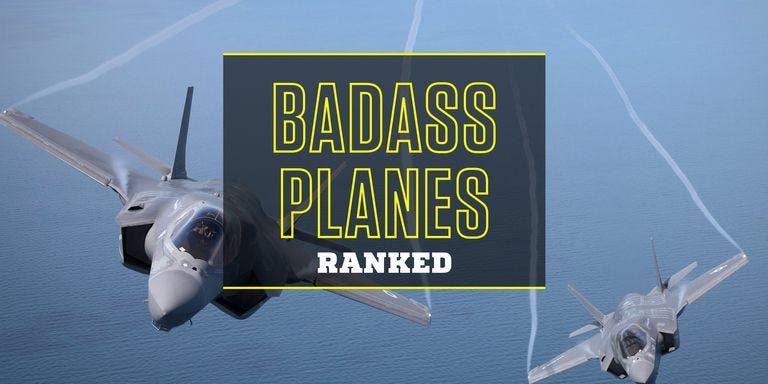
Some airplanes are transportation. Others are legends with wings. The coolest planes are not always the biggest, fastest, loudest, or most expensive, although several of them happily check all four boxes like aviation overachievers with afterburners. What makes a plane cool is a mix of design, performance, cultural impact, engineering courage, and that hard-to-measure quality that makes people stop mid-sentence when one flies overhead.
From the fragile Wright Flyer to the shadowy B-2 Spirit, from the supersonic elegance of Concorde to the thunderous personality of the A-10, aviation history is packed with machines that look like they escaped from a science-fiction storyboard. Some changed warfare. Some changed travel. Some pushed pilots to the edge of space. A few simply made everyone on the ramp point and say, “Okay, that is ridiculousin the best possible way.”
This guide explores the coolest planes ever built, why they matter, and what each one reveals about human imagination. Buckle up. Tray tables may remain down, because this is not a normal flight.
What Makes a Plane One of the Coolest Planes?
Aviation fans love arguing about the coolest planes because “cool” is delightfully subjective. One person may vote for the sleek, black Lockheed SR-71 Blackbird because it flew faster than most missiles. Another may choose the Boeing 747 because it made long-haul travel feel grand. Someone else may defend the C-130 Hercules because it can land where runways seem more like suggestions than infrastructure.
Still, the coolest aircraft usually share a few traits. They solve a hard problem in a bold way. They have a design that feels instantly recognizable. They inspire stories. They influence future aircraft. And, ideally, they have at least one feature that sounds fake until you check the facts: flying at Mach 6.7, crossing the Atlantic at twice the speed of sound, carrying a massive telescope, or cruising so high that the sky turns dark.
In other words, a cool plane is not just a machine. It is an answer to a question most people would not be brave enough to ask.
The Coolest Planes Ever Built
1. Wright Flyer: The Coolest Plane Because It Started Everything
The Wright Flyer does not look intimidating today. It looks like a wooden kite that became ambitious after too much coffee. But on December 17, 1903, at Kill Devil Hills near Kitty Hawk, North Carolina, it changed the world. Orville Wright’s first powered, controlled flight lasted only 12 seconds and covered 120 feet, which is shorter than many airport moving walkways. Yet that tiny hop opened the door to every jetliner, fighter, cargo plane, and spacecraft-inspired aircraft that followed.
The Wright Flyer is one of the coolest planes because it proved that heavier-than-air flight was possible under human control. Its genius was not raw speed or luxury; it was balance, control, experimentation, and stubbornness. The Wright brothers treated flight like a puzzle, not a miracle. They built wind tunnels, studied wings, and refined control surfaces before most people even understood the problem.
Every modern airplane owes something to that fragile machine. It is not the flashiest aircraft on this list, but it is the original mic drop.
2. North American P-51 Mustang: The Fighter With Movie-Star Energy
The P-51 Mustang is one of the most famous World War II fighters, and it earned that reputation the hard way. With excellent range, speed, and maneuverability, the Mustang became a long-range escort fighter that helped protect Allied bombers deep into enemy territory. The P-51D, especially when paired with the Merlin engine, became an aviation icon.
What makes the Mustang cool is its perfect blend of beauty and purpose. The bubble canopy, clean lines, and sharp nose make it look fast even when parked. It was not just a pretty airplane, either. It could escort bombers, attack ground targets, and fight effectively at altitude. For many aviation enthusiasts, the sound of a Mustang engine is less of a noise and more of a historical document with pistons.
The P-51 remains a favorite at airshows because it connects engineering with emotion. It is graceful, powerful, and instantly recognizablethe aviation equivalent of a classic muscle car that also helped win a war.
3. Lockheed SR-71 Blackbird: The Plane That Outran Trouble
If coolness had a speed limit, the SR-71 Blackbird would ignore it politely and disappear over the horizon. Designed by Lockheed’s legendary Skunk Works, the SR-71 could operate at around Mach 3.3 and fly above 85,000 feet. At those altitudes, crews wore pressure suits, the sky looked almost black, and most threats were handled by one simple strategy: go faster.
The Blackbird’s design still looks futuristic decades after its first flights. Its black skin, sharp chines, long fuselage, and mysterious profile give it the personality of a classified document with engines. Built for strategic reconnaissance, it used speed, altitude, and advanced sensors to gather intelligence while staying extremely difficult to intercept.
One of the best things about the SR-71 is that its performance still feels absurd. Many modern aircraft are advanced, but few have the mythic aura of the Blackbird. It did not just fly fast; it made speed feel like a form of invisibility.
4. North American X-15: The Rocket Plane That Flirted With Space
The X-15 was not a normal airplane. It was a rocket-powered research aircraft dropped from a B-52, fired into hypersonic flight, and brought back to Earth by pilots who apparently believed “edge of space” was a reasonable workplace. In 1967, pilot Pete Knight flew the X-15 to Mach 6.7, roughly 4,520 mph, making it one of the fastest crewed, powered aircraft ever flown.
The X-15 helped engineers understand high-speed aerodynamics, extreme heating, flight controls, and human performance at the edge of the atmosphere. It influenced later spaceflight programs and gave researchers real-world data that wind tunnels alone could not provide.
Visually, the X-15 looks like a missile that decided to earn a pilot’s license. Its stubby wings and dark body were shaped by heat, speed, and survival rather than elegance. That is exactly why it is cool. It was not built to charm passengers. It was built to answer terrifying questions at terrifying speeds.
5. Concorde: The Supersonic Jet With a Tuxedo
Concorde was more than an airliner. It was an event. With its needle nose, delta wing, and ability to cruise at about Mach 2, Concorde carried passengers across the Atlantic in roughly half the time of conventional jets. For more than 25 years, it represented luxury, speed, and technological confidence.
The coolest thing about Concorde was not only that it flew faster than sound. It did so while serving champagne. The aircraft operated at altitudes far above typical commercial traffic, giving passengers views that felt closer to space tourism than normal travel. Its famous droop nose improved pilot visibility during takeoff and landing, then lifted into a sleek profile for high-speed flight.
Concorde retired in 2003 due to economic, environmental, maintenance, and market pressures, but its legend refuses to retire. Even today, new supersonic projects are compared to it. Concorde remains the standard for glamorous speed: part aircraft, part sculpture, part very expensive time machine.
6. Boeing 747: The Jumbo Jet That Made the World Smaller
The Boeing 747 is one of the coolest planes because it changed how the world travels. First flown in 1969 and introduced into passenger service with Pan Am in 1970, the 747 became the original “Jumbo Jet.” Its wide-body design, iconic upper deck, and long-range capability helped make international air travel more accessible.
The 747’s raised cockpit was not just a styling choice. It helped support cargo conversion possibilities by leaving room for a nose-loading freight door. Over the decades, the 747 served as a passenger airliner, cargo hauler, space shuttle carrier, and presidential aircraft. Not many machines can say they carried families on vacation, freight across oceans, NASA orbiters, and world leaders. That is rangeboth literal and résumé-based.
Even as airlines moved toward more fuel-efficient twin-engine jets, the 747 kept its status as aviation royalty. Seeing one taxi by still feels like watching a building decide to fly.
7. B-2 Spirit: The Flying Wing From a Stealth Dream
The Northrop Grumman B-2 Spirit looks less like a conventional aircraft and more like a shadow that learned aerodynamics. Its flying-wing design, composite materials, special coatings, and low-observable shaping help reduce radar, infrared, acoustic, visual, and electromagnetic signatures. In plain English: it was designed to be very hard to find.
The B-2 can fly intercontinental missions and carry large payloads while using stealth to penetrate defended airspace. Its unrefueled range is approximately 6,000 nautical miles, and aerial refueling extends its reach even further. But numbers only tell part of the story. The real cool factor is visual. When a B-2 flies overhead, it seems to move with eerie silence and impossible geometry.
The Spirit proves that cool planes do not always need sharp noses and roaring engines. Sometimes the coolest aircraft is the one that looks like a piece of night sky cut loose and given landing gear.
8. F-22 Raptor: The Air Superiority Apex Predator
The F-22 Raptor combines stealth, supercruise, maneuverability, and integrated avionics into one highly capable air superiority fighter. It was designed to dominate contested skies, and its performance still makes aviation fans speak in respectful tones.
Supercruise allows the F-22 to sustain supersonic flight without relying on afterburners, which saves fuel and reduces heat signature compared with traditional afterburner-heavy supersonic flight. Add thrust-vectoring nozzles, advanced sensors, and stealth shaping, and the result is a fighter that can move, see, and react with terrifying efficiency.
The F-22 is cool because it feels like the point where fighter design became less about one impressive trait and more about combining many advanced traits into a single system. It is not just fast. It is not just stealthy. It is not just agile. It is all of those things wearing a gray suit and making no promises about your airspace.
9. F-35 Lightning II: The Flying Data Network
The F-35 Lightning II may not have the pure dogfighting mystique of the F-22, but it is one of the most important modern aircraft because of how it handles information. The F-35A combines stealth, sensor fusion, advanced situational awareness, and multirole capability. It is designed not only to fight, but also to collect, process, and share data across a battlespace.
That makes the F-35 cool in a very modern way. It is less “lone knight in the sky” and more “flying command node with missiles.” Its sensors help pilots understand threats and targets from multiple angles, while its stealth design improves survivability in high-risk environments.
The F-35 is also notable because it comes in variants for conventional runways, aircraft carriers, and short takeoff/vertical landing operations. In other words, it is the aircraft equivalent of a multi-toolif your multi-tool cost a fortune and came with a helmet display from the future.
10. A-10 Thunderbolt II: The Ugly-Cool Legend
The A-10 Thunderbolt II, affectionately known as the Warthog, is proof that cool does not always mean sleek. Sometimes cool means rugged, loud, durable, and built around a 30mm GAU-8/A cannon that sounds like an angry zipper the size of a truck.
The A-10 was the first U.S. Air Force aircraft specially designed for close air support of ground forces. Its straight wings, twin engines, armored cockpit, and redundant systems were designed for survivability and low-speed control near the battlefield. It can operate from rough conditions, carry a wide range of weapons, and absorb damage that would make more delicate aircraft reconsider their career choices.
The Warthog is cool because it has personality. It is not graceful like Concorde or mysterious like the B-2. It is practical, stubborn, and beloved by many of the troops it was designed to support. If aircraft had facial expressions, the A-10 would be grinning with missing teeth.
11. C-130 Hercules: The Workhorse That Refuses to Quit
The C-130 Hercules is not glamorous in the usual sense. It does not break speed records or wear stealth coatings. But it has served for decades because it is incredibly useful. First flown in the 1950s, the Hercules became famous for tactical airlift, cargo delivery, troop transport, medical evacuation, aerial refueling variants, special operations, weather reconnaissance, and humanitarian missions.
The C-130’s coolest quality is versatility. It can operate from short and rough airstrips, carry heavy loads, and adapt to missions that would make most aircraft ask for a union representative. The rear cargo ramp is one of aviation’s great practical inventions, allowing vehicles, supplies, and paratroopers to move efficiently in and out.
The Hercules proves that a cool plane does not have to be exotic. Sometimes the coolest aircraft is the one that shows up when conditions are bad, the runway is questionable, and everyone really needs the cargo to arrive.
12. B-52 Stratofortress: The Bomber With Legendary Longevity
The B-52 Stratofortress is a long-range heavy bomber with a service history so long it practically needs its own museum wing. Capable of flying at high subsonic speeds and altitudes up to about 50,000 feet, the B-52 has performed conventional and strategic missions for generations.
Its cool factor comes from longevity and adaptability. The B-52 first entered service in the Cold War era, yet modernization programs have kept it relevant through changes in weapons, navigation, communications, and mission planning. Few aircraft have remained operationally meaningful for so long.
The B-52 is not stealthy. It is not small. It is not subtle. It is a massive eight-engine symbol of persistence. In aviation terms, it is the grandparent who still runs marathons and owns better tools than everyone else.
13. NASA X-59: The Future of Quiet Supersonic Cool
The NASA X-59 Quesst aircraft deserves a place among the coolest planes because it points toward the future. Built to demonstrate quiet supersonic technology, the X-59 is designed to fly faster than sound without creating the disruptive sonic boom associated with traditional supersonic aircraft. Instead, the goal is a softer sonic “thump.”
Its long, needle-like nose and unusual shape are not just for drama. They are intended to manage shock waves so they do not merge into a loud boom on the ground. NASA plans to use X-59 data to help regulators evaluate possible future rules for overland supersonic flight.
The X-59 is cool because it revisits the dream of Concorde but approaches the problem with modern science. It asks a question that could shape future air travel: Can we go faster without annoying everyone below? That is a very practical question, and also a very cool one.
How the Coolest Planes Changed Aviation
The coolest planes are not just museum pieces or airshow favorites. They often create ripple effects across technology, culture, and public imagination. The Wright Flyer proved controlled powered flight. The P-51 helped define long-range fighter escort. The X-15 expanded knowledge of hypersonic flight and the edge of space. The SR-71 proved that speed and altitude could be defensive tools. Concorde showed that passengers would pay to outrun the clock. The 747 transformed global air travel at scale.
Military aircraft such as the B-2, F-22, and F-35 demonstrate how stealth, sensors, and networked systems have reshaped modern airpower. Utility aircraft like the C-130 show that reliability can be just as revolutionary as speed. The A-10 proves that mission-specific design can create an aircraft with a loyal following. And the X-59 reminds us that aviation still has unfinished dreams.
Together, these aircraft tell a bigger story. Aviation advances when engineers challenge assumptions: wings do not have to look normal, passenger jets do not have to stay subsonic, reconnaissance aircraft do not have to fight if they can outrun danger, and cargo planes do not need perfect runways to be useful. Cool planes are cool because they make the impossible seem temporarily embarrassed.
Experiences Related to Coolest Planes
Experiencing the coolest planes is different from simply reading about them. Aviation has a physical presence that refuses to fit neatly on a screen. You can study the SR-71’s speed, but standing near one in a museum gives you a different feeling. The aircraft is long, black, sharp, and strangely organic, like a mechanical manta ray built for another planet. Suddenly, Mach 3 is not just a number. It is sitting in front of you, quietly judging every car in the parking lot.
Airshows create another kind of aviation memory. A P-51 Mustang passing overhead has a sound that seems to arrive from the 1940s with polished wings and perfect timing. The low growl of a warbird engine can make a crowd go silent in a way few modern machines can. People look up, phones rise, and for a few seconds the sky feels connected to history. The same happens when a large aircraft like a C-130 performs a low pass. It may not be sleek, but its size and steady confidence make it unforgettable.
Commercial aviation has its own emotional moments. Many travelers remember seeing a Boeing 747 for the first time at an airport gate. It looked too big to fly, which is exactly why watching it lift off felt magical. The nose rose, the landing gear tucked away, and the giant became graceful. For millions of passengers, the 747 was not just a plane; it was the start of an international adventure, a family reunion, a new job, or a once-in-a-lifetime trip.
Museums also make aircraft feel personal. Standing under a B-2 or beside an A-10 reveals details that photos miss. The B-2’s smooth flying-wing shape makes it look almost unreal, while the A-10’s blunt, armored practicality feels refreshingly honest. One whispers, “You cannot detect me.” The other says, “I brought a very large cannon.” Both are cool, but in completely different emotional languages.
Even watching aircraft from an airport window can become memorable if you know what to look for. A plane’s wing flex during takeoff, the heat shimmer behind jet engines, the choreography of ground crews, and the moment wheels leave the runway all remind you that flight is still astonishing. We have normalized it because airlines sell tickets and serve pretzels, but every takeoff is a small rebellion against gravity.
The coolest planes inspire curiosity because they turn engineering into experience. They make people ask how wings work, why sonic booms happen, how stealth shaping reduces radar return, why cargo ramps matter, and what it feels like to fly near space. That curiosity is valuable. It keeps aviation alive not only as an industry, but as a shared human fascination.
Whether you are touring an air museum, watching a flyover, boarding a long-haul jet, or spotting aircraft from the fence line at a local airport, the coolest planes offer the same reminder: humans are at their best when they combine imagination with discipline. A great aircraft begins as math, metal, and ambition. Then one day it lifts off, and everyone watching remembers that the sky was never really the limit.
Conclusion
The coolest planes are more than fast machines with wings. They are milestones in human creativity. Some, like the Wright Flyer, are cool because they began the story. Others, like the SR-71, X-15, Concorde, and X-59, are cool because they pushed speed into strange new territory. Aircraft like the 747 and C-130 changed how people and cargo move around the world, while the B-2, F-22, F-35, A-10, P-51, and B-52 show how specialized design can shape history.
What connects them all is boldness. Each aircraft answered a difficult challenge with a design that people still talk about yearsor even generationslater. That is the real definition of a cool plane: it does not simply fly. It leaves a contrail through culture, technology, and imagination.













