
If your shoulders keep creeping forward like they are trying to read your phone before you do, your chest muscles may be tighter than you think. Long hours at a desk, heavy upper-body workouts, driving, gaming, scrolling, and everyday stress can all leave the front of the body feeling stiff and cramped. The good news? A few simple chest stretches can help open things up.
In this guide, you will learn how to perform chest stretches safely, what mistakes to avoid, and four easy exercises you can do at home, at the gym, or during a suspiciously long “bathroom break” at work. These moves are beginner-friendly, require little or no equipment, and can help improve chest flexibility, shoulder mobility, and posture when done consistently.
Why Chest Stretches Matter
Your chest muscles, especially the pectorals, help move the arms and support upper-body motion. But when they get tight, they can pull the shoulders forward and make the upper back work overtime. That can leave you feeling stiff through the chest, front shoulders, and even the neck.
Chest stretches are useful because they can support better upper-body mobility, make reaching overhead feel easier, and help balance out all the time spent hunched over keyboards, steering wheels, and tiny glowing rectangles. They are also a smart complement to strength training. If you bench press, do push-ups, or train chest hard, stretching may help you feel less locked up afterward.
That said, stretching should feel like a gentle pull, not a dramatic scene from an action movie. If you have sharp pain, numbness, tingling, recent surgery, a shoulder injury, or unexplained chest pain, talk with a qualified healthcare professional before trying these exercises.
Before You Start: Smart Rules for Safe Stretching
- Warm up first. Do a few minutes of walking, arm circles, shoulder rolls, or light marching before static stretching.
- Do not bounce. Stretching should be smooth and controlled, not spring-loaded.
- Hold the position gently. Aim for about 15 to 30 seconds per stretch unless a clinician gives different instructions.
- Breathe normally. If you are holding your breath, your body is probably not relaxing.
- Stretch both sides. Even if one side feels tighter, your body likes balance.
- Stop if it hurts. A mild stretch sensation is fine. Sharp, pinching, or radiating pain is not.
How to Perform Chest Stretches: 4 Easy Exercises
1. Doorway Chest Stretch
This is the classic chest opener for a reason. It is simple, effective, and easy to adjust for different flexibility levels.
How to do it:
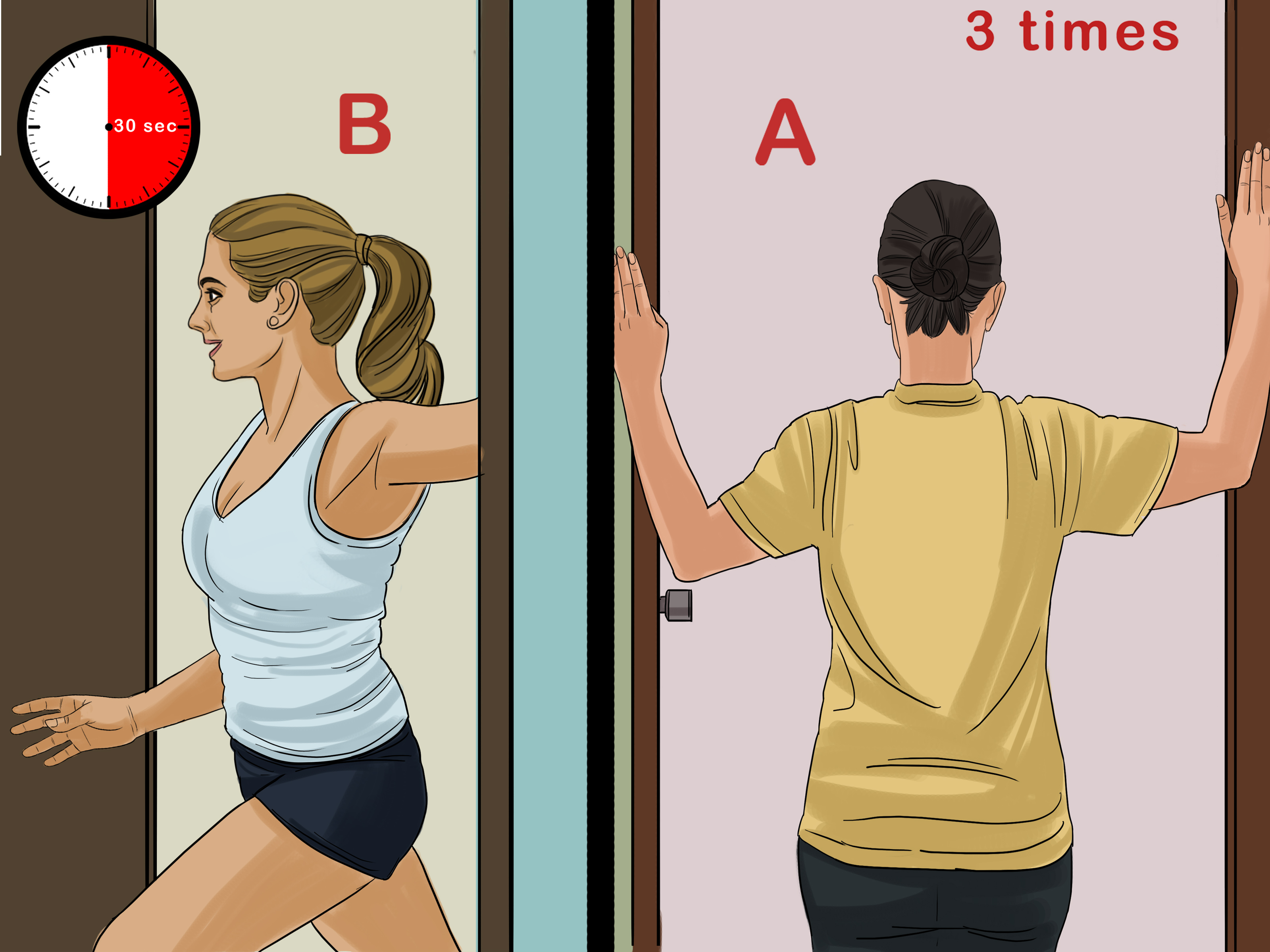
- Stand in an open doorway.
- Place your forearms on the door frame with your elbows bent about 90 degrees.
- Step one foot forward.
- Gently lean your chest through the doorway until you feel a stretch across the front of your chest and shoulders.
- Keep your neck long, ribs down, and shoulders relaxed.
- Hold for 15 to 30 seconds, then step back and relax.
Repeat: 2 to 4 times.
Best for: Desk workers, gym-goers, and anyone whose posture says, “I have emailed too much today.”
Common mistake: Arching the lower back instead of moving from the ankles and hips. Think “lean forward,” not “become a banana.”
Make it easier: Bring your elbows slightly lower than shoulder height and use a smaller lean.
2. Single-Arm Wall Chest Stretch
If one side feels tighter than the other, this stretch helps you work each side individually. It is also a great choice if the full doorway stretch feels too intense.
How to do it:
- Stand next to a wall.
- Place one palm or forearm on the wall at about shoulder height.
- Gently turn your body away from that arm.
- Keep your shoulder down and relaxed as you rotate.
- Stop when you feel a comfortable stretch through the chest and front of the shoulder.
- Hold for 15 to 30 seconds, then switch sides.
Repeat: 2 to 4 times on each side.
Best for: Uneven tightness, post-workout stiffness, and people who want more control over the stretch.
Common mistake: Twisting too aggressively and turning the stretch into a shoulder complaint. Gentle wins here.
Make it easier: Keep the hand slightly below shoulder level or reduce the amount of body rotation.
3. Hands-Behind-Back Chest Opener
This stretch looks deceptively simple, but it can feel fantastic when the front of your shoulders have been glued forward all day.
How to do it:
- Stand tall with your feet hip-width apart.
- Clasp your hands behind your back. If your hands do not meet, hold a towel instead.
- Gently straighten your elbows as much as comfortable.
- Lift your chest slightly while drawing your shoulder blades back and down.
- You may lift your hands a little, but only if it does not cause strain.
- Hold for 15 to 30 seconds.
Repeat: 2 to 3 times.
Best for: A quick reset during the day, especially after typing, driving, or hunching over a laptop.
Common mistake: Cranking the arms high behind the body and jamming the shoulders. The goal is openness, not acrobatics.
Make it easier: Use a towel, keep a soft bend in the elbows, or simply focus on squeezing the shoulder blades together.
4. Seated Elbow-Back Chest Stretch
This is a great low-drama stretch for people who want something easy, quick, and office-friendly. No floor space required. No yoga mat. No audience participation.
How to do it:
- Sit or stand tall.
- Place your hands lightly behind your head.
- Let your elbows point outward.
- Gently pull your elbows back while lifting your chest.
- Keep your chin slightly tucked rather than jutting your head forward.
- Hold for 15 to 30 seconds, then relax.
Repeat: 2 to 4 times.
Best for: People who feel stiff after sitting for long periods and want an easy chest stretch during the workday.
Common mistake: Flaring the ribs and turning the move into a lower-back arch. Keep the core lightly engaged.
Make it easier: Perform a smaller range of motion and think about gently opening the elbows instead of forcing them back.
How Often Should You Do Chest Stretches?
For general flexibility, chest stretches can be done two to three times a week. If you sit a lot, train chest frequently, or feel tight most days, a brief daily routine may help. A practical plan is to choose two or three stretches, hold each for 15 to 30 seconds, and repeat them 2 to 4 times.
A simple example looks like this:
- Doorway chest stretch: 2 rounds
- Single-arm wall stretch: 2 rounds per side
- Hands-behind-back chest opener: 2 rounds
That whole routine can take less than 10 minutes, which is shorter than most people spend deciding what to watch while eating cereal.
Common Mistakes That Make Chest Stretches Less Effective
Stretching cold muscles
Jumping straight into deep stretches without warming up can make the body resist the position. A little movement first goes a long way.
Forcing range of motion
More is not always better. If you push too far, the muscles often tighten up to protect you. Ironically, the “heroic” version of the stretch is usually the less helpful one.
Ignoring posture during the stretch
If your lower back is arching hard and your chin is jutting forward, the stretch is probably drifting away from the chest and into compensation territory.
Doing the same angle every time
The chest is not one tiny square inch of tissue. Changing arm height slightly can shift the stretch and help you find the spot that actually feels tight.
Expecting instant transformation
One stretch session can feel good, but lasting changes usually come from consistency. Think “habit,” not “miracle.”
What People Often Experience When They Start Chest Stretches
One of the most common experiences people describe after starting chest stretches is surprise. Not because the movements are complicated, but because they did not realize how tight the front of the body had become. A lot of people assume upper-body stiffness lives only in the neck or upper back. Then they try a doorway stretch and suddenly discover that the chest has been contributing to the problem all along.
Desk workers often notice the biggest difference first. Someone who spends six to ten hours a day typing may find that their shoulders naturally round forward, their head drifts ahead of the body, and the front of the shoulders feels dense and stiff. After a week or two of consistent chest stretching, many people say they feel less “folded in half.” The change is not magical or instant, but everyday tasks can feel smoother. Reaching for a shelf, sitting taller in a chair, or simply taking a deep breath may feel easier.
People who lift weights often have a different experience. Chest-focused training can build strength and muscle, but without mobility work, the area may feel tight and overworked. Lifters sometimes describe the chest as feeling “packed” or “compressed,” especially after bench press days, push-ups, dips, or heavy pressing. In that situation, chest stretches can feel like a reset button. Not a cure-all, and definitely not permission to skip proper programming, but a helpful tool for restoring comfort and motion.
Beginners also notice that one side is often tighter than the other. That is extremely common. Your dominant arm, your usual sleeping position, how you carry a bag, and the way you sit at a desk can all create small side-to-side differences. The single-arm wall chest stretch is often the exercise where people first notice this. One side turns easily and feels mild. The other side acts like it is negotiating a hostage exchange. That asymmetry is not unusual, but it is a good reason to stretch both sides carefully.
Another common experience is that chest stretches can improve body awareness. When people start moving more deliberately, they begin to notice how often they shrug the shoulders, clench the neck, or flare the ribs. In other words, the stretches do not just lengthen tissue; they teach position. A person might realize, “Oh, this is what relaxed shoulders actually feel like.” That awareness can carry into daily life, which is where the real payoff happens.
Some people also report that chest-opening stretches feel mentally calming. That does not mean stretching is a substitute for medical care or stress treatment, but slow breathing and gentle movement can feel grounding. A short stretch break in the middle of a hectic day may help the body feel less braced up. It is one of the reasons these exercises work well as part of a morning routine, post-workout cooldown, or evening wind-down.
Of course, not every experience is instantly positive. Some people feel awkward at first. Others realize their shoulders are stiffer than expected. A few may feel mild muscular soreness if they stretch after a long period of inactivity. That is why starting gently matters. Chest stretching should feel controlled and useful, not like punishment for having a desk job.
Perhaps the most realistic experience of all is this: progress tends to be subtle before it becomes obvious. You may not wake up after two sessions feeling like a perfectly aligned statue from a fitness ad. But you might notice that your shoulders sit a little easier, your upper body feels less cramped after work, and your posture is easier to maintain without forcing it. Those small wins add up. Over time, many people find that chest stretches become less of a chore and more of a reliable maintenance habit, like brushing your teeth, except with fewer minty consequences.
Conclusion
If you want a simple way to improve chest flexibility and reduce that rounded, tight upper-body feeling, chest stretches are a great place to start. The best approach is also the least glamorous: warm up, move gently, hold the stretch, breathe, and stay consistent. The four easy exercises above can fit into nearly any routine, whether you are a desk worker, an athlete, or just someone trying to convince your shoulders to stop living near your ears.
Start small, pay attention to how your body responds, and let consistency do the heavy lifting. Your chest does not need a dramatic intervention. It just needs a little room to breathe.














