
A smelly basement has a special talent: it can make the whole house feel like it lost a fight with a wet cardboard box. One minute you are heading downstairs to grab holiday decorations, and the next minute you are wondering why the air smells like old socks, damp concrete, and regret. The good news is that basement odors are usually fixable. The even better news is that you do not need to solve them by spraying half a can of air freshener and pretending everything is fine.
If you want to make a basement smell better for good, you have to treat the cause, not just the symptom. In most homes, that smell comes from excess moisture, hidden mold or mildew, stale air, dirty drains, or stored materials that have absorbed years of dampness. Sometimes it is something simpler, like a forgotten pile of laundry. Sometimes it is something less charming, like a dry floor drain letting sewer gas sneak into the room like an uninvited guest.
This guide walks you through how to identify the smell, clean the space, dry it out, and keep it from coming back. You will also find practical examples, real-world problem patterns, and a longer section on homeowner experiences at the end so the article gives readers more than the usual “open a window and good luck” advice.
Why Basements Smell in the First Place
Before you can fix the odor, it helps to know what tends to cause it. Basements are famous for being cool, dark, and humid. That combination is basically a luxury resort for odor problems.
1. Moisture and humidity
The most common reason for a musty basement smell is moisture. Water can enter through foundation walls, floor cracks, condensation on pipes, poor drainage outside the home, or slow plumbing leaks. Even without standing water, high humidity can feed mildew and mold, and those create that classic musty smell people describe as earthy, stale, or “like an old towel that never fully dried.”
2. Mold and mildew growth
If your basement smells musty, mold or mildew may be somewhere nearby, even if you cannot immediately see it. It can grow on drywall, cardboard boxes, wood shelves, carpet backing, insulation, or the back side of finished walls. That is why a basement can smell bad even when it looks fairly clean on the surface.
3. Poor air circulation
Still air holds onto odors. A basement with little ventilation can trap smells from paint, laundry, concrete, pet supplies, stored furniture, sports gear, or cleaning chemicals. If the air never moves, the room starts smelling tired. Yes, air can somehow smell exhausted.
4. Sewer gas from a floor drain or unused fixture
If the smell is sharp, sewage-like, or rotten-egg-ish, check the floor drain, utility sink, shower drain, or any rarely used plumbing fixture. When the water in the P-trap evaporates, sewer gases can move back into the basement. This issue is common in basements that have drains nobody thinks about until the room starts smelling like a mystery no one wants to solve.
5. Wet or porous materials
Carpet, rugs, upholstered furniture, old books, cardboard boxes, and unfinished wood can absorb moisture and hold odor for months. If your basement had a flood, even a minor one, some materials may never fully recover.
How to Figure Out What Kind of Smell You Have
The fastest way to fix basement odor is to identify what the smell is trying to tell you.
- Musty or earthy smell: Usually moisture, mildew, or mold.
- Sewage or rotten-egg smell: Often a dry drain trap, plumbing leak, or venting issue.
- Dirty sock or stale fabric smell: Damp textiles, carpet, laundry, or upholstered furniture.
- Chemical smell: Paints, solvents, cleaners, adhesives, or stored fuel products.
- General stale smell: Poor ventilation, dust buildup, and long-term humidity.
Walk through the basement slowly and sniff like a detective with a very unfortunate assignment. Smell near the floor drain, the sump pit, corners, stored boxes, soft furniture, unfinished walls, laundry areas, and mechanical equipment. Odors are often stronger close to the source.
Step-by-Step: How to Make a Basement Smell Better
Step 1: Remove obvious odor sources
Start with the easy wins. Throw out wet cardboard, damp newspapers, moldy fabric, ruined rugs, or anything that smells bad on its own. If an item has absorbed odor deeply, cleaning may not save it. Harsh, but true. Not every box of “someday I’ll organize this” can be the hero of the story.
Wash removable fabrics, including curtains, pet beds, and washable rugs. For laundry areas, clean behind and under machines, and make sure the dryer is venting correctly to the outside.
Step 2: Lower the humidity
If your basement is humid, a dehumidifier is often the most effective single tool you can use. Set it to keep humidity in a healthy range, empty the bucket regularly or connect a drain hose, and clean the filter as directed. A basement can look dry and still be humid enough to smell bad.
In practical terms, this is often the turning point. A homeowner may scrub the room three times and still hate the smell, then run a properly sized dehumidifier for a few days and finally notice the air improving. That is because odor control usually follows moisture control.
Step 3: Improve airflow
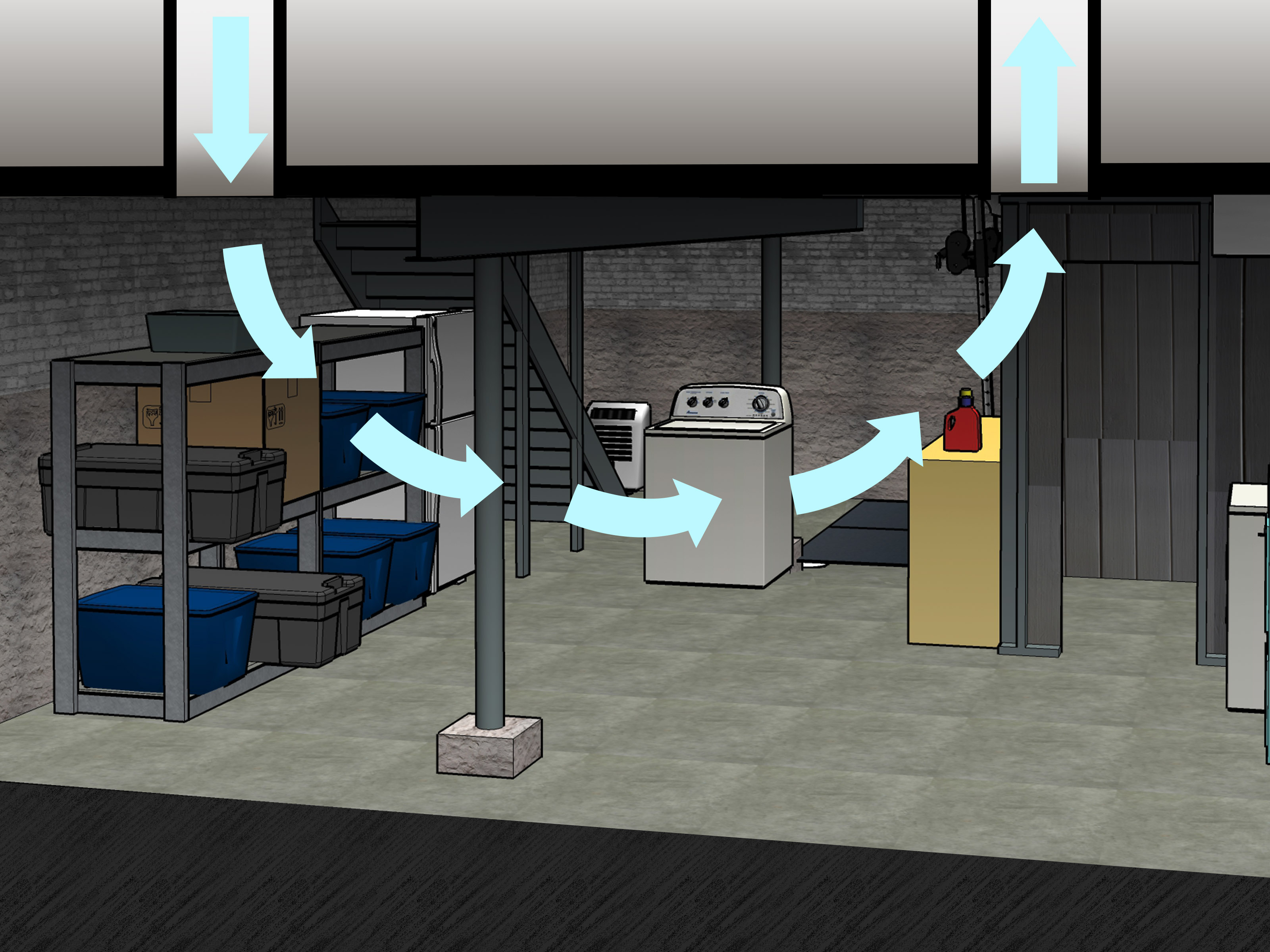
Once humidity is under control, improve air circulation. Run a fan to keep air moving. If weather conditions are favorable and outdoor humidity is lower than indoor humidity, open windows briefly to air the space out. If the basement is connected to the home HVAC system, make sure filters are clean and the system is maintained.
Air movement alone will not fix a wet basement, but it does help prevent stale air from settling in. Think of it as support staff, not the star player.
Step 4: Clean hard surfaces thoroughly
Wipe down walls, shelves, concrete floors, baseboards, and non-porous storage bins. Use an appropriate cleaner for the surface. In many cases, soap and water or a mild cleaning solution will do the job. If mold is present, follow safe cleaning practices and never mix bleach with ammonia or other cleaners.
White vinegar solutions are sometimes used by homeowners on certain hard surfaces for odor removal, but the big picture matters more than the specific bottle in your hand: clean the surface, dry it completely, and fix the moisture source. A fancy cleaner in a damp basement is like putting cologne on a gym bag.
Step 5: Check for hidden moisture problems
If the smell returns quickly, look deeper. Inspect for:
- Condensation on cold water pipes
- Leaking plumbing lines
- Water stains on drywall or paneling
- Efflorescence on concrete walls
- Cracks in the floor or foundation
- Gutters or downspouts dumping water too close to the house
- Soil outside sloping toward the foundation instead of away from it
Many smelly basements are really drainage problems wearing an odor disguise. Fixing the grade outside, extending downspouts, or sealing a plumbing leak can do more than any scented product ever will.
Step 6: Deal with drains and plumbing fixtures
If the odor seems sewer-like, pour water into unused floor drains or rarely used basement fixtures to refill the P-trap. If the smell improves, that may have been the issue. Some homeowners add a small amount of mineral oil afterward to slow evaporation in seldom-used drains.
If the smell does not improve, or if you also hear gurgling, notice slow drains, or suspect a venting or sewer line problem, call a plumber. Sewer odor is not a “light a candle and power through it” situation.
Step 7: Use odor absorbers as backup, not a cure
Once the space is cleaned and dried, odor absorbers like baking soda or activated charcoal can help with lingering smells. They are useful for fine-tuning the air after the main issue has been addressed. They are not a replacement for fixing moisture, mold, or plumbing problems.
Step 8: Replace materials that cannot be saved
Some materials keep holding smell because they are porous and were wet for too long. Carpet padding is a common example. Ceiling tiles, insulation, damaged drywall, and upholstered furniture can also become permanent odor hosts. If you have cleaned, dried, and deodorized everything else and the smell still hangs on, the answer may be removal and replacement.
Best Cleaning and Freshening Strategies for Common Basement Setups
Unfinished basement
Focus on moisture control, concrete cleaning, shelving cleanup, drain checks, and better storage. Swap cardboard boxes for sealed plastic bins. Keep items off the floor on shelves or pallets. Unfinished basements may not be glamorous, but they can smell clean when kept dry and organized.
Finished basement
Be more alert for hidden mold behind walls, trim, and flooring. If you smell odor near finished surfaces but cannot find the source, inspect carefully for past leaks, damp carpet edges, or signs of water intrusion around windows and baseboards.
Basement laundry room
Clean lint, detergent residue, and dust. Check the dryer vent, washer hoses, drain line, and floor behind both appliances. A little hidden water under a washer can create a surprising amount of smell.
Basement after minor flooding
Act fast. Remove wet items, dry the space aggressively, sanitize as appropriate, and do not assume carpet or drywall is fine just because the surface seems dry. Odor often lingers in the layers you cannot see.
How to Keep the Smell from Coming Back
Once your basement smells better, keep it that way with a simple maintenance plan:
- Run a dehumidifier during humid seasons.
- Check humidity levels regularly.
- Inspect pipes, walls, and corners for leaks or dampness.
- Pour water into rarely used drains every few weeks.
- Keep gutters clear and downspouts directed away from the house.
- Store items in plastic bins instead of cardboard.
- Do not keep damp fabric, shoes, or pet gear downstairs.
- Clean HVAC filters and maintain ventilation equipment.
The goal is simple: keep the basement dry, clean, and moving air around. That is the boring answer, but boring answers are often the ones that work.
When to Call a Professional
DIY works for many odor problems, but some situations need expert help. Call a professional if:
- You suspect significant mold growth.
- The basement has been flooded with contaminated water or sewage.
- The smell is strong and sewer-like even after refilling drain traps.
- You see structural cracks or repeated water intrusion.
- The odor persists after cleaning, drying, and removing damaged materials.
There is a difference between “annoying smell” and “this room is trying to tell me something important.” If the basement keeps smelling bad, listen.
Experiences Homeowners Often Have With Basement Odors
One of the most common experiences homeowners describe is the false victory. They clean the floor, spray an odor eliminator, maybe even light a candle, and the basement smells better for a day or two. Then the odor creeps back like it paid rent. What they learn, usually the hard way, is that basement smell is rarely about surface dirt alone. It is usually about dampness hidden in materials, slow leaks, or air that stays too wet for too long.
Another common experience is discovering that the smell is strongest after rain. That pattern matters. If the basement seems fine in dry weather but smells funky after storms, the issue may be water entering through the foundation, poor grading outside, clogged gutters, or downspouts dropping water too close to the house. Many people spend months cleaning indoors when the real fix starts outdoors with drainage corrections.
Finished basements create their own special category of frustration. Homeowners often say the room looks beautiful, yet it smells like a damp sweater hidden in a gym locker. That usually happens because finished materials hide the evidence. Carpet padding, drywall, and insulation can hold moisture and odor even when the visible surface seems dry. People often report that once they removed a strip of baseboard or pulled back a corner of carpet, the mystery suddenly stopped being mysterious.
Basement floor drains are another classic surprise. A homeowner may assume the smell is mold because the basement is below grade and naturally cool, but the real problem is a dry P-trap in a drain nobody uses. Once water is poured into the drain, the smell improves almost immediately. It feels like magic, but it is really plumbing doing what plumbing is supposed to do when there is actually water in it.
There is also the “storage zone problem.” Basements become the home’s unofficial archive: old books, cardboard boxes, holiday bins, sports gear, paint cans, pet carriers, and mystery items from three moves ago. Homeowners often notice that even after the air improves, certain items still smell stale. That is because porous materials absorb odors over time. Replacing cardboard with sealed plastic bins and getting items off the floor often makes a bigger difference than people expect.
Finally, many people discover that the real long-term solution is a routine, not a one-time deep clean. The best results usually come from combining several small habits: checking humidity, emptying or draining the dehumidifier, keeping water away from the foundation, refilling unused drain traps, and dealing with leaks quickly. In other words, the fresh-smelling basement is not usually the one with the strongest fragrance. It is the one that stays dry, stays clean, and does not let moisture quietly run the show.
Final Thoughts
If you want to know how to make a basement smell better, start with this rule: do not treat the odor like a perfume problem when it is usually a moisture problem. Clean thoroughly, dry the space, improve airflow, check drains, remove damaged materials, and fix the reason the smell started in the first place. Once you do that, the basement can stop smelling like a damp cave and start smelling like, well, almost nothing. And for a basement, that is basically luxury.













