
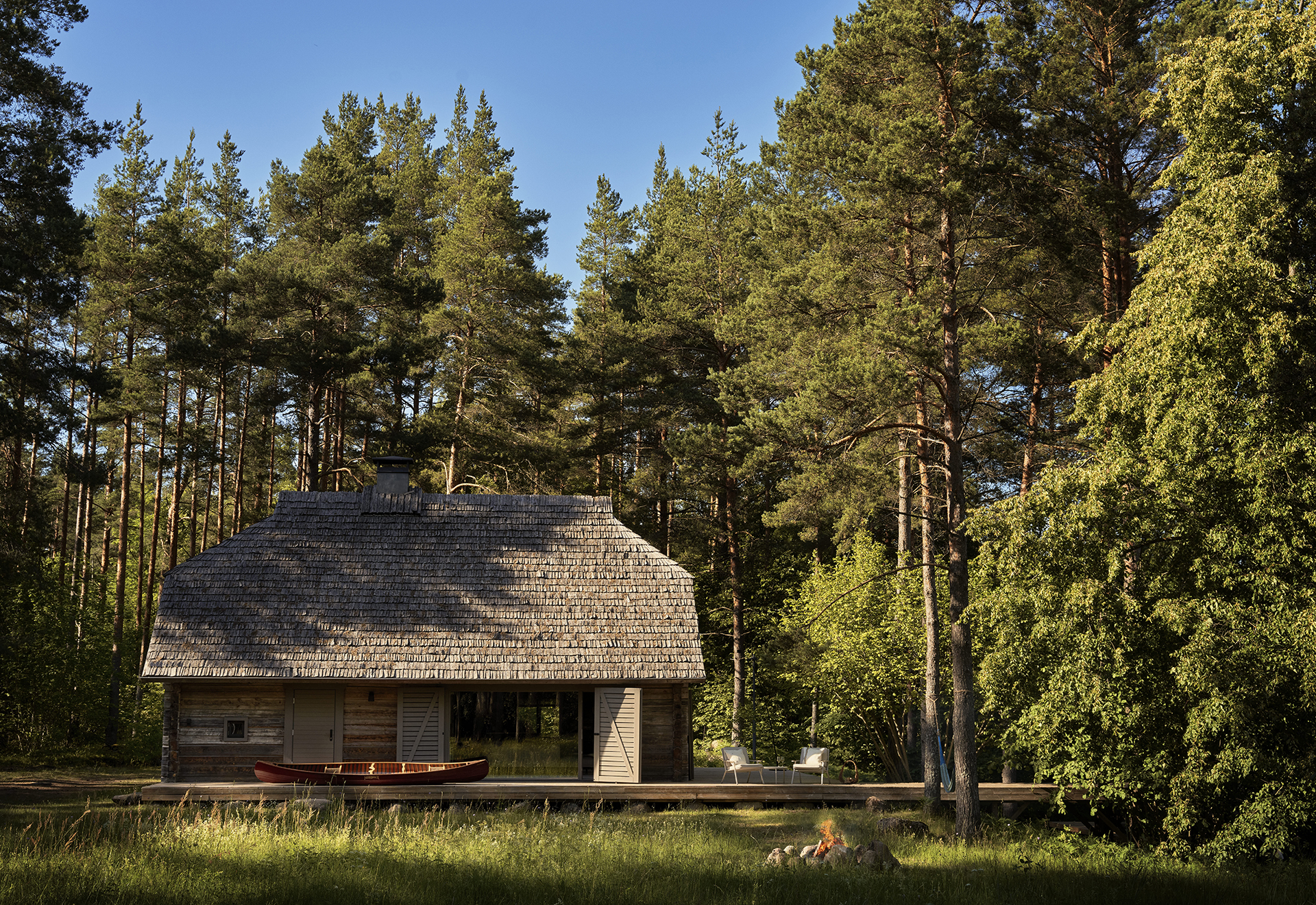
Note: This article is an original, web-ready synthesis based on real reporting and official property information. Unnecessary citation artifacts have been removed for publication.
Every so often, a travel stay comes along that makes ordinary hotels feel a little over-rehearsed. You know the type: scented lobby, polite lighting, a throw pillow arranged like it has a performance review tomorrow. Vipp Salaca River, the Danish design brand’s much-admired Latvia guest house, is the opposite. It is quieter, stranger, smarter, and far more memorable. Instead of staging luxury like a Broadway show, it lets architecture, landscape, and restraint do the talking.
Set in the Salaca River Valley, this design-forward retreat turns a 19th-century Latvian log house into a bookable escape where Scandinavian minimalism meets Baltic wilderness. And yes, that sentence sounds expensive. But the real appeal of Vipp’s Latvia guest house is not flashy luxury. It is mood. Texture. Silence. The pleasure of standing in a restored timber house with a coffee in hand, looking out at a river and wondering why your inbox ever seemed important.
For travelers who care about architecture, interiors, and destinations with a little soul, Vipp Salaca River hits a sweet spot. It is not simply a place to sleep. It is the full design travel package: heritage bones, contemporary function, a remote setting, and the kind of atmosphere that makes you lower your voice without fully knowing why.
Why Vipp Salaca River Matters for Design Travel in Latvia
Vipp has spent years building a reputation for what might best be called “live-in design.” The company began with its iconic pedal bin, then expanded into kitchens, furniture, lighting, and guesthouses that allow travelers to actually use the brand’s products instead of merely admiring them from a tasteful distance. In other words, Vipp figured out that the best showroom is one where someone makes eggs, drops a book on the sofa, and watches the weather change through a giant window.
Salaca River became especially interesting because it did not start as a glossy modern shell dropped into the woods. It started as a former fisherman’s house from 1876, once used as a roadside stop on a historic route. That history matters. Plenty of design retreats are polished to the point of sterility. This one still feels rooted in a place, a climate, and a rural building tradition. It has character before the furniture even arrives.
That is what elevates Vipp Salaca River beyond trend-chasing “quiet luxury.” It is not quiet because someone muted the color palette and called it profound. It is quiet because the site, the structure, and the design decisions all pull in the same direction. This is the kind of property that makes design travel in Latvia feel not niche, but inevitable.
From 1876 Log House to Scandinavian Design Retreat
A rescue mission with good taste
The story behind the house is half preservation project, half design fairy tale. Latvian creative Arturs Martinsons, founder of the design studio Xcelsior, had spent years shaping a riverside retreat on a large tract of meadow and woodland in the Salaca area. When he learned that an old fisherman’s house was about to be dismantled, he saw possibility where most people would have seen a logistical headache and several splinters.
The house was carefully taken apart, its logs numbered, transported, and rebuilt on a new stone foundation in the protected landscape of the Salaca River Valley. That detail matters because the project was never about faking rusticity. It was about giving an authentic building another life in a setting where it could breathe again. In a hospitality market full of “inspired by heritage” concepts, this one actually has heritage.
What Vipp changedand what it wisely left alone
Once the structure was in place, Vipp’s interior team reworked the layout to make the compact house feel open, useful, and connected to the river outside. The result spans roughly 1,180 square feet over two floors, but it feels bigger because the renovation prioritizes light, flow, and framed views over fussy compartmentalization. Several small rooms were opened up, part of the low ceiling was removed, and the house now reads as a conversation between old timber and modern calm.
This is where the project gets smart. Vipp did not try to erase the cabin’s roughness. It used contrast instead. Historic log walls meet a black Vipp kitchen. Rustic surfaces sit beside sleek fittings. A mirrored fireplace wall bounces light and trees back into the room, creating a subtle illusion that the forest has wandered inside and made itself comfortable.
Inside Vipp’s Latvia Guest House
The main living space
The heart of Vipp Salaca River is the open-plan living area on the ground floor. This is where the brand’s approach to hospitality becomes clear. The kitchen is not ornamental. It is meant to be used. The dining area is not staged for a photo shoot. It is meant to host a long breakfast, a late bottle of wine, and maybe one dramatic declaration that you should definitely move to the Baltics and become the sort of person who owns wool socks on purpose.
Large picture windows open the house to the river and surrounding woods, while the fireplace anchors the room in a way that feels genuinely cozy rather than algorithmically cozy. That difference is crucial. Too many “design cabins” look good online and feel emotionally unavailable in real life. Vipp Salaca River appears to understand that beautiful spaces still need warmth, softness, and a reason to linger.
Bedrooms, bath, and the little luxuries
The guest house accommodates up to four adults, making it ideal for a couple, a small family, or two design-obsessed friends who do not mind discussing joinery before breakfast. The upstairs master bedroom overlooks the living area below and includes a freestanding bathtub, which is exactly the kind of detail that sounds ridiculous until you are actually there and suddenly decide that every bedroom should come with one.
Downstairs, a second bedroom with twin beds keeps the layout practical. Outside, a separate terrace with a wood-fired hot tub takes the whole experience from “architecturally pleasing” to “dangerously hard to leave.” Add in outdoor lounging areas, a self-service format, and access to activities like kayaking, swimming, biking, fishing, and mushroom hunting, and the property becomes more than a photogenic cabin. It becomes a working model for slow travel.
Why Latvia Is the Plot Twist Luxury Travelers Need
Latvia does not always get top billing in design travel conversations, which is part of the appeal. That relative under-the-radar status gives the country a freshness that more overexposed European destinations struggle to maintain. For American travelers especially, Latvia can still feel like a discovery rather than a repeat performance.
The Salaca region offers exactly the sort of landscape that makes contemporary travelers feel they have found something special: river valleys, meadows, forests, coastal access, and a pace that rewards attention. There is no rush to “do” the destination in checklist form. The point is to inhabit it. To watch weather move across the sky. To walk. To cook. To read. To admit that perhaps the most luxurious thing in 2026 is not excess, but uninterrupted stillness.
That is why Vipp’s choice of Latvia feels so right. The guest house does not compete with an already overdesigned destination. It lets the place speak. Nearby harbor towns, beaches, and nature reserves add context, but the property itself remains the main event. It is a destination where the architecture does not shout over the landscape. It listens.
Why Design Travelers Keep Falling for Vipp
Part of Vipp’s success lies in its refusal to behave like a traditional hotel brand. Its guesthouses are self-service, design-led, and deeply tied to local architectural typologies. Across the portfolio, the company has used everything from steel shelters and urban lofts to water-pumping stations and remote coastal houses to create distinct stays. Salaca River fits that strategy perfectly, but it also softens it. Compared with some of Vipp’s more overtly sculptural properties, the Latvia guest house feels intimate and grounded.
It also embodies a larger travel trend: people increasingly want accommodations that are specific, not generic. They want properties with a point of view. They want places where design is part of the destination, not just decorative frosting. Architectural Digest has described the rise of these spaces as a kind of stealth showroom, and that idea tracks here. But Vipp Salaca River works because it never feels pushy. Yes, you are surrounded by Vipp products. No, it does not feel like a catalog trapped you in the woods.
Instead, it feels curated in the best sense of the word. Every object belongs. Every material has a job. Every sightline leads somewhere worth looking. That level of cohesion is catnip for design-conscious travelers and a relief for anyone tired of boutique hotels that confuse oddness with personality.
Who Should Book Vipp Salaca River?
Vipp Salaca River is not for everyone, and that is precisely why it is so appealing. This is not a family mega-resort with organized water aerobics and six competing breakfast buffets. It is better suited to travelers who enjoy atmosphere, autonomy, and the pleasure of a beautifully controlled environment.
- Couples looking for a romantic design retreat in Latvia
- Small families who prefer nature and architecture over nonstop programming
- Creative travelers in search of quiet, visual inspiration, and actual darkness at night
- Design fans who like the idea of “trying on” a lifestyle without signing a mortgage
If your ideal trip involves room service every four hours and a lobby bar with twelve signature martinis, this may not be your place. But if your dream escape includes a river view, a hot tub, a working kitchen, and an old timber house reimagined with uncommon intelligence, Vipp Salaca River starts to sound dangerously close to perfect.
The Experience: 24 Hours at Vipp Salaca River
Here is where the property moves from good concept to unforgettable experience. Imagine arriving in the late afternoon after a drive from Riga. The road narrows, the landscape opens up, and the house appears almost shyly among the trees. It does not announce itself like a luxury stay. There is no grand driveway choreography, no theatrical arrival sequence, no one offering cucumber water as if it were a religious rite. It is just a beautifully restored log house sitting in the landscape with complete confidence.
You step inside and the effect is immediate. The exterior feels humble, almost secretive, but the interior opens toward the river in a way that is both dramatic and calming. Light pours through the windows. The black kitchen sharpens the room. Timber walls hold the memory of the house’s earlier life, while the furniture and fixtures make it feel current, precise, and completely livable. It is the rare design stay that photographs well and also seems to understand human behavior. There is a place for your coat, a place for your coffee, a place to stare out the window and quietly reconsider your life choices.
As evening sets in, the whole house changes personality. The fireplace starts doing its emotional heavy lifting. Reflections in the mirrored wall pull the outdoors deeper into the room. Dinner becomes part ritual, part performance, but in a good way. You cook because the kitchen invites it. You eat slowly because there is no reason not to. You look up from the table and realize that silence here is not empty. It is textured. The river moves. Trees shift. The house creaks just enough to remind you that this place had a life long before it became a design destination.
Later, the wood-fired hot tub turns the night cinematic. The air is cold, the water is warm, and the dark sky over the Latvian countryside feels impossibly wide. This is the point where many luxury properties would overplay their hand with mood music, lanterns, and a staff member materializing to explain the local wellness philosophy. Vipp Salaca River does none of that. It trusts the setting. Smart move.
Morning is arguably even better. Sunlight hits the interior differently, softer and more generous, and the guest house reveals how well it handles ordinary moments. Making coffee. Taking a bath upstairs while looking down into the living area. Sitting with a blanket and a book while pretending you are absolutely going to go kayaking in an hour. Maybe you do. Maybe you walk the grounds instead. Maybe you drive out to explore the coast, a nearby harbor, or the surrounding nature reserves. The beauty of the stay is that it makes low-key choices feel luxurious.
By checkout, the experience leaves a particular kind of aftertaste, and it is not just “that was nice.” It is more specific. You leave thinking about proportion, materials, quiet, and how little a place actually needs in order to feel generous. You remember the river, the windows, the old logs, the fire, the bathtub, the dark sky. Most of all, you remember how rare it is to find a travel experience that feels both highly designed and deeply unforced. That is the magic of Vipp Salaca River. It does not beg to be admired. It simply makes admiration feel unavoidable.
Final Thoughts
Vipp Salaca River is more than a stylish guest house in Latvia. It is a persuasive argument for what modern luxury should look like: fewer gimmicks, more integrity; fewer amenities for the sake of amenities, more thoughtfulness in the things that matter. By pairing a rescued 19th-century log house with Scandinavian precision and a spectacular Latvian landscape, Vipp has created a retreat that feels both rooted and fresh.
For travelers interested in design travel, Baltic escapes, and architecture that actually deepens a destination, this guest house is the real deal. It proves that Latvia belongs in the conversation, that adaptive reuse can feel intimate rather than preachy, and that sometimes the coolest place to stay is not the loudest one. Sometimes it is the one beside a river, in a timber house, with a hot tub outside and a very good chair waiting by the window.













