
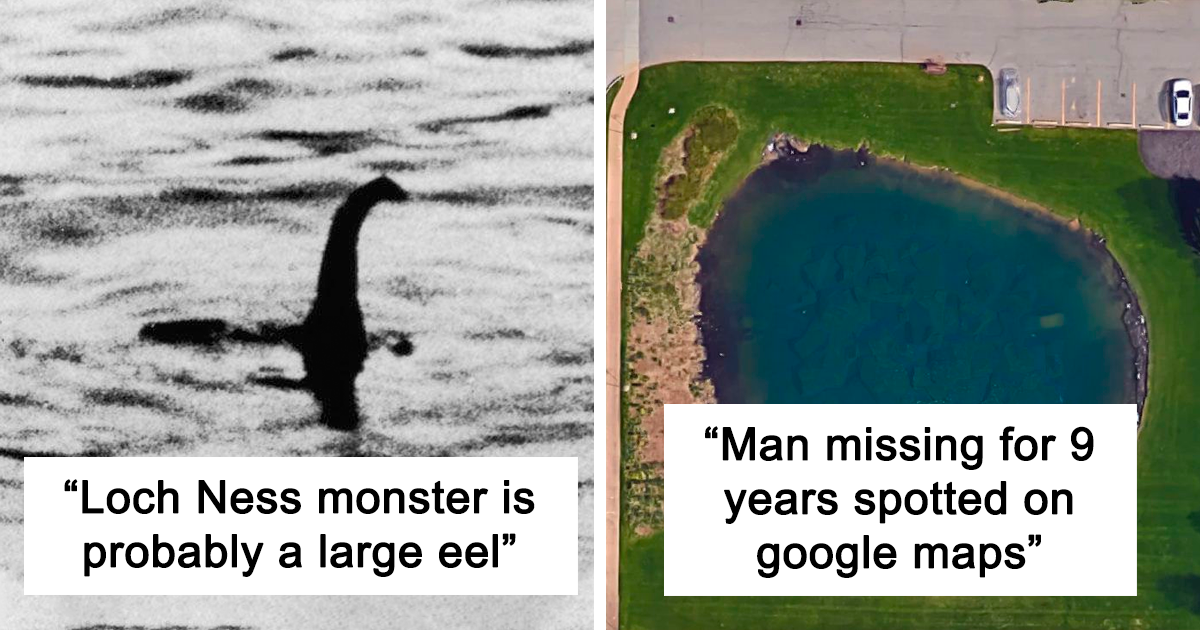
Some mysteries refuse to leave the group chat. They get documentaries, podcasts, dramatic reenactments, late-night Reddit debates, and at least one uncle who swears he “knows what really happened.” But here is the funny thing: a surprising number of famous “unsolved” mysteries have, in fact, been solvedor at least solved enough that the spooky fog has mostly cleared.
That does not mean every question has vanished. In many cases, science solved the main mystery while leaving behind smaller human questions. Who exactly made the final decision? What was someone thinking in the last hour? Why did witnesses remember different details? History is not a tidy filing cabinet; it is more like a junk drawer with DNA evidence, weather data, old newspaper clippings, and one mysterious button nobody wants to throw away.
Below are famous mysteries that were once treated as paranormal, impossible, or permanently unknowableuntil forensic science, archaeology, hydrology, cryptography, or plain stubborn research stepped in and said, “Actually, we have receipts.”
Why “Solved” Mysteries Still Feel Unsolved
A mystery can be solved and still feel mysterious because public memory moves slower than evidence. A dramatic legend is easier to remember than a careful explanation. “Ghost ships!” is stickier than “complex navigational risk plus weather plus human error.” “Aliens moved the rocks!” is more exciting than “thin ice panels and light wind.” Unfortunately for conspiracy theories, nature is weird enough without needing a spaceship every Thursday.
Another reason is that many mysteries are solved in layers. Scientists may identify a body, but not every motive. Investigators may crack a code, but not name the killer. Researchers may explain a natural phenomenon, but not every historic rumor attached to it. So, for this article, “solved” means the central mystery has been convincingly answered, even if footnotes remain.
1. The Romanov Mystery: Was Anastasia Still Alive?
The mystery
For decades, rumors insisted that Grand Duchess Anastasia Romanov had somehow survived the 1918 execution of Russia’s imperial family. The legend had everything: revolution, missing bodies, impostors, royal drama, and enough emotional fuel to power a hundred historical novels.
How it was solved
DNA testing eventually confirmed that remains found near Yekaterinburg belonged to Tsar Nicholas II, Tsarina Alexandra, and their children. Later testing of a second grave helped account for the two missing Romanov children. The romantic survival story collapsed under modern genetics. Anastasia did not escape; the mystery survived because people wanted the ending to be kinder than history allowed.
2. The Somerton Man: The Body on the Beach Got a Name
The mystery
In 1948, an unidentified man was found dead on Somerton Beach in Australia. His clothing labels had been removed, a scrap of paper reading “Tamám Shud” was linked to the case, and theories bloomed like weeds: spy, coded message, secret lover, poison victim, Cold War agent. The case became one of the world’s most famous unidentified-person mysteries.
How it was solved
In 2022, researchers using DNA from hairs preserved in the man’s death mask identified him as Carl “Charles” Webb, an electrical engineer from Melbourne. That does not answer every question about his final hours, but it solves the biggest one: he was not a nameless spy from a thriller paperback. He was a real person, with a real family history, finally restored to the record.
3. Death Valley’s Sailing Stones: Rocks Do Not Need Ghosts to Travel
The mystery
For years, rocks on Death Valley’s Racetrack Playa appeared to move by themselves, dragging long trails across the desert floor. Since no one saw them move, the guesses got creative: magnetic forces, pranksters, aliens with oddly specific landscaping goals.
How it was solved
Researchers finally observed the stones in motion. The answer was a perfect desert magic trick: shallow water, overnight freezing, thin floating ice sheets, sunshine, and light wind. As the ice broke apart, panels pushed the rocks across slick mud. The result looked supernatural, but the engine was weather. Nature, once again, did the weirdest possible thing while technically obeying the rules.
4. The Bermuda Triangle: The Ocean Is Dangerous, Not Cursed
The mystery
The Bermuda Triangle became famous as a zone where ships and planes supposedly vanished at impossible rates. Books, TV shows, and breathless narration turned a busy stretch of the Atlantic into a paranormal trapdoor.
How it was solved
Official and scientific explanations point to ordinary but serious hazards: storms, navigation errors, heavy traffic, strong currents, mechanical failures, and the fact that the ocean is not exactly a carpeted hallway. There is no solid evidence that disappearances in the region happen at unusually mysterious rates. The “triangle” is less a supernatural puzzle than a reminder that branding matters. Call something “The Rough Weather and Human Error Zone” and see how many documentaries it gets.
5. Dyatlov Pass: A Horror Story With a Snow Science Answer
The mystery
In 1959, nine hikers died in the Ural Mountains after fleeing their tent in freezing conditions. Strange injuries, missing clothing, and confusing scene details led to theories involving secret weapons, animals, criminals, andbecause the internet was inevitablealiens.
How it was solved
Modern research has made a delayed slab avalanche one of the strongest explanations. Snow accumulation, wind loading, terrain, and the hikers’ cut into the slope could have triggered a small but powerful slide. That slide may explain why they fled the tent and why some suffered severe injuries. It remains a tragic human story, but not an impossible one. The villain was likely snow, timing, and exposurenot a monster with a passport.
6. Tunguska: The Explosion That Was Not a Secret Weapon
The mystery
In 1908, a massive explosion flattened forest across remote Siberia. There was no obvious crater, which made the Tunguska event perfect for speculation. Was it a comet? A black hole? An early weapons test? A cosmic “oops”?
How it was solved
The widely accepted explanation is an asteroid or meteoroid airburst: a space rock exploded in the atmosphere before hitting the ground. That explains the blast, the flattened trees, and the missing crater. Tunguska remains spectacular, but it is no longer beyond explanation. The sky threw a rock; the rock exploded; humanity spent a century adding dramatic music.
7. Blood Falls: Antarctica Was Not Bleeding
The mystery
Blood Falls in Antarctica looks like a glacier had a very bad day. A red liquid pours from Taylor Glacier, creating one of the most metal-looking natural scenes on Earth. Early theories included red algae, which sounds almost polite compared with the visuals.
How it was solved
Research has shown that the red color comes from iron-rich, salty brine that oxidizes when it reaches the air. Later studies helped clarify how brine can persist and move within the frozen system. The result is not blood, not algae, and not a horror movie marketing campaign. It is chemistry wearing a dramatic cape.
8. The Golden State Killer: A Cold Case Cracked by Genetic Genealogy
The mystery
For decades, the Golden State Killer terrorized California under multiple labels: East Area Rapist, Original Night Stalker, and more. The crimes spanned communities and years, and the attacker seemed to disappear into normal life.
How it was solved
Investigators used DNA evidence and investigative genetic genealogy to narrow the suspect pool and identify Joseph James DeAngelo, a former police officer. He was arrested in 2018 and later received life sentences. This case changed public understanding of cold cases. Suddenly, old evidence was not necessarily dead evidence; it was waiting for technology to catch up.
9. The Zodiac Killer’s 340 Cipher: The Code Finally Talked
The mystery
The Zodiac Killer’s identity remains unsolved, but one of his most famous puzzlesthe 340-character cipherwas cracked more than 50 years after it was sent. For decades, the cipher stood as a taunting wall of symbols.
How it was solved
A team of codebreakers used computational methods, pattern testing, and old-fashioned persistence to solve it in 2020, with the solution later confirmed by the FBI. The message did not reveal the killer’s name, which is very on-brand for a case that refuses to behave. Still, one of the most famous unsolved codes in American crime history was solved. The lock opened; it just did not contain the full treasure map.
10. Devil’s Kettle: The Water Was Not Vanishing Into Another Dimension
The mystery
At Devil’s Kettle Falls in Minnesota, part of the Brule River drops into a rocky hole and seems to disappear. People threw objects into it and waited for them to pop out somewhere downstream. Many did not. Naturally, theories followed: hidden caves, underground tunnels to Lake Superior, portals, watery goblinschoose your flavor.
How it was solved
Hydrologists measured water flow above and below the falls and concluded that the water reenters the river downstream. The objects likely got trapped, broken apart, or hidden by turbulence. The mystery was less “bottomless pit” and more “rivers are messy and do not return your lost property.”
11. The Antikythera Mechanism: The Ancient Computer Was Real
The mystery
When fragments of the Antikythera Mechanism were recovered from an ancient shipwreck, researchers struggled to understand what the corroded gears had once done. It looked too sophisticated for its time, which is exactly the kind of gap where wild theories like to move in and hang curtains.
How it was solved
Advanced imaging and decades of scholarship revealed that the device was an ancient Greek astronomical calculator. It modeled celestial cycles, predicted eclipses, and tracked time with astonishing mechanical complexity. The mystery was not that aliens helped ancient people. The mystery was why modern people kept underestimating ancient engineers.
12. Richard III: The King Under the Parking Lot
The mystery
For centuries, the location of King Richard III’s remains was uncertain. Historical records suggested he had been buried at Greyfriars in Leicester, but the site changed over time, and eventually a parking lot sat above the suspected area. Nothing says “royal dignity” quite like painted parking lines.
How it was solved
Archaeologists excavated the site in 2012 and found a skeleton with wounds consistent with battle trauma and a curved spine. DNA testing linked the remains to Richard’s family line, confirming the identification. A 500-year-old historical question was answered beneath a modern car park, proving that history sometimes waits patiently under asphalt.
What These Solved Mysteries Have in Common
These famous solved mysteries share a pattern: the solution usually arrives when better tools meet better questions. DNA can identify the dead. Ice physics can move rocks. Hydrology can track missing water. Cryptography can open old codes. Archaeology can recover people history mislaid. None of these answers require the universe to be boring. In fact, the truth is often stranger than the legendjust less likely to wear a cape.
The bigger lesson is that mystery is not the enemy of knowledge. Mystery is the invitation. A good mystery says, “Look closer.” A solved mystery says, “Good. Now look closer again.”
Experience Notes: What Exploring Solved Mysteries Teaches Us
Spending time with famous unsolved mysteries that have actually been solved feels a little like walking through a haunted house after someone turns the lights on. At first, you may be disappointed that the floating ghost was fishing line, the groaning wall was old plumbing, and the monster in the corner was a coat rack with ambition. But then something better happens: you start noticing the craftsmanship. You realize the real story is not weaker because it has an explanation. It is stronger because it connects to actual people, actual landscapes, actual science, and actual choices.
One of the most useful experiences from studying these cases is learning to separate drama from evidence. Drama is loud. Evidence is patient. Drama says the Bermuda Triangle eats ships. Evidence asks how many vessels travel there, what the weather was, what navigation records show, and whether the numbers are unusual. Drama says Death Valley’s stones crawl by magic. Evidence waits years for the right conditions, sets up cameras, tracks movement, and discovers that thin ice can act like a slow-motion bulldozer.
Another lesson is humility. Many people in the past were not foolish for being puzzled. They lacked tools we now take for granted. Before DNA testing, identifying remains from degraded bone or hair was brutally difficult. Before satellite data, high-resolution scanning, and computer modeling, natural events could look like supernatural riddles. Future generations will probably laugh at some of our current “impossible” mysteries too, ideally with kindness and better lab equipment.
There is also an emotional side. When a mystery involves a personthe Somerton Man, the Romanov children, victims in cold casesthe solution is not just trivia. It can restore a name, correct a rumor, or give families a form of closure. The internet often treats mysteries like entertainment, but behind many famous cold cases are real people who did not volunteer to become puzzles. Solving a mystery can be an act of respect.
The best experience a reader can take from these stories is a healthier curiosity. Enjoy the eerie details. Keep the goosebumps. But do not stop at the spooky version just because it is more cinematic. Ask what has changed. Ask whether new evidence exists. Ask whether the “unsolved” label is outdated. A surprising number of legends are walking around with expired mystery badges.
And finally, solved mysteries remind us that reality has range. It can be tragic, funny, elegant, brutal, absurd, and beautifulsometimes in the same case. A glacier can appear to bleed. A king can be found under a parking lot. A rock can travel across a desert because ice gave it a gentle shove. If that is not interesting enough without aliens, secret portals, or cursed triangles, perhaps the problem is not reality. Perhaps reality simply needs better marketing.
Conclusion
Famous “unsolved” mysteries often survive because legends are easier to repeat than corrections. Yet many of the world’s most puzzling stories have been explained by forensic science, patient fieldwork, historical research, and technology that did not exist when the mystery began. The truth may not always be as spooky as the rumor, but it is usually more meaningful.
The next time someone brings up a classic mystery at dinner, you can politely ruin the suspense with facts. Do it gently. Nobody likes a party guest who slams a DNA report on the table before dessert. But do remember this: solved mysteries are not failed mysteries. They are proof that curiosity works.
Note: Some cases discussed here are fully solved, while others are substantially resolved in their central question. For example, the Zodiac Killer’s cipher has been solved, but the killer’s identity has not. The Somerton Man has been identified, though questions about his final hours remain.














