
Note: This article is written for web publication and is based on publicly available information about the featured fan art, the artist known as Lander Art, and the animated characters referenced in the illustrations.
Some fan art politely knocks on the door of nostalgia. Other fan art kicks the door open, throws glitter in the air, and somehow makes a horse look like it has its own skincare routine. That is exactly the vibe behind these glowing drawings of cartoon princesses and their pets by the artist known online as Lander Art.
The series features familiar animated heroines and their loyal animal companions, reimagined with soft light, delicate pencil work, and a magical glow that makes every character look like they just stepped out of a moonlit fairytale. The drawings include pairings such as Rapunzel and Maximus, Jasmine and Rajah, Merida and Angus, Fiona with Donkey and Puss in Boots, and other beloved animated duos. The result is a collection that feels sweet, cinematic, and just dramatic enough to make your desk lamp jealous.
What makes the artwork especially charming is not simply that it revisits famous animated characters. The magic comes from how it reframes them. These are not flat redraws or quick sketches. They are emotional little portraits where the bond between princess and pet becomes the main story. The animals are not accessories. They are companions, protectors, chaos agents, best friends, and in some cases, probably the only ones in the room with common sense.
Who Is The Artist Behind The Glowing Princess Drawings?
The artist behind the series is commonly known as Lander Art, with the name Elena associated with her public artist profile. She has built a strong online following through creative drawing challenges, glowing sketches, changing canvases, and fantasy-inspired character art. Her style is instantly recognizable: expressive eyes, soft gradients, luminous outlines, and a polished finish that makes traditional-looking sketches feel almost digital.
One of the most interesting details about her work is that the glow effect does not feel like a cheap filter slapped on at the end. It feels designed into the image from the beginning. The light wraps around hair, fur, fabric, and facial expressions. It gives the drawings a cozy, enchanted atmosphere, like the characters are standing near a lantern at the edge of a forest or glowing from the inside because they remembered they are main characters.
The series also shows how fan artists can expand the emotional life of familiar characters. We already know Rapunzel is curious, Jasmine is independent, Merida is bold, and Fiona has no patience for nonsense. But placing them beside their animals in a glowing portrait makes those traits feel warmer and more personal. It reminds viewers that animated stories often use pets and animal companions to show a character’s softer side.
Why Cartoon Princesses And Pets Make Such A Perfect Pair
Princess stories and animal companions go together like popcorn and movie trailers. The relationship is built into the history of animation. Snow White finds safety among forest creatures. Jasmine has Rajah, the tiger who looks adorable until someone gets too close. Merida has Angus, the horse who understands that adventure is great, but running directly into danger is still a questionable weekend plan. Rapunzel has Maximus, who starts as an obstacle and becomes one of the funniest four-legged heroes in modern animation.
These companions matter because they reveal personality without needing long speeches. A princess can say she is brave, but a horse refusing to move because the situation is obviously ridiculous tells us even more. A tiger resting beside Jasmine tells us she is royal, yes, but also emotionally guarded and deeply loyal. A donkey talking nonstop beside Fiona tells us she lives in a world where chaos is not a bug; it is a feature.
Lander Art’s glowing portraits lean into that emotional shorthand. Each animal becomes part of the character’s aura. Maximus adds comedy and noble stubbornness to Rapunzel’s dreamy energy. Rajah gives Jasmine a regal edge. Angus makes Merida’s wild independence feel grounded in trust. Donkey and Puss in Boots bring Fiona’s fairytale parody roots right to the surface, because nothing says “royal portrait” quite like a dramatic cat and a donkey who probably has three more things to say.
A Closer Look At The 7 Glowing Princess And Pet Illustrations
1. Rapunzel And Maximus
Rapunzel and Maximus are a natural choice for a glowing art series because light is already part of Rapunzel’s visual identity. Her long golden hair, curious personality, and connection to lantern imagery make her one of the easiest characters to imagine in a luminous style. In Lander Art’s interpretation, the glow brings out the sweetness of Rapunzel’s expression while Maximus adds a confident, almost heroic presence.
The pairing works because Maximus is not a typical pet. He is a palace horse with the focus of a detective, the attitude of a hall monitor, and the comic timing of a trained actor. Placing him beside Rapunzel gives the portrait movement and personality. She represents wonder; he represents discipline. Together, they look like one is about to follow a dream and the other is about to make sure all required paperwork is completed first.
2. Megara And Pegasus
Megara, often called Meg, is not always grouped with the official princess crowd, but she remains one of animation’s most memorable heroines. Pairing her with Pegasus from Hercules gives the artwork a graceful, mythic quality. Pegasus brings air, motion, and softness, while Meg brings wit, mystery, and a slightly raised eyebrow that says she has already heard every pickup line in ancient Greece.
The glowing effect suits this pairing beautifully because Greek mythology already carries a sense of divine light. The illustration can feel less like a simple character portrait and more like a moment from a painted myth. Meg’s sharper personality contrasts with Pegasus’s gentle loyalty, creating a balance between elegance and attitude.
3. Snow White And Her Animal Companion
Snow White is one of the original templates for the princess-and-animal-friends idea. Her story has always been tied to forest creatures, kindness, music, and a gentle connection with nature. In a glowing portrait, that innocence can easily become too sugary, but the right artist gives it warmth rather than frosting. Think less birthday cake, more morning sunlight through leaves.
The glow works especially well for Snow White because her visual world is full of contrast: dark hair, pale skin, bright clothing, deep woods, and jewel-like colors. Adding a luminous treatment makes the image feel vintage and modern at the same time. It respects the classic fairytale mood while giving it a fresh social-media-friendly sparkle.
4. Jasmine And Rajah
Jasmine and Rajah may be one of the strongest pairings in the series. Rajah is not just a pet tiger. He is Jasmine’s loyal friend, emotional support system, and unofficial palace security department. Their bond says a lot about Jasmine’s character: she is loving, independent, and not easily intimidated. After all, when your best friend is a tiger, awkward small talk with palace guests probably feels manageable.
In glowing fan art, Jasmine’s jewel-toned design and Rajah’s striped form offer rich visual possibilities. Warm light can enhance the gold accents, the texture of Rajah’s fur, and the sense of quiet confidence between them. The result is not just pretty; it feels powerful. It captures the idea that Jasmine’s softness and strength are not opposites. They are part of the same royal package.
5. Fiona, Puss In Boots, And Donkey
Princess Fiona from Shrek brings a different flavor to the collection. While many princess stories play the fairytale straight, Fiona comes from a world that gleefully flips the genre upside down, shakes out its pockets, and makes a joke about the crown. Adding Donkey and Puss in Boots turns the illustration into a group portrait full of personality.
Donkey brings energy, loyalty, and unstoppable commentary. Puss brings elegance, drama, and those famously persuasive eyes. Fiona grounds the chaos with confidence and humor. In a glowing style, this trio becomes surprisingly tender. The light softens the comedy without erasing it. It reminds viewers that parody can still have heart, and that found family can be just as magical as traditional royal destiny.
6. Merida And Angus
Merida and Angus are perfect for fans who like their princess stories with a little mud on the boots. Merida’s character is tied to freedom, archery, family expectations, and the wild beauty of the Scottish Highlands. Angus, her powerful horse, is more than transportation. He is her partner in escape, exploration, and the occasional “absolutely not, we are not going that way” moment.
The glowing treatment gives this pairing a rugged fairytale atmosphere. Instead of making Merida look overly polished, it can highlight her fiery hair, determined expression, and deep connection to the natural world. Angus adds weight and loyalty to the composition. Together, they represent the thrill of choosing your own path, even when that path includes fog, cliffs, bears, and family drama served at castle temperature.
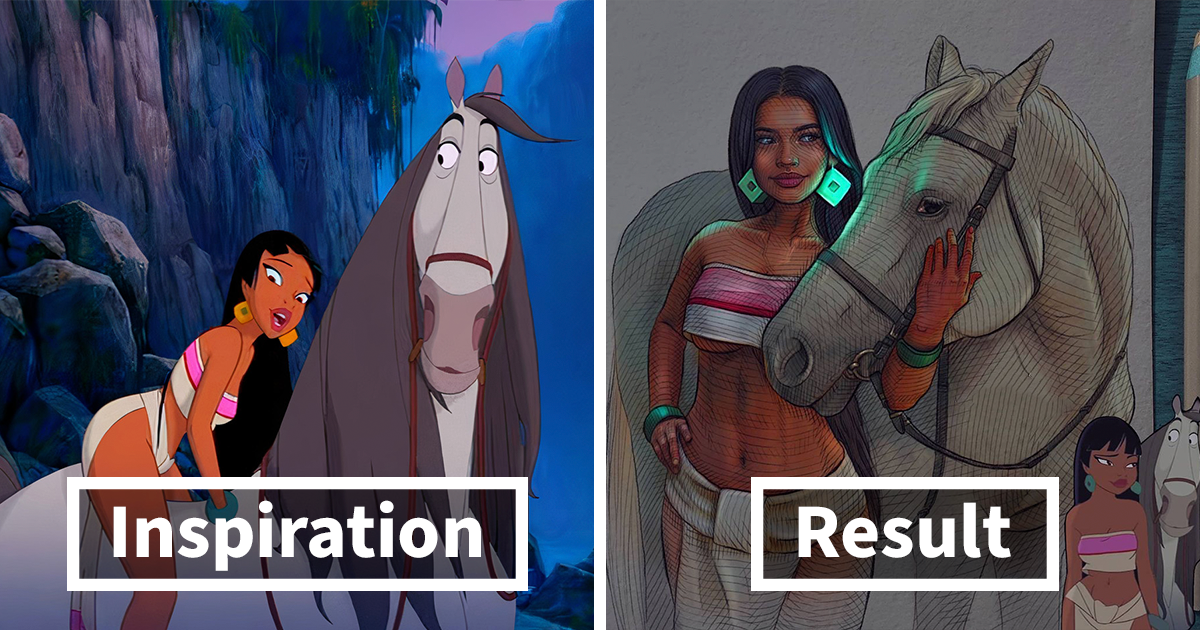
7. Chel And Altivo
Chel and Altivo from The Road to El Dorado add an adventurous twist to the lineup. Chel is clever, confident, and full of personality, while Altivo is the kind of animated horse who steals scenes without needing dialogue. Their inclusion gives the series a broader animation appeal beyond the most obvious princess icons.
This pairing works because both characters carry a sense of mischief. Chel is not a passive fairytale figure; she is strategic, observant, and ready to make her own way. Altivo, meanwhile, brings comic timing and visual elegance. A glowing portrait can make them feel like part of a golden legend, which fits the film’s treasure-hunting atmosphere perfectly.
What Makes The Drawings Look Like They Are Glowing?
The glow effect in character art usually depends on three things: contrast, edge lighting, and color temperature. Even when an artist uses traditional tools, the illusion of light can be created by placing bright highlights near deep shadows. When the brightest parts of the drawing appear around the hair, eyes, clothing edges, or animal fur, the viewer’s brain reads the image as luminous.
Lander Art’s style often gives characters a soft halo effect. This does not mean every line is bright. In fact, the glow works because the artist controls where the viewer looks. The eyes tend to carry emotion, the hair often catches light, and the animals are shaded in a way that makes them feel dimensional. It is a little like stage lighting for fan art: everyone gets their mark, nobody trips over the scenery, and the tiger absolutely knows which side is his good side.
The technique also benefits from nostalgia. Viewers already have emotional memories attached to these characters. When the artist adds a glowing atmosphere, the artwork feels like a memory made visible. It is not only “Here is Jasmine.” It is “Here is how Jasmine felt when you first watched Aladdin and believed a palace balcony could change everything.”
Why This Fan Art Connects With Viewers
Fan art succeeds when it gives audiences something familiar and something new at the same time. If the artwork is too familiar, it feels like a copy. If it is too different, it loses the emotional thread. These glowing princess drawings land in the sweet spot. The characters are instantly recognizable, but the lighting and composition make them feel freshly imagined.
The pet element also gives the series a cozy emotional hook. People love seeing beloved characters with animals because it adds warmth and relatability. Even the most dramatic princess becomes more human when paired with a loyal companion. A horse, tiger, donkey, cat, or forest creature can soften the pose, create humor, and make the whole image feel alive.
Another reason the drawings work is that they are easy to share. A glowing portrait has instant visual impact on social media. It stops the scroll because the light creates contrast, and the recognizable characters create curiosity. Viewers do not need a long explanation to understand the appeal. They see a princess, they see a pet, they see magic, and their thumb pauses like it has been placed under an ancient spell.
The Bigger Appeal Of Princess Fan Art
Princess fan art has become a major part of online pop culture because these characters are flexible symbols. Artists reinterpret them as modern fashion icons, fantasy warriors, historical figures, anime characters, villains, mermaids, superheroes, parents, students, and everything in between. The best versions are not just costume swaps. They reveal something new about the original character.
In this case, the glowing style emphasizes tenderness and companionship. It does not try to redesign the entire story. Instead, it zooms in on the emotional bond between heroine and animal friend. That choice gives the artwork a gentle focus. It is not about making the characters edgy or unrecognizable. It is about making them feel cherished.
For younger viewers, the drawings may simply look beautiful. For older fans, they may trigger memories of watching these films on VHS, DVD, cable, or streaming while sitting too close to the screen and pretending not to cry during the emotional parts. The artwork bridges generations by treating animated characters not as childish leftovers, but as enduring visual icons.
How Artists Can Learn From This Style
Artists who admire this glowing look can learn several practical lessons from the series. First, character recognition matters. The silhouettes, colors, and expressions need to be clear enough that viewers understand who they are seeing. Second, lighting should support the mood. A glow is most effective when it feels connected to the character’s world, such as Rapunzel’s lantern-like warmth or Merida’s fiery hair.
Third, the animal companion should not be treated as background decoration. In strong character art, every figure has a role. Rajah should feel protective. Maximus should feel alert. Angus should feel loyal and powerful. Donkey should look like he is seconds away from improving the silence by destroying it. These personality cues make the artwork more memorable.
Finally, the series shows the value of emotional simplicity. The concept is easy to understand: princesses and pets, glowing together. That clarity makes the artwork accessible. Viewers do not need to read a twelve-page lore document or decode a complicated alternate universe. They can enjoy the image immediately, then appreciate the skill behind it afterward.
Experiences Related To Glowing Cartoon Princess Art
There is a very specific feeling that comes from discovering artwork like this online. You open your phone for one harmless minute, planning to check a message, and suddenly you are twenty images deep into a fan art account, emotionally invested in whether a fictional horse has been shaded correctly. This is how the internet gets us. It does not always need drama. Sometimes it just needs a glowing tiger and a princess with excellent hair.
For many fans, these drawings bring back the experience of childhood movie nights. Maybe you watched Aladdin and wished you had a friend as loyal as Rajah, though preferably one who did not require several hundred pounds of raw meat and a palace courtyard. Maybe Tangled made lanterns feel magical forever. Maybe Brave made you want to run through the woods with a bow, a horse, and absolutely no interest in arranged marriage negotiations. These characters stay with people because they are attached to feelings: freedom, courage, loyalty, humor, and wonder.
The pet side of the artwork is especially relatable. Even if most of us do not have a palace tiger or a horse with law-enforcement instincts, we understand the comfort of an animal companion. Pets often become silent witnesses to our everyday adventures. They sit beside us while we work, stare at us like we have made poor life choices, and somehow make ordinary rooms feel warmer. That is why seeing princesses with their animals feels emotionally satisfying. It connects fantasy to something real.
There is also a creative lesson in the glow itself. Glowing art feels hopeful. It suggests that beauty can come from contrast, that shadows make light more visible, and that familiar stories can shine again when seen through a new artistic lens. That is a useful reminder for anyone who creates content, draws, writes, edits videos, or simply tries to make something original in a world overflowing with recycled ideas.
Looking at these seven pictures, it is easy to understand why fan art remains so popular. It allows viewers to revisit beloved characters without simply replaying the same scenes. It gives artists room to say, “I know you have seen this princess before, but have you seen her like this?” That small shift can make an old character feel new again. It can also inspire other artists to pick up a pencil, test a lighting effect, or finally draw the pet sidekick who has been living rent-free in their imagination.
And honestly, that may be the best part of the whole series. It does not just celebrate princesses. It celebrates companionship, imagination, and the kind of visual magic that makes people pause in the middle of a noisy feed. In a digital world full of hot takes, updates, and notifications, a glowing drawing of a princess and her loyal animal friend feels like a tiny fairytale break. No castle required. Snacks recommended.
Conclusion
Lander Art’s glowing drawings of cartoon princesses and their pets show why fan art continues to thrive online. The series takes characters audiences already love and presents them with warmth, polish, and emotional focus. From Rapunzel and Maximus to Jasmine and Rajah, each portrait highlights the bond between heroine and companion while adding a luminous style that feels both nostalgic and fresh.
The collection is more than a pretty set of pictures. It is a reminder that animated characters endure because they carry feelings people recognize: loyalty, bravery, curiosity, humor, independence, and love. Add a glowing effect and a beloved animal friend, and suddenly the artwork feels like a memory with better lighting. If fairytales had profile pictures, they would probably look a lot like this.










