
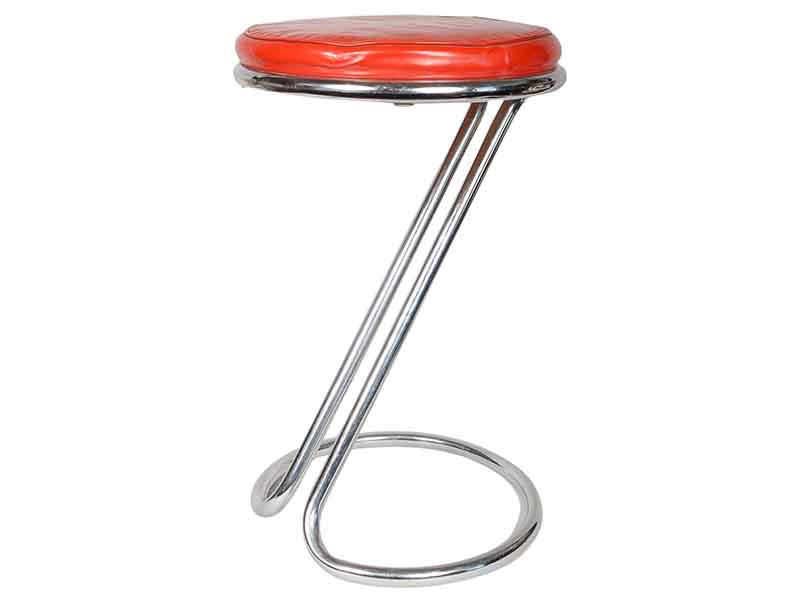
If one piece of furniture could wink at you without having a face, the Gilbert Rohde Art Deco Z Stool would be a strong candidate. It is compact, clever, stylish, and just dramatic enough to make the rest of the room sit up straighter. In the world of American modern design, Rohde’s work often gets praised for helping push furniture away from dusty historical reproductions and toward something cleaner, smarter, and far more in tune with modern life. The Z stool fits beautifully into that story.
At first glance, it looks simple: a circular upholstered seat perched on a chrome frame bent into a bold Z-like profile. But that simplicity is exactly the trick. This is not a fussy stool trying to impress you with carved flourishes or old-world heaviness. It is an Art Deco and Machine Age statement piece that uses line, proportion, metal, and geometry to do all the talking. And yes, it talks with confidence.
For collectors, decorators, and design nerds who enjoy phrases like “streamlined silhouette” and “tubular chrome” a little too much, the Gilbert Rohde Art Deco Z Stool is a small object with a very big personality. It bridges Art Deco glamour and early American modernism, and it proves that a stool does not have to be large to be historically important. Sometimes great design shows up in a surprisingly humble package. Sometimes that package just happens to look like the alphabet got dressed for a cocktail party.
Who Was Gilbert Rohde?
Before you can appreciate the Z stool, it helps to know the mind behind it. Gilbert Rohde was one of the most important American designers of the 1930s and early 1940s. He is widely associated with the rise of modern furniture in the United States, especially through his early-1930s work for Herman Miller. Rohde brought a fresh vision to American interiors at a time when many manufacturers were still producing furniture modeled after historical European styles. His argument was refreshingly direct: modern people deserved modern furniture.
Rohde’s design language blended several influences without becoming stiff or academic. He drew from European modernism, Bauhaus ideas about utility and simplicity, and the glamorous visual rhythm of Art Deco. That combination is what makes his work so distinctive. He could design furniture that felt rational and streamlined, but never cold. Even his more restrained pieces still carried a sense of movement and theatricality.
He also understood something that still matters today: furniture should respond to the way people actually live. That meant cleaner lines, practical forms, modular thinking, and a willingness to use industrial materials such as chrome, glass, and lacquer. Rohde was not interested in making furniture that escaped into the past. He wanted it to look at the present and lean a little into the future.
What Is the Gilbert Rohde Art Deco Z Stool?
The Gilbert Rohde Art Deco Z Stool is generally associated with Rohde’s work for the Troy Sunshade Company and with the sleek chrome-heavy design language that defined much of his Machine Age seating. Surviving examples vary in height and upholstery, with some appearing as low stools and others closer to counter-stool proportions. That variation is part of the charm and part of the challenge when identifying period pieces.
What unites these stools is the silhouette. The frame creates a striking angular profile that reads as a stylized Z, supporting a round upholstered seat above. The design usually features chrome-plated steel or tubular chrome construction, which gives the stool its crisp, reflective, almost architectural presence. The seat is often upholstered in vinyl, leather, or another period-appropriate material, depending on the specific example and whether it has been restored.
Calling it a “stool” almost undersells it. Yes, it is seating. But it is also an exercise in visual economy. Rohde took what could have been an ordinary utility object and made it sculptural. The result is furniture that feels as if it belongs equally in a glamorous dressing area, a cocktail corner, a studio apartment, or a carefully styled modern interior.
The Shape Does Most of the Heavy Lifting
The Z form is the headline act. Instead of relying on ornament, the stool turns structure into style. That was a powerful move in the Art Deco and Machine Age eras, when designers were increasingly fascinated by speed, modern industry, and bold geometric forms. The Z profile feels dynamic even when the stool is standing perfectly still. It looks like motion frozen into metal.
That sense of movement is one reason the stool still feels fresh. Good geometry ages well. A great silhouette does not need to beg for attention; it quietly owns the room.
Chrome Gives It the Machine Age Spark
Chrome was one of the signature materials of modern design in the 1930s, and Rohde used it with confidence. On the Z stool, chrome is not decorative fluff. It reinforces the stool’s sleekness, reflectivity, and modern attitude. It catches light beautifully, which is why even a single stool can add a little zip to a room.
It also places the piece firmly within the Art Deco and Streamline Moderne conversation. Chrome says efficiency, polish, and urban modernity. It says the future has arrived and it is dressed far better than expected.
The Round Seat Softens the Geometry
If the frame is all angles and motion, the upholstered seat adds balance. The circle softens the sharpness of the Z and keeps the piece from feeling too severe. That relationship between hard and soft, metal and upholstery, line and volume, is part of why the stool works so well visually. It is disciplined, but not rigid. Stylish, but still usable.
Why the Z Stool Matters in Design History
The Z stool matters because it captures a key transition in American furniture design. In earlier decades, many furniture makers leaned heavily on revivals and reproduction styles. Rohde helped shift the conversation toward furniture that reflected contemporary architecture, changing urban lifestyles, and modern manufacturing methods. His work was not just about making rooms look new; it was about making furniture behave differently in space.
The stool also shows how Rohde translated high design ideas into compact domestic objects. You do not need a grand desk or a large cabinet to understand his worldview. The Z stool tells the story in miniature. It is economical, versatile, visually bold, and rooted in the idea that everyday furniture can still be artful.
That is why the piece appeals to more than just hardcore collectors. It speaks to anyone interested in Art Deco furniture, early American modernism, Herman Miller-era design culture, or the broader shift toward streamlined living in the first half of the twentieth century.
How to Identify a Gilbert Rohde Art Deco Z Stool
Because vintage market listings can vary in date, height, upholstery, and condition, identification requires a little patience and a good eye. Here are the main details to look for.
1. The Z-Shaped Frame
This is the essential feature. The frame should create a clean, confident Z-like profile rather than a generic bent-metal support. The best examples look intentionally graphic, almost logo-like in silhouette.
2. Chrome-Plated Steel Construction
Most recognized examples use chrome-plated steel or tubular chrome. Patina is normal on older pieces, and gentle wear can actually help confirm age. Chrome that looks suspiciously perfect may indicate later refinishing, which is not necessarily bad, but it does affect collectibility.
3. Circular Upholstered Seat
The seat is typically round and compact. Original upholstery can be a plus, even with wear, because it offers clues about the stool’s age and history. On the other hand, expertly restored upholstery may make the stool more livable for daily use. This is where buyers must decide whether they are collecting history, decorating a room, or trying to do both without starting an argument with themselves.
4. Manufacturer Tags or Provenance
Some examples retain a Troy Sunshade tag or other identifying marks. Provenance, auction history, and trusted dealer descriptions can also help support attribution. Since Rohde’s designs have circulated through the vintage market for decades, documentation matters.
5. Period-Appropriate Proportions
Known examples include both lower stools and taller counter-height versions. Rather than obsessing over one exact measurement, compare the overall proportions, frame logic, and material consistency. The strongest examples feel balanced, compact, and intentionally minimal.
Why Collectors and Decorators Still Love It
The Z stool continues to attract attention because it solves several design problems at once. It is sculptural without being bulky. It is vintage without looking stale. It is glamorous without slipping into costume. And it works in both Art Deco interiors and more contemporary spaces.
In a traditional Art Deco room, it looks perfectly at home beside mirrored surfaces, lacquered case pieces, and dramatic lighting. In a more modern interior, it becomes a contrast piece: a flash of chrome and history that sharpens everything around it. In a minimalist setting, it can function almost like functional sculpture. In a maximalist room, it happily plays the role of stylish co-conspirator.
Collectors also appreciate the stool because it represents a recognized designer without requiring the footprint or budget of a large case piece. It is a manageable entry point into Rohde’s world. You get the design vocabulary, the historical relevance, and the visual drama, all in one compact object.
How to Style a Gilbert Rohde Art Deco Z Stool Today
Use It as a Vanity Stool
This is one of the most natural fits. The stool’s polished frame and compact seat feel right at home with a dressing table, especially one that includes glass, wood veneer, or mirrored accents. It brings instant old-school glamour without requiring the entire room to cosplay as a 1930s penthouse.
Add It to a Kitchen or Bar Area
Taller Z stool examples work beautifully in kitchen and bar settings, especially when paired with black, white, walnut, or stainless finishes. The chrome frame keeps the look airy and avoids the visual heaviness that many wooden stools bring to a compact space.
Let It Stand Alone
One well-placed Z stool can function like a design exclamation point. Place it in a hallway corner, beside a bookshelf, or near a large piece of art. It does not need a matching set to make sense. Some furniture whispers. This one simply arrives.
What to Know Before Buying One
If you are shopping for a Gilbert Rohde Art Deco Z Stool, condition is everything. Check the chrome for pitting, rust, or over-polishing. Examine the welds and frame stability. Ask whether upholstery is original or replaced. Review dimensions carefully, because low stools and counter stools serve very different purposes. And whenever possible, buy from a reputable dealer or auction house that provides clear photographs and attribution details.
It is also worth remembering that vintage design markets are messy. Dates can differ from listing to listing. Some sellers emphasize Art Deco, while others file the stool under Machine Age or even early midcentury categories. Instead of getting hung up on one label, focus on the design language, maker attribution, materials, and overall quality of the piece.
The best buying mindset is simple: know what you want. If you are after museum-level originality, prioritize untouched details and provenance. If you want a beautiful, usable stool for real life, a careful restoration may be the smarter choice. A piece can be historically meaningful and still survive dinner parties.
Experience: Living With the Gilbert Rohde Art Deco Z Stool
Owning or even spending time around a Gilbert Rohde Art Deco Z Stool is a different experience from owning a plain utility stool. It changes the mood of a room in subtle but unmistakable ways. First, there is the visual experience. You notice the outline before anything else. The frame cuts through space with that bold Z gesture, and the chrome picks up light in a way that makes the stool feel active even when nobody is sitting on it. Morning light gives it one personality, lamp light gives it another, and suddenly you realize you are emotionally invested in a stool. Congratulations. This is how design collecting starts.
Then there is the tactile experience. A period or period-style upholstered seat adds warmth where the metal frame stays cool and crisp. That contrast is part of the appeal. The stool feels sleek, but not sterile. It invites use, even if it also looks like it would prefer to be admired from three flattering angles first. In a vanity setting, it feels glamorous. At a bar or counter, it feels almost cinematic, as if a black-and-white movie star might glide in, sit down, and order something with a twist.
There is also an emotional experience tied to scale. The Z stool is not oversized, which makes it easy to live with. It can slide into corners, tuck under tables, or work as a flexible accent seat when guests arrive. That practicality is part of what makes the design feel so modern, even now. Rohde understood that furniture should be responsive to real rooms and real habits. The stool does not dominate a space; it sharpens it.
Collectors often talk about the pleasure of finding a piece like this in the wild. Maybe it appears in a vintage shop with worn upholstery and glorious chrome. Maybe it turns up at auction with a Troy tag still attached. Maybe it shows up online in a listing where the photographs are terrible but the silhouette is unmistakable. That hunt is part scholarship, part intuition, and part hopeful obsession. You start by looking for a stool and end up learning about American modernism, 1930s materials, showroom history, and why one designer cared so deeply about the future of domestic life.
Living with the piece over time also teaches you why Rohde still matters. The stool does not rely on nostalgia alone. It still performs. It still looks disciplined, witty, and forward-thinking. It can sit beside a sleek contemporary kitchen island, a lacquered Art Deco vanity, a walnut case piece, or a minimalist gallery wall and still hold its own. Very few vintage objects are that adaptable without losing their identity.
Perhaps the best experience of all is that the stool keeps rewarding attention. At first you love the shape. Then you notice the balance between the round seat and the angular frame. Then you begin to appreciate how little material Rohde needed to create such a memorable piece. It is efficient, expressive, and just a little bit glamorous. In other words, it behaves exactly how a great Art Deco stool should.
Conclusion
The Gilbert Rohde Art Deco Z Stool is more than a stylish vintage seat. It is a compact lesson in American modern design, a sharp example of Art Deco and Machine Age thinking, and a reminder that Gilbert Rohde knew how to make furniture feel current without stripping it of personality. The stool’s chrome frame, graphic Z profile, and upholstered seat give it a rare combination of practicality and drama. It is useful, collectible, and honestly a little smug about how good it looks.
That confidence is well earned. Whether you admire it for its design history, want it for your interior, or are hunting for one to add to a growing collection, the Z stool remains a small masterpiece with outsized influence. It proves that in the hands of a designer like Rohde, even a humble stool can become an icon.













