
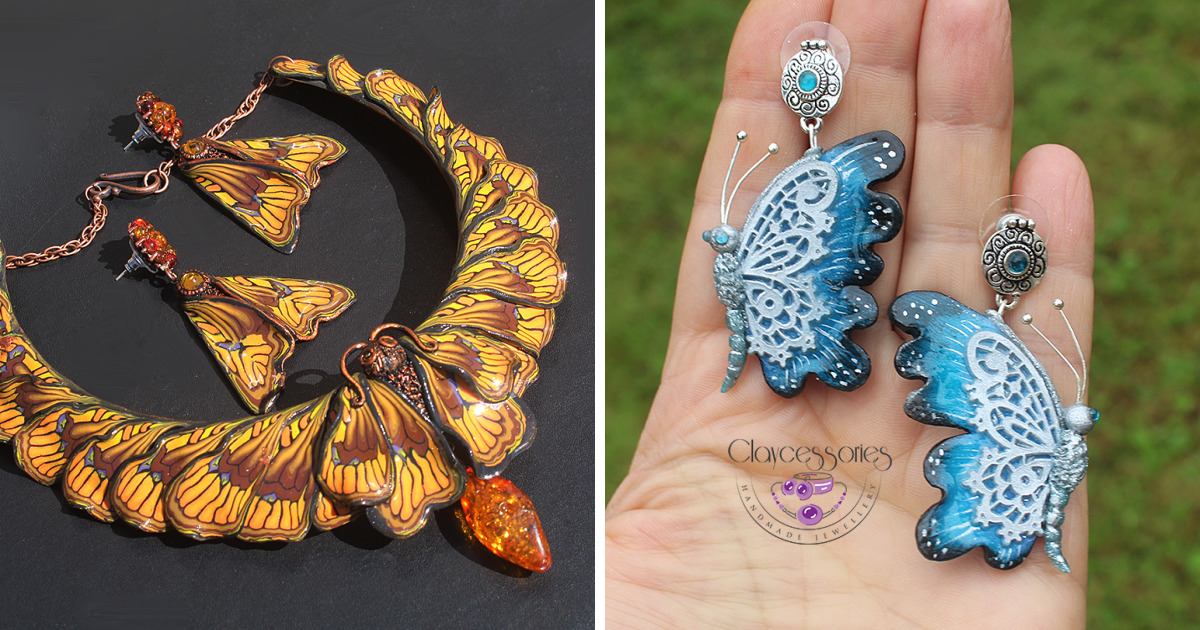
There are a lot of ways to make jewelry, but polymer clay has a special kind of magic. It is colorful, flexible, surprisingly detailed, and a little bit addictive in the best possible way. One minute you are flattening a tiny sheet of clay on your table, and the next minute you are squinting at a miniature wing pattern like a very dramatic artisan scientist. That is how butterfly jewelry happens in my world.
When I use polymer clay to create unique butterfly jewellery, I am not just making cute accessories. I am building tiny wearable stories. Butterflies already come loaded with meaning: transformation, beauty, renewal, movement, spring, and sometimes even memory. Add the freedom of polymer clay, and suddenly the design possibilities multiply faster than the number of craft supplies in a drawer labeled “totally organized.”
What makes this medium so appealing is that it gives me control without taking away play. I can sculpt delicate wings, blend several shades into a soft ombré, press in texture, add subtle shimmer, and shape pieces that feel expressive instead of mass-produced. The result is butterfly jewelry that looks personal, artistic, and just a little bit impossible for people to stop complimenting.
Why Polymer Clay and Butterfly Jewelry Are a Perfect Match
Polymer clay works beautifully for jewelry because it is lightweight, easy to shape, and capable of holding tiny details. That matters when your subject is a butterfly. Real butterflies are all about intricate wing structure, gentle curves, layered color, and delicate symmetry. A clunky material would fight that look. Polymer clay cooperates.
I can roll it thin for airy earrings, build it up for a dramatic pendant, or layer it for depth. I can carve vein lines into the wings, soften edges, emboss patterns, and finish the surface so the piece feels polished rather than homemade in the macaroni-necklace sense of the word. There is charm in school crafts, of course, but this is aiming higher.
Butterflies also lend themselves to endless design directions. Some pieces are soft and romantic with pastel wings and pearl accents. Some feel bold and modern with graphic shapes, metallic details, and high-contrast colors. Others lean into an art-inspired look with flowing lines, natural curves, and botanical textures. That flexibility is a big reason I keep returning to this theme.
The Inspiration Behind My Butterfly Designs
I rarely start with “make butterfly, done.” That would be efficient, but it would also be boring, and butterfly jewelry deserves better. My inspiration usually comes from a mix of nature, vintage ornament, museum design, and color stories I cannot get out of my head.
Nature Does the Heavy Lifting
Butterflies are basically overachievers in the design department. Their wings have rhythm, symmetry, contrast, and texture built right in. I look at monarch tones for warm orange-and-black drama, swallowtail-inspired shapes for elegant movement, and soft garden butterflies for powdery blues, blush pinks, creams, and lavender. Even when I am not copying a specific species, I borrow the logic of real wings: balanced shape, central body, fine edge details, and intentional pattern placement.
Art History Sneaks Into the Studio
I also love the long history of butterflies in decorative art and jewelry. Butterfly forms have appeared in museum-inspired jewelry, art nouveau design, and ornamental objects for generations because they naturally fit a style language built around flowers, insects, flowing lines, and beauty borrowed from nature. That influence shows up in my work whenever I create more sculptural wings, curling outlines, or softly organic silhouettes. In short, if a pendant starts looking poetic and slightly theatrical, I know exactly who is to blame: history.
Meaning Matters
Butterflies are widely associated with rebirth and transformation, which makes them especially compelling for jewelry. People do not wear butterfly pieces only because they look pretty. They wear them because they mean something. A butterfly necklace can represent a new season, a big life change, a softer self-image, or simply the desire to wear something hopeful near the heart. That emotional layer makes designing these pieces much more satisfying.
How I Actually Make Polymer Clay Butterfly Jewellery
Every maker develops a rhythm, but my process usually follows the same broad path. It starts with preparation, because polymer clay rewards patience and punishes shortcuts with the enthusiasm of a strict baking judge.
1. Conditioning the Clay
The first step is conditioning the clay until it is soft, smooth, and workable. If the clay is too stiff, the finished piece can become brittle or uneven. I knead it by hand or roll it repeatedly until it warms up and relaxes. This part is not glamorous, but it is essential. Skipping it is like deciding to frost a cake that is still soup.
2. Creating the Color Story
Next I choose the palette. Sometimes I go realistic with monarch oranges, soft yellows, or blue-black contrasts. Other times I lean dreamy and use rose gold, cream, sage green, smoky plum, or pearlescent white. Polymer clay is wonderful for color blending, so I can create marbled effects, gradients, or layered tones that mimic the complexity of wings without looking too literal.
3. Rolling, Cutting, and Building the Wings
Once the clay is ready, I roll it into even sheets. Then I cut or hand-shape the wing pieces. Depending on the design, I may create four separate wing elements, a stylized two-wing silhouette, or an abstract butterfly outline that feels modern rather than naturalistic. The body is usually a slim central shape that anchors the wings visually.
This is also where texture comes in. I might score fine lines, use texture mats, press lace or mesh lightly into the surface, or layer a thinner contrasting sheet on top to create dimension. Tiny details make a huge difference. A butterfly can go from “that is nice” to “wait, where did you buy that?” in a matter of one subtle wing edge.
4. Planning for Jewelry Findings
If I am making earrings, I decide early where jump rings and hardware will go. If I am making a pendant or brooch-style piece, I plan the backing so the design hangs correctly and feels balanced when worn. This part is practical, but it affects the final look just as much as the decorative details do. Beautiful jewelry that flips upside down every two seconds is not a personality trait I want in my work.
5. Baking and Finishing
After shaping comes curing. Polymer clay has to be baked according to the manufacturer’s instructions, and I never treat that step casually. Correct temperature and timing matter. After baking, I let the pieces cool completely before smoothing edges, drilling holes if needed, assembling components, and adding finishing touches. Wet sanding helps refine the surface, and depending on the design, I may leave the finish matte for a soft velvety look or add a gentle gloss for extra drama.
What Makes My Butterfly Jewelry Unique
Plenty of people use polymer clay. Plenty of people make butterflies. What makes a piece unique is the design thinking behind it.
I Treat Each Piece Like Wearable Art
I do not want my work to feel flat, generic, or cookie-cutter. I want every pair of earrings or pendant to have a point of view. That might come from unusual color combinations, layered textures, asymmetrical composition, hand-painted accents, metallic foils, or a silhouette that nods to nature without copying it exactly.
I Balance Delicacy With Durability
Butterflies look delicate, but jewelry has to survive real life. It needs to handle movement, storage, the occasional drop, and that mysterious force that makes one earring disappear into another dimension. So I design with wearability in mind. Thin wings still need structure. Lightweight does not mean flimsy. Decorative details still need solid assembly.
I Let Imperfection Add Character
Handmade pieces should not look machine-stamped. I like the tiny differences that come from shaping by hand. A slightly different marbling pattern, a small shift in texture, a brushstroke of mica, or a unique blend of color gives each butterfly its own identity. That is part of the charm. No one wants to hear “Wow, this looks exactly like every other thing on the internet.”
Design Ideas I Love for Butterfly Polymer Clay Jewelry
Statement Earrings
Oversized butterfly wing earrings are dramatic without being heavy. I love using bold shapes, layered tones, and just enough movement to catch the light when the wearer turns their head.
Mini Butterfly Studs
On the opposite end of the spectrum, tiny butterfly studs are sweet, wearable, and giftable. They are perfect for shoppers who want something subtle but still artistic.
Pendants With Botanical Details
Butterflies and flowers belong together. A pendant that combines wings with leaves, vines, petals, or tiny blossoms feels romantic and timeless.
Mixed-Media Pieces
I also enjoy combining polymer clay butterflies with metal charms, pearls, beads, crystals, or textured frames. These combinations create contrast and make the clay feel even more elevated.
Common Mistakes I Avoid
The biggest mistake in polymer clay jewelry is rushing. Unconditioned clay, fingerprints everywhere, uneven thickness, poor baking habits, and sloppy finishing can ruin a beautiful idea. I have learned to slow down and respect the process.
I also avoid overdecorating. Butterflies are naturally expressive, so they do not need every trick in the craft cabinet at once. If I add shimmer, texture, paint, foil, crystals, glitter, and three kinds of topcoat, the butterfly stops being elegant and starts looking like it lost a bet. Restraint is underrated.
Why People Connect With Butterfly Jewellery
One reason butterfly jewelry remains popular is that it sits at the intersection of style and symbolism. It can be romantic, artistic, whimsical, emotional, or bold depending on how it is made and worn. A teenager can wear butterfly earrings with a casual outfit. A bride can wear a butterfly pendant with a soft dress. A collector can buy a sculptural brooch-style piece because it feels like art. The motif adapts.
That range is part of why I love making it. Butterfly jewelry does not have to stay in one lane. It can be soft and sentimental one day, fashion-forward the next, and heirloom-inspired after that. Polymer clay gives me the flexibility to follow all of those moods without losing the handmade soul of the piece.
My Experience Creating Butterfly Jewelry From Polymer Clay
When I first started making butterfly jewelry from polymer clay, I assumed the process would be simple. Roll the clay, cut some wings, bake it, add hardware, done. That fantasy lasted about twelve minutes. I quickly discovered that butterfly designs are one of those things that look effortless only after you have wrestled with proportion, symmetry, texture, and finishing. In other words, the butterflies humbled me immediately.
At the beginning, my pieces were enthusiastic rather than refined. Some wings were too thick, some were too stiff, and some looked less like elegant butterflies and more like decorative crackers. Still, I kept going, and that trial-and-error stage taught me the most. I learned that color blending matters more than I expected. I learned that tiny details can save a design. I learned that one extra minute of smoothing before baking can prevent a lot of regret later.
Over time, the experience became less about producing a perfect piece and more about developing a style. That changed everything. Instead of copying what I thought butterfly jewelry should look like, I started asking what I wanted it to feel like. Did I want the piece to feel airy and romantic? Strong and graphic? Softly vintage? Garden-inspired? A little whimsical? Once I approached the work that way, my designs became more personal and more memorable.
One of my favorite parts of the process is choosing the palette. A butterfly can carry so much emotion through color alone. Soft creams and blush tones feel delicate and bridal. Deep black with flashes of blue or green feels dramatic and sophisticated. Warm amber and orange can make a piece feel lively and sunlit. I love watching a plain slab of clay turn into something that suddenly has personality. It is a small transformation, which feels wonderfully appropriate for a butterfly theme.
I also enjoy how making these pieces keeps me observant. I notice wing patterns in nature, color combinations in flowers, curves in old decorative objects, and textures in fabrics or wallpaper that I can reinterpret in clay. Butterfly jewelry has made me pay closer attention to detail in everyday life. Apparently, once you start designing tiny wings, your brain becomes permanently interested in edge shapes and gradients.
Another meaningful part of the experience is seeing how people respond to the finished work. Butterfly jewelry often sparks emotional reactions. Someone might say it reminds them of a loved one, a season of growth, a garden they grew up with, or a milestone they want to honor. That response is special because it proves the jewelry is doing more than decorating an outfit. It is carrying memory, mood, and meaning.
What I appreciate most is that polymer clay keeps the process playful. It allows me to experiment without feeling trapped by perfection. I can test shapes, shift colors, combine finishes, and try new ideas without losing the handmade spirit that drew me to the medium in the first place. Every butterfly I create teaches me something, whether it is a technical lesson or a design insight. That is why I keep coming back to this subject. There is always another wing to refine, another palette to explore, and another little piece of wearable art waiting to emerge from a block of clay and a slightly overexcited imagination.
Conclusion
I use polymer clay to create unique butterfly jewellery because it gives me the best of both worlds: creative freedom and wearable beauty. It lets me capture the lightness, symbolism, and visual poetry of butterflies while still making pieces that feel modern, personal, and fun to wear. From soft botanical pendants to bold statement earrings, every design becomes a chance to turn inspiration into something tangible.
That is the real joy of polymer clay butterfly jewelry. It is not just about crafting accessories. It is about shaping color, texture, meaning, and style into something small enough to wear yet expressive enough to feel unforgettable. And honestly, that is a pretty great trick for a humble block of clay.













