
Super Bowl LVII had everything a football fan could want: Patrick Mahomes magic, Jalen Hurts heroics, a Rihanna halftime show, a late holding call that launched a thousand arguments, and, somehow, a grass field that became one of the biggest characters in the game. Yes, the playing surface at State Farm Stadium in Glendale, Arizona, had its own storyline. Before the Chiefs and Eagles ever stepped on it, the field had been grown, groomed, moved, monitored, painted, protected, and babied for nearly two years. That is a lot of effort for something whose final job was basically to be stomped by 300-pound linemen and rolled over by halftime-show equipment.
So why did growing the field for Super Bowl LVII take two long years? The short answer is that a Super Bowl field is not just “grass.” It is a custom-built sports surface engineered for traction, durability, television appearance, player safety, and event logistics. The longer answer involves Tahoma 31 bermudagrass, ryegrass overseeding, plastic-based sod production, Arizona desert weather, a retractable field tray, thousands of square feet of turf, hundreds of gallons of paint, and the kind of maintenance schedule that makes raising a houseplant look like a casual hobby.
The Super Bowl Field Is a Product, Not Just a Patch of Grass
When most people think about a football field, they imagine a big green rectangle and move on with their lives. Groundskeepers, turf scientists, and NFL field managers do not have that luxury. The Super Bowl is the most-watched television event in American sports, and every inch of the field has to look camera-ready while surviving one of the most violent team sports on earth.
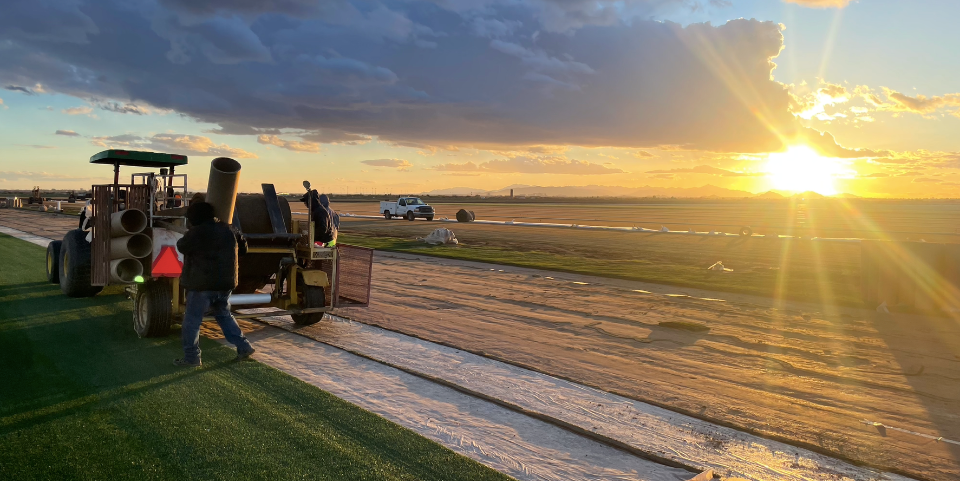
The Super Bowl LVII field measured roughly 95,000 square feet, a little more than two acres of sod. It was grown by West Coast Turf, a company with long experience producing fields for major sporting events. Because the game was played in Arizona, the sod was grown locally in Scottsdale, close enough to State Farm Stadium to reduce transportation stress but far enough from game-day chaos to give the turf a controlled farm environment. That mattered because sod is alive. It can dry out, overheat, bruise, weaken, or become diseased. Unlike artificial turf, natural grass does not arrive in a roll and simply “exist.” It must be grown into a playable system.
Why Two Years? Because Strong Roots Take Time
The two-year timeline was mainly about building strength below the surface. A football field is only as good as its root system. If the roots are weak, the grass can tear, divot, shift, or separate under players’ cleats. That becomes a serious problem when elite athletes are cutting, sprinting, pushing, and colliding on every snap.
The Super Bowl LVII turf began with Tahoma 31 bermudagrass, a newer hybrid grass developed through turfgrass research at Oklahoma State University. Tahoma 31 is known for its cold tolerance, drought resistance, density, and ability to handle wear. Those traits made it appealing for a February game in Arizona, where conditions can swing from warm daytime sunshine to chilly desert nights. But the grass alone was not enough. The production method mattered just as much.
The sod was first established in soil, then lifted and grown on plastic during a later stage of development. That sounds odd until you understand the goal. When grass grows on plastic, its roots cannot dive deep into the ground. Instead, they bind together into a dense mat. Think of it like the turf version of a tightly woven carpet, except alive and much fussier. This root-bound structure makes the sod stronger, cleaner to harvest, and easier to install with tight seams. For a Super Bowl, where the field cannot spend weeks recovering after installation, that strength is priceless.
Tahoma 31: The Grass Chosen for Strength and Survival
Tahoma 31 was selected because it offered a promising balance of toughness and appearance. Bermudagrass is common on warm-season sports fields, but not all bermudagrasses are equal. Tahoma 31 was bred to tolerate cold better than many traditional varieties while still offering density and wear resistance. That matters because February football is a strange assignment for grass. The field has to be green and attractive for television, tough enough for NFL traffic, and healthy enough to handle the stress of being moved, painted, covered, uncovered, and played on.
For Super Bowl LVII, the Tahoma 31 base was also overseeded with ryegrass. Ryegrass helps keep the surface green during cooler weather, when bermudagrass may not look as lush. In simple terms, the bermudagrass provided the muscle, while the ryegrass provided the bright green suit. Together, they were supposed to create a field that looked beautiful and played firm. Like a sports car with a fresh wax job, the field needed both performance and presentation.
The Plastic-Grown Sod Method Was the Secret Weapon
One of the most important details in the Super Bowl LVII field story is that the sod was grown on plastic during part of its life. This was not a gimmick. It was a strategy designed to create a thick, strong slab of turf that could be harvested without cutting deep roots.
Traditional sod is usually cut from soil, which slices the root system and shocks the plant. After being installed somewhere else, the grass needs time to recover and re-root. A Super Bowl field does not have the luxury of a long spa weekend. The NFL needs the surface ready almost immediately because rehearsals, media events, field painting, staging, and final stadium conversions all happen on a strict schedule.
By growing the grass on plastic, the roots formed a compact mat above the barrier. When the sod was harvested, crews could undercut it cleanly and move it with less trauma. This helped the turf settle quickly into the sand base at State Farm Stadium. It also reduced weak seams, which are dangerous because seams can catch cleats or create inconsistent footing. In a game where one slip can turn a touchdown into a blooper reel, seam quality is not a minor detail.
State Farm Stadium Added Another Layer of Complexity
State Farm Stadium is famous for its retractable natural grass field. Instead of growing permanently inside the building, the field sits in a massive tray that can roll in and out of the stadium. The tray is more than 230 feet wide and more than 400 feet long, and it moves on hundreds of steel wheels along railroad-like tracks. This design allows the grass to get real sunlight outside while still letting the stadium host football indoors.
That system is brilliant, but it also means the field is part lawn, part machine, and part engineering circus. For Super Bowl LVII, the grass could be rolled outside for sun during the day and brought back inside to protect it from cooler temperatures or to allow stadium preparations. In theory, this is the best of both worlds: natural grass for players and indoor comfort for fans. In practice, it requires careful timing, constant monitoring, and a lot of people who understand both turf science and stadium operations.
The Halftime Show Was a Bigger Threat Than Most Fans Realized
Football players are hard on grass, but Super Bowl halftime shows are their own special brand of turf chaos. Rihanna’s performance was not just a concert; it was a massive production involving staging, equipment, crew movement, rehearsals, and repeated setup work. Even if the stage design avoids direct damage, the surrounding activity can compress, scuff, and stress the field.
That is one reason the field had to be grown for durability long before game week. The grass needed to withstand not only four quarters of Chiefs vs. Eagles football but also the heavy choreography of Super Bowl entertainment. A regular-season field prepares for football. A Super Bowl field prepares for football, pop music, television deadlines, sponsor branding, camera crews, celebrity logistics, and confetti. It is less “Sunday lawn” and more “green battlefield with a media degree.”
Painting the Field Was a Science of Its Own
The Super Bowl field is not just green. It is a giant branded canvas. Logos, yard numbers, hash marks, end zones, conference colors, and the midfield shield all have to be painted with precision. Natural grass complicates this because it is watered, mowed, moved, and worn during rehearsals. Paint can fade, rub off, or build up too thickly if applied too early.
Crews typically apply multiple coats of paint in stages, balancing appearance with playability. Too little paint, and the field looks unfinished on television. Too much paint, and the surface can become slick or heavy. For Super Bowl LVII, reports described hundreds of gallons of paint being used across the field. That paint had to survive rehearsals and still look sharp under high-definition cameras. In other words, the turf had to be both a sports surface and a live television set.
Why the Field Still Became Controversial
Here is where the story gets messy. Despite the long preparation, Super Bowl LVII became infamous for slipping. Players from both the Kansas City Chiefs and Philadelphia Eagles struggled with footing. Some changed cleats. Defensive linemen slipped while trying to rush the passer. Ball carriers lost traction. Even celebrations had moments that looked like they belonged in a skating rink commercial.
The criticism was immediate. Eagles players were especially vocal, but Chiefs players also dealt with the same surface. The field did not appear to favor one team as much as it affected the overall style of play. The Eagles’ pass rush, one of the most dominant units in the league that season, finished without a sack. That does not mean the grass alone decided the game, but it did become part of the conversation because traction is fundamental to football. If a pass rusher cannot plant his foot, his technique turns into interpretive dance.
Was the Grass Type to Blame?
Not necessarily. The backlash made “Tahoma 31” sound like the villain in a turf thriller, but experts later pointed out that the grass variety itself may not have been the main problem. Tahoma 31 has a strong reputation in sports turf and golf applications. The bigger question was how the surface was managed after installation, including watering, drying, indoor conditions, humidity, paint, ryegrass behavior, and the amount of time the field spent inside before kickoff.
Several turf observers suggested that the ryegrass layer may have become slick under certain moisture conditions. Others focused on whether the field was overwatered or brought inside before it had dried properly. Natural grass performance depends on countless variables. A field can be beautifully grown and still play poorly if moisture, temperature, paint, or traffic creates the wrong surface condition at the wrong time. That is the cruel comedy of turf management: two years of preparation can still be humbled by a few days of final handling.
The Two-Year Timeline Was About Reducing Risk, Not Eliminating It
The biggest misconception is that two years of preparation should guarantee perfection. It does not. It only reduces risk. Growing Super Bowl sod over such a long period gives turf managers more control over density, root strength, thickness, uniformity, and harvest timing. It allows them to produce backup sod, reject weaker rolls, and create a field that can be installed with minimal shock. But once that living surface enters the stadium environment, new variables take over.
The grass has to adapt to a sand base, movement in and out of the venue, changing sun exposure, nighttime temperatures, watering schedules, paint, rehearsals, and the simple fact that football players are extremely large humans wearing cleats. The field is not finished when it is grown. It is finished when the final whistle blows. Unfortunately for the NFL, during Super Bowl LVII, the field’s final exam came with a few too many slips.
What Super Bowl LVII Taught the NFL About Playing Surfaces
Super Bowl LVII became a reminder that natural grass is both beloved and complicated. Many players prefer grass because it can be more forgiving than artificial turf, especially regarding certain lower-body impacts. But grass requires expert care. It is sensitive to moisture, climate, root health, traffic, and maintenance choices. Artificial turf is more uniform, but it brings its own concerns about hardness, heat, and injury risk. There is no perfect surface, only different trade-offs.
The LVII field also showed that the Super Bowl is not a normal football game. It is a giant event layered on top of a football game. A regular field might need to support two teams and a marching band. A Super Bowl field has to support broadcast rehearsals, branding, media access, security operations, halftime staging, pregame ceremonies, and a championship game played at maximum intensity. That is why the NFL starts planning so early. It is also why every mistake becomes magnified.
Why the Field Cost So Much
The reported price tag for the Super Bowl LVII field was around $800,000. That number sounds absurd if you compare it to a backyard lawn. But a Super Bowl field is not a backyard lawn unless your backyard hosts 67,000 fans, a global television audience, Patrick Mahomes, and Rihanna.
The cost reflects specialized sod production, years of labor, extra acreage, constant monitoring, harvesting, transportation, installation, stadium preparation, painting, equipment, and staff. It also reflects the pressure of failure. If a regular lawn has a bad patch, someone says, “Well, that corner looks sad.” If a Super Bowl field has a bad patch, millions of viewers notice, players complain, sports talk shows feast for days, and the internet turns the grass into a meme before the Lombardi Trophy presentation is over.
The Human Side of Growing a Championship Field
Behind the science and machinery were people walking the field multiple times a day, checking moisture, watching weather forecasts, covering grass during cold nights, protecting it from rain, and worrying over small imperfections. That kind of work rarely gets applause. Fans cheer touchdowns, not root density. But without turf crews, there is no clean stage for the game.
Growing a Super Bowl field is a strange kind of craftsmanship. The goal is to create something perfect, knowing its moment of glory will involve being beaten up on national television. It is like baking a wedding cake and then inviting linebackers to tackle each other on top of it. The pride comes from preparation, not preservation.
Experiences and Lessons Related to the Super Bowl LVII Field
The story of why growing the field for Super Bowl LVII took two long years offers useful lessons far beyond football. Anyone who has worked on a major project can recognize the pattern: months or years of preparation, hundreds of invisible decisions, and then one public moment where everyone judges the result in real time. The field was not just a sports surface. It was a case study in planning, risk management, and the uncomfortable truth that preparation does not always protect you from criticism.
One relatable experience is the difference between building something in controlled conditions and using it in the real world. A chef can test a recipe ten times in a quiet kitchen, then struggle when the restaurant is packed. A teacher can prepare the perfect lesson plan, then face a classroom full of students who all forgot breakfast and discovered sarcasm at the same time. A turf crew can grow strong sod for nearly two years, then face moisture, paint, stadium timing, halftime rehearsals, and elite athletes all at once. Real conditions have a way of humbling even the best plans.
Another lesson is that quality often hides beneath the surface. Fans saw slipping and naturally focused on what was visible. But the long preparation was mostly about what no one could see: roots, density, seams, moisture levels, and plant health. This is true in many fields. A successful website depends on backend structure, not just a pretty homepage. A strong business depends on systems, not just a catchy logo. A great athlete depends on training habits, not just highlight plays. The Super Bowl LVII field reminds us that the hidden foundation usually determines whether the public performance succeeds.
There is also a leadership lesson in the controversy. When something goes wrong on a big stage, explanations come quickly, but simple answers rarely tell the whole story. Some blamed the grass variety. Some blamed watering. Some blamed cleats. Some blamed the stadium environment. The reality was probably more complex. Major outcomes often result from several small factors stacking together. In project work, that means leaders should avoid hunting for one villain and instead examine the entire process from design to execution.
Finally, the field teaches patience. Two years of growth for one game sounds excessive until you understand the stakes. Strong things take time. Roots take time. Testing takes time. Backup plans take time. Whether someone is growing grass, building a brand, writing a book, training for a marathon, or launching a company, the visible moment is usually the shortest part of the journey. The Super Bowl LVII field may be remembered for its slippery moments, but its longer story is about the enormous effort required to create a surface worthy of football’s biggest night.
Conclusion
Growing the field for Super Bowl LVII took two long years because the NFL needed more than green grass. It needed a custom-engineered natural playing surface strong enough for professional football, polished enough for global television, and durable enough for the spectacle surrounding the game. The field was grown with Tahoma 31 bermudagrass, overseeded with ryegrass, strengthened through plastic-based sod production, transported to State Farm Stadium, moved on a retractable tray, painted, protected, rehearsed on, and finally tested by the Chiefs and Eagles.
The irony, of course, is that all that preparation did not prevent controversy. Players slipped, fans complained, and the field became part of Super Bowl LVII history for reasons the turf team probably did not put on the vision board. Still, the two-year process reveals how complex modern sports surfaces have become. A Super Bowl field is biology, engineering, logistics, television production, and athletic performance rolled into one very expensive rectangle. And if that sounds dramatic, remember: this is the Super Bowl. Even the grass has pressure.
SEO Tags
Note: This article was written in original language for web publishing and is based on verified public reporting, turf science information, official stadium details, and postgame analysis of the Super Bowl LVII playing surface.













