
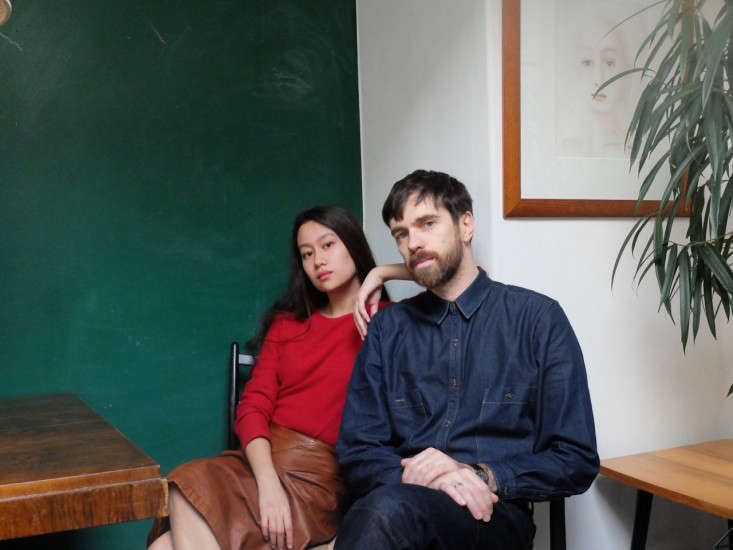
Paris fashion has a talent for making noise while pretending not to. One minute, a runway is sending feathers, crystals, and trousers the size of camping tents into the world; the next, a quiet designer in a beautifully cut coat reminds everyone that the most powerful outfit in the room may be the one that does not beg for applause. That is the enduring appeal of Christophe Lemaire and Sarah-Linh Tran, the creative duo behind LEMAIRE, a Parisian fashion house built on restraint, intelligence, texture, and the radical idea that clothes should actually be worn.
“Under-the-radar” is a funny label for a designer who has worked with Lacoste, Hermès, and Uniqlo, but it fits Lemaire in spirit. The brand is not chasing viral moments, celebrity chaos, or glittery red-carpet gymnastics. Instead, it has become a quiet reference point for people who care about cut, fabric, movement, and usefulness. In other words, LEMAIRE is for the person who wants to look considered, not costumed. It is Parisian style without the postcard clichés: no forced beret, no striped-shirt emergency, no baguette used as a prop unless lunch is involved.
The Designer Behind the Quiet Revolution
Christophe Lemaire founded his namesake label in 1991 after developing his eye in Paris design studios and working in the orbit of major fashion figures, including Christian Lacroix. His career later moved through two famous houses: Lacoste, where he helped sharpen the sportswear brand’s fashion identity, and Hermès, where his approach to luxury deepened into something even more disciplined. Those roles matter because they explain why LEMAIRE feels polished but not stiff. The clothes carry luxury-level thinking, yet they avoid the theatrical stiffness that sometimes makes designer fashion look like it needs its own security guard.
Sarah-Linh Tran, Lemaire’s creative and life partner, joined the brand as co-artistic director in 2010. Her background in literature and publishing gives the label a distinctive narrative intelligence. LEMAIRE does not simply produce coats, shirts, bags, and trousers; it builds a wardrobe language. The pieces are designed to speak to one another across seasons. A soft shirt, a curved bag, a relaxed coat, and a pair of generous trousers can move together like a well-edited sentence. Nothing shouts. Everything has grammar.
Why LEMAIRE Still Feels Under-the-Radar
LEMAIRE is not unknown among fashion insiders. In fact, people who work in fashion often discuss it with the tone usually reserved for excellent restaurants that still have available tables. The label has international boutiques, runway visibility, and the commercial credibility of a long-running partnership with Uniqlo U. Yet it remains under-the-radar because it does not behave like a hype machine. The logo is not the point. The wearer is.
This is the first style lesson from LEMAIRE: great design does not have to announce itself from across the street. It can reveal itself slowly through a sleeve that falls correctly, a shoulder that softens the body, a color that flatters without screaming, or a pocket placed exactly where your hand wants to go. That sounds simple, but anyone who has owned a beautiful-looking coat with useless pockets knows the difference between fashion fantasy and real-life design. LEMAIRE lives in real life.
The LEMAIRE Design Philosophy: Useful, Sensual, and Calm
At the heart of LEMAIRE is a belief in everyday refinement. The brand often works with earthy neutrals, deep browns, muted greens, soft creams, washed blacks, and clay-like tones. These colors create a wardrobe that feels urban without being cold. The silhouettes are relaxed but controlled: wide trousers, long coats, fluid shirts, wrap shapes, soft knits, and outerwear that looks like it has already planned your schedule better than you have.
The clothes are also modular. That means one piece can be worn several ways and mixed across seasons. A LEMAIRE shirt might work under a coat in winter, open over a tank in spring, or tucked into wide-leg trousers for dinner. The point is not to own more; it is to own better. This is where the label quietly pushes back against the speed of modern fashion. Trends demand constant replacement. LEMAIRE suggests continuity. Your wardrobe becomes less like a shopping cart and more like a small, well-run library.
The Personal Uniform
One of Lemaire and Tran’s most useful ideas is the personal uniform. This does not mean dressing like a cartoon character with only one outfit in the closet. It means identifying the shapes, textures, and proportions that make you feel like yourself. For Lemaire, the uniform is not laziness; it is freedom. When your clothes already understand you, mornings become less dramatic. You no longer need to negotiate with eight confused sweaters before coffee.
A LEMAIRE-inspired personal uniform might include a crisp but relaxed white shirt, a soft knit, a pair of tapered or wide-leg trousers, leather shoes, a long coat, and a practical bag with sculptural personality. The magic lies in proportion. The shirt should not be too tight. The trousers should move. The coat should have presence. The bag should be useful enough for daily life but interesting enough to avoid looking like office equipment with straps.
Sarah-Linh Tran’s Influence: Literature, Objects, and Feeling
Sarah-Linh Tran’s role is essential to understanding the brand’s emotional texture. Her creative influence brings a sense of intimacy to LEMAIRE. The garments do not feel like armor for public performance; they feel like companions for private confidence. Tran has also expanded her creative world through publishing, including work connected to artist Carlos Peñafiel, whose sculptural leather pieces have become part of LEMAIRE’s vocabulary.
That connection to objects matters. LEMAIRE accessories often feel less like seasonal add-ons and more like functional sculptures. The brand’s bags, especially its molded and curved leather designs, suggest that practicality and sensuality are not enemies. A bag can hold your keys and still look like it belongs in a gallery. Finally, civilization advances.
LEMAIRE and Uniqlo U: Quiet Luxury Meets Everyday Access
One reason Lemaire’s influence reaches far beyond luxury shoppers is the Uniqlo U line. Christophe Lemaire and Sarah-Linh Tran help direct Uniqlo’s Paris research and development work, bringing their eye for proportion, color, and fabric to more accessible clothing. This partnership is significant because it translates high-design thinking into everyday essentials: T-shirts, coats, knits, trousers, and outerwear designed for regular people living regular lives.
Uniqlo U is not LEMAIRE at a lower price with the soul removed. It is better understood as a parallel project shaped by the same questions: How should a garment move? How does fabric feel against skin? Can a basic item be improved without becoming fussy? Can a coat be elegant and still survive a subway commute, a grocery run, and the emotional event known as “unexpected rain”?
This is why Lemaire’s work matters in the broader conversation about modern style. It challenges the idea that luxury must be loud or fragile. True luxury can be a cotton shirt that gets softer with time, a jacket that layers easily, or a pair of pants that allows you to sit down without silently filing a complaint.
How to Dress Like You Understand LEMAIRE
1. Start With Shape, Not Logos
The LEMAIRE look begins with silhouette. Choose garments with gentle volume, clean lines, and natural movement. Look for relaxed shoulders, slightly oversized shirts, straight or wide-leg trousers, and coats that create a long vertical line. The goal is ease, not sloppiness. Think “poet with a calendar,” not “laundry day but make it Paris.”
2. Build a Calm Color Palette
A wardrobe inspired by this under-the-radar Parisian designer does not need neon drama. Choose colors that work together: ivory, tobacco, charcoal, olive, chocolate, navy, sand, taupe, and black. These shades make layering easier and help each piece feel intentional. When everything harmonizes, you can get dressed quickly and still appear as if you made a thoughtful creative decision.
3. Invest in Texture
Minimalism fails when it becomes flat. LEMAIRE avoids that problem through texture: cotton poplin, brushed wool, soft cashmere, dry linen, smooth leather, compact knits, and washed twill. Texture gives quiet clothing depth. A simple brown coat becomes more interesting when the wool has body. A cream shirt feels richer when the cotton has structure. A black bag becomes memorable when the leather has a sculptural curve.
4. Choose Practical Details
Real style respects real life. Pockets, closures, lining, sleeve length, and fabric weight all matter. LEMAIRE’s approach reminds us to ask better shopping questions. Can you walk in it? Can you sit in it? Can you carry your phone without performing a magic trick? Does it work with what you already own? If not, even the most beautiful piece may become a closet sculpture.
Why This Kind of Parisian Style Feels Modern
The fashion industry has spent years celebrating the new, the shocking, and the instantly shareable. But many shoppers are tired. They want clothes with longevity, not pieces that feel outdated before the credit card bill arrives. LEMAIRE answers that mood perfectly. Its style is modern because it is not obsessed with novelty. It understands that the most useful wardrobe is one that can evolve slowly.
This is also why the brand attracts people who appreciate design beyond fashion. Architects, editors, artists, writers, and creative professionals often respond to LEMAIRE because its clothes operate like well-designed interiors. There is proportion, negative space, material honesty, and mood. A LEMAIRE coat can feel like a room you want to live in: quiet, warm, intelligent, and free of unnecessary decorative panic.
The Home, the Wardrobe, and the LEMAIRE Mindset
The original “Style Counsel” idea is especially fitting because Lemaire and Tran’s style does not stop at clothing. Their references move through art, architecture, fragrance, grooming, books, and domestic rituals. This is a very French idea, but not in the cliché sense. It is not about being perfect. It is about building an atmosphere. A wardrobe is part of a life, not a costume department.
That perspective makes LEMAIRE useful even for people who do not plan to buy designer clothing. You can borrow the mindset: buy fewer things, choose better materials, care for what you own, avoid obvious styling, and let your personality do some of the work. The best outfit should not erase the wearer. It should make the wearer easier to see.
Specific Examples of the LEMAIRE Effect
Consider a white shirt. In an ordinary wardrobe, it may be treated as a basic. In LEMAIRE’s world, it becomes a study in proportion. Is the collar soft or sharp? Does the hem curve? Can it be worn loose, tucked, or layered? Does it look better slightly rumpled? A good white shirt is not boring; it is a blank page with excellent margins.
Now consider trousers. The LEMAIRE approach favors ease around the body. Instead of squeezing the wearer into a narrow trend, the trousers create movement. This changes posture. You walk differently in clothes that give you space. You may even become the kind of person who says “I’ll take the stairs” with alarming confidence.
Finally, consider the bag. LEMAIRE’s accessories often carry the same quiet tension as the clothes: useful but artistic, understated but memorable. A sculptural leather bag can transform a simple outfit of trousers, knitwear, and a coat. It becomes the punctuation mark, not the entire paragraph.
What Other Designers Can Learn From LEMAIRE
LEMAIRE proves that a brand does not need to choose between creativity and wearability. The most successful pieces are often the ones that solve problems gracefully. The brand’s growth also shows that quiet design can be commercially powerful when it is consistent. Instead of reinventing itself every season, LEMAIRE refines its vocabulary. That discipline builds trust.
For emerging designers, the lesson is clear: identity matters more than noise. For shoppers, the lesson is even better: you do not need a closet full of statement pieces to have style. Sometimes the strongest statement is knowing exactly what works for you and refusing to be bullied by every trend with a marketing budget.
Experience Notes: Living With the “Under-the-Radar Parisian Designer” Mindset
To understand the appeal of LEMAIRE, imagine applying its style counsel to a normal week. On Monday morning, you reach for a soft cotton shirt, dark wide-leg trousers, and a long coat in a muted shade of brown. Nothing is flashy. Still, the outfit feels complete. The shirt moves when you move. The trousers do not argue with your chair. The coat makes even a short walk to buy coffee feel like a scene from a thoughtful independent film, possibly one where nobody checks email.
By Wednesday, the usefulness becomes clearer. The same trousers work with a fine knit and leather shoes. The coat layers over everything. The bag holds a notebook, sunglasses, receipts, a phone charger, and the mysterious object every person carries but cannot identify. Instead of changing your entire look each day, you adjust the mood. A button left open, sleeves rolled, a different shoe, a scarf added without ceremony. The wardrobe behaves like a team instead of a group project where nobody read the instructions.
By Friday evening, the philosophy feels less like fashion advice and more like lifestyle therapy. You are not thinking about whether your outfit is “on trend.” You are thinking about whether it feels right. That is the quiet brilliance of Lemaire and Tran’s approach. Their work encourages attention, not anxiety. You begin to notice fabric weight, the curve of a pocket, the color of leather after wear, and the way a sleeve can make a gesture look elegant. You also become less impressed by clothes that only look good in photos but fail at dinner, walking, weather, or breathing.
The experience is not about copying Parisian style. In fact, the best lesson from this under-the-radar Parisian designer is to stop trying so hard to look Parisian at all. The goal is to build a personal uniform that suits your city, your work, your body, and your daily rituals. For one person, that might mean a cotton overshirt, straight jeans, and loafers. For another, it might be a long skirt, soft knit, and sculptural bag. For someone else, it might be a navy coat worn so often it becomes practically a family member.
After a week of dressing this way, the biggest change is not visual. It is mental. Getting dressed becomes calmer. Shopping becomes slower. You start asking whether a piece will still make sense next year. You care less about being noticed instantly and more about being remembered accurately. That is the LEMAIRE effect: style with patience, confidence without volume, and elegance that does not need to clear its throat before entering the room.
Conclusion: The Power of Not Trying Too Hard
“Style Counsel: An Under-the-Radar Parisian Designer” is really a lesson in modern elegance. Christophe Lemaire and Sarah-Linh Tran have built a fashion language around restraint, practicality, sensuality, and intelligence. Their work reminds us that the best clothes are not always the loudest. They are the ones we return to, repair, layer, and live in.
In a world crowded with trend cycles and digital noise, LEMAIRE offers something rare: calm authority. The brand’s appeal lies in its ability to make everyday dressing feel thoughtful without becoming precious. It is proof that a wardrobe can be beautiful, useful, and quietly expressive all at once. And if that sounds simple, that is exactly the point. True style often whispers. The smart people lean in.
Note: This article is an original editorial synthesis based on publicly available information about Christophe Lemaire, Sarah-Linh Tran, LEMAIRE, Uniqlo U, and contemporary Parisian fashion design.










