
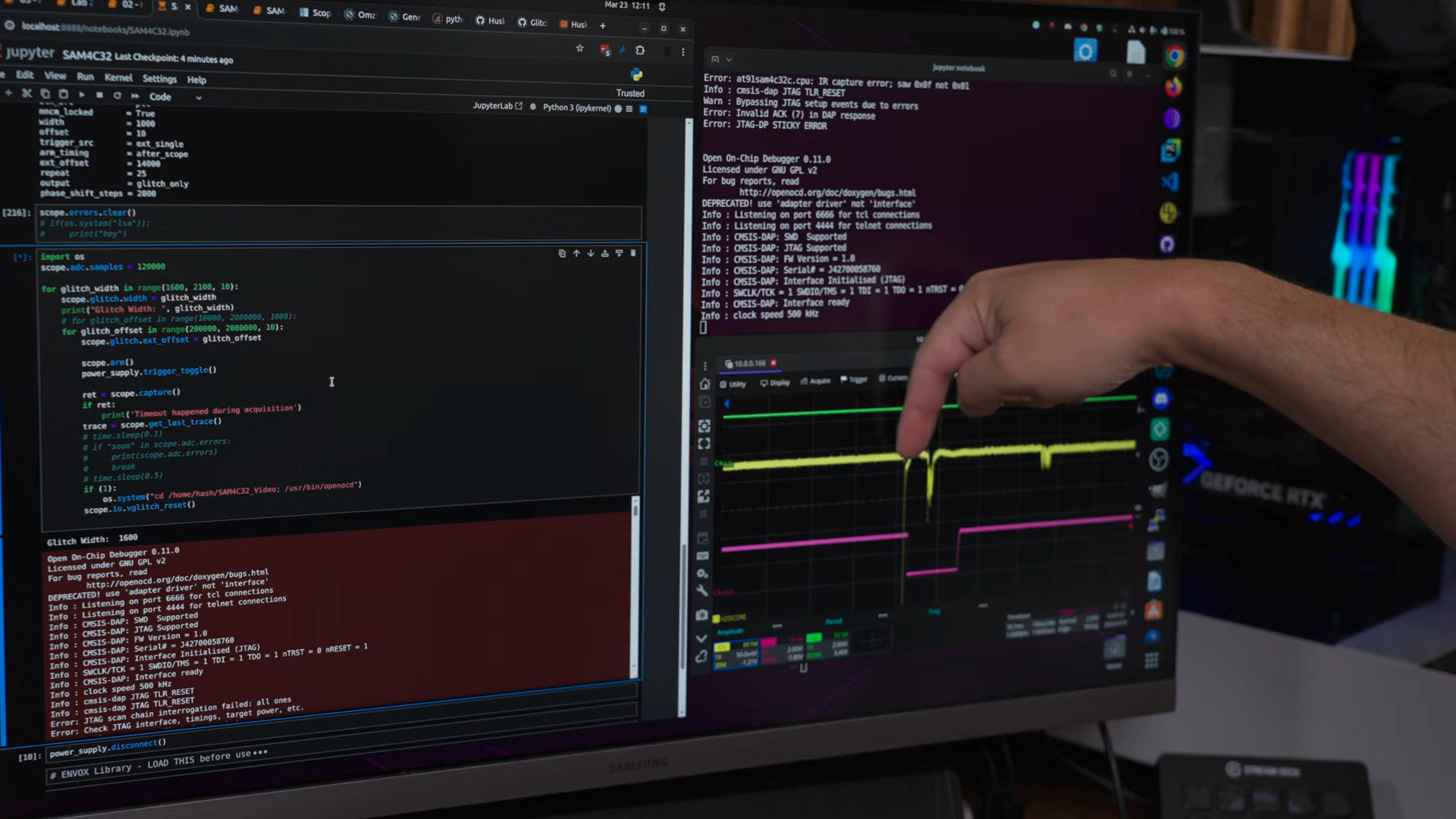
Chip glitching sounds like something a tiny robot does after drinking too much espresso, but in hardware security, it is a serious and fascinating topic. At its simplest, chip glitching is a form of fault injection: a researcher intentionally disturbs a chip’s normal operating conditions for a tiny moment to study how the device behaves when reality gets rude.
The phrase “Chip Glitching 101 With [Hash]” points to a growing interest in practical hardware security research, especially among people who want to understand how secure chips, microcontrollers, bootloaders, and embedded systems respond under stress. This article explains the big ideas behind chip glitching, why it matters, how it relates to secure boot and cryptographic checks, and what responsible learners should take away from the fieldwithout turning this into a recipe book for breaking devices.
What Is Chip Glitching?
Chip glitching is a technique used to cause a temporary fault in an electronic device. Instead of attacking software with a suspicious email or a sketchy download button, glitching targets the physical behavior of the chip itself. Researchers may study how abnormal voltage, clock timing, electromagnetic disturbance, or other environmental changes affect execution.
The key idea is that chips are designed to run within expected limits. Give them stable power, proper timing, and normal temperature, and they behave like disciplined little silicon citizens. Disturb those conditions at just the wrong moment, and the chip may misread data, skip a check, reset, produce an error, or enter an unexpected state. That is the “glitch.”
In security research, this matters because many embedded systems rely on a chain of trust. A device might check whether firmware is signed, whether debug access is locked, whether memory protection is enabled, or whether a bootloader should continue. Fault injection research asks a difficult question: what happens if that important check does not execute exactly as planned?
Why Hardware Security Researchers Care
Modern life is full of embedded devices: phones, payment terminals, smart locks, cars, medical devices, routers, gaming consoles, industrial controllers, and hardware wallets. Many of these devices store secrets or enforce trust decisions. If their physical security is weak, attackers with physical access may try to interfere with the chip rather than fight the software head-on.
This is why chip glitching is not just an academic magic trick. It helps engineers test whether a product can withstand physical tampering. It also teaches designers that “the code says no” is not always enough. If a device can be persuaded to stumble during the exact moment it checks a security condition, the system needs stronger defenses than a single fragile decision point.
Common Types of Glitching at a High Level
Voltage Glitching
Voltage glitching involves disturbing the power supplied to a chip for a very brief period. The goal in a legitimate lab is to observe how a device behaves when power integrity is imperfect. A chip might reset, miscalculate, corrupt a value, or fail safely. In well-designed secure systems, the preferred outcome is simple: detect the fault and stop safely.
Clock Glitching
Digital chips depend on timing. Clock glitching studies what happens when timing is irregular. If a processor expects a clean rhythm and suddenly receives a malformed beat, execution may become unreliable. Think of it like trying to dance to a song where the drummer sneezes into the metronome.
Electromagnetic Fault Injection
Electromagnetic fault injection, often shortened to EMFI, uses electromagnetic disturbance to induce faults. It is usually more specialized than basic voltage or clock experiments because it may target smaller areas of a chip. From a defensive point of view, EMFI is important because it shows that physical security is not only about the power rail or the clock pin.
Optical and Laser Fault Injection
Optical approaches, including laser-based methods, are typically associated with advanced laboratories. They may be used to study highly specific chip behavior, but they also require expertise, equipment, and careful controls. For beginners, the important point is not “how to do it,” but why it exists: chips are physical objects, and physical objects can be disturbed.
Where [Hash] Fits Into the Conversation
The “[Hash]” reference is associated with public discussion of chip glitching as a learning topic. What makes this kind of case study useful is not merely the excitement of making hardware misbehave. The valuable part is the methodical thinking: identify the trust boundary, understand the boot process, observe behavior, form hypotheses, and use results to improve security design.
Good hardware security work is less like a movie hacker montage and more like debugging a haunted toaster. You collect clues, repeat tests, rule out assumptions, document failures, and try not to blame the oscilloscope when the real problem is your mental model. The glamour is optional. The patience is mandatory.
Chip Glitching and Secure Boot
Secure boot is one of the most common topics connected to glitching. A secure boot process usually checks whether firmware is authentic before allowing it to run. The device may verify a digital signature or compare a cryptographic hash as part of its startup sequence.
In a strong design, this verification is not treated as a casual “looks good to me” moment. It is protected with multiple layers: robust code flow, fault detection, memory protections, hardware monitors, and safe failure behavior. A weak design may depend too heavily on one check, one branch, or one status flag. That is exactly the kind of fragile pattern fault-injection testing is meant to reveal.
This is also why hash verification and chip glitching appear in the same conversation. A cryptographic hash may be mathematically strong, but the device must still execute the verification process correctly. Security is not only the algorithm; it is the full implementation, including the hardware environment around it.
What Can Go Wrong During a Fault?
Faults can produce different outcomes depending on the device, timing, circuit design, firmware, and protections. A chip might reset immediately, which is boring but safe. It might produce corrupted data, which is interesting but not always useful. It might skip an operation, misread a condition, or move into an unintended state. In rare and serious cases, that unexpected behavior can undermine a security boundary.
The unpredictability is part of the challenge. Glitching is not a universal magic wand. Different chips behave differently. Even two boards using similar components can respond differently because of layout, power filtering, firmware timing, and manufacturing variation. Anyone who says chip glitching is always easy has probably never spent an afternoon chasing a bug caused by a loose cable.
Defensive Lessons From Chip Glitching
Design for Faults, Not Perfect Conditions
Secure devices should assume that faults can happen. Power may droop. Clocks may jitter. Sensors may report anomalies. Attackers may have physical access. A defensive design does not panic; it detects, responds, and fails safely.
Avoid Single Points of Security Failure
If one skipped instruction can disable a protection, the design is too fragile. Security-critical decisions should be reinforced through redundancy, consistency checks, hardened state machines, and careful control-flow validation.
Use Hardware Monitors
Voltage, clock, and environmental monitors can help detect abnormal operating conditions. These protections are not magic force fields, but they raise the difficulty and give the device a chance to shut down safely.
Verify Before and After Critical Steps
Secure systems often benefit from checking important conditions more than once, especially around boot decisions, debug locks, firmware validation, and cryptographic operations. The goal is to make a single transient fault insufficient to change the security outcome.
Test Like an Attacker, Build Like a Defender
Responsible chip glitching research helps manufacturers understand real-world risk. Testing should happen on owned devices, authorized lab targets, or purpose-built educational boards. The purpose is to improve security, not to bypass protections on systems that do not belong to you.
Beginner-Friendly Concepts Without the Risky Bits
If you are new to chip glitching, start with the vocabulary before touching hardware. Learn the difference between side-channel analysis and fault injection. Study secure boot, memory protection, debug interfaces, firmware signing, and embedded threat models. Read about how chips use clocks, regulators, reset circuits, and brownout detection. This background will make the field far less mysterious.
A safe beginner mindset is: “How do secure devices defend against abnormal conditions?” rather than “How do I break this device?” That difference matters. The first path builds engineering skill. The second path can lead to damaged hardware, broken laws, and a very awkward conversation with people who use words like “unauthorized access.”
Real-World Examples in Plain English
Imagine a microcontroller that checks whether debugging is disabled during startup. A strong device should treat that security state carefully, verify it robustly, and react safely if anything looks strange. A weak implementation might load a protection value once, trust it immediately, and continue. Fault-injection research explores whether a temporary disturbance can affect such moments.
Another example is firmware verification. A device may compute or check a cryptographic value before booting. The math may be excellent, but the implementation must still protect the verification process. If the control flow around that decision is fragile, an attacker may not need to defeat the cryptography itself; they may try to disturb the device around the decision. That is why secure implementation is just as important as secure algorithms.
Why Chip Glitching Is Harder Than It Looks
Online discussions can make glitching look like pushing a red button labeled “hack.” Reality is less cinematic. Fault-injection research involves measurement, careful observation, and lots of failure. Most attempts do nothing useful. Some crash the target. Some create effects that cannot be repeated. Some reveal that the assumed attack path was wrong from the beginning.
Good researchers document conditions, compare results, and avoid overclaiming. They also respect legal boundaries. Owning a device does not automatically mean every attack is appropriate, especially if it involves services, accounts, networks, secrets, or other people’s data.
How Manufacturers Reduce Glitching Risk
Manufacturers use several strategies to reduce fault-injection risk. Hardware countermeasures may include glitch detectors, brownout monitors, clock monitors, redundant logic, error-correcting codes, hardened state machines, and tamper-response circuits. Software countermeasures may include duplicated checks, control-flow integrity, randomized timing, consistency validation, and safe error handling.
None of these defenses is perfect by itself. Strong security usually comes from layers. If one protection fails, another should catch the problem. If a fault is detected, the device should fail closed, not continue cheerfully like nothing happened. A secure chip should not be the electronic equivalent of “this is fine” dog sitting in a burning room.
Experience Notes: What Learning Chip Glitching Teaches You
Spending time with chip glitching as a topic teaches a surprisingly broad set of engineering lessons. First, it teaches humility. Software developers often imagine hardware as a reliable foundation: instructions execute, memory loads, branches branch, and the processor does what the manual says. Fault injection reminds us that hardware is physical. It lives in the messy real world of power rails, timing margins, capacitance, noise, heat, layout decisions, and manufacturing tolerances.
Second, it teaches patience. A beginner may expect immediate results after reading a case study, but real hardware security work is slow and careful. You learn to observe before acting. You learn that a reset is data. A crash is data. A failed hypothesis is data wearing a tiny lab coat. Each result narrows the map.
Third, chip glitching teaches the value of threat modeling. Before analyzing any secure device, you must ask what the asset is, who the attacker is, what access they have, and what the system is supposed to protect. Without a threat model, glitching becomes random poking. With a threat model, it becomes structured security evaluation.
Fourth, it teaches respect for defensive engineering. It is easy to criticize a product after reading a dramatic hardware attack story. It is harder to design a chip that remains secure under cost limits, power limits, performance requirements, manufacturing pressure, and years of real-world use. Hardware security is a balancing act where every added defense has a price.
Fifth, the topic improves your understanding of cryptography in practice. Cryptographic algorithms may be strong on paper, but embedded systems can fail around them. A hash check, signature verification, or key operation must be protected not only mathematically but operationally. The lesson is simple: great crypto inside a weak implementation is like a bank vault with a cardboard wall next to it.
Finally, learning about chip glitching can make you a better builder. You start writing code that treats security checks carefully. You start asking whether important states are verified more than once. You begin to appreciate safe failure modes, hardware monitoring, and defense in depth. Even if you never perform a real fault-injection experiment, understanding the concept changes how you think about embedded security.
Conclusion
Chip glitching is one of the most intriguing areas of hardware security because it sits at the border between electronics, firmware, cryptography, and adversarial thinking. The lesson from “Chip Glitching 101 With [Hash]” is not that every chip is easy to break. The real lesson is that secure systems must be designed for imperfect conditions and tested against physical attacks.
For learners, the best path is responsible curiosity: study the principles, understand the risks, use authorized educational platforms, and focus on how defenses work. For manufacturers, the message is even clearer: do not rely on a single fragile check when protecting valuable secrets. Build layers. Detect faults. Fail safely. And never assume the silicon will always have a calm, uneventful day.













