
Note: Clean HTML body format only, written in standard American English and ready for web publishing.
Open shelving in the kitchen is one of those design ideas that can make people nod dreamily or clutch their cabinet doors in fear. On one side, it looks airy, warm, and charming. On the other, it can expose every mismatched mug, every dusty cereal bowl, and that one mystery platter nobody remembers buying. The truth sits comfortably in the middle: open shelving can be beautiful and genuinely useful when it is done with intention.
That is exactly why this guide focuses on ten favorite ways to use open shelving well. Not “rip out every cabinet and hope for the best” well. More like “make your kitchen look better, work harder, and still leave room for reality” well. Across kitchen design publications, renovation experts, and home organization advice, the same themes come up again and again: moderation beats excess, everyday items deserve the best spots, and styling matters almost as much as storage. In other words, open shelving is not just decor. It is a working part of the kitchen that needs a little strategy and a little self-control.
If you love the look of collected ceramics, warm wood tones, easy-access dishware, and kitchens that feel less boxy, you are in the right place. Here are ten favorite open shelving ideas that balance style and function without turning your kitchen into a stage set.
Why Open Shelving Still Works
Before we get into the favorites, it helps to understand why open shelving remains popular. It visually lightens a kitchen, especially a small one. It can cost less than installing full upper cabinetry. It gives you easy access to daily essentials. And it creates room for personality, which is a polite way of saying your kitchen can stop looking like it was assembled by a committee of beige rectangles.
Still, the best open shelving kitchens rarely go all in. The smartest layouts usually combine open shelves with closed cabinets and drawers. That mix keeps the room feeling open while giving you a place to hide the blender base, the plastic lunch containers, and the baking sheet that has seen too much.
10 Favorite Open Shelving Ideas for Kitchens
1. Classic Wood Floating Shelves
If open shelving had a hall of fame, classic wood floating shelves would be in the front row, smiling modestly. They work with farmhouse kitchens, modern kitchens, Scandinavian kitchens, and transitional spaces that do not want to commit too hard to any one label. White walls and warm wood shelving are an especially reliable combination because they add texture without making the room feel busy.
These shelves are best for everyday dishes, neutral bowls, clear glasses, and a few thoughtful accents like a cutting board or a small vase. The magic comes from restraint. Two or three shelves can feel polished. Six can start to feel like your wall got promoted to stockroom.
2. Shelves Framing a Window
One of the most attractive ways to use open shelving is around a kitchen window. Instead of blocking natural light with upper cabinets, shelves can frame the view and keep the space feeling open. This setup works especially well above a sink or along a narrow wall where every inch matters.
Use this area for glassware, small plates, or pretty everyday items that look good with daylight shining through them. The result feels bright, breezy, and far more custom than it usually costs. It also solves the classic small-kitchen problem of wanting storage without turning the room into a cave.
3. A Mixed Open-and-Closed Cabinet Layout
This is arguably the smartest favorite on the list because it is the most realistic. Instead of replacing all upper cabinets, remove or skip only one section. Use open shelves in a focal-point area, then keep closed storage elsewhere. That way, your attractive plates and glassware can have their moment, while the less photogenic parts of kitchen life stay offstage.
This layout makes sense for busy households, families, and anyone who likes the look of open shelving but also enjoys the radical freedom of not styling every square inch. It is flexible, livable, and forgiving. Frankly, more kitchens need that energy.
4. Corner Wraparound Shelves
Corner shelves are a favorite because they turn awkward space into something useful. A wraparound shelf can connect two walls and make the kitchen feel cohesive, especially in compact layouts. It also adds a built-in look that feels intentional rather than improvised.
The key is not to crowd the corner with bulky objects. Use medium-size dishes, matching canisters, or a few cookbooks. Keep the palette controlled so the eye moves smoothly around the room. Done well, a corner shelf becomes one of those details people remember without being able to explain why it works so well.
5. Coffee Station Open Shelving
Not every shelf needs to carry the weight of the whole kitchen. A small coffee station with open shelving above the counter is one of the easiest and most charming ways to try the trend. Stack mugs, display coffee beans or tea tins in matching containers, and keep the pretty equipment visible.
This idea works because it gives open shelving a clear job. Instead of asking it to store everything, you let it support a single daily ritual. That makes it easier to keep organized, and it adds personality without demanding constant maintenance. Bonus: it makes morning coffee feel slightly more cinematic, which some of us desperately need.
6. Glassware Display Shelves
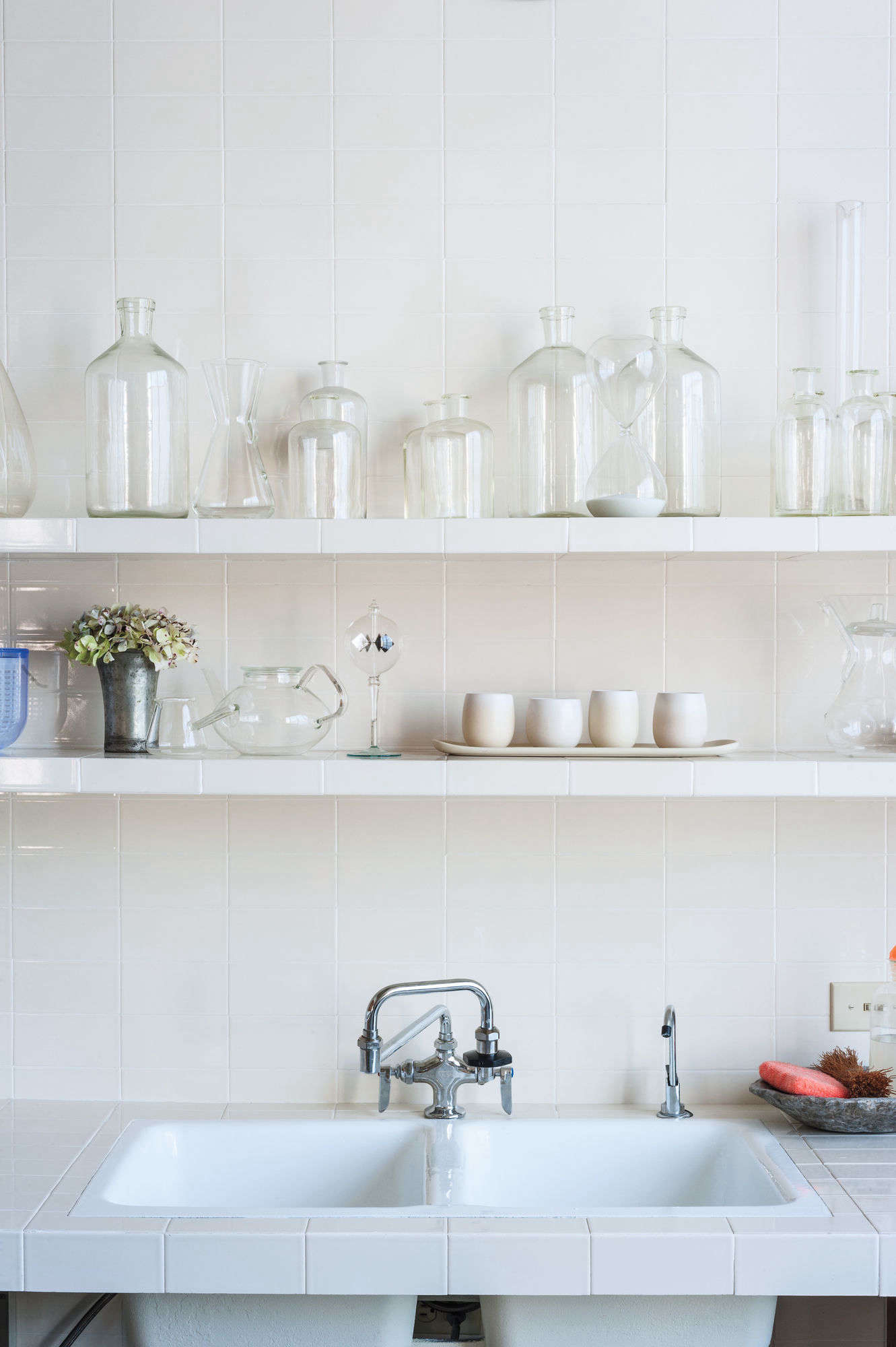
Open shelving and glassware get along beautifully. Drinking glasses, stemless wine glasses, pitchers, and simple barware all reflect light and create a clean, airy look. In a butler’s pantry or on a side kitchen wall, glassware shelves can feel elegant without trying too hard.
This look works best when the collection is edited. Similar shapes, coordinated tones, and a little breathing room go a long way. If every glass is a different color, height, decade, and mood, the effect can shift from curated to “yard sale but make it hydration.”
7. Open Pantry-Style Shelving
For people who care as much about function as style, pantry-style open shelving deserves a permanent spot on the favorites list. This can be a walk-in pantry, a pantry wall, or simply a section of kitchen shelving devoted to dry goods and everyday staples. Decanted grains, labeled jars, baskets, and tiered storage help this area stay practical and attractive.
The real advantage here is accessibility. You can see what you have, reach it quickly, and avoid buying your fourth jar of paprika because the other three were hiding behind a tower of soup cans. Open pantry shelving rewards good habits, which is both inspiring and mildly insulting.
8. Industrial Metal-and-Wood Shelves
If you like a kitchen with a little edge, industrial shelves in metal and wood are a strong choice. Black brackets, dark steel frames, and reclaimed wood can add contrast to white kitchens or complement loft-style interiors. They are especially effective in spaces that already have metal pendants, exposed brick, or darker hardware.
The trick is balance. Industrial shelves can look striking, but if everything else in the room is also shouting, the kitchen becomes a design debate instead of a design plan. Pair them with simple dishware and natural materials so the shelves feel grounded rather than theatrical.
9. Built-In or Plaster-Look Shelving
For a softer, more architectural effect, built-in open shelving is a favorite that feels high-end. These shelves can be integrated into a niche, finished to match the wall, or designed with a plaster-like surround. The overall look is seamless and calm, which makes even basic dishes look more important than they are.
This style works beautifully in modern, Mediterranean, and minimalist kitchens. It is less about the shelf itself and more about the atmosphere it creates. If floating shelves say, “Look at my pretty bowls,” built-ins say, “We are all very relaxed and own excellent olive oil.”
10. Renter-Friendly Open Shelving by Removing Cabinet Doors
For anyone not doing a full remodel, this is one of the most accessible favorites. Removing upper cabinet doors can create an open-shelf look without changing the structure of the kitchen. Paint the cabinet interior, line the back with peel-and-stick wallpaper, or simply style the shelves neatly and call it a design decision.
This option is budget-friendly and flexible. If you hate it, you can reattach the doors. If you love it, you get the charm of open shelving without committing to a full renovation. It is the kitchen version of trying bangs with a clip-in fringe before doing anything dramatic.
How to Make Open Shelving Look Good in Real Life
Use Everyday Items First
The best kitchen shelf styling starts with function. Plates, bowls, glasses, mugs, and frequently used ingredients should get the prime spots. These are the items you reach for all the time, and they earn their visibility. Decorative objects should support the scene, not take over the apartment.
Stick to a Tight Color Story
Open shelving looks calmer when the palette is limited. White ceramics, wood cutting boards, clear jars, black accents, or muted earth tones all help the arrangement feel intentional. You do not need everything to match perfectly, but the shelves should look like one conversation, not twelve people talking over each other.
Give Items Room to Breathe
One of the biggest mistakes with kitchen open shelving is crowding. A little negative space makes the whole arrangement look cleaner and more expensive. If every inch is filled, the shelves stop reading as design and start reading as inventory.
Keep Grease Zones in Mind
Open shelves too close to the cooktop can collect grease faster than expected. If you want shelving near the range, use items that are easy to clean and expect more maintenance. In many kitchens, it is smarter to keep shelves near prep space, the sink wall, or a coffee area instead.
What Not to Put on Open Kitchen Shelves
- Rarely used appliances that make the shelves feel heavy
- Oversized packaging and bulky plastic containers
- Too many tiny decorative objects
- Fragile items in high-traffic zones
- Random clutter pretending to be “eclectic”
There is a huge difference between a lived-in kitchen and a shelf that looks like it lost a fight with a discount home store. Edit often. Be honest. If you do not want to dust it, clean it, or look at it every day, it probably belongs behind a door.
The Real Appeal of Open Shelving
What makes open shelving so appealing is not just the look. It is the feeling. Kitchens with good open shelving tend to feel more personal, more relaxed, and more connected to daily life. The dishes become part of the room. The objects you actually use help shape the atmosphere. It is storage with a point of view.
At the same time, open shelving asks for a little discipline. That is why the best examples are not just pretty; they are edited, balanced, and practical. The sweet spot is somewhere between “design magazine” and “human being who cooks pasta on weeknights.” Hit that balance, and open shelving can be one of the most rewarding upgrades in the kitchen.
Experience: What Living With Open Shelving Really Feels Like
After the initial excitement of open shelving wears off, a more interesting phase begins: daily life. That is where people discover whether they actually love the idea or only loved the photos. In real kitchens, open shelving changes behavior in subtle ways. Homeowners often become more selective about what they keep. Suddenly, the chipped souvenir mug from 2014 is not “quirky.” It is just in the way. The shelf becomes a quiet editor, asking tough questions no one expected from a wall.
One of the first things people notice is convenience. Reaching for a plate or bowl becomes easier, especially during busy mornings or weeknight cooking. There is no cabinet door to swing open, no stack to dig through, and no mystery avalanche of plastic lids. When shelves are arranged well, the kitchen feels more fluid. Coffee cups near the machine, cereal bowls near breakfast prep, glasses near the sink: it all makes daily movement simpler.
Then comes the visual effect. Kitchens with open shelving often feel larger, lighter, and friendlier. Even a modest kitchen can feel more open when a bank of bulky upper cabinets is replaced by a few carefully placed shelves. Light travels farther. Pretty dishware becomes part of the design. A stack of white plates, a walnut cutting board, and a small ceramic vase can do more for the mood of a room than many expensive upgrades.
Of course, open shelving also has a way of exposing habits. Dust appears. Grease can sneak onto surfaces near the stove. Mugs multiply with alarming confidence. People who enjoy organizing often find this manageable, even satisfying. People who prefer to hide the chaos behind a cabinet door sometimes discover that open shelving is less a design feature and more a lifestyle audit.
That is why many homeowners end up loving open shelving most when it is limited to the right zones. A coffee nook, a window wall, a pantry corner, or one stylish section between cabinets tends to perform better than an entire kitchen of exposed storage. This approach preserves the airy look while reducing the pressure to keep every item display-ready at all times.
There is also an emotional side to it. Open shelving encourages people to notice the objects they use every day. A favorite mug gets pride of place. Handmade bowls feel special instead of hidden. Family dishes that once stayed tucked away can become part of the daily rhythm. In that sense, open shelving makes a kitchen feel more personal. It turns practical objects into part of the home’s visual language.
In the end, the experience of open shelving is rarely perfect, but it can be deeply rewarding. It asks for a little maintenance, a little editing, and a willingness to be honest about what deserves space. In return, it gives a kitchen warmth, character, and a more open feel that many people find hard to give up once they have lived with it. The best verdict is not that open shelving looks good in photos. It is that, in the right kitchen, it genuinely makes daily life feel a bit easier and a lot more beautiful.
Final Thoughts
Open shelving in the kitchen is not a one-size-fits-all trend, and that is exactly why it remains interesting. It can be rustic, modern, minimal, budget-friendly, architectural, or renter-smart. The most successful versions share the same basics: thoughtful placement, practical storage, a clear visual rhythm, and enough honesty to admit that not everything deserves public display.
If you are considering the look, start small. Choose one zone. Give it a purpose. Style it with items you actually use. Then step back and see how the kitchen feels. The best open shelves are not just beautiful on day one. They still make sense when life gets messy, dinner gets late, and somebody puts the bowls back slightly crooked. Which, to be fair, is how you know it is a real kitchen.













