
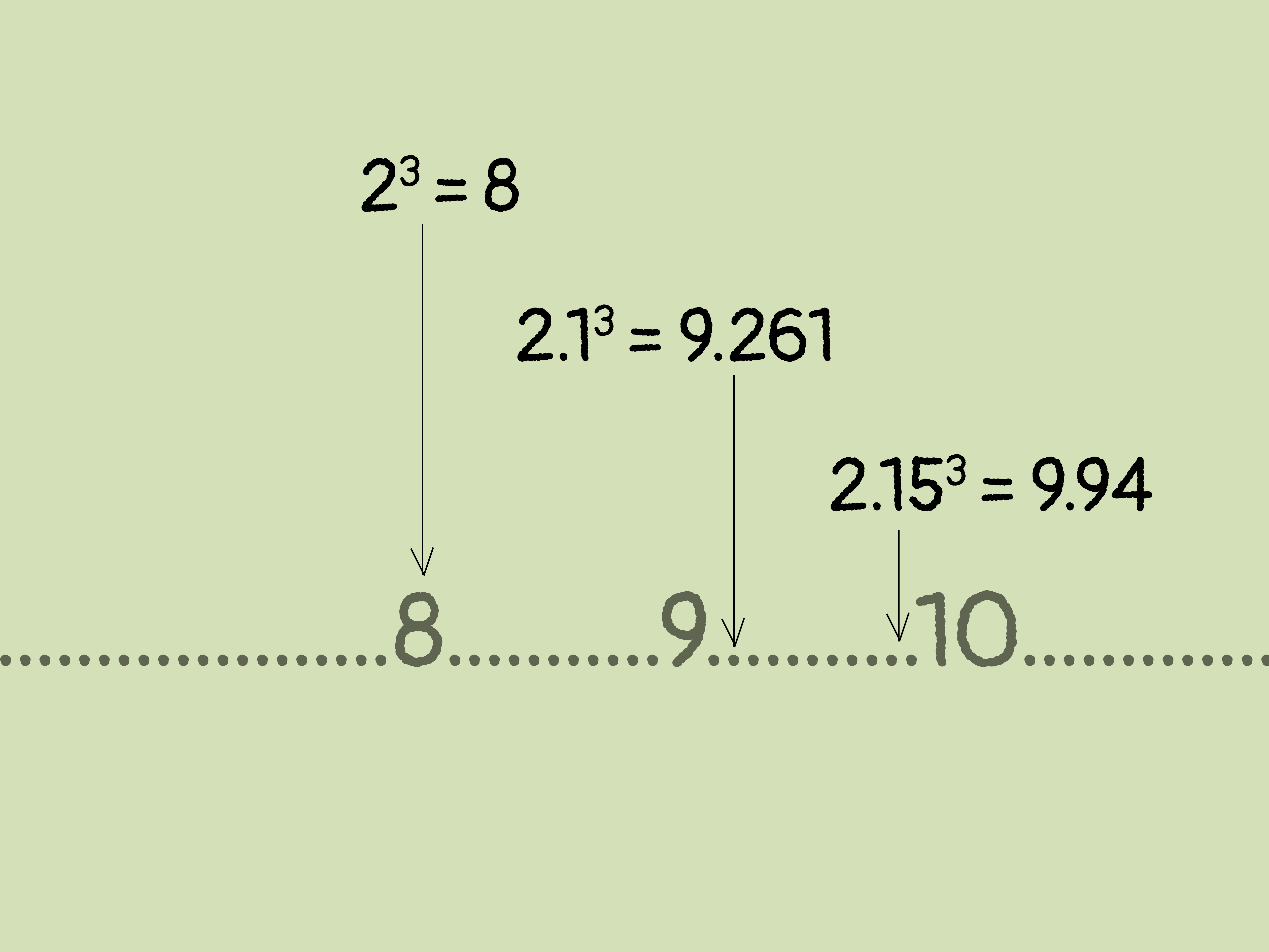
Calculating a cube root by hand sounds like the kind of thing a wizard does while wearing tiny spectacles and muttering at a chalkboard. But the truth is much friendlier: cube roots follow patterns, and once you learn those patterns, the mystery starts to behave. Whether you are checking homework, preparing for a math test, sharpening mental math skills, or simply trying to impress someone without reaching for your phone, learning how to calculate cube root by hand is a surprisingly useful skill.
A cube root answers one simple question: What number, multiplied by itself three times, gives the original number? For example, the cube root of 27 is 3 because 3 × 3 × 3 = 27. The cube root of 125 is 5 because 5 × 5 × 5 = 125. Unlike square roots, cube roots can also be negative in a very natural way: the cube root of -8 is -2 because -2 × -2 × -2 = -8.
This guide explains several practical hand methods: memorizing perfect cubes, using prime factorization, estimating between cubes, applying the long division cube root method, and using Newton’s method for decimal approximations. No calculator required. Just paper, pencil, patience, and maybe a snack.
What Is a Cube Root?
The cube root of a number is the value that produces that number when raised to the third power. In symbols, if x³ = n, then x is the cube root of n. The cube root symbol is written as ∛, so ∛64 = 4.
Here are a few quick examples:
- ∛1 = 1 because 1³ = 1
- ∛8 = 2 because 2³ = 8
- ∛27 = 3 because 3³ = 27
- ∛64 = 4 because 4³ = 64
- ∛-125 = -5 because (-5)³ = -125
A number such as 8, 27, 64, 125, or 216 is called a perfect cube because it is the cube of an integer. Perfect cubes are the easiest cube roots to calculate by hand because the answer comes out cleanly. Non-perfect cubes, such as 10, 30, or 100, usually require estimation or a decimal approximation.
Start With the Perfect Cubes
The fastest way to calculate cube roots by hand is to memorize the first several perfect cubes. This is the math version of learning the alphabet before writing a novel. You do not need to memorize hundreds of values. For most hand calculations, knowing cubes from 1 to 20 gives you a huge advantage.
Perfect Cubes from 1 to 20
| Number | Cube |
|---|---|
| 1 | 1 |
| 2 | 8 |
| 3 | 27 |
| 4 | 64 |
| 5 | 125 |
| 6 | 216 |
| 7 | 343 |
| 8 | 512 |
| 9 | 729 |
| 10 | 1,000 |
| 11 | 1,331 |
| 12 | 1,728 |
| 13 | 2,197 |
| 14 | 2,744 |
| 15 | 3,375 |
| 16 | 4,096 |
| 17 | 4,913 |
| 18 | 5,832 |
| 19 | 6,859 |
| 20 | 8,000 |
Once you know this table, finding cube roots of perfect cubes becomes simple. If someone asks for ∛729, you know the answer is 9. If the number is ∛4,096, the answer is 16. Congratulations, you have already moved from “Where is my calculator?” to “I might be dangerous with a pencil.”
Method 1: Calculate Cube Root by Memorization
Memorization is best for small perfect cubes. The process is simple:
- Look at the number under the cube root sign.
- Compare it with your perfect cube table.
- Choose the number whose cube equals the given number.
Example: Find ∛343
From the perfect cube table, 7³ = 343. Therefore:
∛343 = 7
Example: Find ∛1,728
From the table, 12³ = 1,728. Therefore:
∛1,728 = 12
This method is fast, clean, and excellent for school math, mental math, and quick checks. The limitation is obvious: it works best when the number is a perfect cube you recognize.
Method 2: Use Prime Factorization
Prime factorization is a reliable way to calculate cube roots by hand when the number is a perfect cube but not instantly recognizable. The idea is to break the number into prime factors and group identical factors in sets of three.
Why groups of three? Because a cube means the same factor appears three times. For example:
216 = 2 × 2 × 2 × 3 × 3 × 3
That gives one group of three 2s and one group of three 3s. Take one factor from each group:
∛216 = 2 × 3 = 6
Step-by-Step Example: Find ∛729
- Break 729 into prime factors: 729 = 3 × 3 × 3 × 3 × 3 × 3
- Group the factors into triples: (3 × 3 × 3) and (3 × 3 × 3)
- Take one 3 from each group: 3 × 3 = 9
∛729 = 9
Step-by-Step Example: Find ∛8,000
- Factor 8,000: 8,000 = 8 × 1,000 = 2³ × 10³
- Take the cube root of each perfect cube: ∛2³ = 2 and ∛10³ = 10
- Multiply: 2 × 10 = 20
∛8,000 = 20
Prime factorization is especially helpful when the number looks intimidating. It turns one large number into small, manageable pieces. Basically, it makes the number confess.
Method 3: Estimate Cube Roots Between Perfect Cubes
Not every number is a perfect cube. For example, ∛50 is not a whole number. But you can still estimate it by locating the two perfect cubes around it.
Since 3³ = 27 and 4³ = 64, the cube root of 50 must be between 3 and 4. Because 50 is closer to 64 than to 27, ∛50 is closer to 4 than to 3. A reasonable first estimate is about 3.7.
Example: Estimate ∛100
Find the nearest perfect cubes:
- 4³ = 64
- 5³ = 125
Since 100 is between 64 and 125, ∛100 is between 4 and 5. Because 100 is closer to 125 than 64, the answer is closer to 5. A good estimate is about 4.6 or 4.7.
Check 4.6:
4.6 × 4.6 × 4.6 = 97.336
That is close to 100, so ∛100 is a little higher than 4.6. The actual value is about 4.64.
Method 4: Use the Last-Digit Trick for Perfect Cubes
For large perfect cubes, the last digit can help you find the ones digit of the cube root. This mental math trick works because cube numbers have predictable final digits.
| If the cube ends in… | The cube root ends in… |
|---|---|
| 0 | 0 |
| 1 | 1 |
| 2 | 8 |
| 3 | 7 |
| 4 | 4 |
| 5 | 5 |
| 6 | 6 |
| 7 | 3 |
| 8 | 2 |
| 9 | 9 |
Example: Find ∛148,877
First, separate the number into the thousands part and the last three digits:
148 | 877
Look at 148. The largest perfect cube less than or equal to 148 is 125, and 5³ = 125. So the tens digit is 5.
Now look at the last digit of 148,877. It ends in 7. A cube ending in 7 has a cube root ending in 3.
Put the digits together:
∛148,877 = 53
Check: 53³ = 148,877. Not bad for a method that feels like a magic trick but is really just pattern recognition wearing a cape.
Method 5: The Long Division Method for Cube Roots
The long division method is the classic paper-and-pencil way to calculate cube roots exactly or to several decimal places. It looks a little more complex than square root long division, but the logic is similar: group digits, find one digit at a time, subtract, and continue.
The Basic Idea
To calculate a cube root by long division:
- Group the digits in threes, starting from the decimal point and moving left for whole numbers.
- Find the largest cube less than or equal to the first group.
- Subtract and bring down the next group of three digits.
- Use the current root to form a trial divisor.
- Choose the next digit so the product does not exceed the current remainder.
- Repeat until finished.
The reason digits are grouped in threes is that cube roots are based on powers of three. Each new digit in the root corresponds to another group of three digits in the original number.
Example: Calculate ∛17,576
We know the answer will be a two-digit number because 20³ = 8,000 and 30³ = 27,000. Now use the long division approach.
Step 1: Group the Digits
Write 17,576 as:
17 | 576
Step 2: Find the First Digit
Look at the first group, 17. The largest cube less than or equal to 17 is 8, and 2³ = 8. So the first digit of the cube root is 2.
Subtract:
17 – 8 = 9
Bring down the next group, 576, to get 9,576.
Step 3: Find the Next Digit
Let the current root be 2. To find the next digit, test a digit x from 0 to 9 using this expression:
x × (300 × 2² + 30 × 2 × x + x²)
Try x = 6:
6 × (300 × 4 + 30 × 2 × 6 + 6²)
6 × (1,200 + 360 + 36) = 6 × 1,596 = 9,576
That matches the remainder exactly. Therefore, the next digit is 6.
∛17,576 = 26
Check: 26³ = 26 × 26 × 26 = 17,576. Perfect.
Method 6: Use Newton’s Method for Decimal Cube Roots
Newton’s method is a powerful way to approximate cube roots by hand, especially when the number is not a perfect cube. It uses repeated improvement. You start with a reasonable guess, plug it into a formula, and each round usually gets closer to the true answer.
For finding ∛N, use this formula:
New guess = (2 × old guess + N ÷ old guess²) ÷ 3
Example: Approximate ∛10
We know 2³ = 8 and 3³ = 27, so ∛10 is between 2 and 3. Start with 2.2.
First round:
Old guess = 2.2
Old guess² = 4.84
10 ÷ 4.84 ≈ 2.066
New guess = (2 × 2.2 + 2.066) ÷ 3
New guess = (4.4 + 2.066) ÷ 3 = 6.466 ÷ 3 ≈ 2.155
Second round:
Old guess = 2.155
2.155² ≈ 4.644
10 ÷ 4.644 ≈ 2.153
New guess = (4.310 + 2.153) ÷ 3 ≈ 2.154
So:
∛10 ≈ 2.154
That is impressively close. Newton’s method is excellent when you want a decimal cube root without a calculator. It does involve division, but the improvement is fast.
How to Calculate Cube Root of a Negative Number
Cube roots of negative numbers are easier than many students expect. Because multiplying a negative number by itself three times gives a negative result, the cube root of a negative number is also negative.
For example:
- ∛-8 = -2
- ∛-27 = -3
- ∛-64 = -4
- ∛-1,000 = -10
The easiest hand method is to ignore the negative sign temporarily, find the cube root of the positive number, and then put the negative sign back.
Example: Find ∛-216
First find ∛216. Since 6³ = 216, ∛216 = 6.
Now apply the negative sign:
∛-216 = -6
Common Mistakes When Calculating Cube Roots by Hand
Even careful math students make small errors with cube roots. Here are the most common traps and how to avoid them.
Mistake 1: Confusing Square Roots and Cube Roots
The square root of 64 is 8, but the cube root of 64 is 4. Always check the small index number. If there is a little 3 above the radical sign, you are finding a cube root.
Mistake 2: Grouping Digits in Pairs
Square root long division groups digits in pairs. Cube root long division groups digits in threes. Using pairs for cube roots is like wearing flip-flops to a snowstorm: technically possible, but things will go wrong quickly.
Mistake 3: Forgetting Negative Cube Roots
Negative numbers can have real cube roots. This is different from square roots, where negative numbers do not have real square roots. Remember: odd roots allow negative answers.
Mistake 4: Assuming Every Cube Root Is a Whole Number
Only perfect cubes have integer cube roots. If the number is not a perfect cube, the answer will usually be a decimal or irrational number.
Practice Problems
Try these by hand before checking the answers.
- ∛512
- ∛2,744
- ∛-343
- Estimate ∛70
- Find ∛46,656
Answers
- ∛512 = 8
- ∛2,744 = 14
- ∛-343 = -7
- ∛70 is between 4 and 5 because 4³ = 64 and 5³ = 125. It is just above 4.
- ∛46,656 = 36 because 36³ = 46,656
When Should You Use Each Method?
There is no single best method for every cube root. Choose the method based on the type of number and how accurate your answer needs to be.
| Situation | Best Method |
|---|---|
| Small perfect cube | Memorization |
| Large perfect cube | Last-digit trick or long division |
| Number with obvious factors | Prime factorization |
| Non-perfect cube | Estimation or Newton’s method |
| Need exact digit-by-digit work | Long division method |
Real-Life Uses of Cube Roots
Cube roots are not just classroom decoration. They show up in geometry, engineering, physics, finance, computer graphics, and measurement problems involving volume. If you know the volume of a cube and need to find the side length, you use a cube root.
For example, suppose a cube-shaped container has a volume of 1,000 cubic inches. The side length is ∛1,000, which equals 10 inches. In real life, this kind of reasoning can apply to packaging, storage, design, architecture, and scaling objects up or down.
Cube roots are also useful when comparing three-dimensional growth. If the volume of an object increases by a factor of 8, its side length increases by a factor of ∛8, or 2. That is why cube roots matter whenever length, width, and height are all involved.
of Practical Experience: What Calculating Cube Roots by Hand Actually Feels Like
Learning how to calculate cube root by hand is a little like learning to cook without measuring every single ingredient. At first, you want exact instructions for every move. Where do I put the digits? Which number do I try? Why did my remainder suddenly become the size of a small planet? But after a while, patterns begin to stand out, and the process becomes less intimidating.
The first useful experience is this: memorizing perfect cubes pays off immediately. Many people try to jump straight into long division, but that is like trying to drive on the highway before learning where the brake pedal is. Knowing 1³ through 20³ makes every other method easier. When estimating ∛90, you instantly know it is between 4 and 5 because 4³ = 64 and 5³ = 125. When checking ∛4,913, you recognize 17³. That recognition saves time and reduces mistakes.
The second experience is that estimation is not “less real” math. In everyday life, an estimate is often enough. If you are trying to understand whether ∛200 is closer to 5 or 6, you do not need ten decimal places. Since 5³ = 125 and 6³ = 216, the answer is a little under 6. That kind of mental estimate is quick, useful, and surprisingly satisfying. It gives you number sense, which is the quiet superpower behind good math.
The third experience is that the long division cube root method looks scarier on paper than it feels after practice. The key is not to memorize random steps mechanically. The method works because when you build a cube root digit by digit, each new digit changes the cube in a predictable way. The expression used in the trial divisor comes from expanding a binomial cube. Once you understand that, the method stops feeling like a magic spell copied from an ancient textbook.
The fourth experience is that Newton’s method feels almost unfair. You make a decent guess, apply one formula, and suddenly the answer improves dramatically. For non-perfect cubes, this is often the most practical hand method. The trick is choosing a reasonable starting point. If you want ∛30, notice that 3³ = 27 and 4³ = 64, so start near 3.1. A good starting guess makes the arithmetic shorter and the approximation better.
The fifth experience is that checking your work matters. Cube your answer when possible. If you claim ∛15,625 = 25, check 25³. Since 25 × 25 = 625 and 625 × 25 = 15,625, the answer is correct. If your cube is too low, your root estimate is too low. If your cube is too high, your estimate is too high. The number always tells on you, but politely.
Finally, calculating cube roots by hand builds confidence because it turns a “calculator-only” skill into something visible and understandable. You see how numbers are constructed. You learn why place value matters. You get better at multiplication, estimation, and checking reasonableness. And yes, you also gain a party trick that may or may not make you popular at parties, depending on the party.
Conclusion
Calculating cube root by hand is not just an old-school math exercise. It is a practical way to understand numbers more deeply. For perfect cubes, memorization and prime factorization work beautifully. For larger perfect cubes, the last-digit trick can make you look like a mental math genius. For exact paper-and-pencil work, the long division cube root method gives you a structured process. For non-perfect cubes, estimation and Newton’s method help you find accurate decimal answers without a calculator.
The best approach is to start small. Memorize perfect cubes, practice estimates, and then try the long division method with friendly numbers such as 17,576 or 46,656. With enough practice, cube roots stop looking like mathematical porcupines and start behaving like patterns you can actually use.
Note: This article is written for educational publishing and is based on established cube root definitions, arithmetic methods, perfect cube patterns, long division procedures, and numerical approximation techniques used in standard math instruction.













