
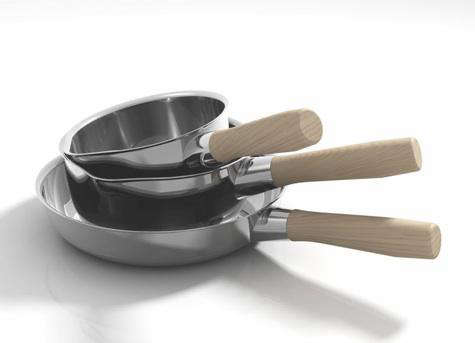
If most cookware collections are the kitchen equivalent of a marching band, the Shiba cookware collection by Naoto Fukasawa for Alessi is a well-tuned string quartet: disciplined, elegant, and somehow more moving because it never tries too hard. That is exactly the charm. Shiba does not yell “designer cookware” from the stovetop. It quietly simmers, reduces, braises, and occasionally makes your old pan look like it has been making questionable life choices.
Designed for Alessi and introduced in the early 2010s, Shiba reflects Naoto Fukasawa’s signature approach to industrial design: remove the extra noise, keep the usefulness, and let beauty arrive through proportion, material, and everyday use. This is cookware that feels thoughtful without becoming fussy. It is minimalist, yes, but not cold. Practical, but not boring. Polished, but not precious.
For anyone interested in kitchen design, modern cookware, or the broader conversation around functional objects that age well, the Shiba collection deserves attention. It is not just a set of pots and pans. It is a small essay on how daily tools should live with us.
Why the Shiba Cookware Collection Still Feels Fresh
One reason Shiba continues to attract design lovers is that it solves a problem many cookware brands still have not figured out: how to be refined without turning the kitchen into a showroom. Fukasawa designed the collection around the pieces people actually use on a regular basis rather than building an oversized battery of specialty pans that spend most of their lives hiding in lower cabinets like shy raccoons.
That restrained philosophy is central to the appeal. Instead of treating cookware as a status symbol, Shiba treats it as a companion to real cooking. The collection is tightly edited, typically centered around essential forms such as a stockpot, casserole, saucepan, and frying pan. In other words, this is cookware for people who cook often enough to know that three useful pieces beat ten rarely touched ones every time.
And that is where the design becomes emotionally smart. Shiba does not chase novelty for novelty’s sake. It is interested in routine, repetition, and familiarity. The pots and pans are meant to be used over and over, until their presence in the kitchen feels inevitable.
Naoto Fukasawa’s Design Philosophy in a Pot-and-Pan Set
To understand Shiba, it helps to understand Fukasawa. He is often associated with ideas like “super normal,” “without thought,” and the kind of design that fits so naturally into life that people almost stop noticing it. That is not an insult in his world. It is the highest compliment. A successful object becomes intuitive. It belongs.
Shiba expresses that mindset beautifully. The forms are modest, almost quiet. The lines are smooth and clean, but not aggressive. The silhouettes avoid the puffed-up theatricality that some premium cookware embraces. Fukasawa seems less interested in making cookware that performs for the camera and more interested in making cookware that performs for Tuesday night dinner.
That philosophy also explains why the collection feels both Japanese and universal. Design observers have often described Shiba as a modern interpretation of traditional Japanese cookware, but it does not slide into cliché. There are no decorative gestures trying too hard to announce cultural reference points. Instead, the influence is visible in the restraint, the reduced palette, and the idea that utility itself can be graceful.
The Meaning Behind the Name “Shiba”
The name “Shiba” gives the collection an extra layer of personality. Fukasawa linked the project to the Shiba dog, a breed associated with Japan and with qualities like loyalty, familiarity, and everyday companionship. That comparison is unexpectedly perfect for cookware.
Think about the best pot in your kitchen. Not the one you post online. The one you reach for when you are tired, hungry, busy, or trying to impress your in-laws with suspiciously casual confidence. That pot is a companion. It earns affection through reliability. The Shiba collection leans into that idea. These are not objects meant to be admired from a distance. They are tools designed to become trusted kitchen friends.
Materials, Construction, and the Beauty of Restraint
Shiba cookware is notable for its polished stainless-steel appearance and its careful material mix. Some pieces were described with a multiply construction combining stainless steel and aluminum, which helps balance visual elegance with cooking performance. The reflective finish gives the collection a refined presence, but the overall effect stays grounded because the shapes remain understated.
Then there are the handles, one of the collection’s most memorable details. Depending on the piece, Shiba uses wood or Bakelite handles, a contrast that softens the coolness of the steel body. This matters more than it might seem. In cookware design, handles are where the hand meets the object, so they do a lot of emotional work. Wood brings warmth and tactility. Bakelite adds durability and a slightly more industrial tone. Both options underline the same idea: utility can be elegant without becoming delicate.
One especially interesting feature associated with the collection is the hiba wood cover, described as useful for simmering delicate ingredients. That detail says a lot about how thoughtfully the project was considered. The lid is not just a cover; it is part of a cooking method. Shiba does not separate appearance from performance. It lets them work together.
A Cookware Collection Designed for Real Kitchens
Some designer cookware feels best suited to kitchens that never smell like onions. Shiba is not that. Even at its most polished, it is rooted in cooking as an everyday act. Reports on the collection have emphasized that Fukasawa designed it around the limited number of pots and pans a household genuinely needs. That simple idea has radical consequences.
It means Shiba works especially well for smaller kitchens, urban apartments, modern family homes, and anyone trying to keep clutter under control. A thoughtful saucepan, a reliable frying pan, a good pot for slow cooking, and a casserole that can handle repetition: that is a serious kitchen, not a compromised one.
It also makes the collection appealing to cooks who value visual order. Because the pieces share a unified language, they create calm on open shelving or hanging storage. They look collected rather than accumulated. If you have ever stared at a mismatched assortment of inherited pans and thought, “Well, this feels emotionally chaotic,” Shiba offers a more composed alternative.
How Shiba Balances Minimalism and Warmth
Minimalist cookware can sometimes drift into the territory of “beautiful but vaguely intimidating.” Shiba avoids that trap. The secret is warmth. Fukasawa’s version of minimalism is rarely sterile. He is interested in objects that feel natural in the hand and believable in the home.
That is why the collection does not come across as a severe design exercise. The rounded forms, the soft transitions between parts, and the warmth introduced by wood elements prevent the cookware from feeling clinical. It is minimalism with manners. Clean, yes. Rigid, no.
This also explains why the collection photographs beautifully but lives even better. In pictures, you notice proportion and finish. In daily life, you notice ease. The handles make sense, the pieces do not feel visually noisy, and the cookware integrates into the rhythm of cooking without demanding attention every five seconds like a needy reality-show contestant.
Specific Examples of What Makes the Collection Stand Out
1. The tightly edited lineup
Instead of offering a sprawling catalog, the Shiba cookware collection focuses on a compact set of everyday essentials. That gives it a sense of discipline that many cookware brands lack.
2. Wood and Bakelite handle options
These handle choices add character while reinforcing usability. Wood introduces a tactile, natural counterpoint to polished steel, while Bakelite supports a more streamlined modern look.
3. The hiba wood cover
This is one of those details that design lovers remember because it is unusual without being gimmicky. It hints at technique, material sensitivity, and the slower, more attentive side of cooking.
4. A modern interpretation of traditional cookware
Shiba does not imitate older forms literally. Instead, it translates tradition into contemporary proportions and materials, which makes the collection feel timeless instead of nostalgic.
Who Is This Cookware Really For?
The obvious answer is design enthusiasts, but that is too narrow. Shiba works for several kinds of people. It suits the minimalist home cook who wants fewer, better things. It suits the architecture-minded shopper who cares how kitchen tools look when left out on the stove. It suits the practical cook who values long-term use over trend-chasing. And it suits the thoughtful gift buyer who wants something more memorable than another set of aggressively cheerful mixing bowls.
There is also a strong case for Shiba as cookware for people who are building a mature kitchen rather than a temporary one. The collection suggests commitment: not necessarily to gourmet performance at all times, but to living with objects that reward repeat use. That is a different kind of luxury. Less flash, more depth.
What Shiba Says About Alessi
Alessi has long occupied a fascinating place in design culture because it often treats household objects as meaningful cultural artifacts rather than mere equipment. The company’s collaboration with Fukasawa on Shiba fits neatly into that tradition. Yet the collection also reflects a more restrained side of Alessi: one less focused on visual spectacle and more interested in clarity, simplicity, and lasting relevance.
That makes Shiba important within Alessi’s broader story. It shows how the brand can support a quieter design voice without losing sophistication. In a catalog famous for icons and conversation pieces, Shiba is the composed adult in the room. It does not need a spotlight. It has range.
How the Collection Connects to Modern Kitchen Trends
Current kitchen trends increasingly favor decluttering, multifunctional tools, open storage, and objects that look good enough to remain visible. In that context, Shiba feels remarkably current. It anticipated the shift toward edited kitchens filled with fewer but better items.
It also aligns with a growing appreciation for longevity. More shoppers now want cookware that can stay relevant across moves, renovations, and changing styles. Shiba answers that need by refusing obvious trend markers. It does not belong to one design moment only. It slides easily into contemporary kitchens, Scandinavian-inspired interiors, warm minimalist homes, or more eclectic spaces that need a calm counterbalance.
Final Thoughts: Quietly Brilliant Cookware
The Shiba cookware collection by Naoto Fukasawa for Alessi is not trying to become a celebrity. That is part of its genius. It is designed around usefulness, reduced to essentials, and shaped with the kind of care that reveals itself gradually. The more you think about it, the more intelligent it seems. The more you imagine using it, the more appealing it becomes.
In a market full of cookware that shouts about innovation, luxury, or performance, Shiba makes a calmer case: good design should feel natural, dependable, and quietly satisfying. It should serve the meal, the hand, and the home. And maybe, just maybe, it should look excellent while doing all that.
That is the magic here. Shiba proves that cookware does not need to be loud to be unforgettable. Sometimes the best-designed objects are the ones that slip into your life so gracefully that you wonder how your kitchen ever looked complete without them.
Extended Experience Section: Living with the Shiba Cookware Collection
Using cookware like Shiba changes the kitchen experience in ways that are subtle at first and surprisingly meaningful over time. The first impression is visual: the pieces look calm. They do not clutter the counter, even when left out. They create the feeling that the kitchen is organized before you have actually done the organizing, which is a small miracle and arguably one of the noblest services a household object can provide.
Then comes the tactile side. A handle that feels balanced, a lid that seems intentionally made rather than generically assigned, a pot that does not look oversized for the task at hand: these details affect mood. Cooking becomes less about wrestling equipment and more about moving through a sequence of simple actions. Slice, simmer, stir, reduce. The cookware does not interrupt. It supports.
That is especially noticeable during slower cooking. A pan designed with restraint invites a different tempo. You become more aware of steam, aroma, surface, and sound. You notice when onions soften rather than scorch. You pay attention to the way broth settles into a gentle simmer. The collection’s quiet design seems to encourage quieter cooking habits, which is not something many products can claim.
There is also a strong emotional dimension. In many kitchens, favorite cookware earns affection because it becomes associated with routine meals: weekend noodles, rainy-day soup, late-night eggs, quick tomato sauce, or a careful braise when guests are coming over. Shiba seems built for that kind of attachment. It does not try to impress through extravagance. It earns trust through repetition.
Another part of the experience is how well the collection fits modern living spaces. In smaller apartments or open-plan homes, cookware is rarely hidden all the time. It becomes part of the visual environment. Shiba handles that reality beautifully. It looks appropriate on a stove, on a hanging rack, or even on a shelf near cookbooks and ceramics. It contributes to the room instead of visually apologizing for being a kitchen tool.
Perhaps the best way to describe the experience of Shiba is this: it makes everyday cooking feel a little more composed. Not dramatic. Not theatrical. Just better aligned. The collection brings a sense of order, and that order can be surprisingly comforting. When life is chaotic, a well-designed saucepan is not a solution to everything, but it is not nothing either. It helps create a corner of daily life that feels manageable, warm, and intelligently made. That is a lovely achievement for cookware, and it is why the Shiba collection remains so memorable.














