
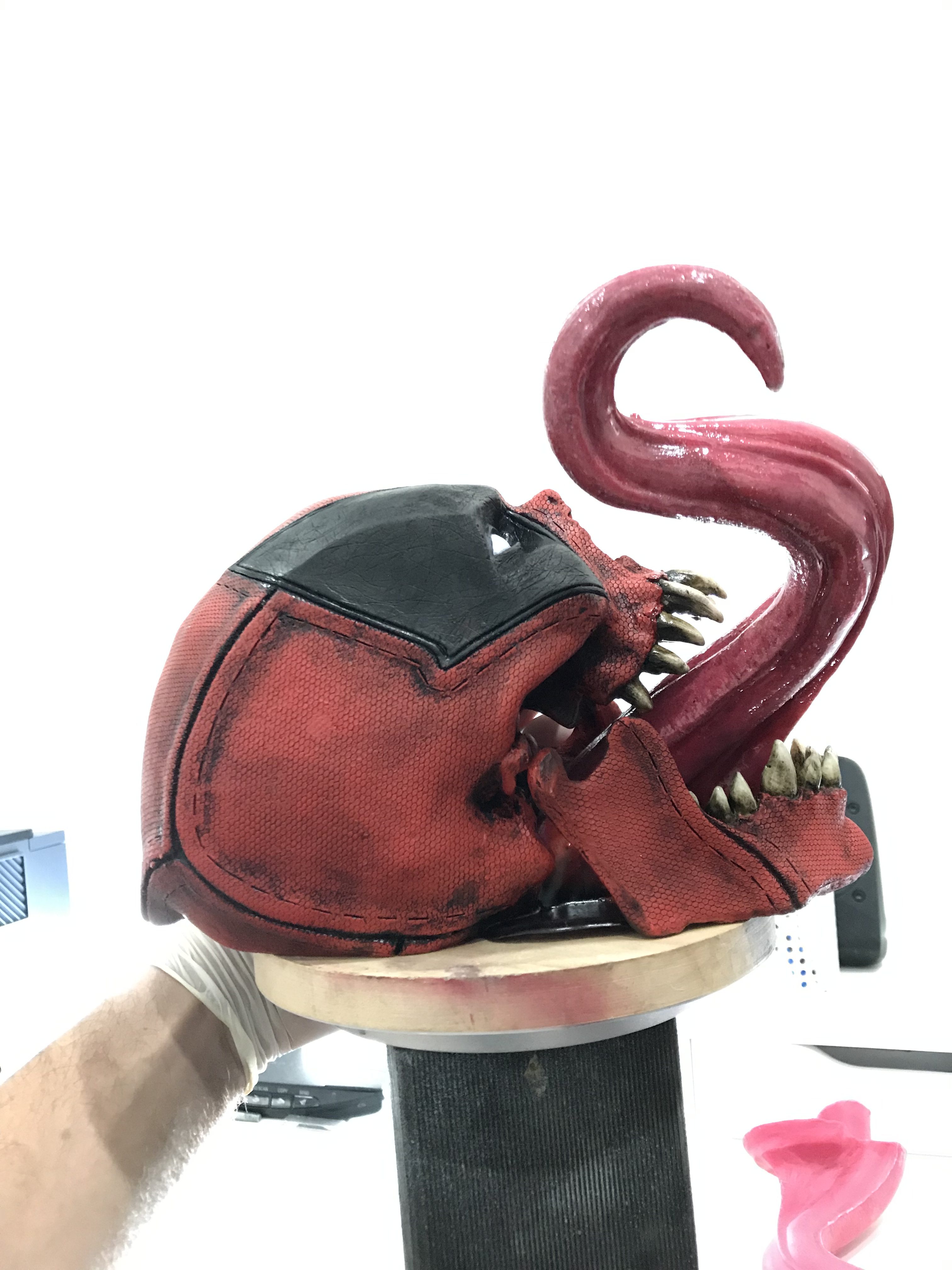
Five years ago, I made my first skull. It was not elegant. It was not mysterious. It was not the kind of handcrafted skull art that makes people whisper, “Ah yes, a bold meditation on mortality.” It looked more like a potato had joined a motorcycle gang.
Still, something clicked. Skulls had shape, attitude, history, and just enough dramatic energy to make a craft table feel like a tiny villain laboratory. Since then, I have experimented with resin, clay, paint, texture, sanding, dry brushing, sculpted teeth, comic-style exaggeration, and enough black pigment to make my workspace look like it was sponsored by a haunted ink factory.
Now, after five years of trial, error, and several “I swear it looked better before the clear coat” moments, I finally finished my newest creation: The Venompool. It is a handmade skull sculpture inspired by the chaotic collision of Deadpool’s loud personality and Venom’s alien symbiote style. In other words, it is what happens when a skull decides subtlety is for furniture catalogs.
Why Skulls Never Really Go Out of Style
Skulls have been part of visual culture for centuries, and not just because artists enjoy making cheekbones look intimidating. In Western art, skulls often appear in memento mori and vanitas imagery, reminding viewers that life is temporary, beauty fades, and nobody gets to keep their snacks forever. In many traditions, skulls can also represent transformation, remembrance, courage, rebellion, humor, or celebration.
That range is exactly why skull sculpture remains so addictive for makers. A skull can be gothic, funny, elegant, punk, futuristic, spiritual, comic-book wild, or all of the above before lunch. It gives the artist a strong base shape, then invites personality. Add flowers, and it becomes poetic. Add chrome, and it becomes cyberpunk. Add a symbiote grin and red comic panels, and suddenly it looks like it just insulted Spider-Man and stole your tacos.
Meet The Venompool: A Skull With Too Much Personality
The Venompool is my newest custom skull creation, built around one question: what would happen if a skull sculpture absorbed the visual DNA of Venom and Deadpool at the same time?
The answer: chaos, but make it collectible.
Venompool is known in Marvel lore as a wild alternate-reality fusion of Deadpool and the Venom symbiote. That gives an artist a delicious design problem. Deadpool brings red-and-black comic energy, sarcastic attitude, weapons-grade confidence, and the feeling that the sculpture might interrupt you mid-sentence. Venom brings organic black shapes, monstrous curves, sharp contrast, and that glossy alien texture that looks like it crawled out of a nightmare but somehow remembered to moisturize.
For my skull version, I wanted both sides to be visible without turning the piece into a messy costume party. The structure remains skull-first. The character influence appears through color blocking, exaggerated shapes, surface movement, and the feeling that the sculpture is half trophy, half troublemaker.
The Core Design Idea
The skull is the anchor. I wanted it to feel solid, sculptural, and display-worthy. Around that base, the Venom-inspired elements stretch across the form like a living suit, while the Deadpool-inspired red panels create bold comic contrast. The black areas are glossy and fluid. The red sections are sharper, more graphic, and intentionally loud.
The final effect is not just “a skull painted like a character.” That would be too easy, and also my inner overthinker would file a complaint. Instead, The Venompool is a custom fan art sculpture that uses the skull as a storytelling object. It feels like a transformation caught mid-moment, as if the piece is still deciding whether to sit politely on a shelf or start narrating its own origin story.
The Making Process: From Blank Skull to Symbiote Chaos
Every handmade skull sculpture starts with a simple truth: the early stages are ugly. This is normal. In fact, if a project looks too good too early, I immediately distrust it. The Venompool went through several phases before it became the finished piece.
1. Planning the Shape and Silhouette
Before touching paint or clay, I studied the silhouette. A strong skull sculpture needs recognizable anatomy, even when it is heavily stylized. The brow, cheekbones, jawline, nasal cavity, and teeth give the viewer a familiar map. Once that map is clear, the artist can bend the rules.
For The Venompool, I exaggerated the attitude. The brow needed more aggression. The mouth area needed a mischievous, comic-book snarl. The symbiote-inspired sections needed to feel like they were wrapping over the skull rather than simply sitting on top of it. A good monster design should feel alive, even when it is technically a decorative object that cannot pay rent.
2. Building Texture Without Making Mud
Texture can make or break custom skull art. Too little, and the piece looks flat. Too much, and the details fight each other like toddlers in a cereal aisle. I used raised forms, carved lines, and layered surface effects to separate the skull structure from the symbiote elements.
The black areas needed a wet, organic finish. The red areas needed a cleaner comic-book feel. Around the transitions, I added irregular edges so the design looked like a takeover rather than a paint-by-number exercise. The goal was controlled chaos, which is also how I describe my desk during tax season.
3. Color Blocking the Deadpool and Venom Influence
Color is where The Venompool really came alive. Red and black are already powerful together, but they can easily become predictable. To avoid that, I played with finish and placement. Glossy black created the alien look. Rich red brought in the Deadpool energy. Dark shadows helped the skull keep depth. Small highlights made the sculpted features pop under light.
This is one of the biggest lessons I have learned from five years of making skulls: paint is not just color. Paint is lighting, mood, texture, and personality. A small dry-brushed highlight can reveal a sculpted edge. A gloss coat can make one area feel slick and alive. A matte section can calm everything down before the piece becomes visually louder than a superhero movie trailer.
4. Finishing, Sealing, and the Final “Please Don’t Ruin It” Stage
The final stage is always the most stressful. When a piece is nearly finished, every decision feels suspicious. Should I add one more highlight? Should I deepen the shadows? Should I stop before I turn a perfectly good skull into a decorative bowling ball?
For The Venompool, I focused on balance. The sculpture needed enough shine to suggest symbiote movement, but not so much that the whole piece became a reflective black puddle. The red needed to stay bold, but not plastic. The skull features needed to remain readable from across the room. A strong display piece should work up close and at a distance.
Why Venompool Works So Well as Skull Art
Some characters translate beautifully into skull sculpture because they already have strong visual language. Venompool is one of them. The concept brings together two instantly recognizable energies: Deadpool’s comic chaos and Venom’s dark alien form.
That combination gives a skull artist plenty to work with. The skull naturally supports the darker side of the design, while the red-and-black pattern introduces humor, motion, and comic-book identity. The result feels dramatic but playful. It is not horror for horror’s sake. It is pop culture with teeth, attitude, and a suspicious amount of confidence.
There is also a fun contrast in the character idea. Skulls are often associated with silence, memory, and stillness. Deadpool is associated with talking too much. Venom is associated with overwhelming presence. Put those ideas together, and the sculpture becomes a joke with excellent cheekbones.
Handmade Fan Art and Respecting the Source
The Venompool is best understood as a handmade fan art sculpture: a personal creative tribute, not official merchandise. That distinction matters. Fan art lives in a fascinating space where admiration, craftsmanship, pop culture, and intellectual property all meet. For artists, the goal should be to bring original skill and interpretation to the work while respecting the characters and worlds that inspired it.
In this piece, the skull form is my own artistic foundation. The Venompool influence appears through theme, palette, and stylized details. I wanted the result to feel recognizable enough for Marvel fans to smile, but original enough that it stands as a sculptural object rather than a simple copy.
Lessons From Five Years of Making Skulls
When I started making skulls five years ago, I thought the hardest part would be sculpting. I was wrong. The hardest part is patience. Sculpting takes patience. Sanding takes patience. Paint drying takes patience. Waiting for resin or sealant to cure takes the patience of a monk who has also misplaced his phone charger.
The second hardest part is learning when to stop. Beginners often add detail because detail feels like progress. But not every surface needs a crack, stripe, highlight, shadow, tooth, tentacle, flame, or mysterious glowing symbol. A great skull design needs focal points. The viewer’s eye should know where to land first, where to travel next, and where to rest.
The third lesson is that materials have personalities. Resin can be glassy and dramatic, but it demands careful handling, ventilation, gloves, and respect before it cures. Polymer clay is flexible and beginner-friendly, but baking, thickness, and surface preparation matter. Acrylic paint is forgiving, until it suddenly is not. Clear coat can save a piece or humble you in one dramatic spray.
Most of all, skull making taught me that style develops through repetition. You cannot think your way into a signature look. You build it one piece at a time. Every skull teaches something: how to shape shadows, how to fix a bad paint choice, how to create cleaner teeth, how to make black surfaces interesting, and how to accept that sometimes the “happy accident” is simply an accident wearing a tiny hat.
How The Venompool Changed My Approach
This piece pushed me harder than earlier skulls because it had to balance anatomy, fan art, comic design, and sculptural presence. A plain skull can rely on form. A character-inspired skull has to communicate identity without becoming cluttered. The Venompool needed to feel alive, funny, dark, and display-ready at the same time.
I learned to think more carefully about contrast. Gloss against matte. Red against black. Smooth surfaces against raised organic texture. Clean comic shapes against chaotic symbiote movement. That push and pull became the real design language of the piece.
I also learned that recognizable inspiration does not replace composition. A famous character theme may attract attention, but structure keeps attention. If the silhouette is weak, the paint cannot rescue it. If the focal points are confused, the viewer will not know what to enjoy first. The best handmade skull art is not just decorated; it is designed.
Experience Notes: What Making The Venompool Taught Me About Art, Mistakes, and Not Panicking
After five years of making skulls, I can confidently say that every project has three stages: excitement, regret, and dramatic recovery. The Venompool was no different. At the beginning, I had a clear vision. The sketch looked bold. The color palette looked perfect. My brain played heroic background music. Then the first layer went down, and suddenly the piece looked like a confused Halloween mask having an identity crisis.
This is where experience matters. Years ago, I might have abandoned the project or tried to fix everything at once. Now I know that ugly phases are part of the process. Base coats look flat. Sculpted details disappear until highlights bring them back. Glossy areas look strange before surrounding textures are finished. A handmade sculpture is built in layers, and judging it too early is like reviewing a pizza while it is still flour.
The Venompool also reminded me how important references are. I did not want to copy one image directly. Instead, I studied the general language of symbiote shapes, comic-book contrast, skull anatomy, and display sculpture. Good references help you understand why a design works. They teach rhythm, proportion, and attitude. Bad reference habits, on the other hand, can trap you into copying instead of creating. The trick is to absorb the idea, then translate it through your own hands.
Another experience I gained from this project is the value of restraint. With a character as visually loud as Venompool, it is tempting to add everything: more teeth, more slime effects, more red panels, more black tendrils, more shine, more dramatic edges. But more is not always better. Sometimes more is just more, standing in the corner wearing tap shoes. I had to remove details, repaint sections, and simplify transitions so the strongest parts could breathe.
The final lesson is emotional: finishing matters. Artists often chase the perfect version in their heads, but the real object will always be slightly different. That is not failure. That is the handmade signature. The tiny asymmetries, brush decisions, texture choices, and solved problems are what make the piece yours. The Venompool is not just my newest skull sculpture. It is a record of five years spent learning how to turn mistakes into style, patience into detail, and a weird idea into something that can sit on a shelf and look dangerously pleased with itself.
Conclusion: A Skull, a Symbiote, and Five Years of Practice
The Venompool represents the kind of project I hoped I could make when I first started sculpting skulls five years ago. It is bold, strange, funny, dark, and full of handmade character. It combines the timeless appeal of skull art with the explosive personality of comic-inspired fan sculpture. Most importantly, it proves that progress is not one magical leap. It is a pile of experiments, failed layers, better tools, late-night sanding, and the stubborn belief that the next skull will be better.
And honestly, that is the best part of making art. You start with a blank shape, a messy idea, and maybe too much caffeine. Then, slowly, the thing begins to stare back at you. If it looks like The Venompool, it may also be judging your life choicesbut at least it is doing it with style.













