
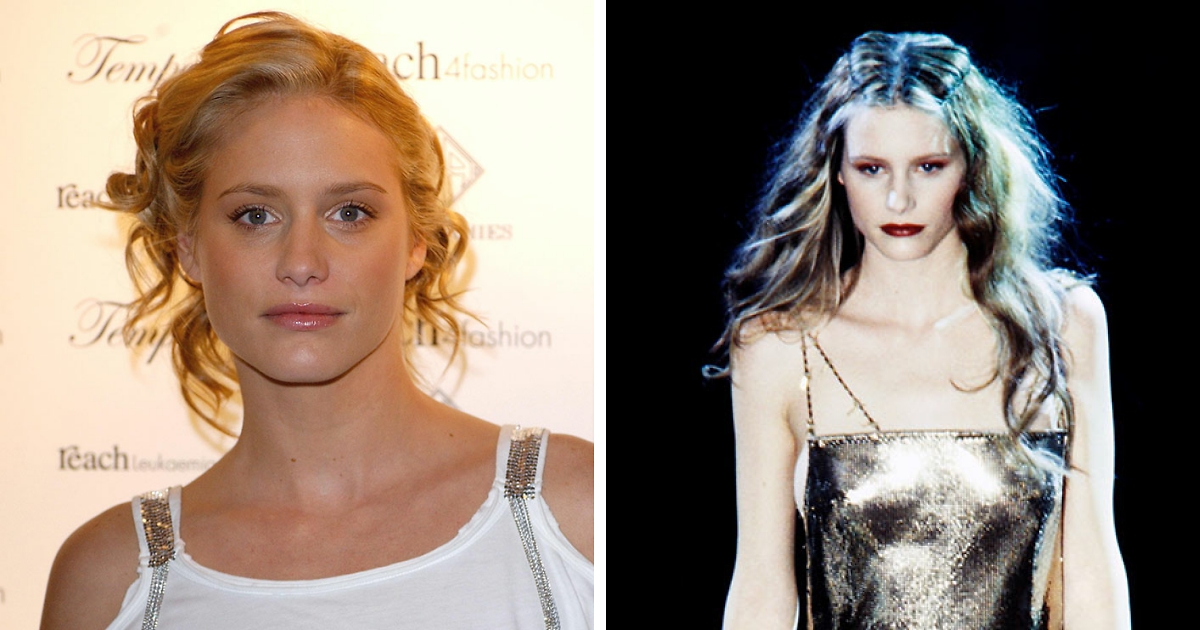
Some fashion stories arrive with glitter, flashbulbs, and a runway soundtrack loud enough to make your coffee vibrate. Others arrive quietly, with a wave of sadness that moves through the industry like a curtain falling at the end of a show. The news that British model Georgina Cooper died at 46 was one of those moments. For fans of 1990s fashion, Cooper was not just another beautiful face in a very crowded decade of beautiful faces. She was memorable, mischievous, warm, and instantly recognizable thanks to the gap-toothed smile that helped make her a symbol of the Cool Britannia era.
Her passing felt especially heartbreaking because it came just months after she had married her husband, Nigel Smith, and was reportedly looking forward to a new chapter in life. Cooper died after falling ill while in Greece, a country she loved and had visited often. Friends, former colleagues, and admirers responded with grief, remembering her not only as a standout model but also as a funny, kind, people-loving woman who brought brightness into rooms that were already full of professional sparkle.
This article looks at Georgina Cooper’s life, her modeling legacy, the circumstances reported around her death, and why her story continues to resonate with readers who remember the 1990s fashion world as a wild mixture of rebellion, beauty, personality, and very tiny sunglasses.
Who Was Georgina Cooper?
Georgina Cooper was a British model who rose to fame during the 1990s, a period when fashion was obsessed with attitude as much as appearance. Born in London, she began modeling young and quickly became associated with the fresh, imperfect, electric look that defined the decade. At a time when the industry was moving away from untouchable glamour and toward something more personal, Cooper fit perfectly. She did not look manufactured. She looked alive.
Her gap-toothed smile became one of her signatures. In an industry that often tries to sand down every edge, Cooper’s look was proof that individuality could be more powerful than polish. She was sometimes described as one of the original gap-toothed girls of British fashion, and that phrase stuck because it captured what made her so appealing: she was beautiful, yes, but she was also distinctive. She had a face you remembered after flipping past a magazine page. That is not easy when the page is competing with Kate Moss, Naomi Campbell, Stella Tennant, and a parade of other icons.
Cooper appeared in major fashion magazines and became part of the broader Cool Britannia mood, when British music, art, nightlife, and style seemed to be taking over the cultural conversation. Her career connected her to fashion shoots, editorials, and a creative scene that valued confidence, wit, and a little backstage chaos. Basically, if the 1990s had a group chat, she would have been in it.
The Tragic News: Georgina Cooper Dies at 46
Georgina Cooper’s death was reported in November 2024, though friends and outlets noted that she had died earlier while in Greece. According to multiple reports, Cooper was on the island of Kos with her husband, Nigel, when she became seriously ill. She was reportedly taken to a local hospital before her condition worsened and she was transferred for further medical care.
The timing made the news feel even more painful. Cooper had married Nigel Smith only months earlier, in June 2024, near her home in Kent. Former agent Dean Goodman said she had been looking forward to the future and to beginning married life. That detail landed heavily with readers because it turned a celebrity headline into something deeply human: a woman who had just stepped into a hopeful new chapter did not get the time she expected.
Early reports mentioned serious health complications and long-term illness after COVID, while later local reporting stated that her cause of death had been recorded as cirrhosis of the liver and internal bleeding after organ failure. Because public reporting has included different details at different times, the most responsible way to discuss her passing is with care rather than guesswork. What remains clear is that Cooper had experienced health struggles, fell gravely ill in Greece, and died far too young.
Why the Fashion World Called Her Loss “Heartbreaking”
The word “heartbreaking” can get tossed around online so often that it starts to feel like headline seasoning. In Georgina Cooper’s case, it fits. Her death touched people because she represented more than a modeling portfolio. Friends described her as funny, warm, generous, and full of life. Model Jade Parfitt shared an emotional tribute, while Erin O’Connor remembered Cooper as loving and kind. Those are not the usual empty celebrity adjectives; they suggest someone people genuinely enjoyed being around.
Fashion can be glamorous, but it can also be lonely, competitive, and fast-moving. Models often become images before they are allowed to be people. Cooper seemed to resist that flattening. She was remembered for her humor as much as her beauty, her presence as much as her photographs. That matters because a true fashion legacy is not only about campaigns and covers. It is also about the atmosphere someone creates when the camera turns off.
Her story also moved readers because she had stepped away from modeling after becoming a mother. In past interviews, Cooper spoke about working in hospitality and enjoying it because she loved people. That detail surprises some readers who imagine former models floating forever through perfume ads and velvet ropes. But Cooper’s later life showed another kind of confidence: the ability to leave one stage and build a meaningful life somewhere else.
Georgina Cooper and the Cool Britannia Era
To understand Georgina Cooper’s appeal, you have to understand the cultural weather of 1990s Britain. Cool Britannia was not just a phrase; it was a mood. Britpop bands were everywhere, magazines had attitude, fashion was less about looking perfect and more about looking like you had a story, and London felt like the center of a very stylish storm.
Cooper emerged during this moment. Her look had that specific British mix of beauty and irreverence. She did not seem like someone who had been designed in a boardroom. She seemed like someone you might find laughing outside a club, wearing something that would look ridiculous on everyone else and somehow brilliant on her. That was the magic of the era. The models were not just hangers for clothes; they were personalities.
Her gap-toothed smile became part of that movement because it challenged a narrow idea of perfection. Long before social media made “authenticity” a marketing buzzword, Cooper’s face carried a natural, memorable charm. She helped show that the features people are sometimes told to hide can become the very thing that makes them iconic. Somewhere, an orthodontist may have sighed dramatically, but fashion fans understood the assignment.
From Runways to Real Life: A Model Who Chose Family
One of the most touching parts of Georgina Cooper’s story is that she did not appear to chase fame forever. After becoming a mother to her son, Sonny, she stepped back from modeling. She reportedly found it difficult to leave him for work, which is both relatable and quietly powerful. The modeling industry often rewards constant availability, but Cooper chose presence. She chose motherhood, stability, and eventually a life connected to hospitality and community.
That choice does not make her fashion career smaller. If anything, it makes her life feel fuller. Many public figures are remembered only through their most photographed years, as if they stop evolving once the camera stops clicking. Cooper’s life reminds us that people are not frozen in their peak magazine-cover moment. They grow, change jobs, fall in love, raise children, make plans, and find joy in ordinary places.
Her recent marriage to Nigel Smith added another layer to that story. Reports described them as newly married and looking forward to their life together. The sadness of her death comes partly from that interrupted future. It is one thing to mourn a person’s past; it is another to mourn all the mornings, trips, jokes, and plans they did not get to have.
The Public Reaction: Tributes, Memories, and Shock
When the news spread, reactions came from fashion insiders and everyday readers alike. For people who remembered the 1990s modeling scene, Cooper’s death felt like losing a small but vivid piece of cultural history. She belonged to a generation of models who made magazines feel exciting, unpredictable, and personal. They were not all trying to look like the same polished mannequin. They had quirks, edges, moods, and stories.
Friends remembered Cooper as a bright presence. Tributes emphasized her humor, warmth, and the fun she brought backstage. That detail is important because backstage fashion culture can be intense. There are tight schedules, uncomfortable shoes, last-minute fittings, and enough hairspray to threaten local weather patterns. Someone who makes people laugh in that environment is not just pleasant; she is essential.
The shock also came from her age. Forty-six is young. It is an age when many people are starting second chapters, not closing final ones. Cooper’s passing became a reminder that beauty, fame, and even recent happiness do not make anyone immune to fragile health or sudden loss. The runway may look controlled, but life has never been very good at following a production schedule.
Why Georgina Cooper’s Look Still Matters
Fashion has always had a complicated relationship with perfection. It sells fantasy, but the faces that last are often the ones with something unexpected. Georgina Cooper’s smile was not just a physical feature; it was a statement. It made her approachable, expressive, and unforgettable. In the language of branding, she had instant recognition. In the language of regular humans, she had charm.
Today, when beauty conversations often focus on filters, fillers, and flawless digital editing, Cooper’s legacy feels especially relevant. She became known because of what made her different, not despite it. That message is worth repeating, especially for younger readers growing up in a world where every photo can be adjusted before anyone sees it. The goal is not to become a copy of someone else’s “perfect.” The goal is to become unmistakably yourself.
Her career also reflects a broader shift in modeling. The 1990s opened space for personality-driven fashion imagery. Photographers and editors wanted faces that carried stories. Cooper belonged in that world because she looked like she had just said something funny right before the shutter clicked. That kind of energy cannot be faked. Well, it can be faked, but usually it looks like a toothpaste commercial having an identity crisis.
Lessons From Georgina Cooper’s Life and Legacy
1. Individuality Is Not a Flaw
Cooper’s signature look showed that a so-called imperfection can become a strength. Her smile helped define her image and gave her work an unforgettable quality. In fashion and in life, the thing that makes you different may be the thing that makes people remember you.
2. A Career Does Not Have to Be Forever to Matter
Georgina Cooper did not need to remain on runways for decades to leave a mark. Her impact came from timing, presence, and authenticity. Some careers burn brightly for a particular cultural moment, and that is enough. Not every legacy needs a 40-year spreadsheet.
3. Private Happiness Matters
Her later life, including motherhood, work outside modeling, and marriage, reminds us that public success is only one kind of success. Being loved by family and friends, building a life away from cameras, and finding work that suits your personality can be just as meaningful as magazine covers.
4. Talk About Health With Care
Because reporting around Cooper’s medical circumstances included evolving details, her story is also a reminder to avoid turning illness into speculation. When someone dies, especially publicly, accuracy matters. Compassion matters even more.
Additional Reflections: What Georgina Cooper’s Story Teaches Us About Grief, Beauty, and Remembering People Well
There is a strange thing that happens when a public figure dies. People who never met them feel something real. Maybe it is not the same grief their family feels, of course, but it is still a kind of grief. It is the sadness of realizing that a person who once represented a time, a style, a feeling, or even your own youth is gone. Georgina Cooper’s passing carried that kind of emotional weight for many fashion fans.
For someone who grew up flipping through magazines, seeing a model like Cooper was not just about clothes. It was about imagination. A great fashion image can make a teenager in a small bedroom feel connected to a wider world. It can make style feel playful instead of intimidating. Cooper’s photographs belonged to that world of possibility. She had the kind of face that suggested fashion could be fun, not just severe. She looked like she knew the secret joke and might tell you if you sat nearby long enough.
Her death also reminds us how quickly life can change after a joyful milestone. Marriage usually symbolizes beginning: new plans, new routines, new stories to tell later. That is why the phrase “months after getting married” feels so painful. It places happiness and loss too close together. Many readers may recognize that emotional whiplash from their own lives. A family celebration can be followed by a diagnosis. A dream trip can become an emergency. A fresh chapter can be interrupted before it has a chance to become ordinary.
That is not a cheerful thought, but it is a useful one. Stories like Cooper’s can push us to pay closer attention to the people we love. Not in a dramatic, movie-trailer way, but in ordinary ways: answer the message, take the photo, say the kind thing, stop saving affection for special occasions. Life does not always give a polite calendar invitation before everything changes.
There is also something valuable in the way Cooper is being remembered. The tributes did not focus only on beauty. They focused on laughter, kindness, warmth, and the way she made people feel. That is the part of a legacy that survives best. Looks may open doors in fashion, but character is what people talk about after the door closes. Nobody wants their final review to be, “Great cheekbones, questionable vibes.” Cooper’s friends remembered her as a bright and beloved person, and that says more than any campaign credit ever could.
For readers interested in fashion, her story is a reminder to look beyond the image. Behind every editorial photo is a person with family, health worries, private dreams, and complicated days. Models are often treated like symbols: of beauty, youth, luxury, rebellion, or whatever a magazine needs that month. But Georgina Cooper’s life shows the person behind the symbol. She was a mother, a wife, a friend, a worker, and someone who loved Greece and had plans for the future.
In the end, remembering her well means holding both parts of the story together. Yes, she was a face of a stylish era. Yes, she had an unforgettable smile. Yes, her death was painfully sad. But she was also more than a headline. She was someone who made others laugh, someone who chose family, someone who lived beyond the frame. That is why the grief around her passing feels sincere. Georgina Cooper’s legacy is not only in the archives of fashion magazines. It is in the reminder that the most memorable people are rarely perfect. They are vivid, human, and impossible to replace.
Conclusion
Georgina Cooper’s death at 46 is a heartbreaking loss for her family, friends, and the fashion world that once celebrated her unforgettable presence. She rose during one of the most exciting periods in British style, helped define the Cool Britannia look, and proved that individuality could be more powerful than conventional perfection. Her gap-toothed smile became iconic, but the tributes after her passing show that her warmth and humor mattered just as much.
The fact that she died only months after getting married makes the story especially painful. Yet her life should not be remembered only through sadness. Cooper’s legacy includes creativity, motherhood, reinvention, laughter, and a kind of beauty that never needed to be airbrushed into sameness. She was, in every sense, unforgettable.














