
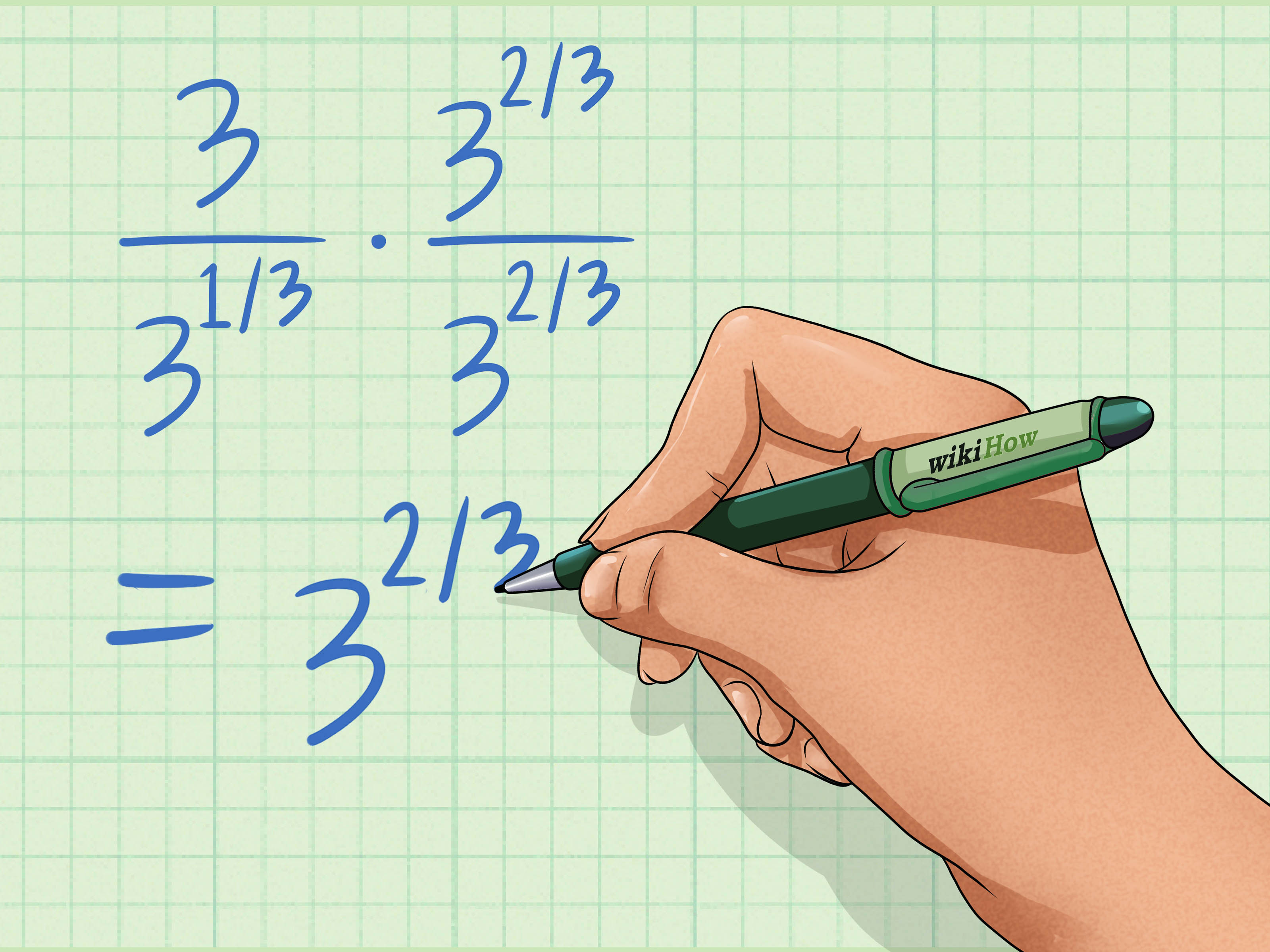
If you have ever looked at a fraction like 1/√2 and thought, “That denominator looks like it needs a tiny math haircut,” congratulations: you have already met the idea behind rationalizing the denominator. In algebra, rationalizing the denominator means rewriting a fraction so there are no radicals, such as square roots or cube roots, left in the bottom of the fraction.
This does not change the value of the fraction. It simply changes how the fraction looks. Think of it like folding a messy T-shirt: same shirt, much neater presentation. Mathematicians like clean denominators because they make expressions easier to compare, combine, simplify, and use in later calculations.
In this guide, you will learn exactly how to rationalize the denominator, why the method works, when to use conjugates, and how to solve several example problems step by step. We will keep the explanation friendly, practical, and not nearly as scary as the square root symbol wants you to believe.
What Does It Mean to Rationalize the Denominator?
To rationalize the denominator means to remove irrational numbers, usually radicals, from the denominator of a fraction. A denominator is the bottom part of a fraction. A rational number is a number that can be written as a ratio of two integers, such as 3, 7/2, or -5. Many radicals, such as √2, √3, and √5, are irrational because they cannot be written as a simple fraction.
For example, the expression:
has a radical in the denominator. After rationalizing, it becomes:
Both forms have the same value, but the second form has a rational denominator. That is the whole mission. We are not changing the number; we are changing its outfit.
Why Do We Rationalize Denominators?
Rationalizing denominators is a traditional algebra skill, but it is not just math busywork. It helps in several important ways:
- It creates a standard simplified form. Many textbooks and teachers expect final answers to have no radicals in the denominator.
- It makes fractions easier to compare. Comparing √3/3 and √2/2 is often cleaner than comparing 1/√3 and 1/√2.
- It helps with later operations. Adding, subtracting, and simplifying radical expressions can be easier when denominators are rational.
- It reduces confusion in exact answers. Rationalized forms often show the structure of an expression more clearly.
In modern calculators, decimals are easy to produce, but algebra is not only about decimal answers. Algebra loves exact forms. Rationalizing the denominator keeps the answer exact while making it cleaner.
The Big Rule: Multiply by a Smart Form of 1
The main trick behind rationalizing the denominator is simple: multiply the fraction by a form of 1. Since multiplying by 1 does not change the value of a number, the expression remains equivalent.
For example:
So if we multiply a fraction by √2/√2, we are not changing its value. We are only changing its form.
Basic Formula for One Square Root in the Denominator
If you have a fraction like:
multiply the numerator and denominator by √b:
The square root disappears from the denominator because:
That little fact is the engine of the whole method.
Example 1: Rationalize 1/√2
Let’s begin with the classic example. It is basically the “hello world” of rationalizing denominators.
Step 1: Multiply the top and bottom by √2.
Step 2: Multiply across.
Step 3: Simplify.
So the rationalized form is:
The denominator is now 2, which is rational. The radical moved to the numerator, where it is allowed to live rent-free.
Example 2: Rationalize 5/√3
Now let’s try a fraction with a larger numerator.
Step 1: Multiply by √3/√3.
Step 2: Multiply numerator and denominator.
The answer is:
Notice that the 5 stays in front of √3. There is no need to turn this into a decimal unless a problem specifically asks for an approximation.
Example 3: Rationalize 6/√12
This example has one extra step because √12 can be simplified.
Step 1: Simplify the radical first.
So the expression becomes:
Step 2: Simplify the fraction.
Step 3: Multiply by √3/√3.
Step 4: Reduce.
The final answer is:
This is a great reminder: always simplify radicals when possible. Sometimes rationalizing leads to a surprisingly clean result, like finding out your messy closet had a floor after all.
How to Rationalize a Denominator with a Coefficient
Sometimes the denominator has a number multiplied by a radical, such as:
The radical part is √5, so multiply by √5/√5.
Multiply across:
Simplify:
The rationalized form is:
The coefficient 3 remains in the denominator and multiplies by 5 after √5 × √5 becomes 5.
Rationalizing Binomial Denominators with Conjugates
Things get more interesting when the denominator has two terms, such as:
You cannot simply multiply by √3/√3 and expect the whole radical to disappear. The denominator is a binomial, meaning it has two terms. For this type of problem, you use the conjugate.
What Is a Conjugate?
The conjugate of a binomial is made by changing the sign between the two terms.
- The conjugate of 2 + √3 is 2 – √3.
- The conjugate of 5 – √7 is 5 + √7.
- The conjugate of √6 + √2 is √6 – √2.
Conjugates work because of the difference of squares formula:
When radicals are squared, they become rational. That is why conjugates are so useful. They make the denominator behave.
Example 4: Rationalize 1/(2 + √3)
Start with:
Step 1: Identify the conjugate of the denominator.
Step 2: Multiply the numerator and denominator by the conjugate.
Step 3: Multiply the numerator.
Step 4: Multiply the denominator using difference of squares.
Step 5: Simplify.
The final answer is:
This answer may look totally different from the original, but it has the same value. Algebra is full of identity changes like this. It is basically math wearing sunglasses.
Example 5: Rationalize 4/(5 – √2)
Start with:
Step 1: Use the conjugate of the denominator.
Step 2: Multiply top and bottom by the conjugate.
Step 3: Multiply the numerator.
Step 4: Multiply the denominator.
The rationalized form is:
Since 20, 4, and 23 have no common factor, this expression is already simplified.
Example 6: Rationalize √5/(√7 – √2)
Now both terms in the denominator are radicals. No need to panic. The conjugate still works.
Step 1: Find the conjugate.
Step 2: Multiply numerator and denominator by the conjugate.
Step 3: Multiply the numerator.
Step 4: Multiply the denominator.
The final answer is:
The denominator is now rational, and the expression is in a cleaner exact form.
How to Rationalize Cube Root Denominators
Square roots are the most common radicals students see, but cube roots can also appear in denominators. The goal is still to make the denominator rational, but the multiplier may be different.
For cube roots, remember:
If the denominator is ∛2, multiplying by just ∛2 is not enough because:
That is still a radical. Instead, multiply by ∛4, because:
Example 7: Rationalize 3/∛2
Start with:
Step 1: Multiply top and bottom by ∛4.
Step 2: Multiply across.
Step 3: Simplify the denominator.
The final answer is:
The key is to complete a perfect cube under the radical. For square roots, you complete a perfect square. For cube roots, you complete a perfect cube. The pattern is friendly once you see it.
Common Mistakes When Rationalizing Denominators
1. Multiplying Only the Denominator
This is the biggest mistake. If you multiply the denominator by something, you must multiply the numerator by the same thing. Otherwise, you changed the value of the fraction. Algebra does not enjoy surprise edits.
2. Forgetting to Simplify Radicals First
Before rationalizing, check whether the radical can be simplified. For example, √20 becomes 2√5. Simplifying first often makes the rationalization easier.
3. Using the Wrong Conjugate
If the denominator is 3 + √5, the conjugate is 3 – √5. Only the sign changes. The terms themselves stay the same.
4. Distributing Incorrectly
When multiplying binomials, use FOIL or the difference of squares formula carefully. A small sign error can turn a beautiful solution into a math smoothie.
5. Stopping Too Early
After rationalizing, check whether the fraction can be reduced. If every term in the numerator and denominator shares a common factor, simplify it.
Practice Problems
Try these on your own before checking the answers. Your pencil deserves a little exercise.
Problem 1
Solution:
Answer:
Problem 2
Solution:
Answer:
Problem 3
Solution:
Answer:
Problem 4
Solution:
Answer:
Problem 5
Solution:
Answer:
Quick Checklist for Rationalizing the Denominator
When you see a radical in the denominator, use this checklist:
- Check whether the radical can be simplified.
- If the denominator is a single square root, multiply by that square root over itself.
- If the denominator is a binomial, multiply by the conjugate over itself.
- If the denominator has a cube root, multiply by the factor needed to create a perfect cube.
- Simplify the numerator and denominator.
- Reduce the fraction if possible.
This checklist works for most beginner and intermediate rationalizing denominator problems.
Experiences and Study Tips for Learning How to Rationalize the Denominator
One of the most useful experiences students can have with rationalizing denominators is realizing that the process is not random. At first, it may look like algebra teachers are just inventing extra steps to keep everyone busy until the bell rings. But after solving enough examples, the pattern becomes clear: you are always multiplying by a carefully chosen version of 1.
A helpful way to learn this topic is to separate problems into “families.” The first family is single square root denominators, such as 1/√7 or 4/√11. These are usually the easiest because you multiply by the same square root. The second family is denominators with coefficients, such as 5/(2√3). These are only slightly harder because the coefficient stays in place while the radical gets cleaned up. The third family is binomial denominators, such as 1/(3 + √5). These require conjugates, and this is where many students need extra practice.
Another experience that helps is checking answers with decimals after completing the exact algebra. For example, 1/√2 and √2/2 both have the same decimal value, about 0.707. This check can reassure you that rationalizing did not magically alter the number. However, do not replace exact answers with decimals unless asked. The decimal is a useful flashlight, not the final treasure.
Students often improve faster when they say the reason for each step out loud. For example: “I am multiplying by √3/√3 because that equals 1, and √3 times √3 equals 3.” This may feel dramatic at first, like narrating a cooking show where the main ingredient is a radical, but it builds strong understanding. Math becomes easier when each move has a reason.
It is also smart to practice slowly before practicing quickly. Speed is not the goal at the beginning. Accuracy is. Many mistakes happen because students rush through signs, especially with conjugates. If the denominator is 4 – √6, the conjugate is 4 + √6. The sign changes, but the terms do not. Writing this clearly before multiplying can prevent a lot of frustration.
Another practical tip is to review the difference of squares formula until it feels automatic. The formula (a + b)(a – b) = a² – b² is the secret weapon behind conjugates. Once you understand that middle terms cancel, binomial rationalization becomes much less mysterious. It is not magic; it is cancellation doing a very neat little dance.
For learners preparing for tests, create a small mixed practice set. Include five single-radical problems, five binomial problems, and two cube-root problems. Mixing problem types trains your brain to choose the right method instead of running on autopilot. Autopilot is fine for airplanes. It is less fine when the denominator has two terms and secretly needs a conjugate.
Finally, remember that rationalizing the denominator is a skill built through repetition. The first few problems may feel awkward, but after enough practice, you will start recognizing the structure immediately. When you see √5 in the denominator, you will know what to do. When you see 2 + √7, the word “conjugate” will politely knock on the door. That is the moment the topic starts feeling less like a rule to memorize and more like a tool you actually control.
Conclusion
Learning how to rationalize the denominator is an important algebra skill that helps you rewrite radical fractions in cleaner, standard form. The main idea is simple: multiply by a useful form of 1 so the denominator becomes rational. For a single square root, multiply by the same square root. For a binomial denominator, multiply by the conjugate. For cube roots, complete a perfect cube.
Once you understand the logic, rationalizing denominators becomes much less intimidating. It is not about making math harder; it is about making expressions easier to read, compare, and simplify. With a little practice, radicals in the denominator will stop looking like monsters and start looking like tiny algebra puzzles waiting to be cleaned up.













